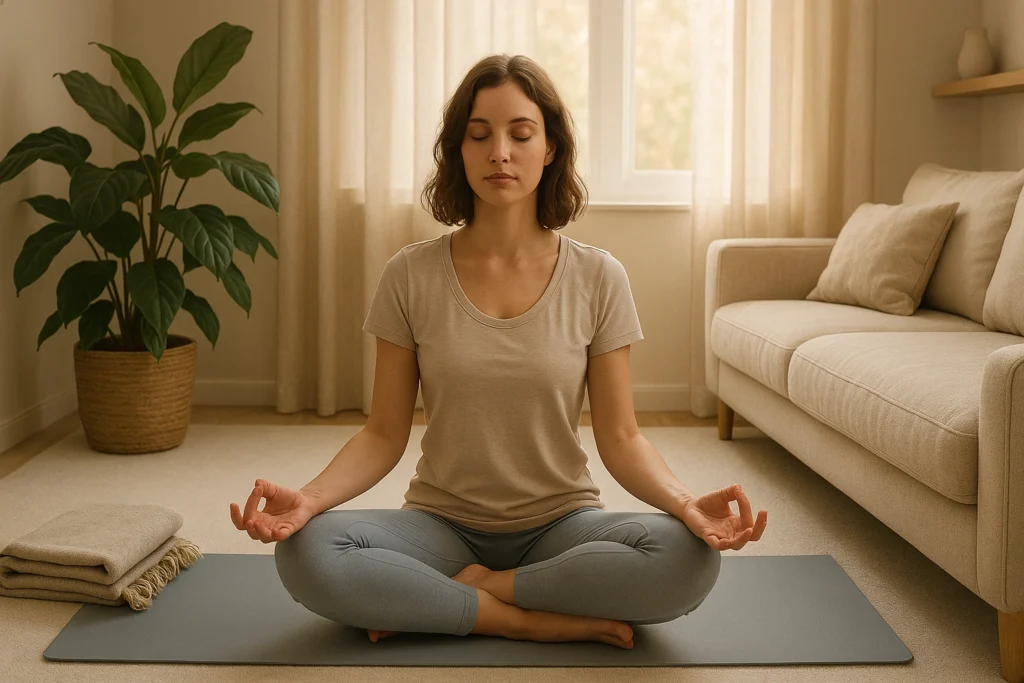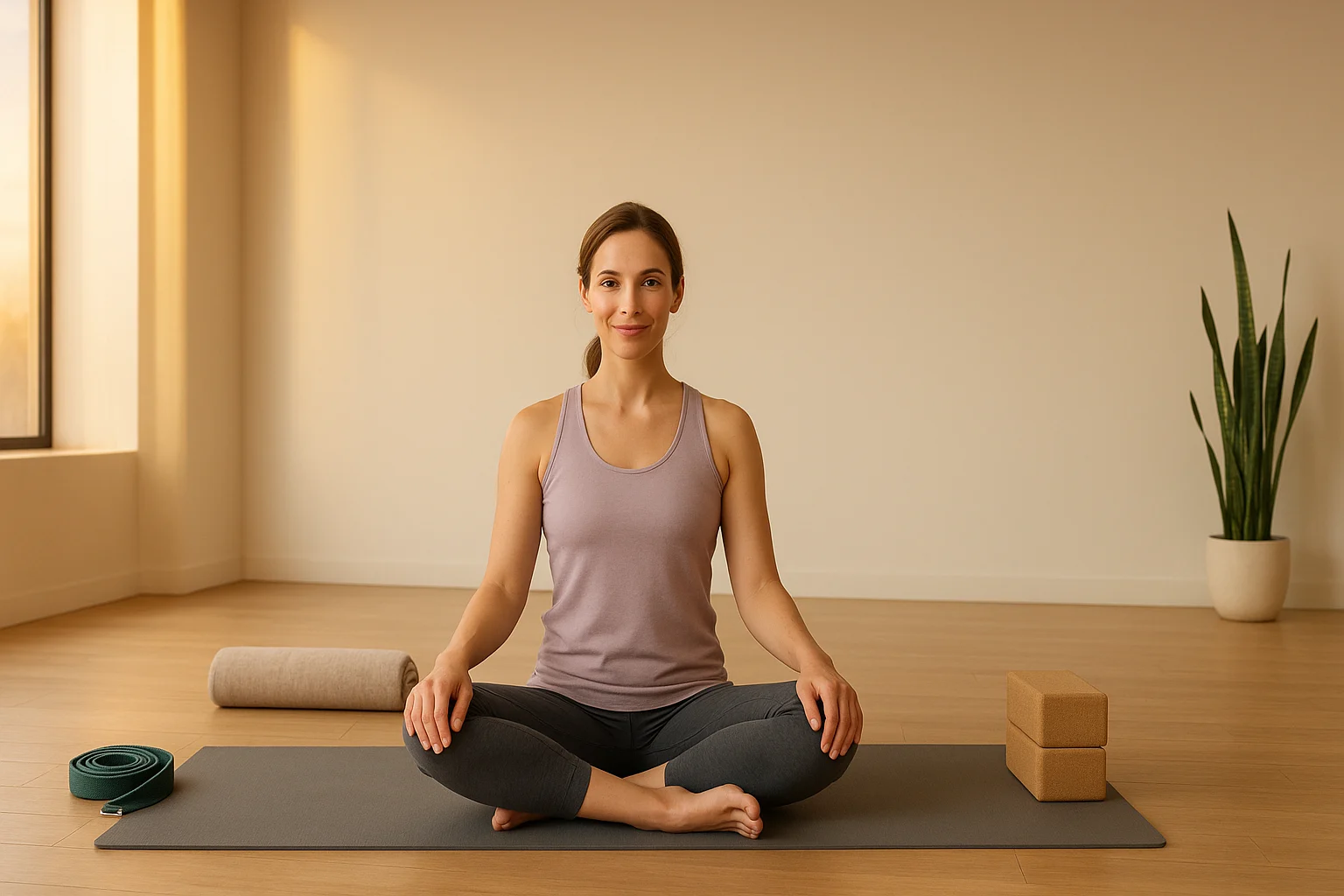
If getting to the floor, balancing comfortably, or feeling the same every day is not a given, a standard pose list is the wrong starting point. Yoga for specialized health needs works better when it starts with the body you have today: whether floor transitions are comfortable, whether you need a chair or wheelchair, whether balance or fatigue changes from day to day, and whether a clinician has given you movement limits.
Here, specialized-health yoga means adapting position, range, pace, props, and the next guide you choose. Yoga may support well-being and some symptoms, but it does not diagnose, cure, or replace medical treatment or rehabilitation. Use the route finder below for a quick starting point, or keep reading for the ability-first framework behind it.
Table of Contents
- Find Your Yoga Starting Point
- Five Rules to Use Across Every Route
- What “Specialized Health Yoga” Means Here
- Start With Ability, Not a Condition Label
- Safety Before Style
- Choose the Guide That Matches What You’re Managing
- Working With Healthcare Professionals
- Build a Practice You Can Repeat
- Get the 10-Minute Chair Yoga Routine
- Track What Actually Changes
- Frequently Asked Questions
- Choose Your Next Step
Find Your Yoga Starting Point
Answer two quick questions to find the most useful place to start reading. This tool routes you to a practice format and guide; it does not diagnose a condition or clear you for exercise.
Your route
Two answers, then a starting point
Choose your starting position and topic. The result will point you to the most relevant guide without turning this into a medical diagnosis.
Five Rules to Use Across Every Route
- Ability first: choose the position and support that fit today before choosing a style or pose.
- Restrictions outrank routines: if your doctor, physical therapist, or other clinician has given you movement limits, use those as the boundary.
- Chair and seated practice are core routes: they are not fallback content for people who “can’t do real yoga.”
- Evidence varies: research suggests yoga may help stress, sleep, balance, some pain conditions, and menopause symptoms, but the size and certainty of benefit differ by condition and person.
- Use the deeper guide when the details matter: this page is the map; the linked condition and accessibility articles hold the narrower instructions.
What “Specialized Health Yoga” Means Here
The phrase can sound clinical, but this page is not offering medical yoga prescriptions. Here, specialized yoga practices mean adapting ordinary yoga around mobility, pain, fatigue, pregnancy, recovery, balance, or other real-life constraints. The same principle applies when people search for therapeutic yoga or yoga for health conditions: the useful question is not “Which pose cures this?” but “What form of practice fits this body and this care plan?”
The NIH’s NCCIH overview on yoga’s effectiveness and safety describes a mixed evidence base: possible benefits exist for several areas of well-being and symptom support, while yoga styles, study populations, and results vary. That is why this hub emphasizes adaptation and routing instead of universal sequences.
Start With Ability, Not a Condition Label
Your diagnosis may matter, but it does not tell you whether getting down to the floor is realistic today. Start with the movement format that removes the biggest barrier.
If standing and floor transitions are workable
You can still use blocks, a wall, a chair, or a shorter range of motion. “Able to get to the floor” is not a reason to avoid support; it simply gives you more position choices.
If chair or mostly seated practice fits better
A chair is a practice tool, not a lesser version of yoga. Choose the route that matches what you need next:
- Seated yoga poses for beginners when you want the simplest chair-based starting routine.
- The chair yoga poses PDF when you want a free printable routine to keep nearby.
- 5-minute desk yoga routine when the goal is a short workday movement break.
- The chair yoga and weight-loss guide when weight is the search concern; it keeps the emphasis on repeatable accessible movement rather than treating yoga as a weight-loss method.
If you use a wheelchair or need seated-only options
Use the wheelchair yoga for seniors guide for a seated-only route. The goal is to adapt around current range of motion, fatigue, and support needs instead of translating a floor routine pose by pose.
If your ability changes day to day
Let today’s version of your body choose today’s version of the practice. A standing sequence one day and a chair-based sequence the next can be the same practice strategy, not a step backward.

Safety Before Style
No list of “safe poses” can account for every diagnosis, surgery, pregnancy, medication, balance issue, or flare. Use a few rules that travel with you across every section of this hub.
Use medical restrictions as the boundary
If you have a health condition, injury, disability, or pregnancy-related restriction, ask the healthcare professional who knows your history what types and amounts of activity are appropriate. A useful yoga teacher can adapt within those limits; they should not override them.
Let symptoms change the plan
Do not use pain as proof that a pose is “working.” Stop or scale back when movement causes pain, unusual fatigue, dizziness, or other concerning symptoms. Start slowly, use a range you can control, and choose the supported version before the deeper version.
Use props to change the demand
- Blocks: reduce how far you need to reach.
- Straps: extend reach without forcing a joint to the end of its range.
- Bolsters or folded blankets: support positions that would otherwise require you to hold yourself up.
- Wall, counter, or sturdy chair: add balance support and make transitions more predictable.
No special prop is mandatory. A belt can stand in for a strap, folded blankets can replace a bolster, and a stable household surface can be useful support when the setup is secure.
Pause when the situation stops being a yoga question
New or worsening neurological symptoms, fainting, chest pain, unusual shortness of breath, severe pain, fever or infection, or an unhealed surgical wound are reasons to stop practice and seek appropriate medical care rather than troubleshooting the pose.
Choose the Guide That Matches What You’re Managing
This hub stays deliberately brief here. Each route below has its own article because the useful details—and the cautions—change by condition.
Chronic pain, back pain, and shoulder recovery
Evidence for yoga is more encouraging for some pain conditions than others, so avoid treating “chronic pain” as one diagnosis. For shoulder-specific limits, use yoga for rotator cuff recovery and follow clinician or physical-therapy clearance. For a fully chair-based back route, see gentle yoga for seniors with back pain.
Arthritis, knee pain, and hypermobile joints
NIAMS guidance on living with arthritis supports exercise as part of arthritis management when it is matched to the person and started gradually. Use whole-body yoga for arthritis for broader context, yoga for knee arthritis for a knee-specific route, and yoga for hypermobile joints when stability matters more than getting a deeper stretch.
Pregnancy, postpartum, and pelvic-floor questions
For healthy pregnancies, some forms of yoga can be part of physical activity, but pregnancy changes positioning and balance. CDC pregnancy activity guidance advises avoiding activities that require lying flat on your back after the first trimester and recommends discussing adjustments with your clinician. For pelvic-floor-specific questions, use yoga for pelvic floor strength and involve a pelvic-floor physical therapist when symptoms or technique need individualized assessment.
Post-surgery recovery
There is no universal yoga timeline after surgery. Procedure-specific restrictions from your surgeon or physical therapist come first. Use Recovery Yoga only after you know which movements, positions, and loads are cleared for your recovery.
Stress, sleep, and sleep apnea
Yoga may support stress management and sleep for some people. For a short workday movement break, try the quick desk yoga routine for posture. Sleep apnea is different: yoga and breathing exercises do not replace treatment. NHLBI treatment guidance lists PAP devices such as CPAP among established therapies; keep prescribed treatment in place and use our yoga and sleep-apnea guide only as optional relaxation support.
Neurological conditions and changing mobility
When fatigue, balance, sensation, or mobility can vary, choose the most supported version that fits the day and keep clinical restrictions in view. For a condition-specific example, see yoga for multiple sclerosis.
Digestive symptoms
Use yoga for gentle movement or relaxation, not as a claim that a twist “detoxes” the body or treats IBS, bloating, or another digestive disorder. The yoga poses for digestion guide keeps the claims soft and the emphasis on comfort.
Menopause symptoms
Yoga may help some menopause symptoms, including hot flashes, sleep problems, or mood-related symptoms, but it should not be described as “balancing hormones.” Use yoga for menopause symptoms for a symptom-support route, and keep bone health or persistent symptoms inside an appropriate medical plan.
Working With Healthcare Professionals
The most useful collaboration is specific. Bring the movements you want to try, the symptoms or restrictions that change your choices, and the questions you cannot answer from a general article.
When a yoga therapist may add value
If you want individualized yoga adaptation, look for a yoga therapist with relevant training and experience. The International Association of Yoga Therapists offers C-IAYT certification for yoga therapists who meet its certification requirements. A credential does not replace your medical team, but it can help you look for someone whose work centers on individualized yoga adaptation rather than pushing a standard class sequence.
Questions worth bringing to your care team
- Are there positions, ranges, or loads I should avoid right now?
- Is there a symptom that should make me stop or contact you?
- Would chair, seated, or supported standing work better than floor practice for now?
- What rehabilitation exercises should remain the priority over yoga?
Build a Practice You Can Repeat
Choose a repeatable baseline
Start with an amount and format you can do without turning the session into a recovery event. Small amounts of physical activity can still be worthwhile, and you can build gradually when your body and care plan allow it.
Change one variable at a time
If you increase range, duration, balance demand, or resistance, change one thing first. That makes it easier to notice what your body tolerates instead of guessing which change caused a flare.
Keep the practice flexible
A sustainable practice can switch between standing, floor, chair, and restorative versions. Consistency does not require doing the same sequence at the same intensity every day.
If chair or mostly seated practice is the route that fits you, this is a concrete way to see what that can look like. I can send you the 10-minute Stiff Mornings chair-yoga routine.
Get the 10-Minute Chair Yoga Routine
Confirm to get the routine and yoga tips. Unsubscribe anytime.
Something went wrong. Please check your email address and try again.
Track What Actually Changes
Use a few consistent signals that matter to daily life: pain or stiffness, sleep quality, mood, fatigue, and one everyday activity such as getting out of a chair or walking a familiar distance. Look for patterns over time and bring meaningful changes to your care team. The goal is not to score yourself; it is to make the practice easier to adjust.
Frequently Asked Questions
Choose Your Next Step
The most useful version of this guide is not a giant list of condition-specific poses. Choose the position you can control, keep medical limits in charge, and move into the deeper guide that matches your actual situation. If you are still between routes, use the starting-point finder again. Start with the body you have today, use support without apology, and let the practice change when your body changes.