Hot flashes keeping you up—or making the day feel unpredictable? If you’re looking at Ayurveda for menopause, the useful distinction is between tradition and treatment. Ayurveda can offer a way to think about routine and personal preference; yoga can offer gentle movement, breathing, and rest. Neither should be sold as a hormone fix.
This guide gives you the traditional dosha lens, optional food and routine ideas, a plain-English evidence check, and chair- or wall-friendly menopause yoga poses. If you’re unsure where to begin, the practice chooser will point you to a comfortable starting section. For broader safety-first adaptations, see our yoga for specialized health guide.
Find a Gentle Starting PointTable of Contents
- What the Dosha Lens Means
- What the Evidence Says About Ayurveda & Yoga
- Ayurvedic Lifestyle Ideas for Menopause
- Find Your Gentle Menopause Yoga Starting Point
- Gentle Yoga Practices During Menopause
- Frequently Asked Questions
- Start With One Practice, Not a Perfect Plan
- Free 10-Minute Chair Yoga Routine
Ayurveda and Menopause: What the Dosha Lens Means
Ayurveda is a traditional Indian medical system that uses concepts called doshas—Vata, Pitta, and Kapha—to describe patterns of qualities and balance. These ideas can be meaningful within Ayurvedic tradition, but they are not biomedical diagnoses, so this guide does not use them to explain the cause of menopause symptoms.
If the framework is meaningful to you, use it to describe a preferred pace, routine, or style of practice—not to decide what caused a symptom.
- Vata: traditionally associated with dry, light, and mobile qualities. In this guide, that theme points toward slower, grounding practice.
- Pitta: traditionally associated with heat and intensity. Here, it points toward a calmer, less intense practice style.
- Kapha: traditionally associated with heaviness and steadiness. Here, it points toward gentle movement when you want more momentum.
What the Evidence Says About Ayurveda and Yoga for Menopause
The traditional lens and the clinical evidence answer different questions. NCCIH says there is little scientific evidence for Ayurveda’s value for most health issues. In this guide, that sets a clear boundary: use doshas, food, and routine ideas as traditional context or personal preference—not as a diagnosis or proven menopause treatment. NCCIH on Ayurveda.
Evidence snapshot: Yoga has a larger research base, but the conclusion depends on the outcome being studied. NCCIH summarizes a 2018 evaluation of 13 studies that reported improvements in physical and psychological menopause symptoms. A 2025 systematic review and meta-analysis of randomized trials also reported improvements in menopausal symptoms and several related outcomes. The Menopause Society’s 2023 nonhormone position statement asks a narrower clinical question—treatment of vasomotor symptoms—and does not recommend yoga as a single intervention for hot flashes because that evidence is limited and inconsistent. So yoga may support wellbeing without being a proven hot-flash treatment. 2025 yoga review · Menopause Society statement · NCCIH overview.
The practical takeaway is simple: use yoga because it helps you move, rest, or feel more settled—not because a pose promises to change hormones. If hot flashes, sleep problems, or mood changes are disruptive, keep the yoga gentle and discuss treatment options with a qualified healthcare professional.
Ayurvedic Lifestyle Ideas for Menopause: Food, Routine & Herbs
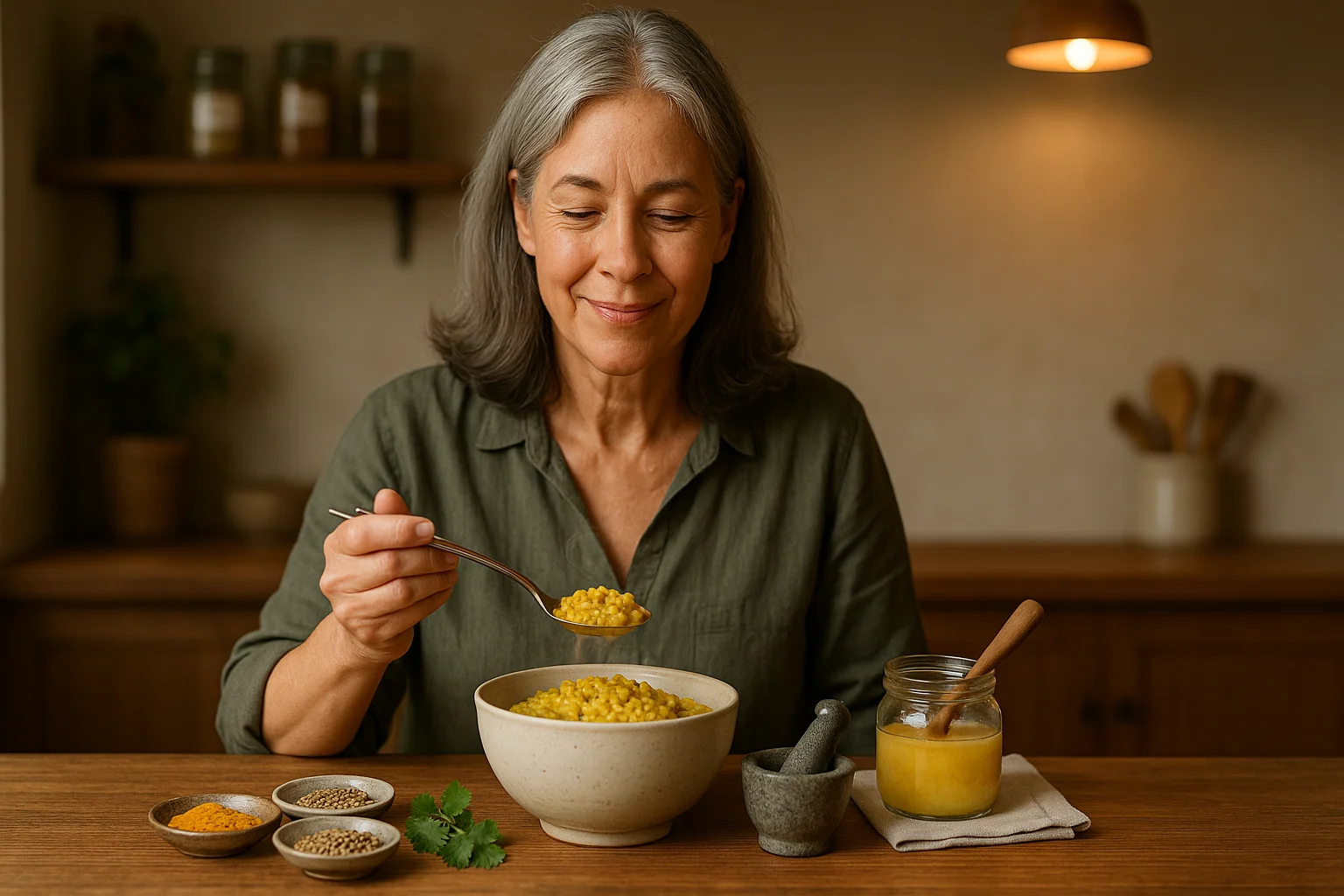
If the traditional framework still appeals to you after that evidence check, use these ideas as optional traditions and preferences rather than as a menopause prescription. Our Ayurvedic wellness guide explains the terminology in more depth if any of it is new. The table below shows the traditional logic behind a few food, routine, and self-care ideas; choose only what is practical for you, and do not treat a dosha category as a medical explanation for symptoms.
| Dosha | Traditional food ideas | Routine idea | Traditional self-care |
|---|---|---|---|
| Vata | Warm soups, root vegetables, ghee, warming spices. | Keep a consistent sleep and wake schedule. | Sesame oil massage (Abhyanga), if it suits your skin and preferences. |
| Pitta | Cucumber, coconut, leafy greens, cooling spices. | Favor regular meals and a steady evening routine. | Coconut oil massage, if it suits your skin and preferences. |
| Kapha | Light vegetables, legumes, ginger, black pepper. | Use a regular morning routine with comfortable activity. | Keep self-care simple and avoid turning the routine into another rigid rule. |
Be more cautious with herbs and supplements than with ordinary food or gentle movement. The Menopause Society’s 2023 nonhormone statement does not recommend herbal remedies as treatments for vasomotor symptoms, and NCCIH says there is not enough evidence to determine whether ashwagandha helps menopause; it can also interact with medicines and has important safety cautions. If you use Ayurvedic products, discuss them with a healthcare professional and do not use them to delay medical care. NCCIH on ashwagandha.
Find Your Gentle Menopause Yoga Starting Point
Start with what your body can comfortably do today, then choose the kind of practice you want. This is a practice chooser, not a medical assessment or a way to diagnose your dosha.
Step 1 of 2
How much movement feels comfortable today?
Step 2 of 2
What kind of practice sounds most useful right now?
Choose one answer in each step to see a gentle starting point.
Gentle Yoga Practices During Menopause
Want a short practice? Choose one or two of these menopause yoga poses, grouped by the kind of practice they create rather than by a promise to treat symptoms. Start small, notice what feels comfortable, and keep what works for your body. If disturbed sleep or a racing mind is the harder part, gentle practices for stress may fit better than a pose sequence.
Gentle Starting Practices
New to this, stiff, or unsure how much movement you want? Begin here. Use a chair, wall, cushion, or folded blanket whenever it makes a position easier to enter and leave.
- Gentle Warm-ups: Rotate ankles, wrists, hips, and shoulders slowly while seated or standing with support.
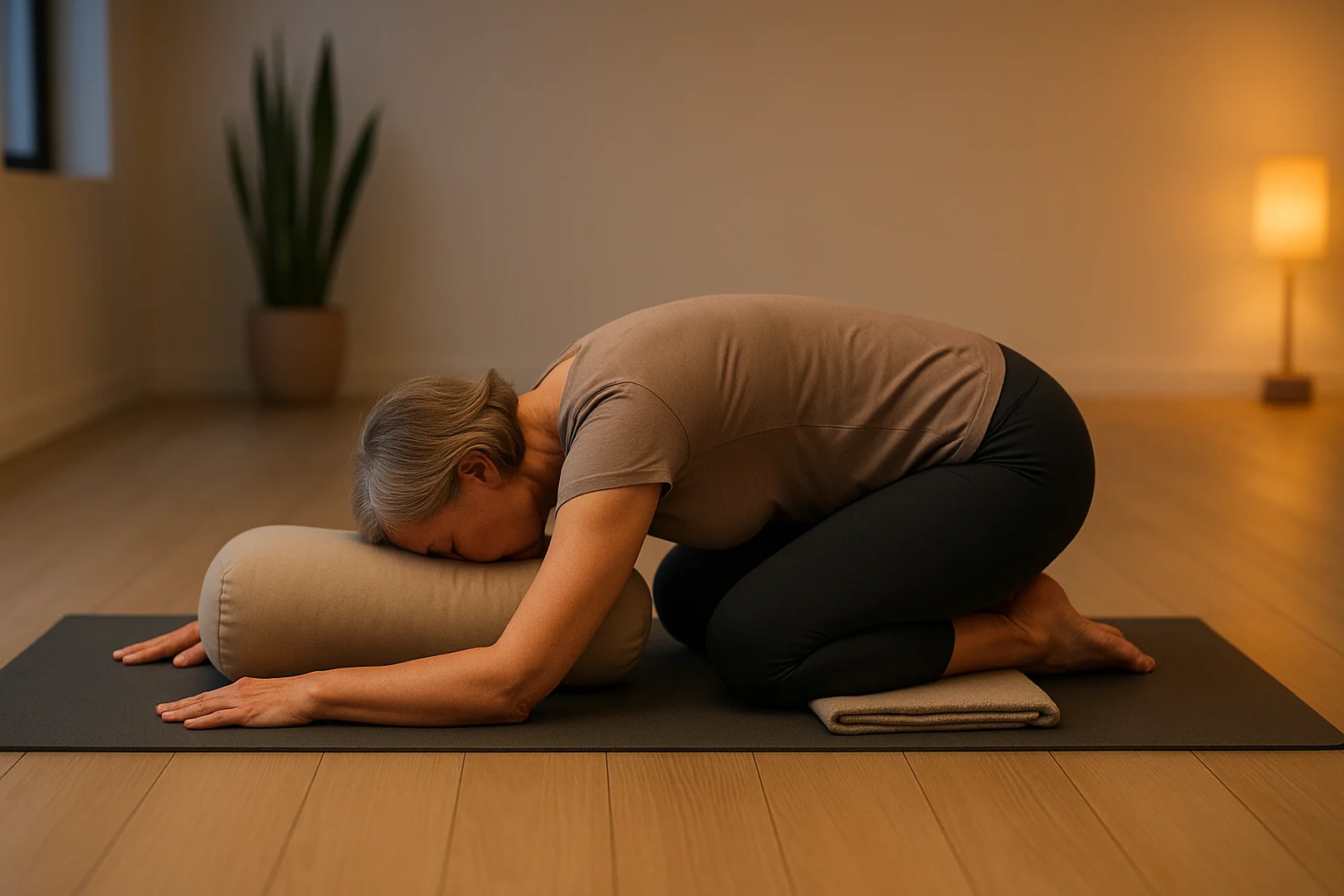
- Child’s Pose (Balasana): If kneeling feels comfortable, rest your hips back and support your head on your arms, a cushion, or a bolster. If kneeling does not suit you, sit in a chair and rest your forearms on a table or stack of cushions instead.
- Diaphragmatic Breathing: Sit back in a chair or recline comfortably, place a hand on your belly, and let the breath stay easy rather than forcing a deep inhale.
Grounding Practices (Vata-Inspired)
If you like the Ayurvedic Vata lens, you might prefer grounding, gently paced poses. Treat that as a practice preference—not a diagnosis—and move a little slower than usual.
- Mountain Pose (Tadasana): Stand with feet about hip-width and keep one or both hands on a wall or chair if that feels steadier.
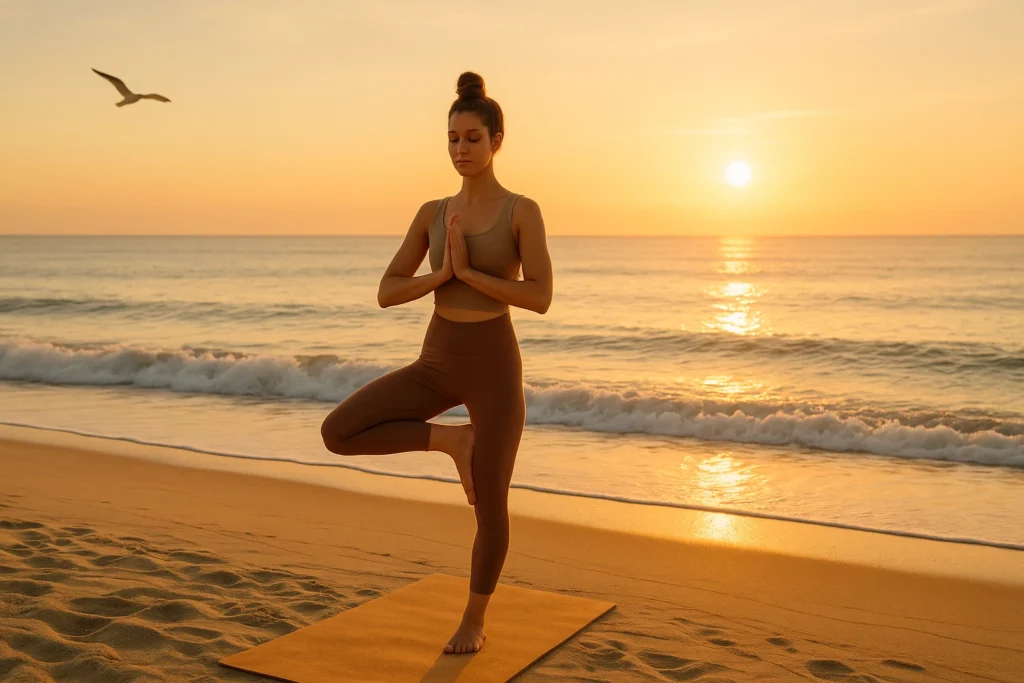
- Tree Pose (Vrksasana): Use a wall or chair for support. Keep the lifted toes on the floor or place the foot lightly at the ankle or calf rather than pressing into the standing knee.
- Warrior II (Virabhadrasana II): Shorten your stance and use a chair if a long lunge feels tiring or unstable.
- Legs-Up-the-Wall (Viparita Karani): Rest with your legs on a wall, or place your calves on a chair or sofa if the wall setup is awkward.
- Nadi Shodhana (Alternate Nostril Breathing): Alternate gently between nostrils for a few easy rounds without breath holds or strain.
Slower Practices (Pitta-Inspired)
In Ayurvedic language, Pitta is associated with heat and intensity. That does not mean Pitta causes hot flashes; use this section simply as a slower, less intense practice theme.
- Supine Bound Angle Pose (Supta Baddha Konasana): Recline with the soles of your feet together and support both thighs with cushions or folded blankets.
- Seated Forward Fold (Paschimottanasana): Keep your knees bent and hinge only as far as comfortable, or sit in a chair and rest your hands on your thighs.
- Supported Bridge Pose (Setu Bandhasana): If you already know the pose, use a stable support at a comfortable height and come out if your neck or back feels strained. Otherwise, choose a simpler supported rest.
- Sitali Breath: Inhale gently through a curled tongue (or pursed lips if curling isn’t accessible), then exhale softly through the nose. Try a few comfortable rounds only if the technique feels natural; do not rely on it as a treatment for hot flashes.
Gently Energizing Practices (Kapha-Inspired)
If you like the Ayurvedic Kapha lens and want a more active practice, choose steady, rhythmic movement that feels energizing without becoming strenuous.
- Gentle Sun Salutations: Choose a standing or chair-supported version and move through a few easy rounds. Skip floor transitions if getting down and up is not comfortable.
- Warrior I & II: Shorten your stance and use a chair or wall for support if that makes the poses steadier.
- Chair Pose (Utkatasana): Hold a chair back or practice a small sit-back rather than a deep bend.
Restorative Options
Restorative positions can be useful when you want less movement. Stay only as long as the setup remains comfortable, and use enough support that you are not holding yourself in place.
- Savasana: Recline in the position that lets you rest most easily; bend your knees or support them with cushions if lying flat is uncomfortable.
- Supported Child’s Pose: Rest over a bolster if kneeling works for you, or use the seated chair-and-table version from the gentle starting section.
A Simple Daily Menopause Yoga Flow
You may see the phrase yoga for hormonal balance, but yoga has not been shown to balance menopause hormones or treat hot flashes. If you enjoy a daily routine, keep it simple: a few minutes of seated or standing warm-ups, one or two supported poses that feel steady, then an easy resting position and ordinary slow breathing. Use the routine for movement and relaxation rather than as hormone treatment.
Frequently Asked Questions
Start With One Practice, Not a Perfect Plan
Pick the easiest option you can do without strain: one supported pose, a few easy breaths, or a short standing sequence. Use the practice chooser if you want help narrowing it down, and judge the practice by whether it feels comfortable and repeatable—not by whether it “balances” a dosha. If symptoms are disrupting sleep or daily life, keep yoga in the supportive role and bring the symptom question to a qualified healthcare professional.
If seated practice feels like your best starting point, the free 10-minute chair-yoga routine gives you one simple sequence to follow on a stiff morning.
A Seated Routine for Restless Mornings
Confirm to get the routine and yoga tips. Unsubscribe anytime.
Something went wrong. Please check your email address and try again.