
Practicing yoga sustainably in Ocean City, Maryland is less about buying a shelf of “green” gear and more about using what you already own, cutting single-use waste, and treating the beach as habitat, not scenery. The practical priorities are simple: keep useful gear in service, bring less disposable stuff to the coast, verify local sustainability claims, and replace equipment only when there is a real need.
Find Your Sustainable Yoga Next StepThis post contains affiliate links. If you purchase through them, I may earn a commission at no extra cost to you. As an Amazon Associate, I earn from qualifying purchases. Learn more.
Table of Contents
- Quick Wins for a Lower-Waste Ocean City Practice
- What Sustainable Yoga Looks Like in Ocean City
- How to Check a Studio’s Sustainability Claims
- Lower-Waste Yoga Gear Choices in Ocean City
- Practicing Beach Yoga the Eco-Friendly Way
- Reducing Waste in Yoga
- Aligning Yoga with Mindfulness
- Find Your Sustainable Yoga Next Step
- Frequently Asked Questions
- Keep the Practice Light on the Coast
Quick Wins for a Lower-Waste Ocean City Practice
- Keep using mats, clothes, bottles, and props that still do their job.
- Bring reusables to the beach and pack out everything you bring in.
- When gear genuinely needs replacing, compare the full construction and expected lifespan—not just an “eco” label.
- Use Ocean City’s sustainability and volunteer resources to find real local ways to help the coast.
What Sustainable Yoga Looks Like in Ocean City
Ocean City’s beach and bay are the setting for the practice, not just the background. The Town of Ocean City maintains sustainability programs that include source-reduction work, beach-cleanup opportunities, and Adopt-Your-Beach resources. Ocean City’s sustainability page is a useful starting point for current local programs.
The practical yoga connection is simple: buy less when your current gear still works, reduce single-use waste, and take extra care around dunes and wildlife. Nearby Assateague also protects free-roaming horses and sensitive shorebird habitat, a good reminder to give wildlife space rather than treating a beach practice as a photo set.
How to Check a Studio’s Sustainability Claims
If a yoga studio calls itself eco-friendly, ask what it actually does rather than relying on branding. Ocean City publishes sustainability resources and green-business directories, but those directories are not a yoga-studio certification. Use them as a starting point, then verify the practices that matter to you.
- Energy: Does the studio describe efficiency measures or renewable-energy use?
- Waste: Are refill stations, reusable supplies, recycling, or composting part of normal operations?
- Cleaning: Can staff explain what products they use and why?
- Community action: Does the studio participate in local cleanup or stewardship programs it can actually name?
For local context, see the Town’s Sustainable Ocean City resources. A studio visit, email, or short call is still the best way to verify what happens day to day.
Lower-Waste Yoga Gear Choices in Ocean City
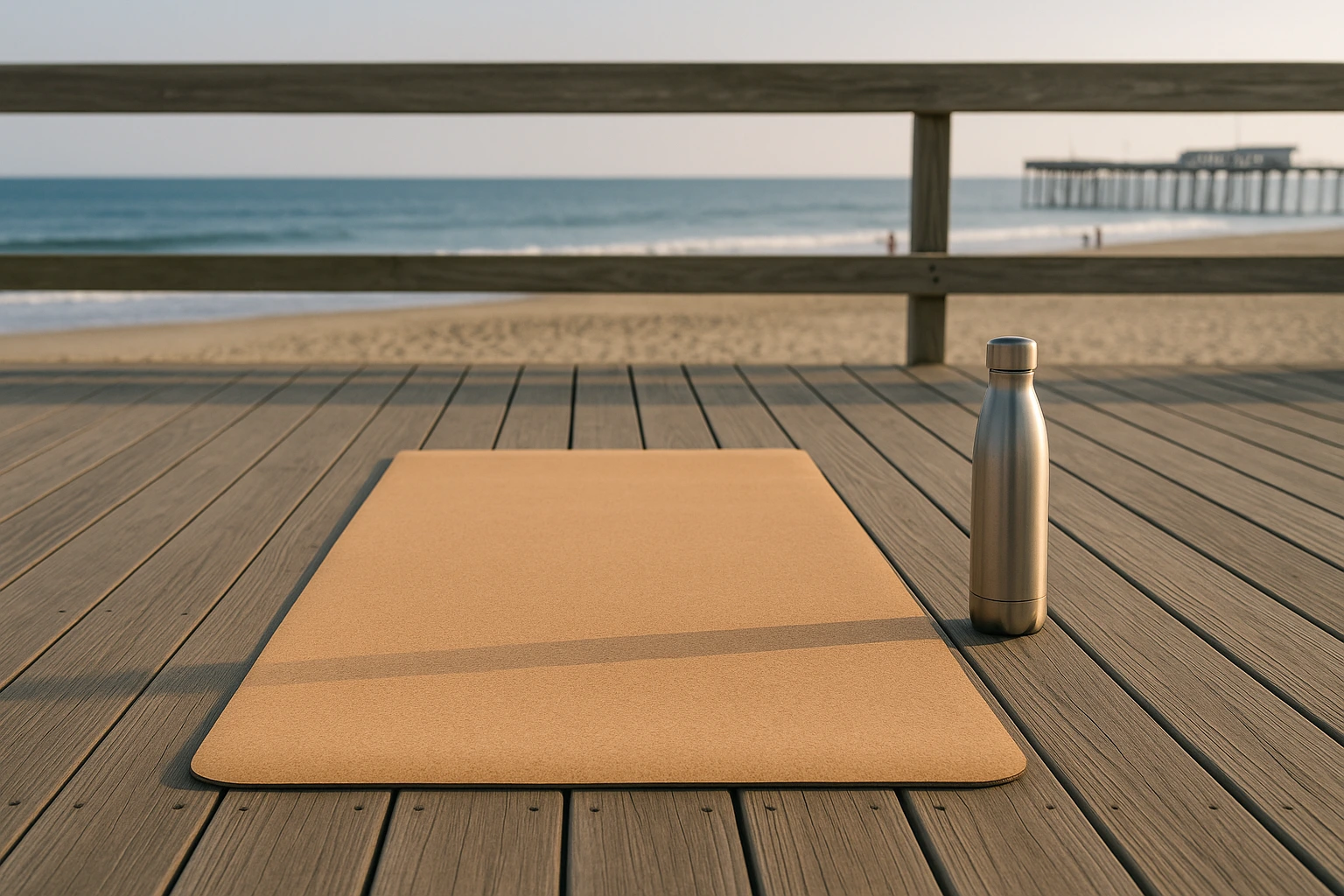
If you’re comparing eco-friendly yoga gear, start with a harder question: does anything actually need replacing? Keep using what still works. When a mat, prop, or piece of clothing genuinely needs replacing, compare durability and the full material construction before buying. If something else needs replacing, use the yoga gear guide to compare options.
Yoga Mat Materials: What to Compare
- Natural rubber: Offers a grippy, cushioned feel in many mats, but it can be heavier and is not appropriate for everyone with latex sensitivity.
- Cork: Comes from renewable bark, but many cork mats still use a separate backing—check the complete construction rather than judging the top layer alone.
- Jute: Is a plant fiber with a textured feel, but jute mats may also be blended or bonded with other materials.
| Mat material | Useful qualities | What to check |
|---|---|---|
| Natural rubber | Grip and cushioning | Weight, rubber sensitivity, full construction |
| Cork | Renewable top material; textured surface | Backing material, durability, care |
| Jute | Plant-fiber texture | Blends/binders, cushioning, durability |
Main trade-off: an “eco” label does not automatically make a new mat lower-impact than continuing to use a mat you already own.
If your current mat is worn enough to replace, the Manduka eKO Yoga Mat 5mm is one natural-rubber option to compare. Manduka currently describes it as natural rubber with more than 30% recycled content and a textured grip surface.
Yoga Props: Keep, Repair, or Replace
Props do not need to become another shopping list. Keep sturdy blocks, straps, and bolsters in service while they still work; when replacement is needed, compare construction and durability.
- Blocks: Cork and wood are firmer options; choose the density and edges that feel usable in your practice.
- Straps: Cotton webbing can last a long time when the buckle and stitching remain sound.
- Bolsters: A replaceable or washable cover can matter more over time than a “green” label on the filling.
Practicing Beach Yoga the Eco-Friendly Way

For beach yoga in Ocean City, Maryland, the shoreline is part of the practice environment, not just the backdrop. Keep the setup small and make the environmental part of the routine as automatic as rolling out the mat:
- Bring reusables: A bottle, towel, and snack container you already own are usually enough.
- Pack everything out: Take trash and recyclables with you rather than assuming a nearby bin can handle them.
- Keep gear intact: Use a mat that is in good condition and do not leave foam, plastic, ties, or packaging behind.
- Give wildlife space: Avoid marked nesting areas and keep your distance from birds and other wildlife.
- Choose conditions carefully: Cooler, less crowded periods can make a short practice easier to manage without spreading gear across the beach.
If you want to turn that care into local action, Ocean City’s environmental volunteer page lists Adopt-Your-Beach and other cleanup opportunities.
Reducing Waste in Yoga
Small repeatable habits matter more than buying another reusable item. Ocean City works with Go Green OC on composting and waste-diversion programs, but availability varies by business and event, so check the current program before carrying food scraps to a location.
- Reusable water bottle: Use the bottle you already own and refill it when practical.
- Reusable coffee cup: Bring one when the café accepts personal cups.
- Snacks: Pack food in a container you can take home again.
- Single-use items: Skip unnecessary bags, straws, and cutlery when you can.
- Old gear: Repair, repurpose, or donate usable equipment instead of treating replacement as the first option.
- Composting: Use a verified participating program rather than assuming a public bin accepts food waste.
For current local context, Ocean City’s tourism office summarizes composting and cleanup initiatives connected with Go Green OC and local partners.
A lower-waste practice can also mean having an option that doesn’t start with shopping. This free 10-minute chair-yoga PDF gives you a guided practice built around a sturdy chair you already own.
Get the 10-Minute Chair Yoga Routine
Confirm to get the routine and yoga tips. Unsubscribe anytime.
Something went wrong. Please check your email address and try again.
Aligning Yoga with Mindfulness

Mindfulness helps here because it creates a pause between “I could buy this” and “I actually need this.” Use that same pause outdoors: notice the surface, the weather, the wildlife, and what you are carrying in and out.
- Practice ahimsa: Make choices that reduce unnecessary harm—to your body, other people, and the place where you practice.
- Pause before replacing: Ask whether cleaning, repairing, or simply continuing to use an item solves the problem.
- Notice the setting: Keep dunes, wildlife, and other beach users in the decision, not just the view.
- Support local stewardship: Use named cleanup and volunteer programs when you want to do more than practice privately.
For more on the mental side of the practice, see the benefits of mindful movement or try yoga and breathwork for stress relief.
Find Your Sustainable Yoga Next Step
Answer four quick questions about habits you already know. This is not a scientific footprint score; it points to one practical lower-waste next step from this guide.
Answer all four questions to get one practical next step.
Frequently Asked Questions
Keep the Practice Light on the Coast
The most sustainable yoga purchase is often the one you do not need to make. Keep useful gear in service, bring reusables, pack out what you bring in, and give dunes and wildlife space. If one habit needs attention, use the sustainable-yoga next-step check; if equipment truly needs replacing, compare materials, durability, and fit before you buy. The goal is simple: leave the beach without waste or gear fragments behind.