Mindful movement yoga is less about making a pose look right and more about noticing what happens while you move. Breath, pressure, balance, effort, and comfort become information instead of a test. The goal is not a deeper pose; it is a clearer signal from your body.
That makes the practice especially useful when you feel stiff, cautious, out of practice, or simply uninterested in forcing your body into a shape. You can work seated, standing with support, or on the floor. The mindful part is the same: choose a range you can control, notice what changes, and back off when a movement feels wrong rather than productive.
This guide explains the benefits of yoga through that gentler lens, then gives you a practical way to start. If you want the broader mindfulness framework behind the practice, see our guide to mindfulness and stress relief.
Table of Contents
- What Mindful Movement Yoga Actually Means
- Benefits of Yoga When You Practice Mindfully
- How Mindfulness Changes the Way You Practice
- A Gentle Way to Start Mindful Movement Yoga
- Mindfulness Check-In for Your Yoga Practice
- Breath as an Anchor
- Common Mistakes That Make Gentle Practice Harder
- Taking Mindfulness Off the Mat
- What Research Says About Yoga and Mindfulness
- Your Questions Answered
- A Simple Way to Keep Going
What Mindful Movement Yoga Actually Means
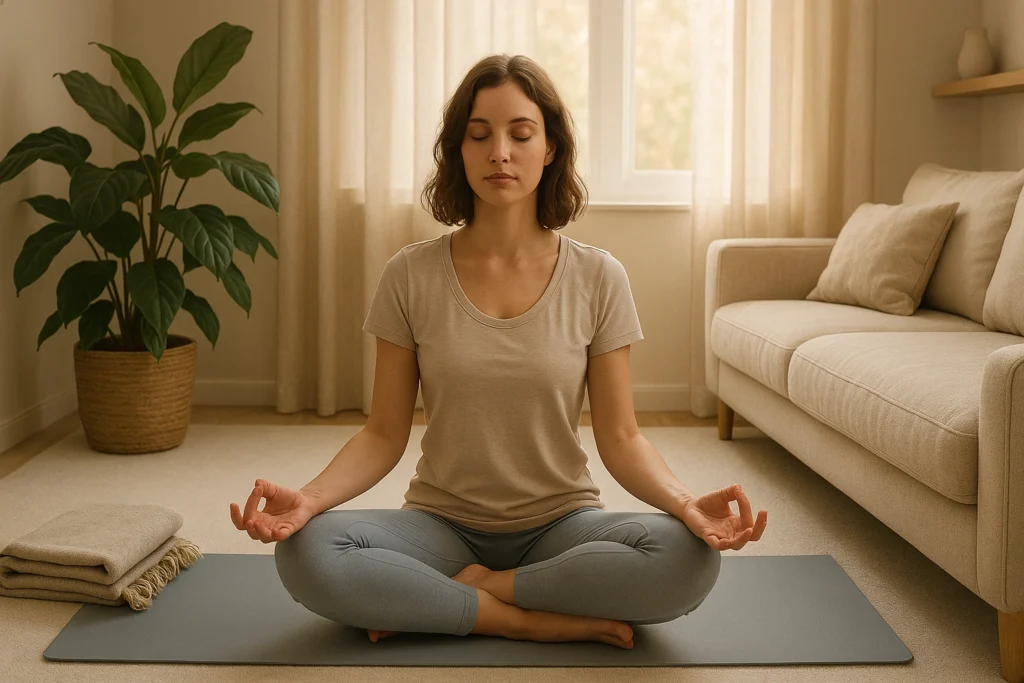
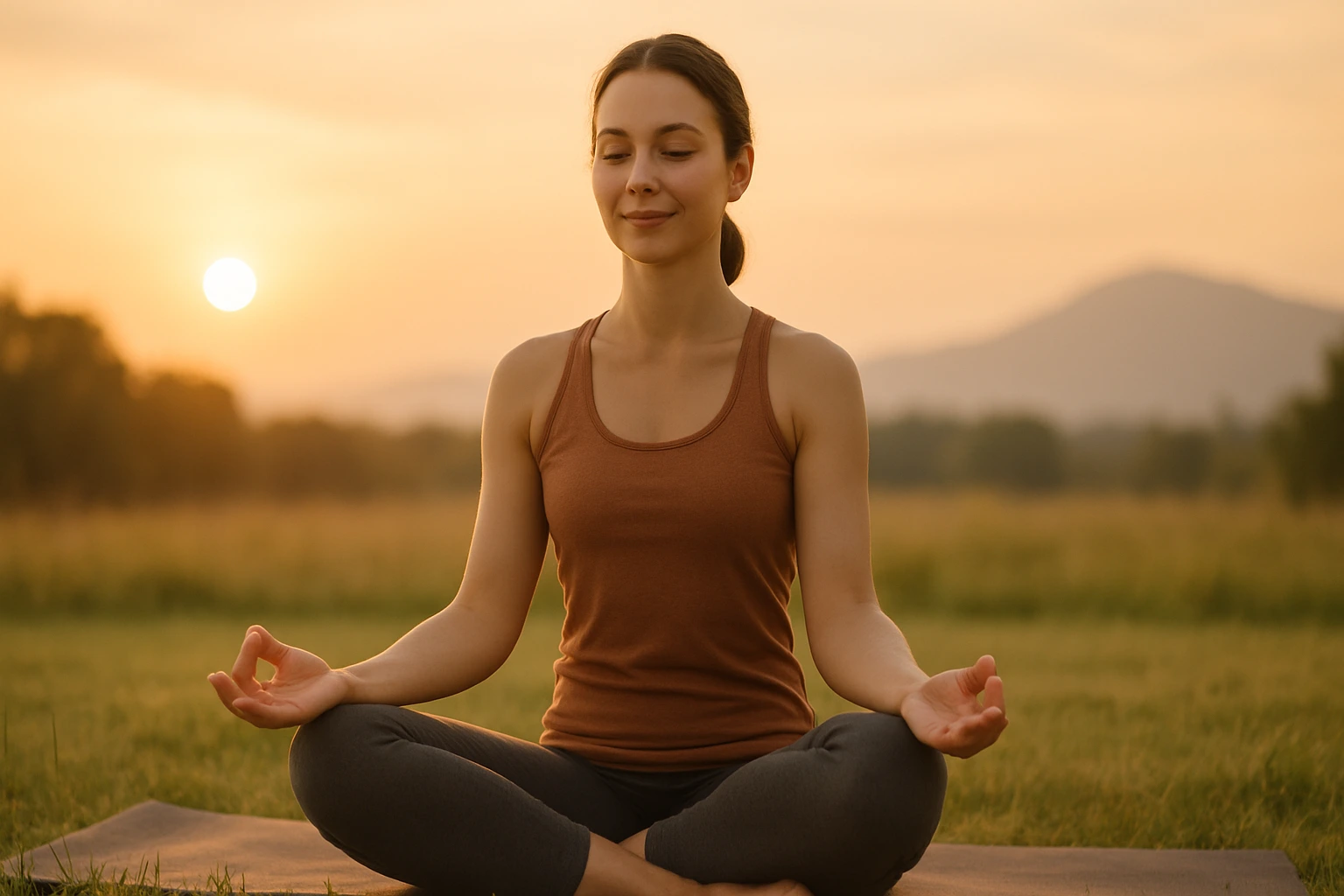
Mindful movement yoga combines ordinary yoga movements with deliberate attention. Instead of rushing from one pose to the next, you notice the breath, the points of contact with the floor or chair, where effort builds, and whether your range still feels steady. When attention wanders, the practice is simply to notice and return.
You do not need unusual flexibility, a silent mind, or a long session. A seated side bend, a supported standing pose, or a few slow shoulder movements can all become mindful movement when you pay attention to sensation and pace without treating discomfort as a goal.
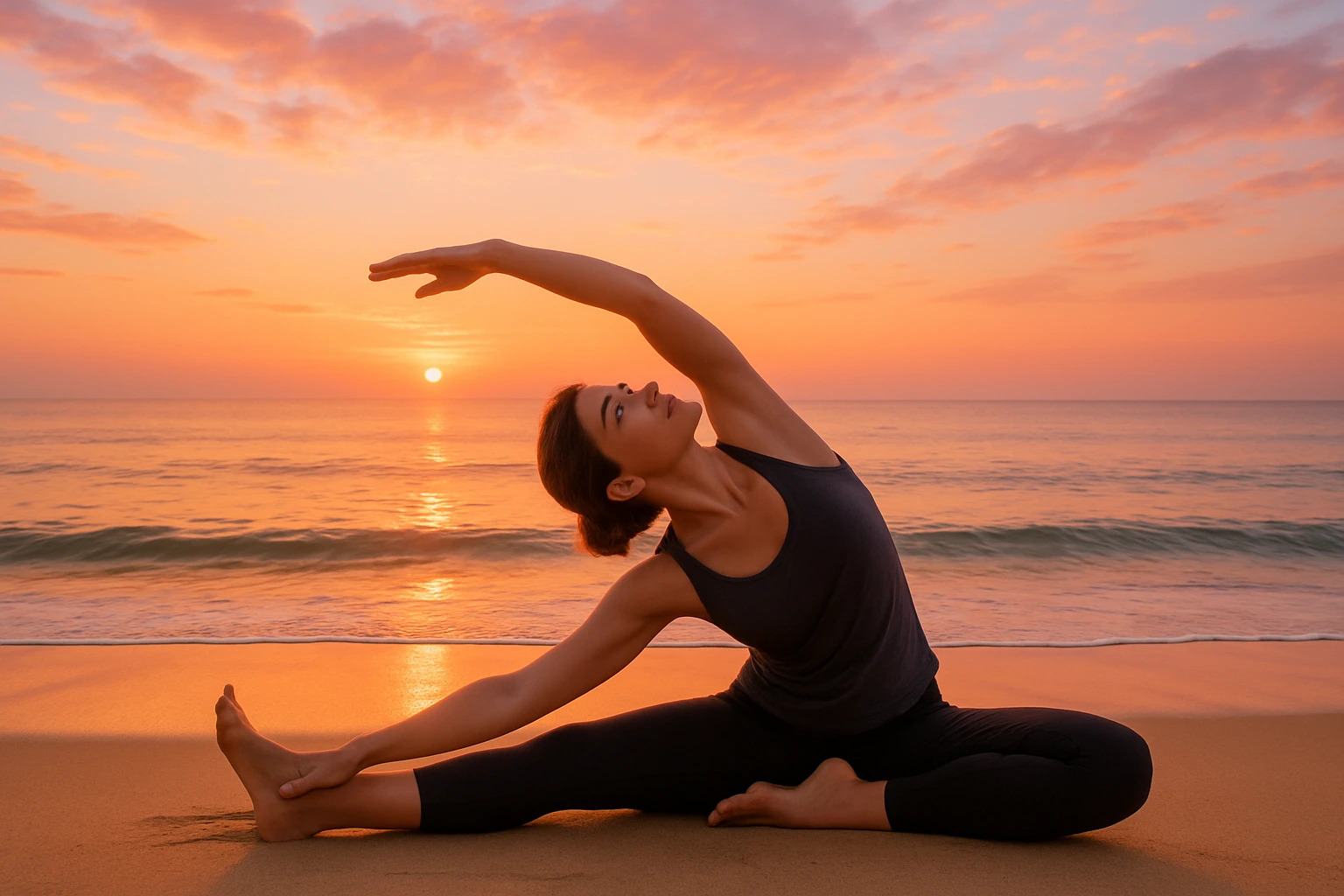
Benefits of Yoga When You Practice Mindfully
The benefits of yoga do not come from mindfulness alone, and not every benefit is guaranteed. What the mindful approach changes is how you meet the practice: it can make the session easier to pace, easier to adapt, and easier to repeat without turning it into a performance.
- A clearer pace: breath and sensation give you feedback about when to continue, soften, or pause.
- More body awareness: you practice noticing pressure, tension, balance, and effort before they become background noise.
- A calmer attention target: returning to one sensation or breath gives the mind a simple job when it starts to wander.
- Gentler mobility work: slow, controlled movement can help you explore a comfortable range without chasing a dramatic stretch.
- Support for stress and sleep: research suggests yoga may help some people with stress management and sleep, although results vary.
- Possible help with some pain-related outcomes: yoga has the strongest pain evidence for low-back pain, but it is not a universal treatment and should be adapted to the individual.
If stress is the main reason you are practicing, our mindfulness techniques for stress guide gives you options that do not require a yoga session.
How Mindfulness Changes the Way You Practice
You can bring mindful attention into many styles of yoga. The useful question is not which style is most mindful; it is what you are being asked to notice and whether the format gives your body enough support.
| Practice style | Mindful focus | Gentler way to approach it |
|---|---|---|
| Hatha | Notice alignment, effort, and breath while holding a shape. | Shorten the hold or use a wall or chair for support. |
| Vinyasa | Notice the transition between poses instead of rushing to the next shape. | Slow the sequence, skip floor transitions, or repeat fewer movements. |
| Yin | Notice sensation over time without treating intensity as success. | Use support and come out earlier if sensation keeps building. |
| Restorative | Notice where you can release unnecessary effort. | Choose a position that feels supported enough to stay without strain. |
| Chair or seated yoga | Notice posture, breath, and range without needing to get down to the floor. | Keep both feet supported and use a stable chair that does not roll. |
A Gentle Way to Start Mindful Movement Yoga
Start with the version of practice your body can actually use today. If getting to the floor is inconvenient or uncomfortable, stay seated or stand near a wall or sturdy chair. If you prefer practicing at home, this no-equipment yoga routine gives you a simple starting structure.
- Pick your base: seated, supported standing, or floor-based.
- Choose one anchor: natural breathing, pressure through the feet or hands, or one easy-to-feel body sensation.
- Use a smaller range first: move only as far as you can stay steady and breathe normally.
- Pause before you push: if a stretch becomes sharp, pinching, numb, or painful, stop or change the position.
- Let attention wander: noticing that the mind drifted is part of the practice; return without turning it into a mistake.
- End before you are depleted: a short session you can repeat is more useful than one that leaves you dreading the next practice.
Try It Now: One Minute of Mindful Movement
You can feel the method without doing a full sequence. Sit or stand in a position that feels steady, then choose one small movement you already know: a shoulder roll, an easy arm raise, an ankle movement, or a gentle weight shift.
- Notice one thing before you move: your natural breath, the pressure under your feet or seat, or how much effort you are already using.
- Repeat the movement a few times at an easy pace while keeping attention on that one signal.
- Make the next repetition slightly smaller or slower and notice whether it feels easier to control.
- Stop there. The useful result is the information you noticed, not how far you moved.
That is the mind-body connection in practical terms: movement gives your attention something concrete to notice, and attention helps you adjust the movement while it is happening.
Pose Options for Stiff or Cautious Bodies
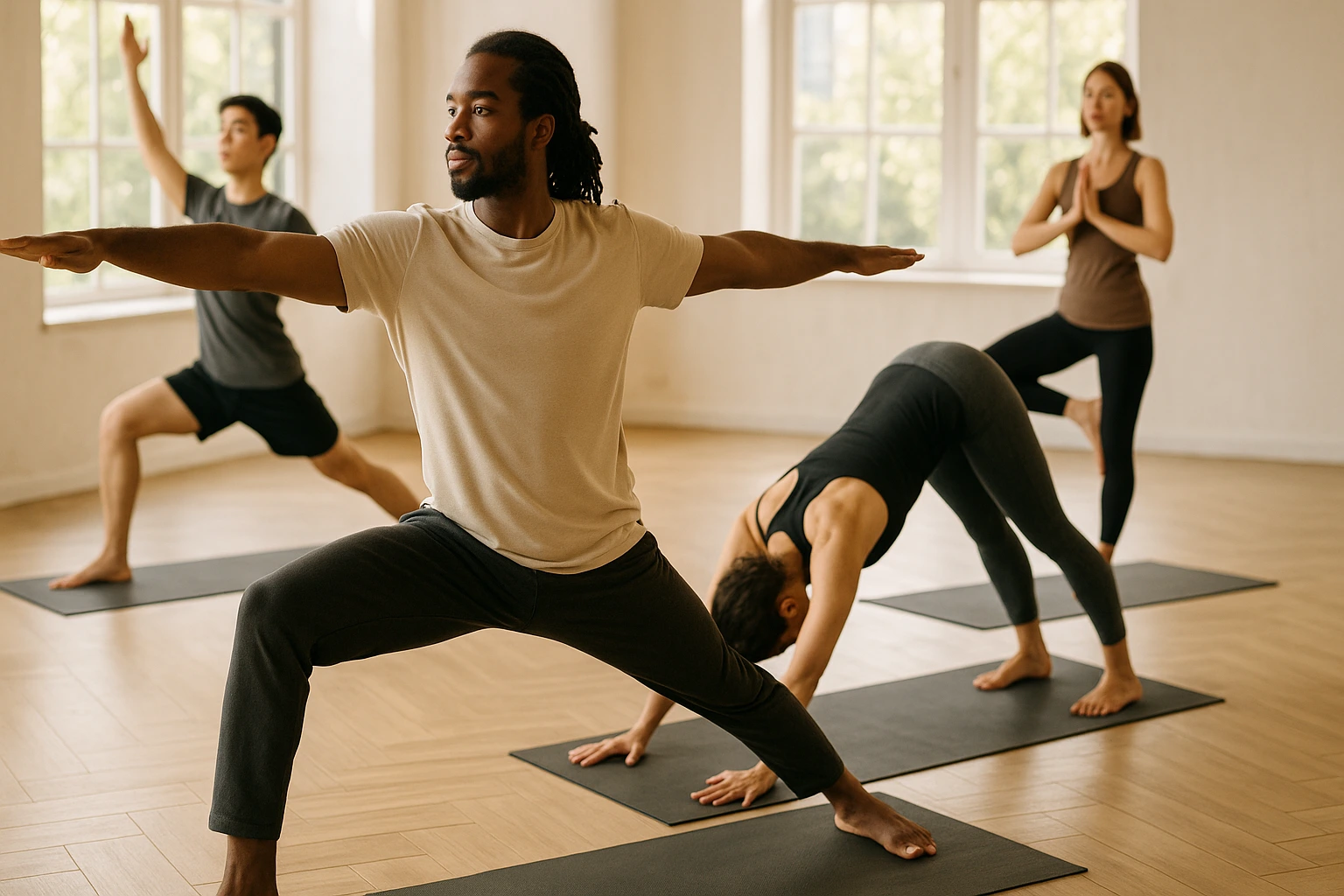
Use the pose name as a starting point, not a shape you have to copy. The supported version is still the practice.
- Mountain Pose: stand with a comfortable stance, or sit upright with both feet supported. Notice where your weight meets the floor or chair.
- Supported Downward-Dog shape: place your hands on a wall, counter, or sturdy chair and step back until your spine has room to lengthen without forcing the shoulders or hamstrings.
- Warrior II: shorten the stance, reduce the knee bend, or keep one hand on a chair if balance is uncertain.
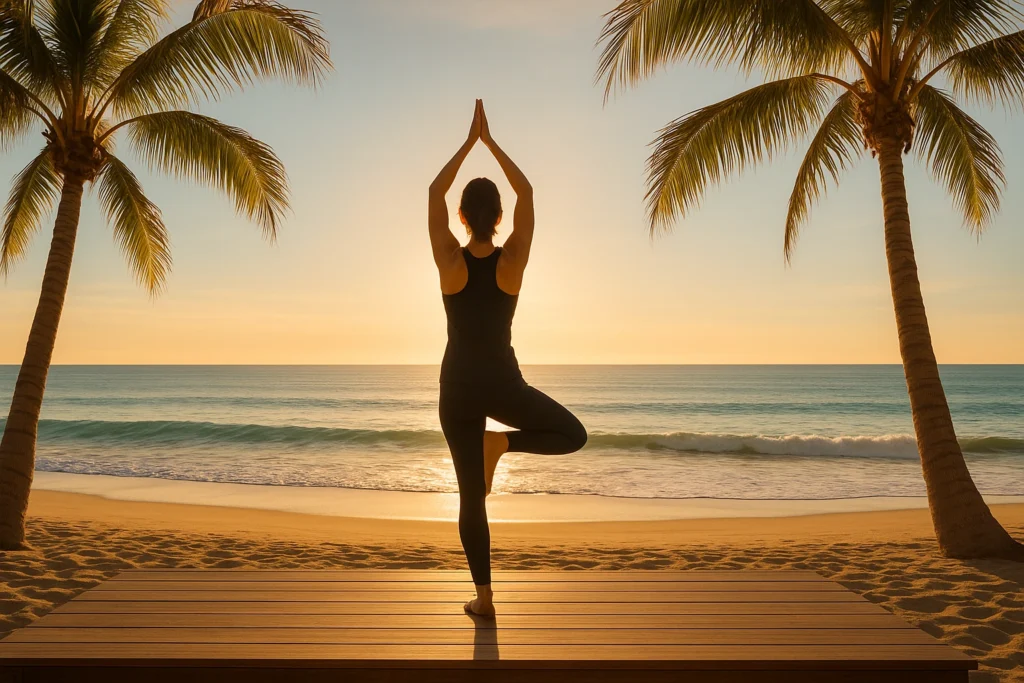
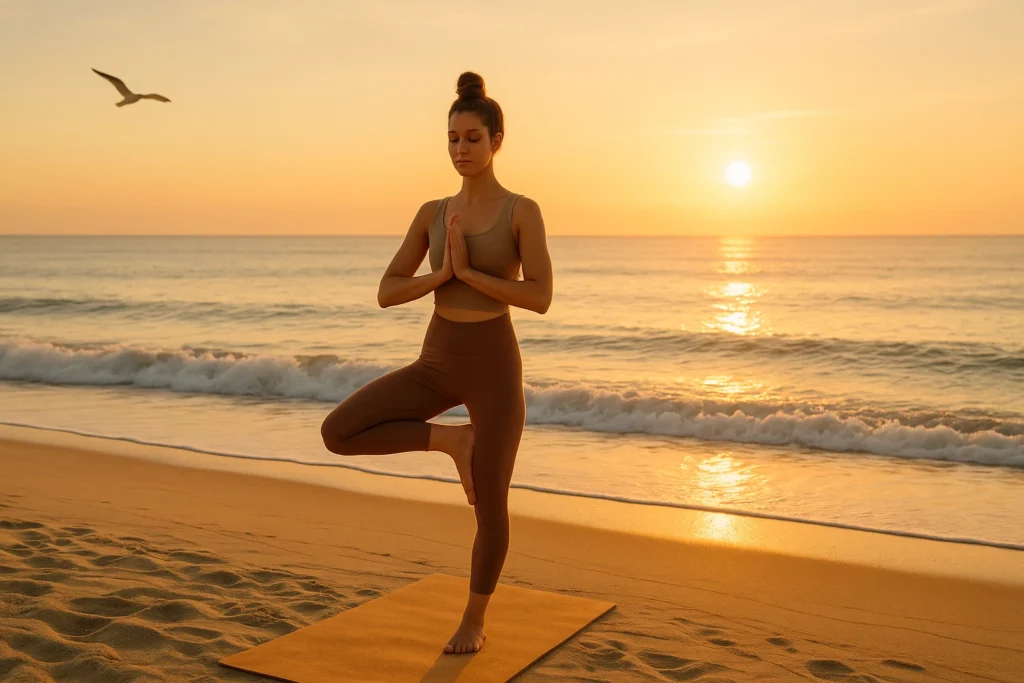
- Tree Pose: keep fingertips on a wall and use a toe-tap or heel-to-ankle position instead of lifting the foot high.
- Resting pose: lie down if that is comfortable, or sit supported and let the arms rest while you notice the breath settle.
Once you have a comfortable base, the check-in below can help you choose one thing to pay attention to instead of trying to monitor everything at once.
Mindfulness Check-In for Your Yoga Practice
Choose the answer closest to your practice right now. There’s no score—this check-in points you toward one useful focus for your next session.
Choose all 3 answers to see one focus for your next practice.
Breath as an Anchor
If your check-in pointed you toward breath—or you simply want one steady place to return your attention—start with breathing that feels normal and unforced. For more guidance, see our beginner breathwork guide for anxious moments.
- Natural breath observation: notice the breath without changing it. Feel it at the nose, ribs, or belly and return to that sensation when attention wanders.
- A slightly longer exhale: if it feels easy, let the exhale last a little longer than the inhale for a few rounds. Return to normal breathing if you feel strained or light-headed.
- Alternate-nostril breathing: if the technique is already familiar and comfortable, alternate sides gently without forcing the inhale or exhale. Skip it if the hand position or nasal breathing feels awkward.
For beginners, simple and comfortable is enough. NCCIH advises people who are new to yoga to avoid forceful breathing practices.
Common Mistakes That Make Gentle Practice Harder
Most early problems come from trying to make the practice look more advanced than it needs to be. A mindful session should give you more information about your body, not fewer choices.
- Chasing a shape: a smaller range with steady breathing is usually more useful than forcing the full pose.
- Treating discomfort as progress: strong effort and pain are not the same signal. Stop, modify, or skip a movement that hurts.
- Ignoring support: a chair, wall, folded blanket, or wider stance can make attention easier because you are not fighting for balance.
- Monitoring everything at once: choose one anchor—breath, feet, hands, or another clear sensation—and let the rest stay in the background.
- Turning distraction into failure: each time you notice the mind wandered, you have already returned to the practice.
If mindfulness is part of a broader recovery process rather than simply a yoga habit, our mindfulness for recovery guide keeps that wider context separate from movement instruction.
Taking Mindfulness Off the Mat
The same skill—notice, pause, return—works outside yoga. You do not need to turn the whole day into a meditation practice; choose ordinary moments where attention changes the experience.
- Eating: slow down for a few bites and notice taste, texture, hunger, and fullness. Our mindfulness eating exercise gives this its own step-by-step practice.
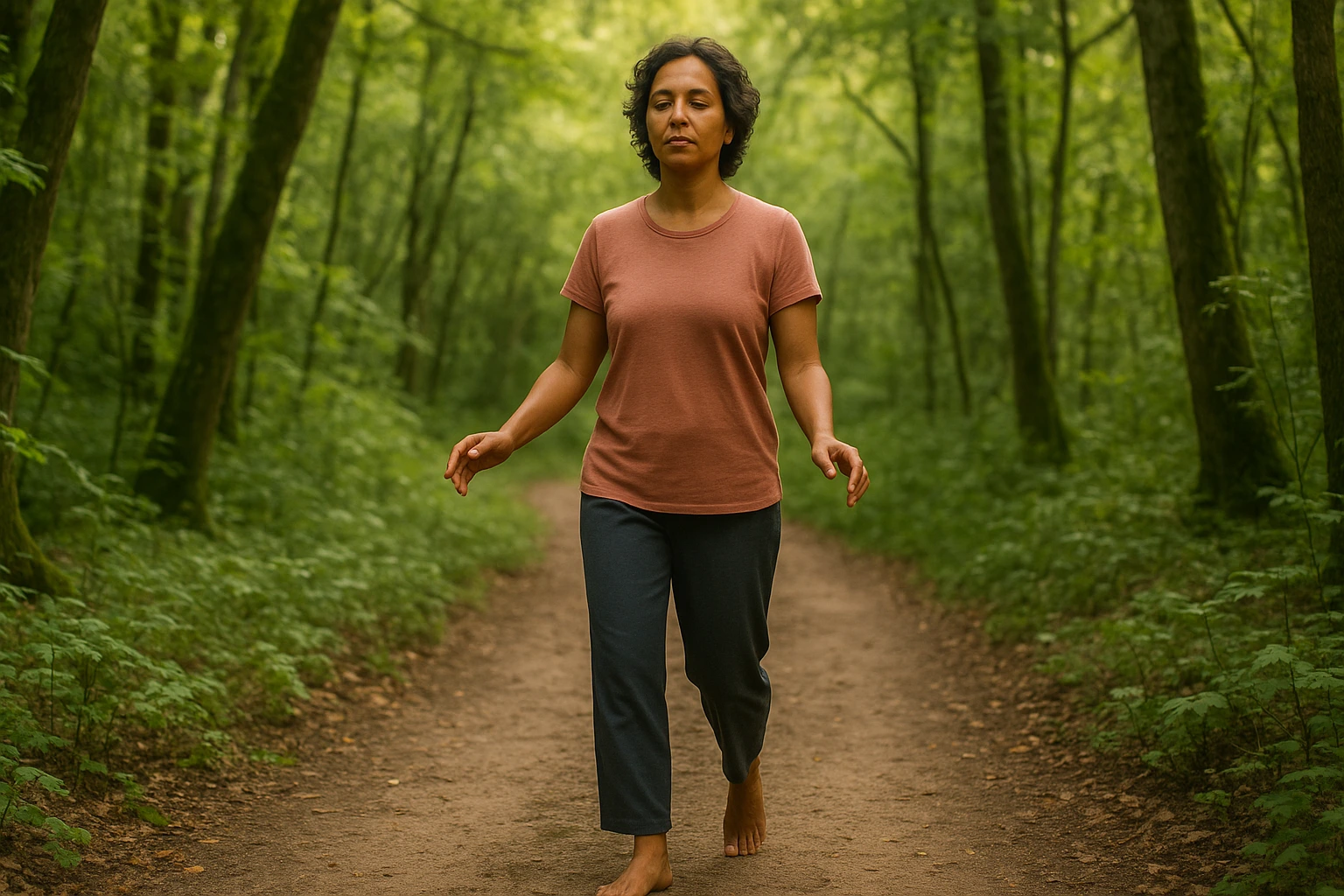
- Walking: notice contact with the ground and the rhythm of your steps.
- Listening: notice when you start preparing your reply instead of hearing the other person.
- Working: choose one task, notice the urge to switch, and decide deliberately whether the switch is useful.
- Resting: notice whether you are actually resting or simply filling the pause with another screen or task.
What Research Says About Yoga and Mindfulness
Research supports some benefits of yoga and mindfulness, but the evidence is not equally strong for every outcome. The useful takeaway is modest: these practices may support stress management, sleep, balance, and some pain-related outcomes, while individual results vary.
Stress and sleep
Studies suggest yoga may help with stress and sleep in some groups. Mindfulness practices may also improve sleep quality, although results vary by program and population.
Pain and function
Yoga has been studied most extensively for low-back pain. Current evidence suggests a small benefit for some people, but yoga is not a universal pain treatment and should be adapted to the person and condition.
Keep the claims modest
Research on mindfulness-related brain changes is still difficult to interpret in practical terms, and this practice should not be presented as a guaranteed way to change the brain, hormones, or immune system. For a current evidence overview, see the NCCIH guide to yoga effectiveness and safety.
Your Questions Answered
Yes. Beginners can start with simple seated, supported-standing, or floor-based movements and one attention anchor, such as natural breathing or pressure through the feet. You do not need advanced flexibility to practice mindfully.
There is no required schedule. Start with a short amount you can repeat comfortably—even a few minutes of deliberate movement and attention can be a complete practice. Increase time or frequency only when it still fits your body and routine.
No special gear is required. A mat can add cushioning, and a wall or stable chair can make standing and seated options easier to control. Use props because they make the movement more workable, not because the practice requires them.
Yoga may help some people with certain pain conditions, especially low-back pain, but the evidence does not mean every kind of pain will improve. If pain is persistent, unexplained, or affected by an injury or health condition, ask a qualified healthcare professional what type of movement is appropriate for you.
Mindful movement yoga is yoga practiced with deliberate attention to breath, sensation, effort, balance, and the present moment. The point is to notice what is happening while you move rather than chase a particular shape.
Mindfulness yoga is a closely related way of describing yoga that emphasizes present-moment awareness. The label matters less than the method: notice breath and body, let thoughts come and go, and return attention without judgment.
Mindful flow yoga usually means a flowing sequence practiced with deliberate attention to breath and transitions. It does not have to be fast; slowing the sequence or skipping transitions can make the same approach more accessible.
Tai Chi is not yoga. It is a distinct Chinese martial art and movement tradition. Both can involve slow movement, attention, and breath, so they may feel similar as mindful-movement practices even though their histories and methods are different.
If a seated practice feels like the most workable way to try this gentler approach, the routine below gives you one to follow instead of building it yourself.
A Chair-Yoga Routine for Stiff Mornings
Confirm to get the routine and yoga tips. Unsubscribe anytime.
Something went wrong. Please check your email address and try again.
A Simple Way to Keep Going
You do not need a perfect pose or a perfect state of mind to practice mindful movement yoga. Pick one comfortable shape, choose one anchor, and notice what changes for a few minutes. If you are not sure which anchor to use, return to the Mindfulness Check-In. When you want a fuller practice for that same gentle approach, continue with these gentle yoga sequences for flexibility and ease.