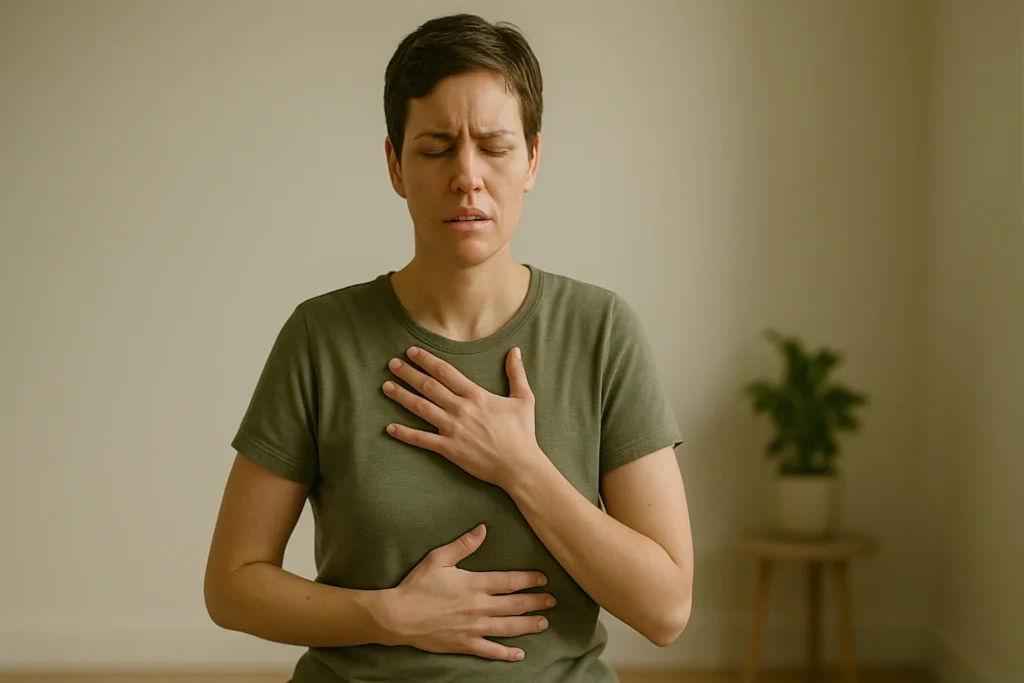
If anxiety is already making your breathing feel difficult, forcing a deeper breath can turn the exercise into another test. Start with a slower, comfortable rhythm instead, and stop if focusing on your breath makes you feel worse.
This guide walks through beginner breathwork for anxiety with two no-hold options first, optional counted patterns after that, and a quick selector if you are not sure where to begin. The exercises take only a few minutes and need no special gear. For a broader set of practices beyond breathing, the mindfulness stress relief guide covers other ways to work with attention and tension.
Find a Breathing PracticeTable of Contents
- What Is Breathwork for Anxiety?
- Why Slow Breathing Can Feel Calming
- Breathing Basics: Start Gently
- Choose a Breathing Practice
- Calming Breath Exercises for Anxiety
- Build a Short Daily Routine
- When to Seek Professional Support
- Frequently Asked Questions
- Start With the Easiest Breath
What Is Breathwork for Anxiety?
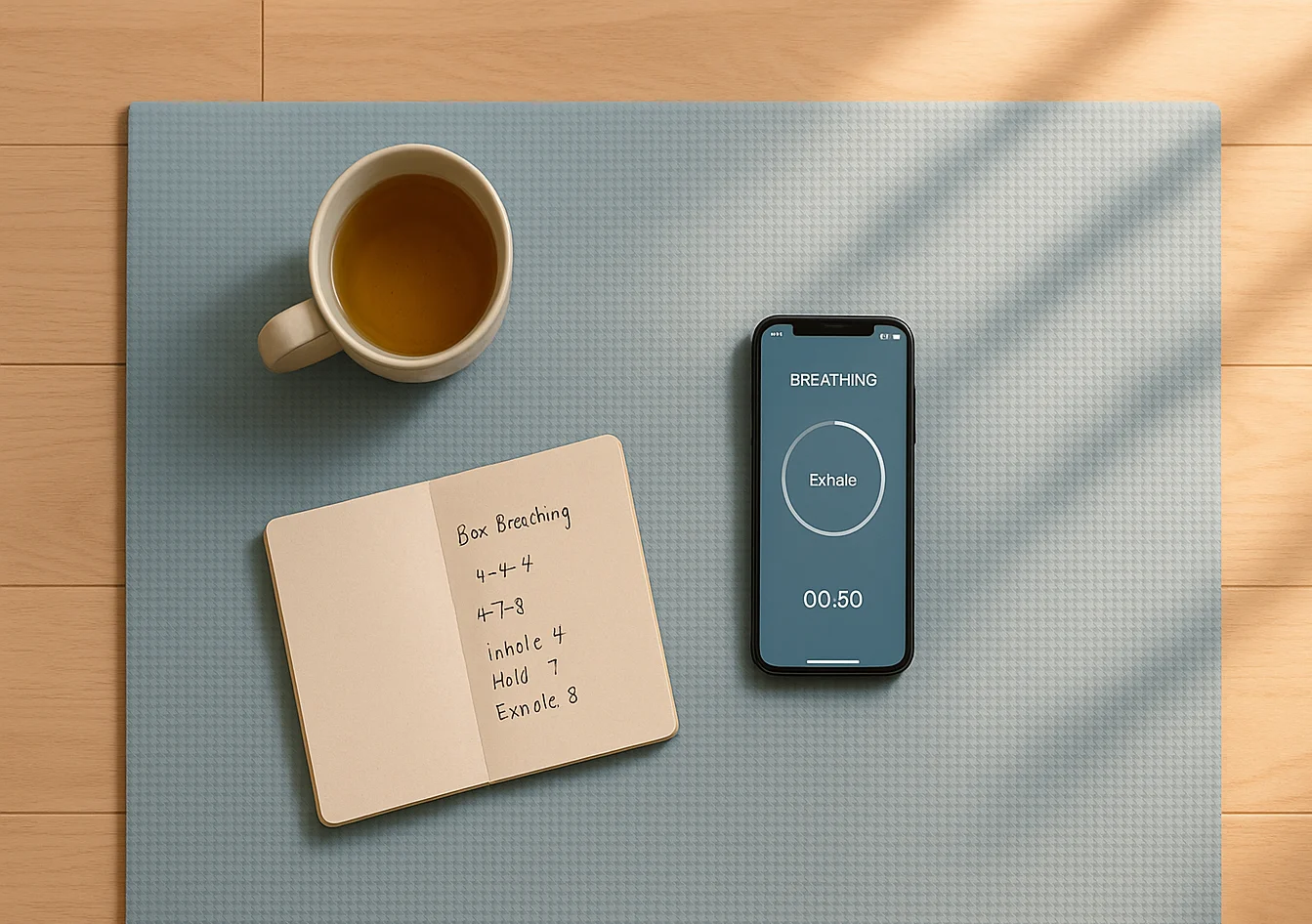
Breathwork simply means paying attention to or deliberately changing your breathing pattern. For anxiety, the beginner goal is not to take the deepest breath possible; it is to make the breath slower, easier, and more comfortable. A gentle rhythm can give your attention something concrete to follow when thoughts or physical sensations feel noisy. If changing your breathing makes you feel worse, return to normal breathing rather than pushing through the exercise.
Why Slow Breathing Can Feel Calming
Anxiety can come with faster breathing, a racing heart, muscle tension, or lightheadedness. Slowing the pace does not switch anxiety off, but it can give your body and attention a steadier rhythm to follow.
- It slows the pace: Gentle deliberate breathing can reduce the tendency to breathe faster and harder when you feel keyed up.
- It gives attention one simple task: Following an easy rhythm or count can make spiraling thoughts less dominant for some people.
- It stays low-tech: You can practice seated, standing, or lying down without buying equipment.
Research on slow, deliberate breathing is promising, but it does not show that every counting pattern works the same way for every person. A 2023 meta-analysis of randomized trials found improvements in stress and smaller improvements in anxiety, while urging caution about overinterpreting the evidence (see the breathwork meta-analysis). Treat these calming breathing techniques as optional self-help practices rather than a test or treatment.
A 2017 study of diaphragmatic breathing offers useful historical context: after eight weeks, participants showed improvements in attention and reductions in negative affect and cortisol (see PMCID: PMC5455070).
Breathing Basics: Start Gently
Before trying a pattern, set up the practice so you can stop easily if it feels wrong:
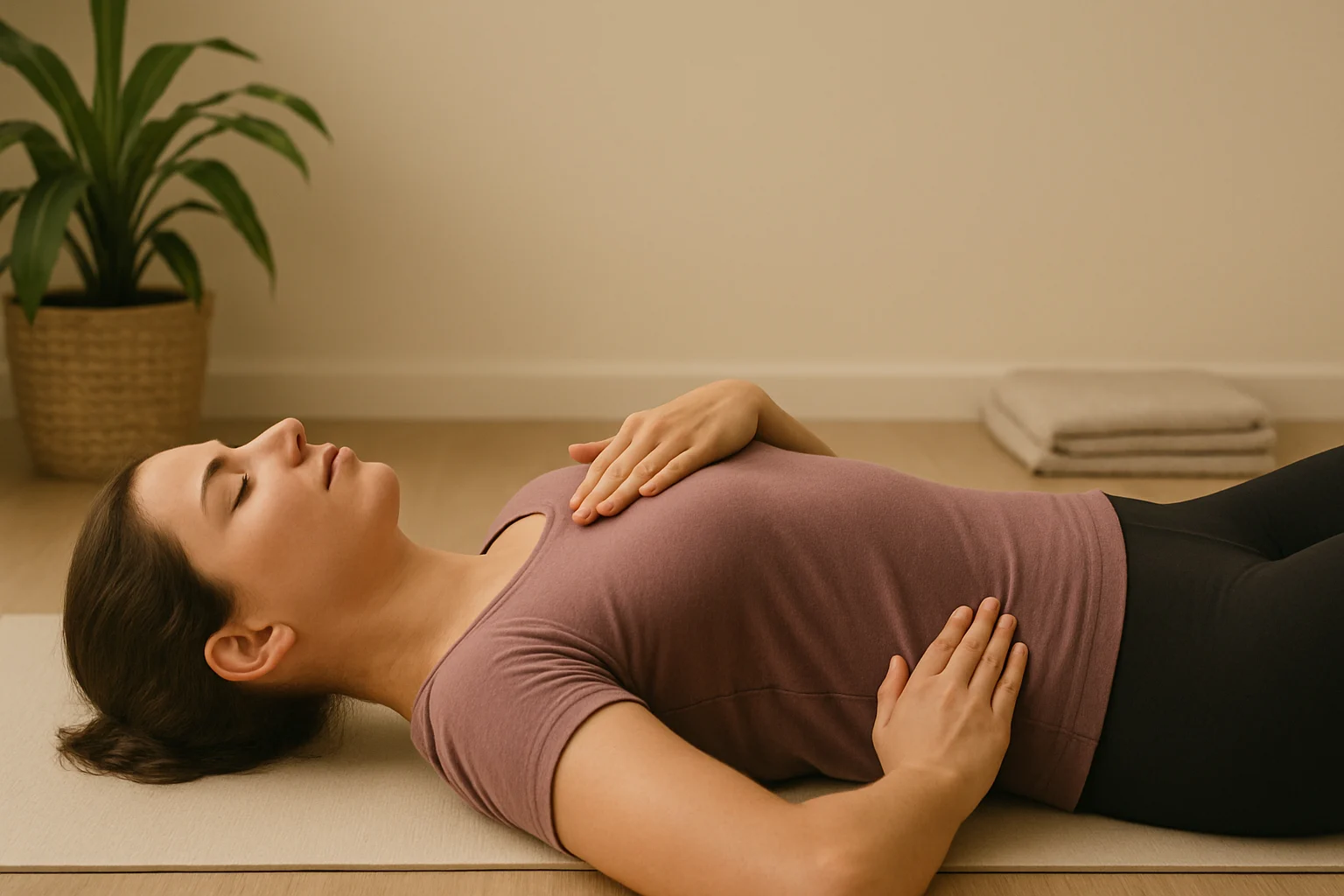
- Choose a comfortable position: Sit in a supportive chair, stand, or lie down—whatever lets your shoulders and belly soften.
- Keep the breath unforced: Breathe only as deeply and slowly as feels comfortable.
- Start short: Try 2–3 minutes before extending a practice toward 5 minutes.
- Use an easy focus: Close your eyes only if that feels comfortable; a soft gaze on one neutral point works too.
- Stop for discomfort: If you feel dizzy, air-hungry, tingly, or more panicked, return to normal breathing and rest.
The NHS uses the same comfort-first principle in its breathing exercise for stress: breathe gently and only as deeply as is comfortable.
Not sure which pattern to start with? Use this quick selector before comparing the exercises below.
Choose a Breathing Practice to Try
Answer three quick questions to narrow the options to one gentle starting point. This is a comfort-and-preference guide, not a diagnosis.
Calming Breath Exercises for Anxiety
Start with the first two if you want to avoid breath holds. The hold-based patterns later are optional; skip any count that feels strained or makes your anxiety worse.
1. Resonant Breathing
This even, no-hold rhythm is a practical baseline when you want something simple and repeatable.
How to do it:
- Inhale: Breathe in gently through your nose for about 5 counts.
- Exhale: Breathe out gently for about 5 counts.
- Repeat: Continue for 2–5 minutes, shortening the count if it feels forced.
What to expect: Slow breathing around 5–6 breaths per minute can increase heart-rate variability; whether that rhythm feels calming is individual.
Why try it: Slow-paced breathing has stronger physiological evidence than many named counting patterns, making this a useful no-hold baseline to test.
2. Extended Exhale Breathing
This no-hold pattern lets the exhale run a little longer than the inhale without turning the breath into a test.
How to do it:
- Inhale: Breathe in comfortably for 3–4 counts.
- Exhale: Breathe out for 4–6 counts, stopping before you feel air-hungry.
- Repeat: Continue for 2–5 minutes.
What to expect: The main evidence is for slowing the breathing rate. In a 2023 randomized trial, 12 weeks of slow breathing reduced psychological stress, but making the exhale longer than the inhale did not significantly outperform an equal ratio (see the randomized trial).
Why try it: Use the longer exhale if it feels easier or more settling to you—not because the ratio itself has been shown to work better.
3. 4-7-8 Breathing (Optional Hold)
4-7-8 breathing is a well-known relaxation pattern, but the 7-count hold makes it a poor first choice if breath holds already feel uncomfortable.
How to do it:
- Exhale: Breathe out gently through your mouth.
- Inhale: Breathe in through your nose for 4 counts.
- Hold: Hold for 7 counts only if that feels easy.
- Exhale: Breathe out through your mouth for 8 counts.
- Repeat: Complete up to 4 cycles.
What to expect: Some people find the long exhale relaxing. Evidence for the exact 4-7-8 pattern is more limited than evidence for slow-paced breathing in general.
Comfort note: If the hold creates air hunger, tension, or lightheadedness, stop and choose a no-hold pattern instead.
4. 5-5-5 Breathing (Optional Hold)
The equal count gives your attention a simple rhythm, but this version also includes a hold.
How to do it:
- Inhale: Breathe in through your nose for 5 counts.
- Hold: Hold for 5 counts only if comfortable.
- Exhale: Breathe out for 5 counts.
- Repeat: Continue for 2–5 minutes.
What to expect: The steady count can provide a grounding focus, but this exact pattern is not established as a treatment for anxiety.
Comfort note: If the hold feels effortful, use resonant breathing instead of forcing the count.
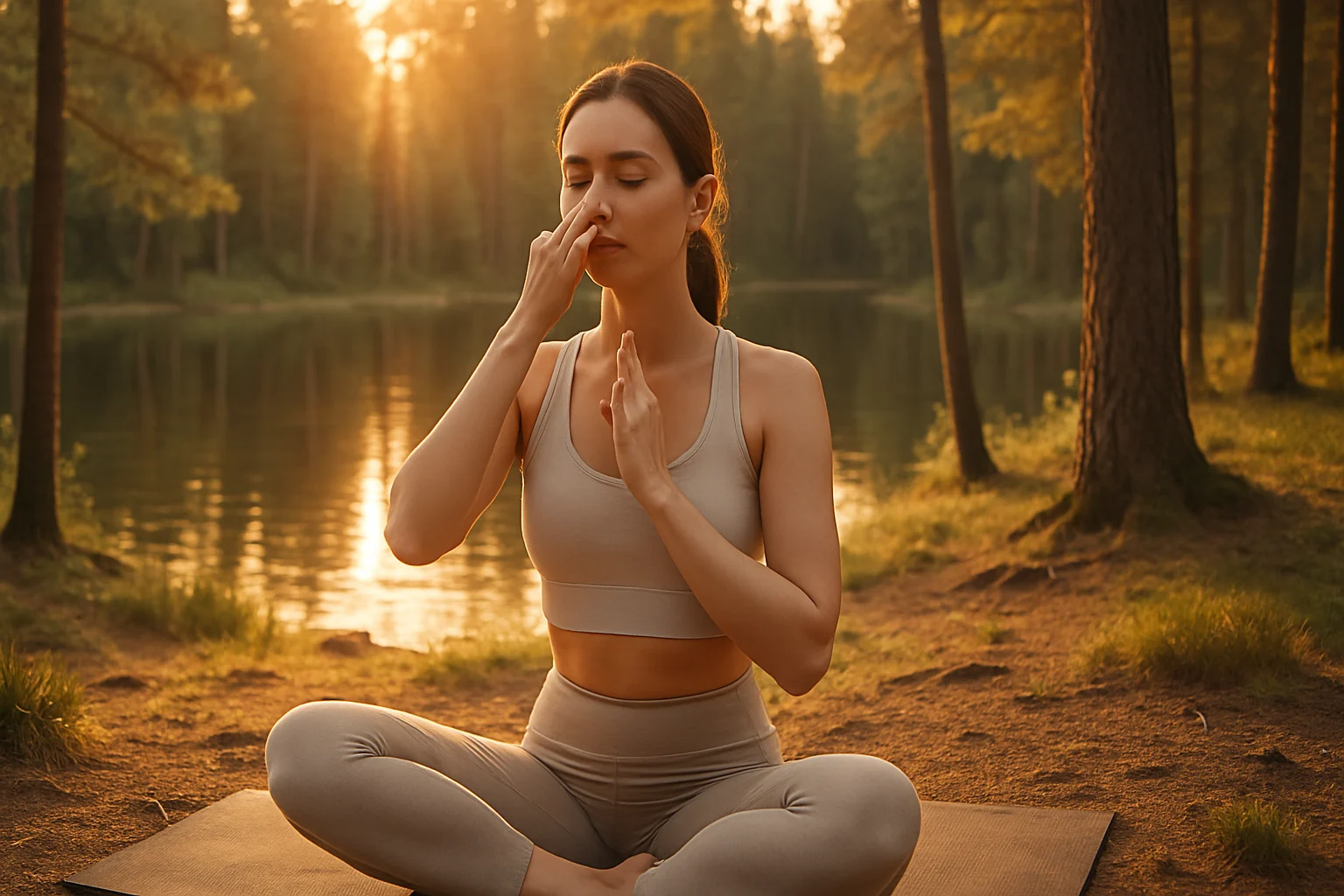
5. Alternate Nostril Breathing
This yoga breathing pattern alternates the nostril you use and can give your attention a precise sequence to follow. For a beginner anxiety practice, there is no need to add a breath hold.
How to do it:
- Inhale left: Close the right nostril and breathe in gently through the left.
- Exhale right: Switch sides and breathe out through the right.
- Inhale right: Breathe in gently through the right.
- Exhale left: Switch sides and breathe out through the left.
- Repeat: Continue for 3–5 cycles at an easy pace.
What to expect: The alternating sequence gives your attention a precise task. Treat it as a focus exercise rather than assuming it has a stronger anxiety effect than the slow-breathing patterns above.
Comfort note: Skip this technique if nasal breathing is uncomfortable or you are congested.
Quick Reference: Compare the Breathing Patterns
| Technique | Inhale | Hold | Exhale | Best use here |
|---|---|---|---|---|
| Resonant Breathing | ~5 | None | ~5 | Simple no-hold baseline |
| Extended Exhale | 3–4 | None | 4–6 | No-hold option with a longer exhale |
| 4-7-8 Breathing | 4 | 7 | 8 | Optional if longer holds feel comfortable |
| 5-5-5 Breathing | 5 | 5 | 5 | Optional steady-count pattern |
| Alternate Nostril | Easy | None | Easy | Attention-focused yoga breathing pattern |
Build a Short Daily Breathwork Routine
You do not need to rotate through every technique. Pick one comfortable pattern and make it easy to repeat:
- Choose one anchor time: Try a short practice after waking, before bed, or after another routine you already do.
- Keep it brief: Start with 2–5 minutes rather than pushing for a long session.
- Reuse what already feels familiar: In a difficult moment, return to a pattern you have practiced comfortably before.
- Let comfort decide: If a technique repeatedly makes you feel worse, choose a different anchor instead of trying harder.
- Give it more than one try: If a pattern feels comfortable, try it on several occasions before deciding whether it helps you.
If sitting on the floor is uncomfortable, a meditation cushion is one optional setup change—not a requirement for breathwork. If sitting still makes you more restless, a 5-minute desk yoga break can be another way to reset without forcing more breath focus.
Optional Tools for Pacing
Breathing exercises need no gear, but simple pacing aids can make a routine easier to follow:
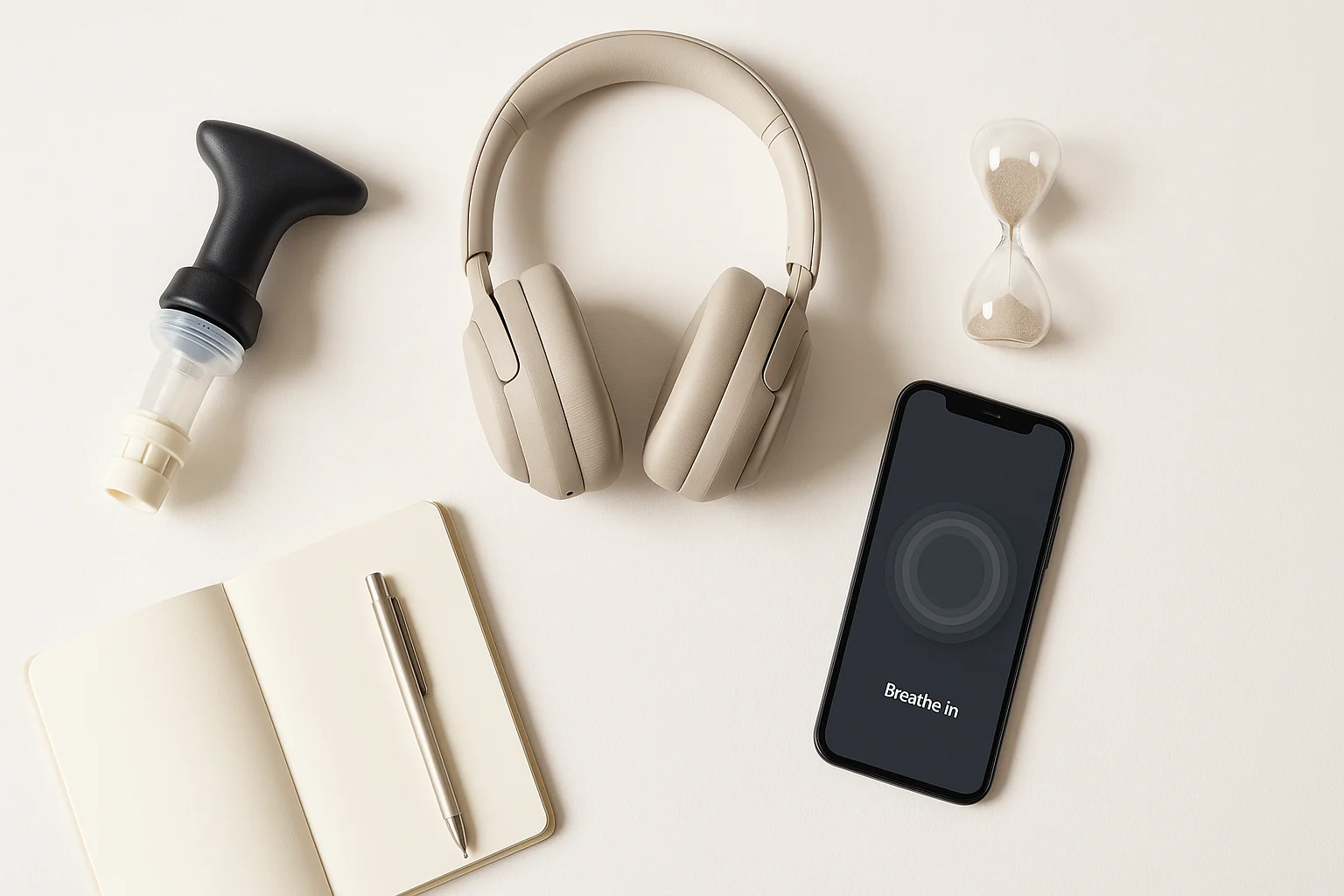
- Timer or visual pacer: Use a simple timer or animation to keep an easy rhythm.
- Guided app: Calm and Breathwrk are examples of apps that offer guided breathing exercises; features and subscriptions can change.
- Quiet space: Reduce distractions if that helps, but do not make a perfect setup a requirement.
When to Seek Professional Help for Anxiety
Breathing exercises can be one self-help option, but they are not a substitute for mental-health care. If anxiety, fear, or panic is hard to cope with, affects daily life, or the things you are trying are not helping, talk with a qualified health professional. The NHS also advises against self-diagnosing persistent anxiety symptoms; see the NHS guidance on anxiety, fear and panic.
Frequently Asked Questions
If you’d rather try a gentle movement practice than keep working with your breath, the routine below gives you a seated sequence to follow instead.
A Chair-Yoga Routine for Stiff Mornings
A 17-page seated routine for stiff mornings, delivered after you confirm your email.
Confirm to get the routine and yoga tips. Unsubscribe anytime.
Something went wrong. Please check your email address and try again.
Start With the Easiest Breath
If you want one place to begin, try resonant breathing for 2–3 minutes or use the selector above. The goal is not to force calm or hit a perfect count; it is to find a breathing pattern you can do comfortably. If focusing on your breath makes anxiety stronger, stop and shift your attention outward instead.
If you want a non-breath option next, this mindfulness techniques for stress guide includes grounding, body-scan, and movement-based practices. And if anxiety keeps disrupting daily life, professional support matters more than perfecting a breathing technique.