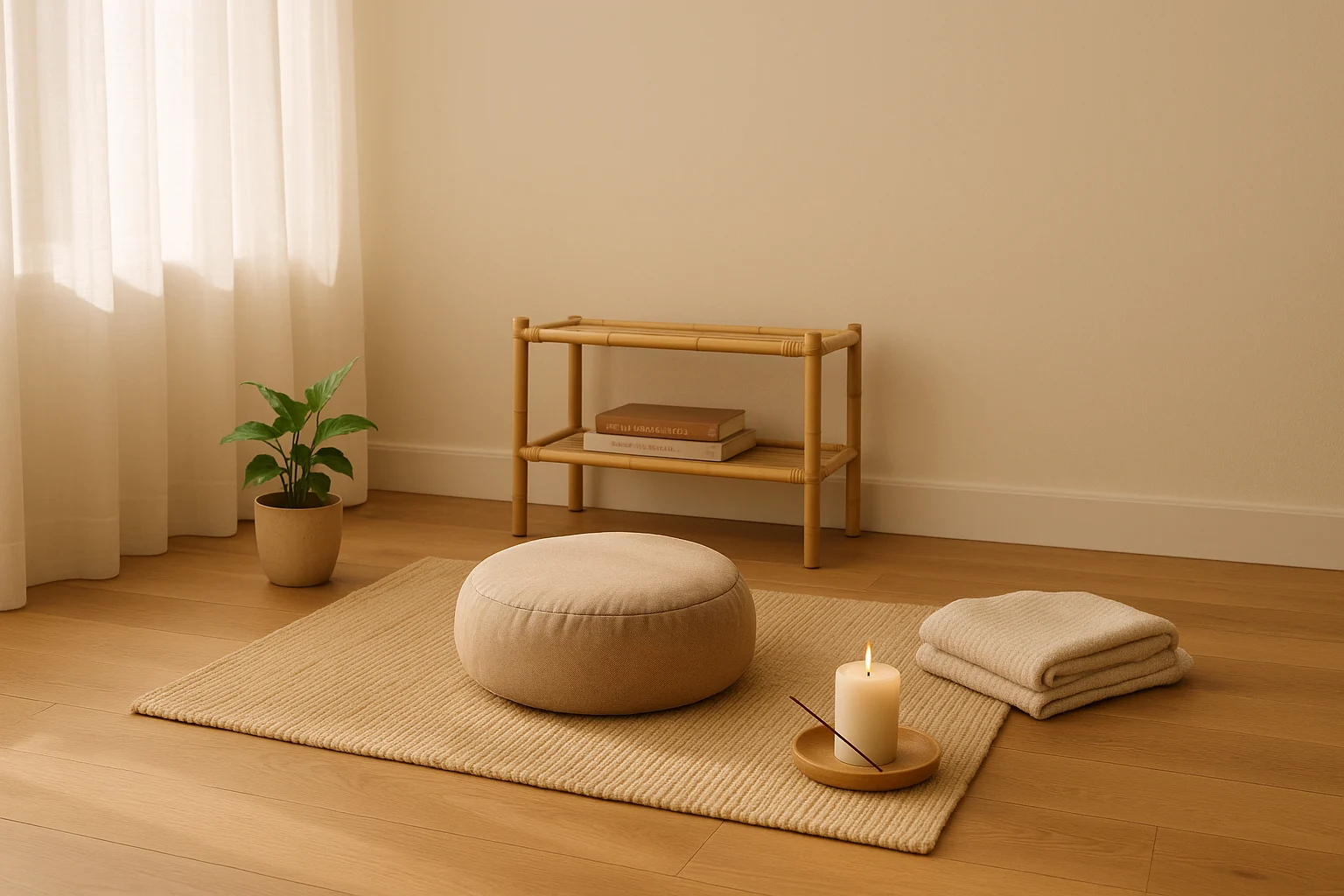
Shopping for a cheap meditation cushion? Start with the position, not the product. A cushion should improve a position you already want to use—not force you into one. If floor sitting feels wrong, a chair, bench, folded blanket, sofa edge, or another stable seat is a valid meditation setup.
If floor sitting does suit you, compare shape, fill, height, cover, and portability, then use the two-question Cushion Finder to narrow three product options. For a broader equipment overview, see our yoga gear guide.
This post contains Amazon affiliate links. As an Amazon Associate, I earn from qualifying purchases. If you purchase through these links, I may earn a commission at no extra cost to you. Learn more.
Table of Contents
- Quick Answer: Which Cushion Fits Your Setup?
- Find Your Best-Fit Meditation Cushion
- Best Budget Meditation Cushions
- What a Meditation Cushion Can—and Can’t—Do
- Try a Chair-Based Practice Instead
- How to Choose a Budget Meditation Cushion
- Meditation Cushion Types: Which Shape Fits the Job?
- Cushion Care and Refills
- Frequently Asked Questions
- Your Next Step: Test the Seat, Then Choose
Quick Answer: Which Cushion Fits Your Setup?
If you already like floor sitting, a round buckwheat zafu is the simplest all-purpose starting point. Choose a crescent when you want more room around your legs, or an inflatable cushion when portability matters most. If floor sitting itself is uncomfortable, use a chair, bench, folded blanket, or another stable seat instead.
Find Your Best-Fit Meditation Cushion
Answer two quick questions to narrow the three picks below. The result is a starting point, not a rule—your most comfortable seat may still be a chair, bench, blanket, or another setup.
Best Budget Meditation Cushions
Use your result above to narrow the list, or compare all three options here. They cover a traditional round zafu, a crescent alternative, and a packable travel cushion. Product details were checked in August 2026; price and seller availability can change, so confirm the listing before buying.
What a Meditation Cushion Can—and Can’t—Do
A meditation cushion mainly changes the height and feel of a floor seat. It can make some seated positions easier to maintain, but it should not turn meditation into a test of flexibility.
- Add Lift: Raising the hips can make some cross-legged positions feel less cramped.
- Add Padding: A cushion or zabuton can soften direct contact with a hard floor.
- Create a Stable Base: A seat that feels steady can reduce fidgeting and make it easier to focus on the practice itself.
- Know the Limit: A cushion is not a treatment for back, hip, or knee pain. If a position causes pain, numbness, or increasing discomfort, change the position or use a different seat.
Floor sitting is optional. A chair that lets you focus beats a cushion that makes you fight the position.
If stiffness—not cushion shape—is the bigger barrier, stay with the chair. Try the free 10-minute chair-yoga routine below on a stiff morning; it gives you a seated movement option before you decide whether a floor cushion belongs in your setup.
Get the 10-Minute Chair Yoga Routine
Confirm to get the routine and yoga tips. Unsubscribe anytime.
Something went wrong. Please check your email address and try again.
How to Choose a Budget Meditation Cushion
Start with the way you actually want to sit, then compare fill, height, and cover. If floor sitting itself does not feel comfortable, a chair or bench may be the better answer before you compare cushions.
Filling Material
Fill changes how firm, moldable, and adjustable the seat feels.
- Buckwheat Hulls: Firm and moldable; many zippered cushions let you remove or add hulls to change the feel.
- Kapok: Usually lighter and springier than buckwheat; how adjustable it is depends on the cushion’s construction.
- Cotton or Foam: Feel varies widely by density and construction, so judge the actual cushion rather than the material name alone.
Firmness and Height
There is no universal “correct” cushion height. More lift can help some people find a comfortable floor position, while too much lift can feel unstable. Adjustable fill is useful because you can experiment without committing to one fixed height.
Cover and Care
A removable cover is convenient when it can be washed according to the maker’s instructions. Also check whether the inner cushion opens for fill adjustment before assuming it does.
Meditation Cushion Types: Which Shape Fits the Job?
Shape is easiest to choose when you think about the position and setting rather than trying to match a body “type.”
Classic Zafu
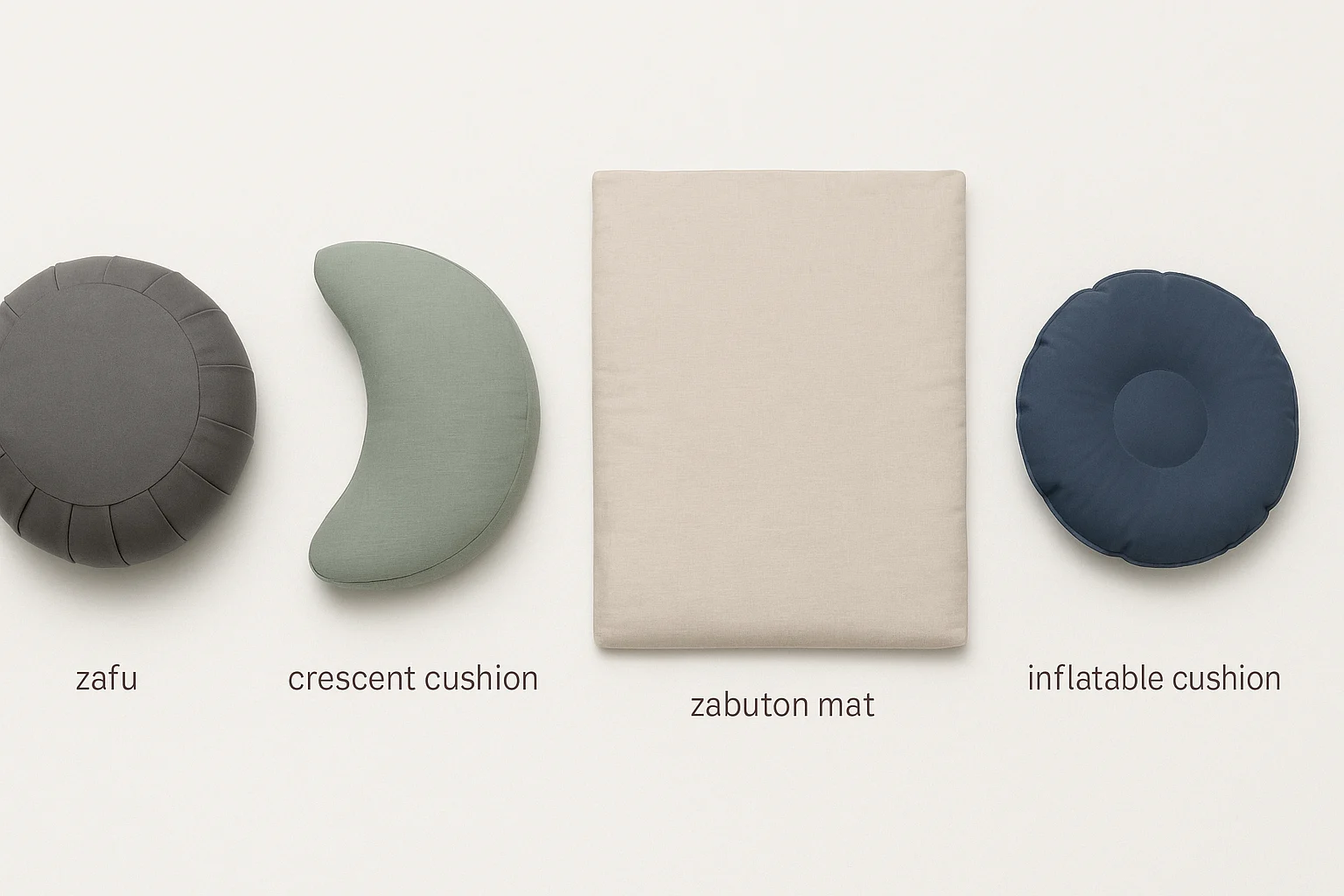
A classic zafu meditation cushion is a simple general-purpose floor seat that gives you a raised base without taking up much space. Choose it for a traditional, compact seat for cross-legged or kneeling positions; if the round shape makes your legs feel crowded, try a crescent, bench, blanket, or chair instead.
Crescent Cushion
A crescent leaves more open space in front of the seat and can feel less restrictive around the legs. Choose it when you want more leg room while keeping a raised floor seat; because the shape is more specific, comfort still depends on how you naturally position your legs.
Supportive Zabuton
A zabuton is a flat meditation mat used under the knees, shins, ankles, or another meditation cushion. Choose it for extra cushioning on a hard floor, not for much additional seat height; it serves a different job from a zafu.
Travel and Inflatable Cushions
A travel meditation cushion prioritizes packability over the heavier, more planted feel of a filled home cushion; inflatable versions also let you adjust air pressure. Choose one for travel, retreats, or a setup you move often; because the feel changes with inflation, expect some trial and error before it feels stable.
Cushion Care and Refills
Care depends on the cover and fill, so start with the maker’s instructions instead of treating every cushion the same.
- Clean the Cover as Directed: Remove and wash it only when the care label says it is washable.
- Keep the Fill Dry: Air the cushion in a dry space and avoid soaking buckwheat hulls or other loose fill.
- Redistribute the Fill: If buckwheat settles unevenly, loosen and redistribute the hulls before adding more.
- Store It Dry: Keep the cushion away from damp storage conditions.
- Add a Base When Useful: A mat or zabuton can add padding and keep the main cushion off a hard or dusty floor.
- Top Up Only When Needed: If a refillable cushion has noticeably settled, add hulls as needed and follow the maker’s guidance.
If your refillable buckwheat cushion has settled, adding fresh hulls may be enough instead of replacing the cushion. Match the refill material to the cushion maker’s instructions and add only enough to restore the feel you want.
Frequently Asked Questions
Your Next Step: Test the Seat, Then Choose
If floor sitting already works for you, use the Cushion Finder to choose between the round zafu, crescent, and inflatable travel options, then check the current product details before buying. If you are still unsure about floor sitting, try the position first with a folded blanket, bench, chair, or another stable seat. A meditation-specific cushion is useful only when it makes a setup you already want to use easier.