If panic is rising right now, do not try to work through this entire page. Give your attention one small job. Feel your feet against the floor, name a few things you can see, or let your breathing settle into a gentle rhythm. These mindfulness techniques for panic attacks are meant to make the next minute simpler, not to force the panic away.
They are coping tools, not a diagnosis or treatment. If symptoms are new, severe, or feel different from what you usually experience, seek medical care rather than assuming panic is the cause. For a broader practice between episodes, use our guide to mindfulness and stress relief.
Try a Grounding Prompt NowTable of Contents
- In-the-Moment Mindfulness Techniques for Panic Attacks
- What Is a Panic Attack—and Where Mindfulness Fits
- Between Attacks: Make the Skills Familiar
- After a Panic Attack: What to Do Next
- Frequently Asked Questions
- One Small Task Is Enough for Now
In-the-Moment Mindfulness Techniques for Panic Attacks
When panic rises, long instructions can be hard to follow. Choose one simple tool and stay with it for a few moments; you do not need to complete every technique on this page.
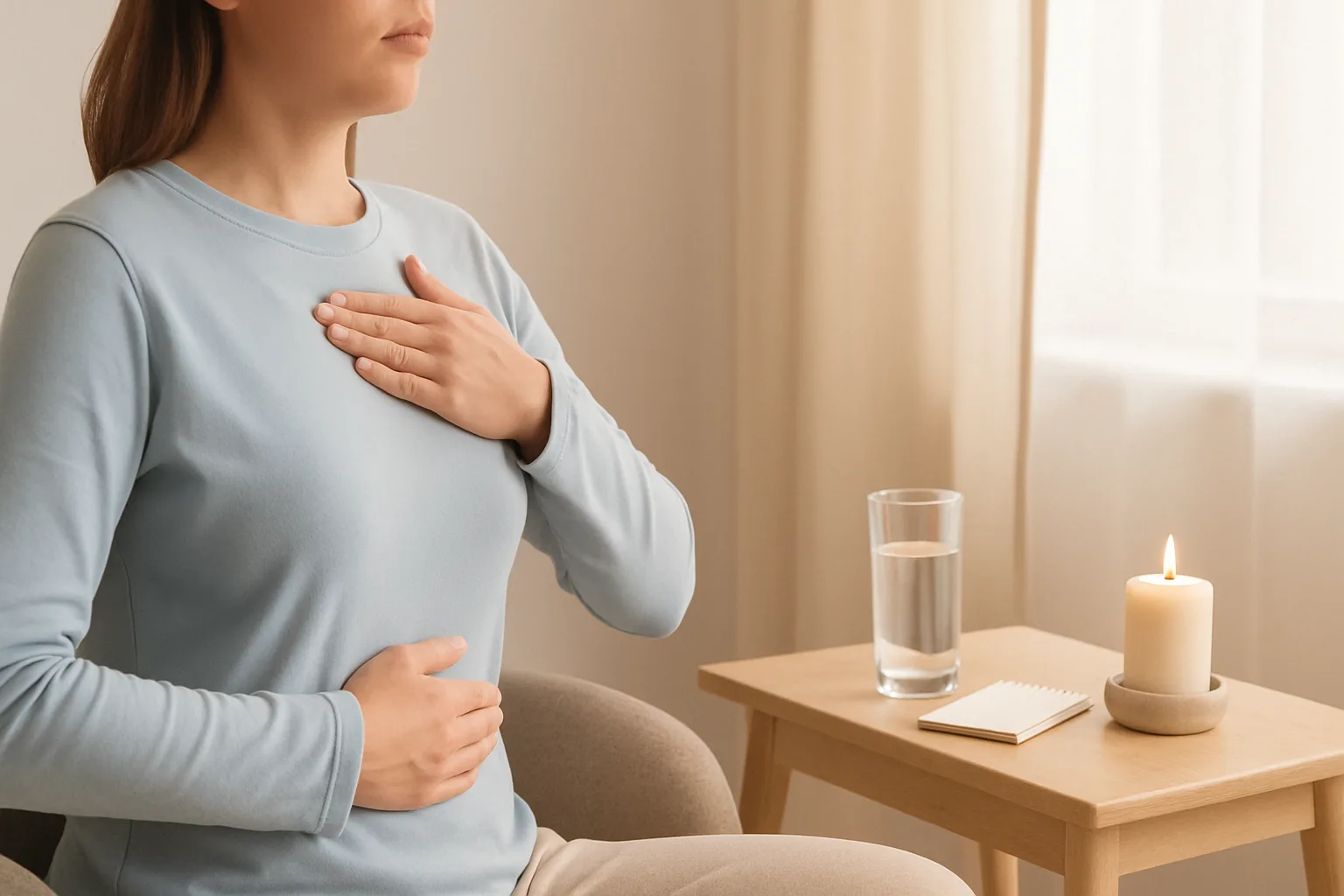
1. Gentle Paced Breathing
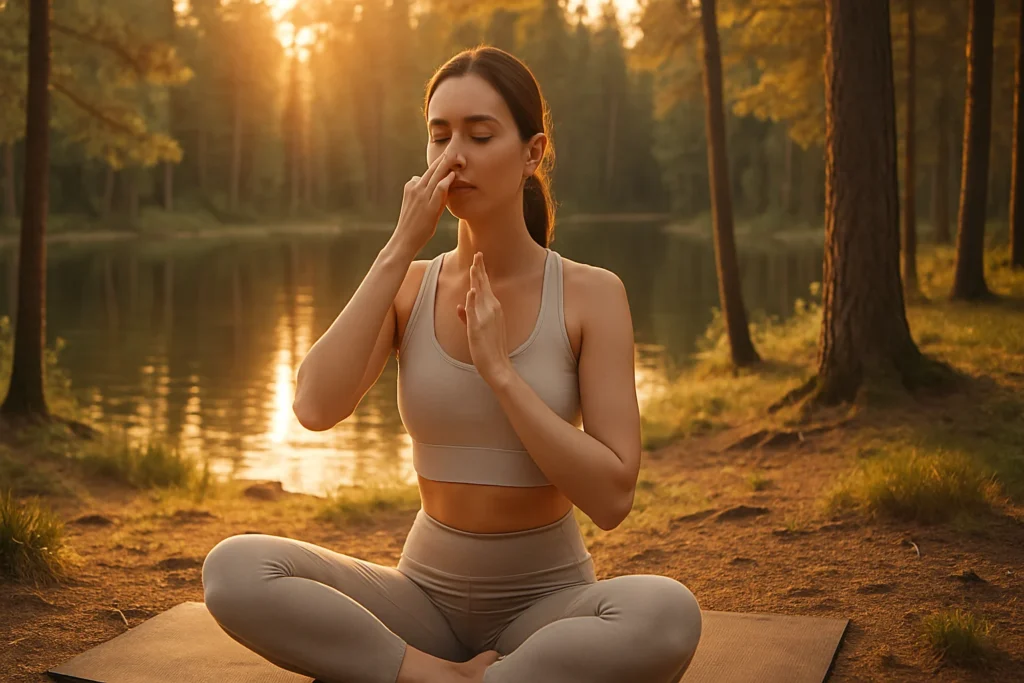
Use a comfortable breathing rhythm rather than forcing a deep inhale or a long breath hold. NHS breathing guidance recommends breathing gently and regularly, with counting only if it helps.
How to try it:
- Get supported: sit, stand, or lie in a position that feels stable and comfortable.
- Let the breath stay easy: allow it to move as deeply as is comfortable without forcing it.
- Breathe in gently: use your nose if that feels comfortable; count slowly from 1 to 5 only if counting helps.
- Breathe out gently: let the exhale flow without pushing it; you can use the same slow count.
- Continue briefly: stay with the rhythm for a few minutes if it feels useful, or switch to sensory grounding if breath focus is not helping.
Why use it: the point is not to “beat” panic with a perfect count. It is to give your attention a simple, repeatable rhythm while the surge passes.
2. 5-4-3-2-1 Grounding Method
Think of this as a quick sensory check-in that pulls your attention toward the present. NHS Inform lists 5-4-3-2-1 as a grounding exercise, and the sequence is discreet enough to use in many public settings.
How to try it:
- 5 things you see: name five details around you.
- 4 things you can feel: notice contact such as your feet in your shoes, clothing on your skin, or the chair beneath you.
- 3 things you hear: identify three sounds without needing to judge or explain them.
- 2 things you smell: notice two scents if they are available.
- 1 thing you taste: notice one taste if there is one.
Why use it: the sequence gives your attention concrete details to follow when thoughts feel scattered. If one sense is hard to use, skip it or shorten the sequence; the goal is orientation, not perfect numbers.
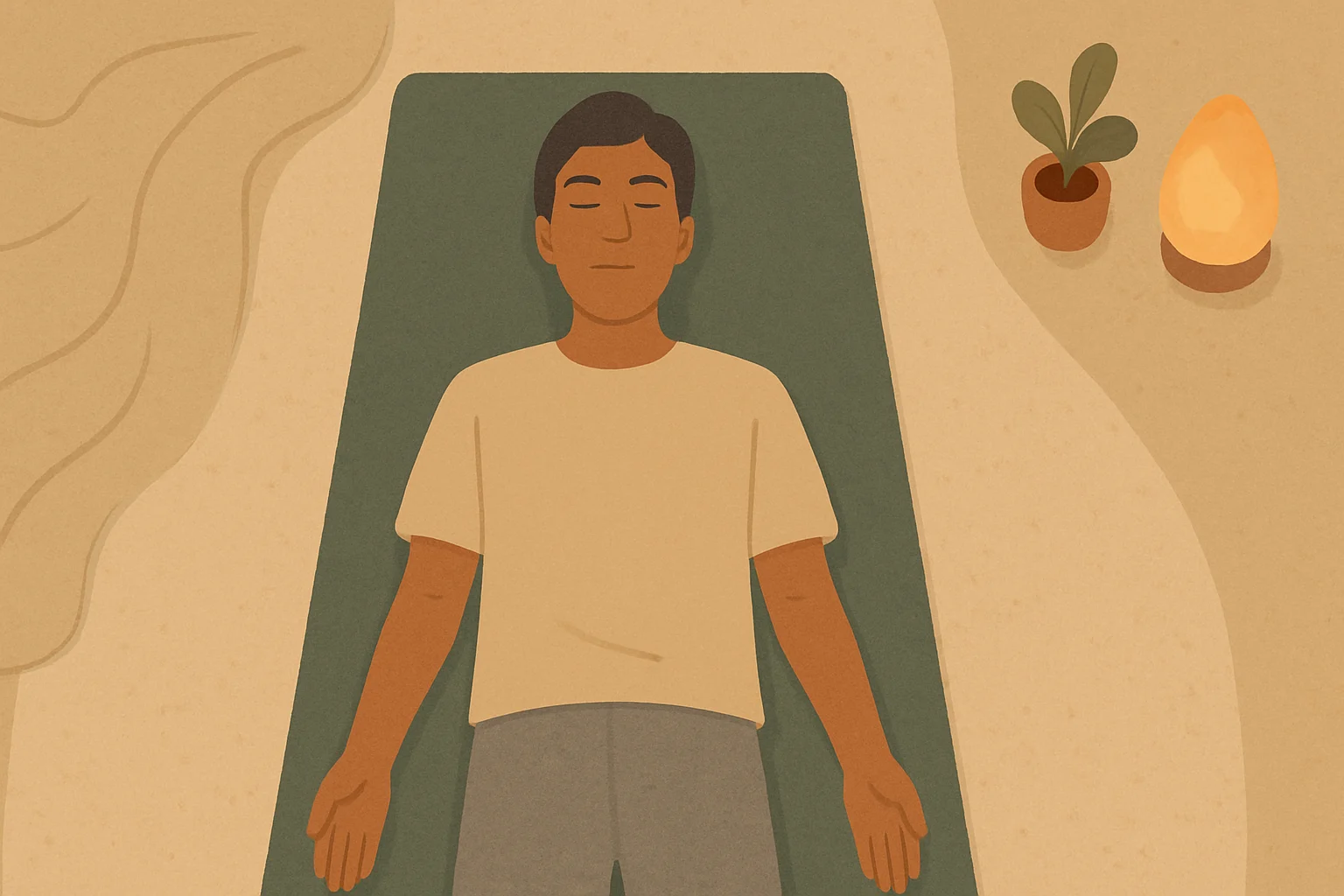
3. Short Body Scan Meditation
A body scan is one of several supportive anxiety relief practices. Its job here is simple: notice sensations one area at a time without immediately trying to change them.
How to try it:
- Find support: sit or lie down in a position that feels stable.
- Choose a comfortable gaze: keep your eyes open, soften your gaze, or close them only if that feels steadier.
- Scan slowly: move your attention through a few areas of the body rather than trying to inspect everything at once.
- Notice without grading: label sensations such as tight, warm, shaky, or neutral without treating them as a test.
- Widen awareness: notice your whole body and the room around you for a few moments.
Why use it: it gives you a structured way to notice sensations one area at a time. If inward attention makes panic feel stronger, switch to the external 5-4-3-2-1 method instead.
Choose a Grounding Prompt for This Moment
Choose your setting and how panic or anxiety feels right now. This is a coping prompt, not a diagnosis. If you are driving, keep your attention on the road and pull over somewhere safe before using the tool.
Choose both answers to get a grounding prompt.
Use the prompt as one next step, not another test to pass. If you want to understand why panic can feel so physical—and when it is time to seek professional help—read the next section.
What Is a Panic Attack—and Where Mindfulness Fits
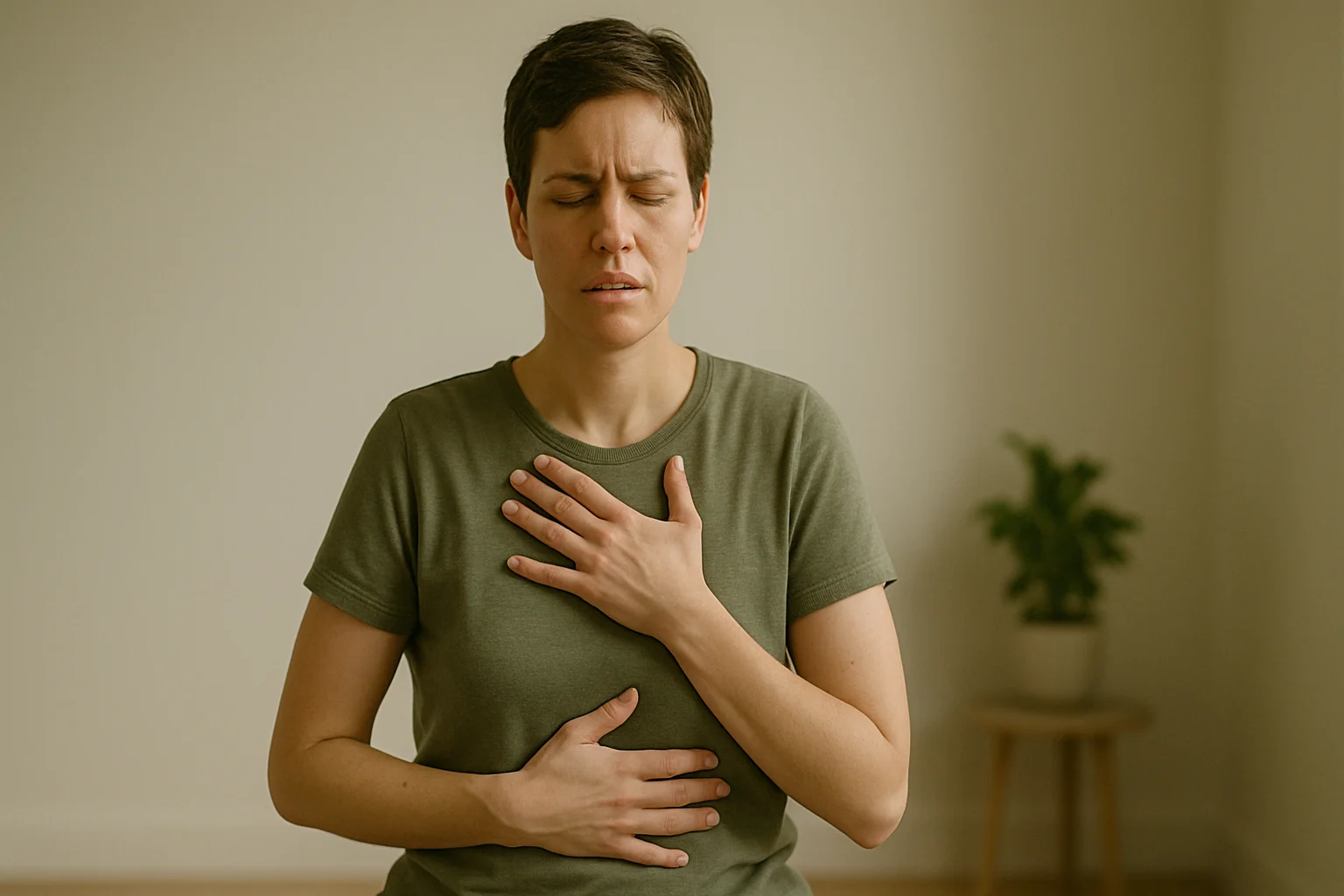
Imagine you’re going about your day when fear surges and your body suddenly feels as if an alarm has gone off. A panic attack is a sudden wave of intense fear or discomfort that can come with strong physical symptoms, sometimes without an obvious trigger. Mindfulness during a panic attack does not diagnose or stop it; it gives your attention a present-moment anchor while the wave passes.
Common symptoms of a panic attack:
- Racing heart: a pounding or rapid heartbeat.
- Shortness of breath: feeling unable to get a comfortable breath.
- Chest pain: pain, pressure, or tightness in the chest.
- Dizziness: feeling faint, light-headed, or unsteady.
- Trembling: shaking or trembling.
- Sweating: sudden sweating or temperature changes.
- Numbness or tingling: often in the hands or fingers.
- Nausea: stomach discomfort or feeling sick.
- Detachment: feeling unreal or disconnected from your body or surroundings.
- Fear of dying or losing control: a strong sense that something terrible is happening.
Do not assume new or severe symptoms are panic. Chest pain, severe breathing difficulty, fainting, or other concerning symptoms can have medical causes. Seek urgent medical care if you think you may be having a medical emergency; see NHS heart-attack guidance for examples of symptoms that need immediate assessment.
Panic symptoms can overlap with other health problems, and recurrent attacks deserve assessment. The National Institute of Mental Health describes psychotherapy, medication, or both as treatments for panic disorder and identifies cognitive behavioral therapy (CBT) as a well-studied option.
Mindfulness as a Coping Skill
Mindfulness means paying attention to the present moment without judging what you notice. During a panic attack, attention can get pulled toward frightening sensations and “what-if” thoughts. A grounding task gives you a narrower job: notice the breath gently, orient to your senses, or name what is around you.
Grounding can give your attention something concrete to follow, gentle breathing can provide a simple rhythm, and noticing a frightening thought as a thought can create a little distance from it. Practising one simple routine while you are relatively steady can also make the sequence easier to remember later. These are coping skills; they do not replace professional assessment or evidence-based treatment when those are needed.
Between Attacks: Make the Skills Familiar
If you want a calming mindfulness routine between attacks, keep the goal modest: familiarity, not prevention. Daily practice cannot guarantee fewer attacks, but rehearsing one simple skill while you are relatively steady can make it easier to remember when anxiety rises.
- Pick one anchor: practise gentle paced breathing, 5-4-3-2-1 grounding, or a brief external orientation. Our beginner breathwork for anxiety walks through the breathing one slowly.
- Keep it repeatable: choose a short practice you can return to without turning mindfulness into another performance test.
- Notice the bigger pattern: if panic attacks recur, lead to avoidance, or start changing how you live, bring that pattern to a qualified health or mental-health professional.
Mindfulness can support the work, but it should not become a test of whether you can handle panic on your own.
After a Panic Attack: What to Do Next
Once the surge has eased, you do not need a special recovery protocol. Give yourself time to settle, return to ordinary routines gradually, and avoid turning the episode into a problem you have to solve immediately.
- Let your body settle: sit somewhere comfortable, sip water if you are thirsty, and return to food or rest as needed.
- Notice what helped: remember the one or two things that made the moment easier to navigate.
- Write down only what is useful: if reflection helps, note what was happening, what you tried, and anything you may want to discuss with a clinician.
- Reach out when the pattern is growing: recurring attacks, avoidance, or disruption to work, school, relationships, or ordinary routines are reasons to seek professional help.
Recovery is not about proving the attack was harmless or forcing yourself back to normal immediately. The useful question is what support you need next.
Frequently Asked Questions About Mindfulness for Panic
One Small Task Is Enough for Now
If panic is happening now, choose one thing: feel your feet, name what you can see, or let the breath move gently. You do not need to complete every exercise or make the feeling disappear. If attacks keep returning, lead to avoidance, or interfere with daily life, let that be the next decision: seek professional support rather than relying on mindfulness alone.