Stress rarely waits for a quiet room. It shows up between deadlines, family demands, and the next thing you need to do. This mindfulness stress relief guide gives you a practical way to bring attention back to what is happening now—your breath, senses, movement, or surroundings—without needing a long meditation session.
This guide starts with short practices, then shows what research does and does not support, how to build a routine, and where to go when you need a more specific approach. If inward focus feels uncomfortable, choose an outward anchor such as sound or walking instead.
Build Your Mindfulness RoutineTable of Contents
- What is Mindfulness Stress Relief?
- Beginner-Friendly Mindfulness Stress Relief Practices
- Mindfulness Benefits: What Research Suggests
- Get the 10-Minute Chair Yoga Routine
- Building a Daily Mindfulness Routine
- Frequently Asked Questions
- Your Next Step: Pick One Anchor
What is Mindfulness Stress Relief?
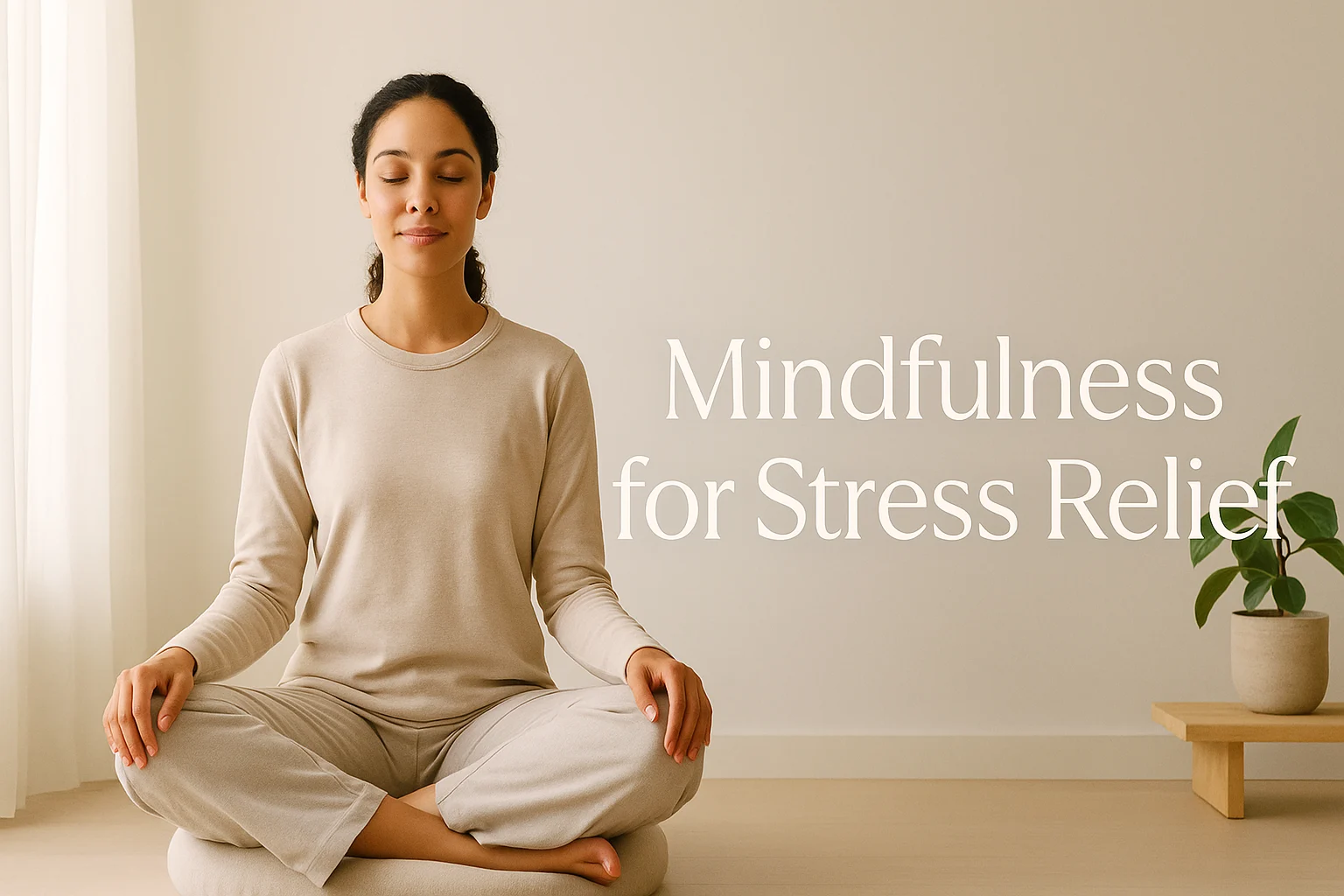
Simply put, mindfulness is the practice of paying attention on purpose to the present moment, without judgment. It means noticing what is happening right now—your breath, the sounds around you, or the feel of your feet on the ground—without immediately labeling the experience as good or bad. Meditation is one way to practice mindfulness, but you can also train the same skill while walking, eating, listening, journaling, or moving.
Choose the Guide That Fits Your Next Step
Think of this as your mindfulness techniques guide: use the route that matches what you want to practice or understand next:
- Start with stress and breath: use the mindfulness techniques for stress guide or a gentler beginner breathwork for anxiety guide.
- Practice through movement: try mindfulness walking meditation, read about the benefits of mindful movement in yoga, or follow a yoga for stress relief guide.
- Bring mindfulness into daily life: explore mindful eating practice or mindfulness techniques for focus.
- For more sensitive topics: use the dedicated guides for recovery support, panic attacks, or depression support; these are educational routes, not replacements for professional care.
- Looking for a structured program in New York City? Start with the MBSR in NYC guide.
Beginner-Friendly Mindfulness Stress Relief Practices
You don’t need to be a meditation expert to start mindfulness for stress relief. These practices use ordinary anchors—breath, sound, movement, food, or writing—so you can test what actually fits your day.
Mindful Breathing: Use the Breath as an Anchor
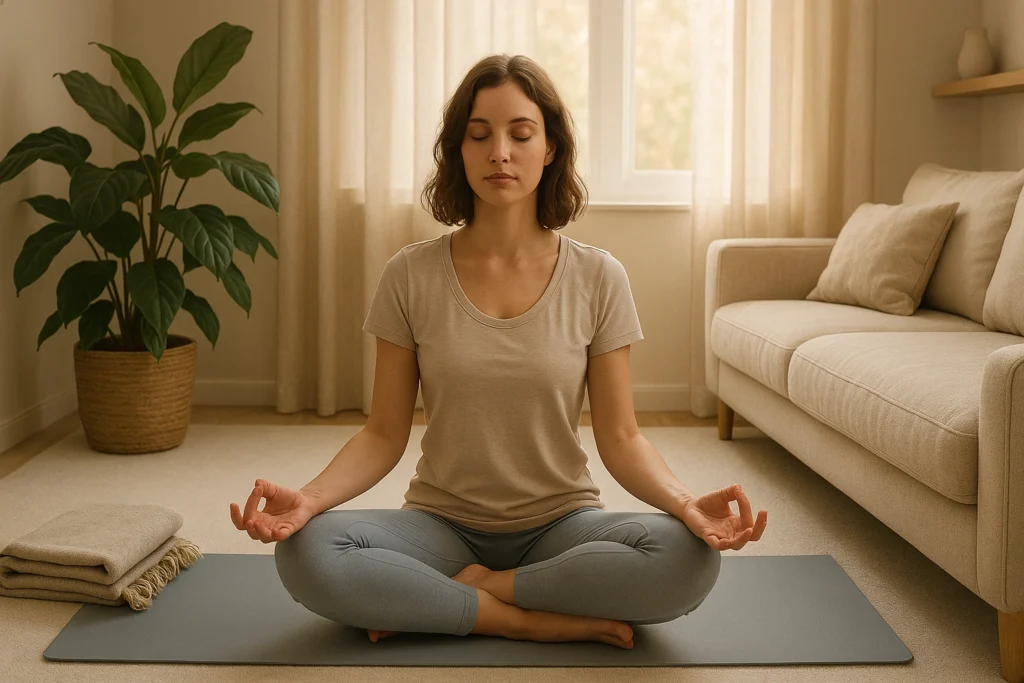
Your breath is always available, which can make it a convenient attention anchor. Try this when you want a short pause before a meeting or another demanding moment.
- Find a comfortable position: Sit with feet flat or lie down.
- Close your eyes (or soften your gaze): Pick a spot to focus on if closing eyes feels odd.
- Notice your breath: Feel the air in your nostrils, chest, or belly. Is it deep or shallow?
- Observe without changing: Let your breath flow naturally.
- Redirect wandering thoughts: When your mind drifts (e.g., “I forgot to email Bob”), gently return to your breath.
- Start small: Try 1–2 minutes, then build up.
Breathwork When You Feel Anxious
When you feel anxious, keep breathwork comfortable rather than chasing a perfect count. The NHS recommends gentle, regular breathing without forcing depth; if you feel dizzy or more distressed, return to your normal breath. See its breathing exercise guidance.
- Settle into a comfortable position: Let your shoulders soften and keep your jaw loose.
- Breathe gently: Inhale through your nose if comfortable, then let the breath out without pushing.
- Use an easy count only if it helps: Count steadily on the inhale and exhale without breath holds or straining to reach a number.
- Stop if it feels worse: Switch to normal breathing, listening, or walking if inward focus increases distress.
If breathwork is the main thing you want to explore, use this beginner breathwork for anxiety guide for a more focused next step.
Mindful Eating: Use a Meal as the Anchor
Make part of a meal your practice by easing the pace and noticing sensory details you usually pass over.
- Look: Notice color, shape, and texture.
- Touch: Feel the texture in your fingers before the first bite.
- Smell: Notice its aroma.
- Place in mouth: Feel it on your tongue before chewing.
- Chew slowly: Notice flavors and texture changes.
- Swallow: Feel it move down your throat.
- Notice aftertaste: Any lingering flavors?
This practice turns an ordinary meal into a sensory attention exercise. For a step-by-step approach, explore this mindfulness eating exercise guide.
Mindful Walking: Use Steps and Sensation
Use a familiar walk as an attention practice by returning to steps, contact with the ground, and the environment around you. For an in-depth guide, see this mindfulness walking meditation.
- Choose a safe route: A familiar hallway, sidewalk, or park works.
- Notice your body: Feel your feet on the ground.
- Focus on steps: Feel your heel lift and roll.
- Notice your pace: Let breathing stay comfortable while you notice the rhythm of your steps.
- Expand awareness: Notice sounds and air on your skin.
- Redirect thoughts: Gently return to walking sensations.
Mindful Listening: Use an Outward Anchor
Sound can be a useful outward anchor when focusing on your breath feels uncomfortable, distracting, or simply unappealing.
- Sit comfortably and soften your gaze, or close your eyes if that feels comfortable.
- Let your breathing stay natural.
- Notice obvious sounds (e.g., traffic).
- Listen for subtle sounds (e.g., your breath).
- Observe sounds without labeling them as good or bad.
- When your mind wanders, bring attention back to hearing.
This quick check-in helps ground you and pairs well with movement practices like mindful walking.
Mindful Journaling: Notice What Is Here
Journaling gives you a concrete way to notice thoughts, emotions, and body sensations without needing to sit in silence.
- Find a quiet space with a notebook.
- Set a timer for 5–10 minutes.
- Write freely, ignoring grammar.
- Use prompts like: “What am I feeling?” or “What’s in my body?”
- Notice thoughts come and go without getting pulled in.
Yoga: Use Movement as the Anchor
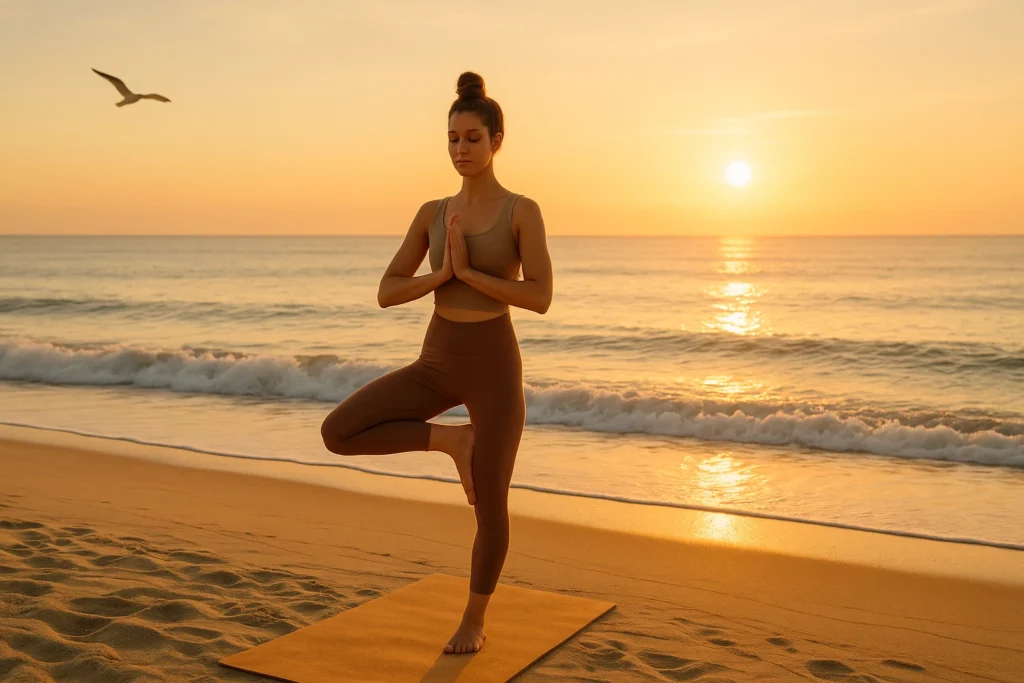
Yoga can turn movement into a mindfulness anchor by giving you clear sensations to notice: contact with the floor, balance, range of motion, and breathing.
- Move unhurriedly: Give yourself time to notice how each position feels instead of rushing to the next shape.
- Use sensation as the anchor: Pay attention to feet, hands, balance, and the parts of the body doing the work.
- Keep the range comfortable: A smaller, steadier movement is more useful than forcing depth.
If movement is your preferred anchor, read about the benefits of mindful movement in yoga. For a gentle practice-focused next step, use this yoga for stress relief guide.
Mindfulness Benefits: What Research Suggests
Mindfulness research is substantial, but the evidence is not equally strong for every claim. The National Center for Complementary and Integrative Health notes that studies use different practices and methods, results can be difficult to compare, and some findings have been interpreted too optimistically. For current evidence and safety context, see the NCCIH overview; this NIH overview is also a readable introduction.
Stress, Sleep, and Physical Effects
- Stress and anxiety: Structured mindfulness-based approaches can help some people, but outcomes vary by program, population, and study quality.
- Blood pressure: Some studies report reductions in people with health conditions, while high-quality evidence is still limited.
- Sleep: Mindfulness meditation may improve sleep quality, but it has not consistently outperformed established treatments such as cognitive behavioral therapy or exercise.
Brain Findings: Interesting, Not a Promise
Some studies have found differences in brain activity or structure among people who practice meditation or mindfulness. NCCIH cautions that these findings are difficult to interpret and that their practical implications are not yet clear, so “rewiring your brain” is too strong a promise for a general guide.
Psychological Benefits for Stress Relief
Mindfulness can be useful as a skill for noticing thoughts, feelings, urges, and sensations without reacting automatically. For health conditions, it is best understood as a possible support rather than a replacement for appropriate care.
Improved Focus
Practicing the return of attention—notice the drift, then come back to breath, sound, or movement—can support concentration skills. For more targeted practice, explore these mindfulness techniques for focus.
Recovery Support
Mindfulness-based relapse-prevention approaches have been studied as part of substance-use treatment, including for cravings and automatic reactions. Results are mixed, and mindfulness should not replace professional treatment. For a cautious overview, see this mindfulness for recovery support guide.
Panic and Intense Anxiety
Grounding attention in external senses can be a useful coping skill for some people, but inward focus or breath attention can also feel uncomfortable during intense anxiety. If panic is frequent, severe, or hard to manage, professional support matters. This mindfulness for panic attacks guide keeps the techniques in that narrower context.
Depression Support
Mindfulness-Based Cognitive Therapy (MBCT) is a structured psychological approach that combines mindfulness practices with elements of cognitive behavioral therapy. That is different from casually meditating on your own. For the distinction and a more focused discussion, see this mindful meditation for depression resource.
The practical takeaway is modest: mindfulness may be useful, but the best practice is one you can do comfortably and consistently without treating it as a cure-all.
If gentle movement is the format you’re most likely to repeat, a ready-made seated routine gives you something concrete to practice on stiff mornings.
A Gentle Seated Routine for Mornings
Confirm to get the routine and yoga tips. Unsubscribe anytime.
Something went wrong. Please check your email address and try again.
Building a Daily Mindfulness Routine
A routine makes mindfulness and other stress reduction practices easier to remember and repeat. The goal is not a perfect streak; it is a practice simple enough to return to on an ordinary day.
Make It Easy to Repeat
Build the routine around the day you actually have, not the day you wish you had. A small default is easier to restart after a busy week.
- Choose a tiny default: Start with 2–5 minutes, with a 60-second version for busy days.
- Attach it to a cue: Try after coffee, during a walk, with the first few bites of a meal, or before bed.
- Use reminders lightly: Put it on your calendar if that helps, but treat a missed day as a cue to resume—not a failed streak.
- Change the anchor when needed: If stillness feels boring or uncomfortable, use sound, walking, food, writing, or gentle movement instead.
Use Guidance When It Helps
If guidance helps, choose a meditation from a trusted health system, university, or experienced teacher and try the same format for several sessions before judging it. For everyday use, the most useful mindful living tips are simple: choose a format you trust, repeat it for several sessions, and avoid chasing a new app every week.
Mindfulness Routine Builder
Choose the time you actually have and the style that feels easiest to do today. You’ll get one simple starting routine—not a score.
If focused breathing or inward attention makes you feel more distressed or dizzy, stop and return to normal breathing or choose a listening or walking option instead.
Choose your time and preferred style to build a starting routine.
Use the routine as a starting point, then keep going for one-minute backups and a simple week-long plan.
60-Second Mindfulness Resets
Short on time? These one-minute resets fit into real life and give your attention somewhere concrete to land without requiring a full session.
- Inbox pause: Before opening email, feel your feet or the chair supporting you. Take a few comfortable breaths, then begin.
- Traffic light check-in: When stopped, feel both feet on the floor and locate three sounds around you. When it is time to go, return your attention to driving.
- Meeting micro-scan: Relax your jaw and shoulders, then notice one natural inhale and exhale before you speak.
- Parenting moment: Notice three sounds or body sensations before responding. Use the pause to decide what you want to say next.
- Bedtime unwind: Trace a slow square in the air while letting your breathing stay comfortable and unforced.
- Snack reset: Take one mindful bite—look, smell, chew slowly, and notice how the flavor changes before the next bite.
7-Day Starter Plan
Use this simple week to build momentum. If you miss a day, just pick up where you left off.
- Day 1: 2 minutes of mindful breathing on waking. Note one word that describes how you feel.
- Day 2: Try 3 minutes of mindful listening before lunch. Notice nearby sounds, then farther sounds, and return to hearing when your mind wanders.
- Day 3: Mindful eating for the first three bites of dinner. What flavors did you notice?
- Day 4: 5-minute mindful walk after work. Notice ten steps in a row, then widen attention to sounds and let your breathing stay natural.
- Day 5: Body-scan audio (5–10 minutes) before bed. Note one sensation you noticed without needing it to change.
- Day 6: Loving-kindness for 5 minutes. Include yourself and one person you see often.
- Day 7: Repeat your favorite practice and choose the everyday cue you will pair it with next week.
Common Mistakes & Fixes
- Waiting for “perfect” time: There isn’t one. Use micro-resets while life is happening.
- Forcing calm: The goal is awareness, not a specific feeling. Let sensations be as they are.
- All or nothing: One minute counts. Consistency beats intensity.
- Forcing the breath: Keep breathing comfortable and unforced. If you feel dizzy or more distressed, return to normal breathing or switch anchors.
- Judging yourself: Spot the judgment, call it “just a thought,” and return to your anchor (breath, sound, steps).
- Ignoring the body: Check whether your jaw, shoulders, hands, or belly are tense and soften them if that feels comfortable.
Track What Helps, Not a Streak
Tracking is optional. Use it only if it helps you notice what is easy to repeat rather than turning mindfulness into homework.
- After a session: Note the practice and whether it felt comfortable, neutral, or uncomfortable.
- At the end of the week: Keep the anchor that was easiest to start and return to.
- If you fall out of the routine: Use one 60-second reset and begin again. Momentum matters more than streaks.
If you are still wondering what counts as mindfulness—or what to do when a practice feels uncomfortable—the FAQ below covers the common sticking points.
Frequently Asked Questions
Your Next Step: Pick One Anchor
Do not leave this guide with seven practices to remember. Pick one anchor—breath, sound, steps, food, writing, or gentle movement—and use it for several sessions. Keep it if it feels comfortable and easy enough to return to.
If you want help choosing, use the Mindfulness Routine Builder. If your need is more specific, return to the guide routes above rather than forcing a general practice. The goal is not to eliminate stress; it is to build a reliable way to notice, pause, and choose your next step.