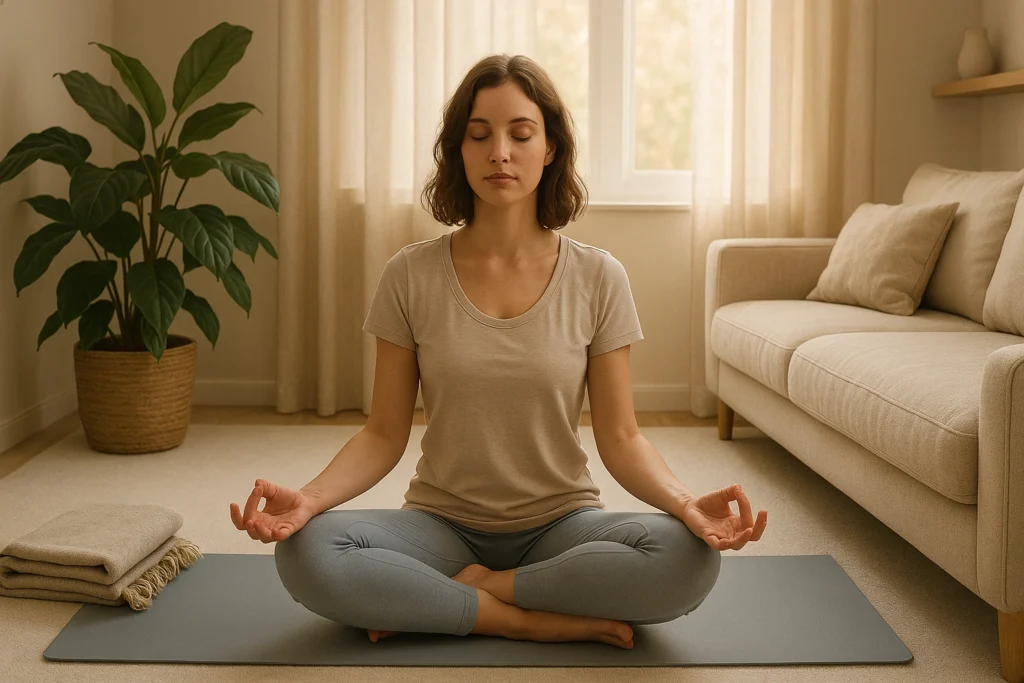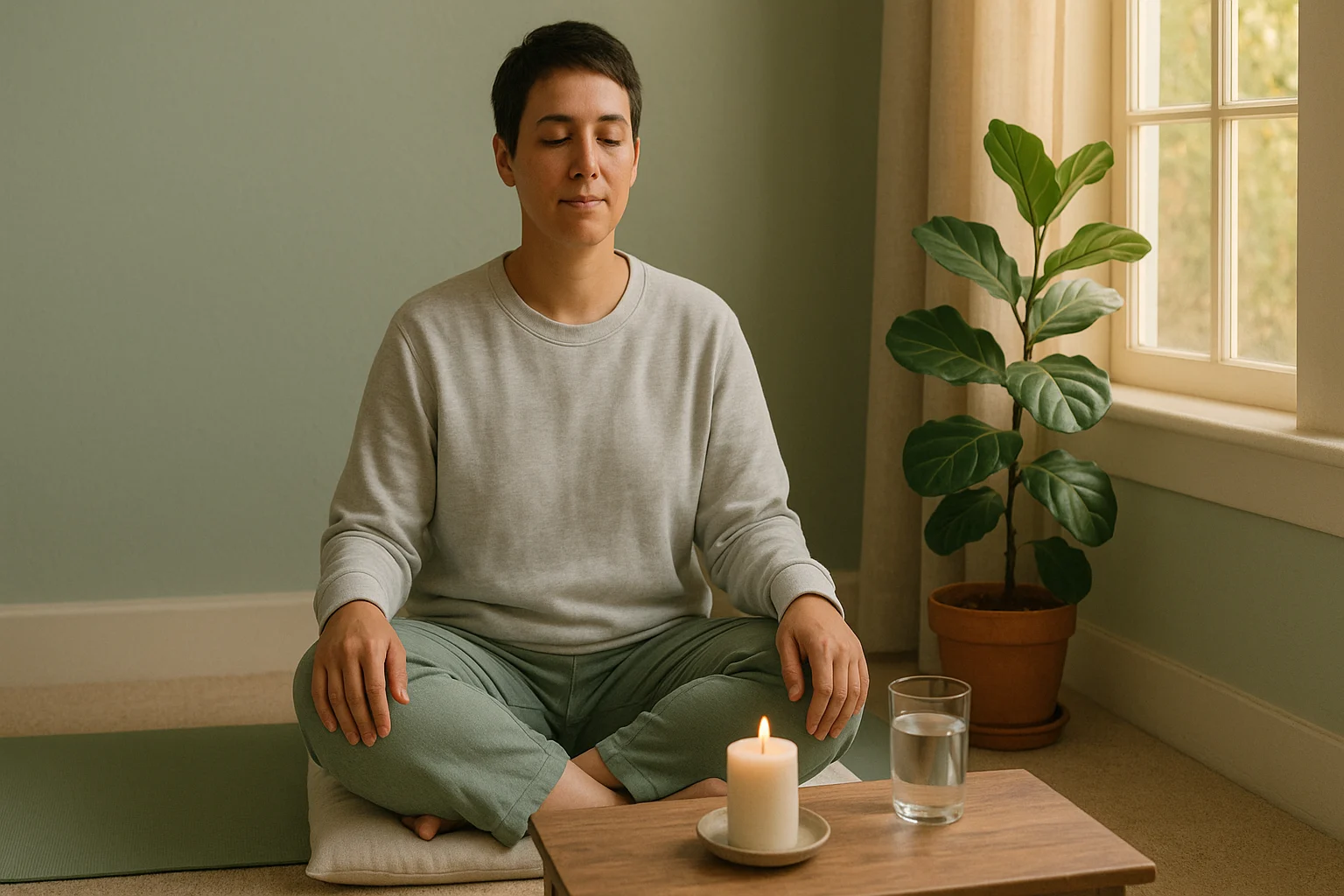
Mindfulness for recovery can be useful in the moment between noticing a craving, stress spike, or difficult emotion and deciding what to do next. The skill is not to make the feeling disappear; it is to notice it without automatically treating it as a command. Mindfulness can support recovery, but it is not a stand-alone treatment.
This guide focuses mainly on addiction recovery and helps you choose among breathing, sensory grounding, urge surfing, body scans, and journaling. Use these practices alongside the professional, medical, peer, or community support that fits your situation. For broader stress-focused basics, see our guide to mindfulness for stress relief.
Table of Contents
- What Is Mindfulness for Recovery?
- What Mindfulness May Support in Addiction Recovery
- How to Use Mindfulness in the Moment
- Choose a Mindfulness Practice for This Moment
- Mindfulness Practices You Can Try
- Using Mindfulness Alongside Other Recovery Support
- Frequently Asked Questions About Mindfulness for Recovery
- Using Mindfulness as One Part of Recovery
What Is Mindfulness for Recovery?
At its core, mindfulness for recovery is about being fully present—paying attention to what is happening inside and around you with a curious, open mindset. In recovery, that can mean noticing an urge, thought, emotion, or body sensation early enough to choose what to do next. This awareness practice can help you:
- Observe, Don’t React: Notice an urge, thought, or difficult memory without treating it as an instruction you have to follow.
- Notice Patterns: Pay attention to what tends to show up before a craving, shutdown, or stress spike without assuming every reaction has one simple cause.
- Create Response Space: Give yourself enough pause to choose a next step, change your anchor, or ask for support.
Mindfulness is not about emptying your mind or forcing difficult experience away. For readers exploring mindfulness for healing, the practical goal is to notice what is present with less judgment and then choose how to respond.
What Mindfulness May Support in Addiction Recovery
Think of these as recovery support techniques, not stand-alone solutions. Mindfulness may help with a few recurring challenges when it is used in the right context, but effects vary and no one practice guarantees a particular outcome.
Cravings and Automatic Reactions
Mindfulness-Based Relapse Prevention (MBRP) programs use awareness skills to help people notice urges and practice responding differently. In the moment, the practical sequence is to notice the urge, look for what may be triggering it, and create enough pause to choose your next action. Evidence on relapse outcomes varies, so treat mindfulness as a complement to established treatment rather than a replacement for it. NCCIH summarizes the current substance-use evidence.
Anxiety, Emotion, and Self-Compassion
Mindfulness may reduce stress or anxiety for some people and can make it easier to notice emotions without immediately reacting to them. A comfortable breath, an outside-senses anchor, or simply naming what you feel can create a little distance. If inward focus makes you more activated or disconnected, switch anchors instead of pushing through.
The same nonjudgmental stance can be used to practice a less self-critical response. The aim is not to suppress difficult feelings or force yourself to feel calm; it is to notice what is present and respond with more care.
How to Use Mindfulness in the Moment
In the moment, mindfulness is less about forcing calm and more about creating a short sequence you can use:
- Notice: Pay attention to cravings, stress, thoughts, emotions, or body cues before they become the only thing in focus.
- Pause: Observe what is happening long enough to interrupt autopilot and choose what to do next.
- Choose an Anchor: Use breath, body sensations, movement, outside sensory cues, or writing depending on what feels workable in the moment.
Recovery can feel different from one hour to the next. Before you choose a technique, use this quick check to match the moment with a style of attention that feels workable.
Choose a Mindfulness Practice for This Moment
Answer two quick questions. You can change either answer at any time.
This is a starting-point tool, not treatment advice. If a practice makes you feel more activated or disconnected, stop, switch to an outside-senses approach, or reach out to a trusted support person or clinician.
Choose what feels hardest right now, then choose the kind of attention that feels most workable.
Mindfulness Practices You Can Try
The recovery mindfulness practices below use different anchors, so you do not have to force one method to fit every moment. Start with the practice your tool result points to, or read through the options and choose the one that feels most workable.
Mindful Breathing
Your breath is always available, which makes it a common anchor for mindfulness in recovery—but it is not the best fit for everyone. If breath focus feels activating, keep your eyes open and use sound, sight, touch, or gentle movement instead.
How to Do It
- Sit or lie comfortably.
- Keep your eyes open or soften your gaze—choose what feels more orienting.
- Notice your breath without changing it—feel the air in your nostrils or your chest’s rise.
- When your attention wanders, notice it and gently return to the breath.
Why It Can Help
A comfortable breath anchor gives attention one place to return when cravings or stress pull it elsewhere. The useful part is the pause: you notice what is happening, then decide what to do next. If breath focus feels activating, use sensory grounding instead. For breathing and grounding options outside a recovery context, see our walkthrough of mindfulness techniques for stress.
Sensory Grounding
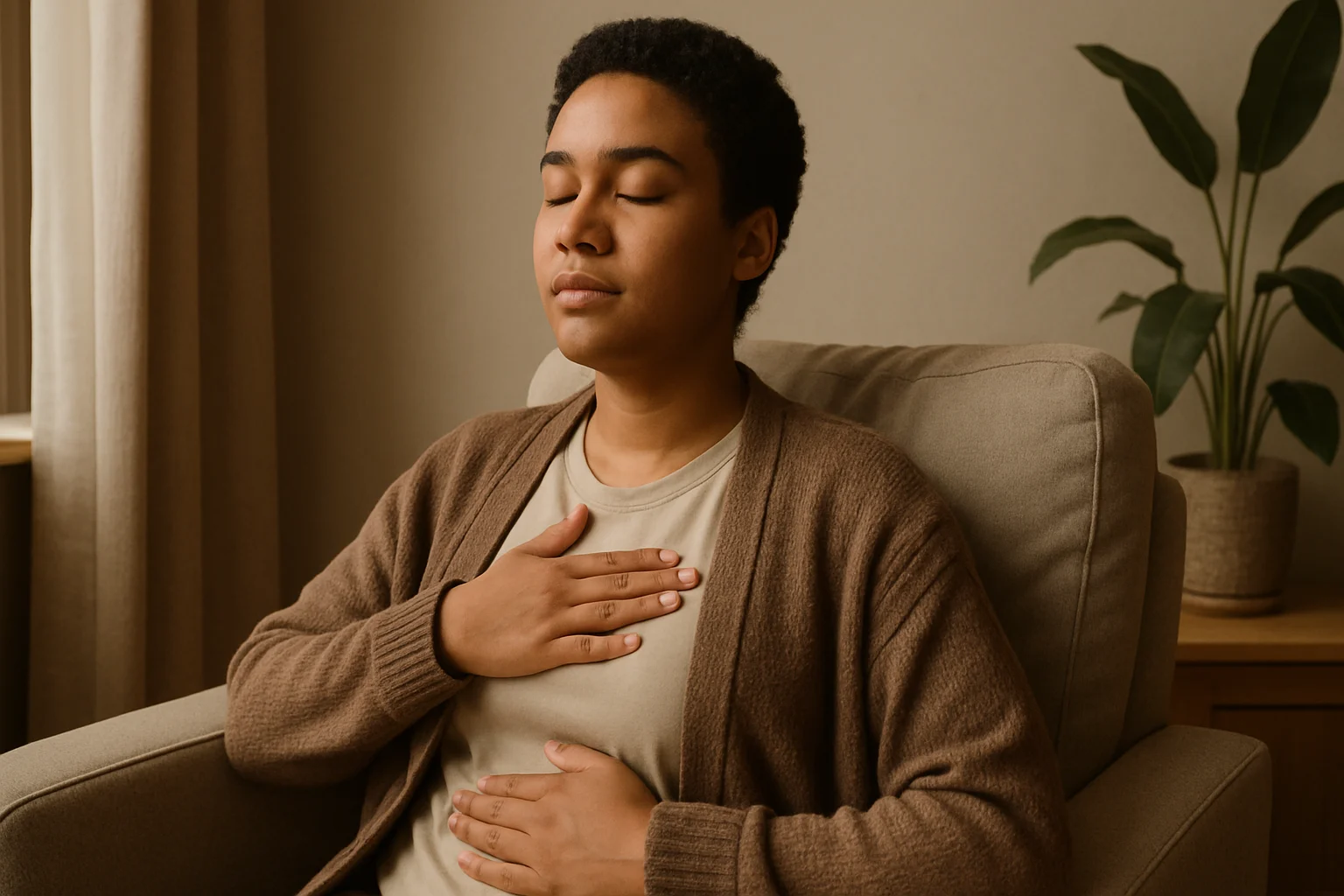
Sensory grounding techniques use details in the room—what you can see, hear, or feel through contact—to bring attention back to the present. It can be a better first anchor when closing your eyes or focusing inside the body feels activating or disconnecting. VA guidance on coping with traumatic stress reactions also recommends keeping your eyes open, noticing where you are, and using present-moment cues when trauma reactions are active.
How to Do It
- Keep your eyes open and look around slowly.
- Name three ordinary things you can see.
- Notice two sounds and one point of physical contact, such as your feet on the floor or your back against a chair.
- If movement feels more orienting, add a slow shoulder roll, stand up, or take a few deliberate steps while noticing contact and pressure. Walking can carry the same attention practice — our step-by-step walking meditation guide covers the pace and route details.
Why It Can Help
Outside-senses grounding gives attention a concrete present-moment target without requiring you to stay focused on breath or internal sensations. If a trauma reaction is intense or worsening, stop the exercise and reach out to a trusted support person or clinician.
Urge Surfing
Urge surfing is designed for cravings and other urges: you notice the urge as a changing experience rather than a command you must follow. If you are dealing with a trauma reminder or flashback, outside-senses grounding or clinician-guided coping may be a better first step.
How to Do It
- Notice the urge without judgment.
- Focus on its physical sensations—where do you feel it? Tension? Heat?
- Imagine it as a wave, building, peaking, and subsiding.
- Ride the wave with curiosity, noticing how its intensity changes over time.
Why It Can Help
Urge surfing separates the experience of an urge from the action that follows it. Repeating that pause lets you practice a different response instead of moving straight from urge to action. If body sensations make the urge harder to tolerate, switch to sensory grounding and use your recovery supports as needed.
Body Scan Meditation
A body scan moves attention through physical sensations. It can work as an inward anchor when body focus feels steady enough.
How to Do It
- Lie or sit comfortably.
- Focus on your toes, noticing sensations like warmth or tingling.
- Move up your body—feet, legs, hips, chest, arms, head—lingering on each area.
- Gently guide your mind back if it wanders.
Why It Can Help
A body scan gives you an inward anchor and can make tension or discomfort easier to notice. It is optional, not a test of whether you are “doing mindfulness right.” If inward attention increases overwhelm or disconnection, stop and use sensory grounding or another outside-senses practice.
Mindful Journaling
Mindful journaling gives thoughts, feelings, triggers, and needs a place to be named without requiring you to solve them immediately.
How to Do It
- Choose a brief anchor first—one or two comfortable breaths, sounds in the room, or contact with the chair.
- Write freely for 5-10 minutes, using prompts like “What am I feeling?” or “What’s in my body?”
- Don’t edit—let words flow.
- Read your writing with curiosity, not judgment.
Why It Can Help
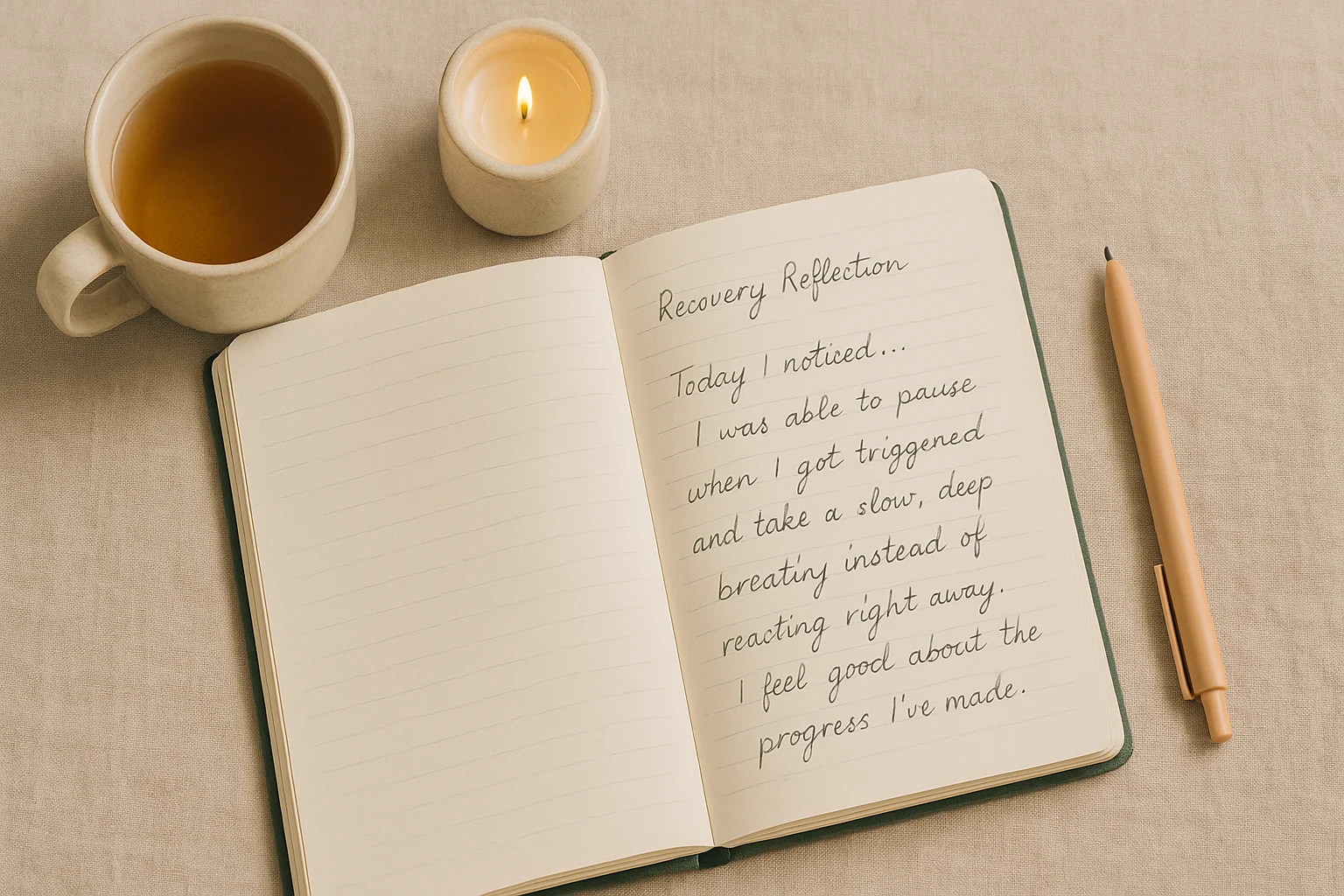
Putting thoughts and feelings into words can make patterns easier to notice and gives you something concrete to reflect on later. Keep the exercise brief when you are already overwhelmed, and stop if writing pulls you deeper into distress.
Using Mindfulness Alongside Other Recovery Support
Mindfulness is best treated as a complementary practice rather than something that automatically improves every form of care. How it fits depends on what you are recovering from and the treatment or support you already use.
- Professional Treatment: For substance use disorders, established care may include behavioral therapies, medications, or both. For PTSD, VA guidance places mindfulness within complementary and integrative care rather than as a replacement for evidence-based PTSD treatment.
- Peer and Community Support: Some people combine mindfulness with mutual-help groups, spiritual practices, gentle movement, or other routines that fit their recovery and beliefs. There is no single required combination.
- Chronic Pain or Illness: Mindfulness-based approaches may help some people manage chronic pain, but results vary by condition and they are not a substitute for diagnosis or medical treatment. NCCIH reviews the evidence by pain condition.
If movement is one of the anchors that feels workable for you, the routine below is a concrete way to try a short seated practice without planning it yourself.
A Chair-Yoga Routine for Stiff Mornings
Confirm to get the routine and yoga tips. Unsubscribe anytime.
Something went wrong. Please check your email address and try again.
Frequently Asked Questions About Mindfulness for Recovery
Using Mindfulness as One Part of Recovery
Recovery can change from day to day. Mindfulness will not erase cravings, pain, anxiety, or difficult memories, but it can give you a way to notice what is happening and choose a next step with more awareness.
If you take one idea from this guide, let it be this: choose the anchor that helps you notice the moment without making it harder. Try that practice briefly when you feel relatively steady so you can learn whether it feels workable for you. Let mindfulness stay in its supporting role, and use professional, medical, peer, or community support whenever the situation calls for more than a self-guided practice.