
Try this mindfulness eating exercise with your next snack or meal: pause before the first bite, notice one sensory detail, take the first bite slowly enough to taste it, then pause once more partway through. You do not need a silent room or a “perfect” meal—one bite is enough to begin.
You can scan all seven steps at once or follow them one at a time in the guided version. If you want to use the same attention skills beyond meals, start with our mindfulness guide for stress relief.
Start the 7-Step Guided MealTable of Contents
- 7-Step Exercise
- What Mindful Eating Means
- Mindful Eating Benefits
- Tips for Real Life
- Practical Questions
- Try One Bite
Mindfulness Eating Exercise: 7-Step Practice
Use this sequence with a snack or a full meal. The goal is not perfection—just enough attention to notice what is happening.
Before You Start: Keep It Simple
- Choose any food: A snack or a full meal both work.
- Reduce one distraction: Silence a notification, move a screen aside, or choose a calmer spot if that is practical.
- Take one easy breath: Use it as a simple marker that the practice has begun.
The 7 Steps at a Glance
Use this list when you want the whole sequence at a glance. The guided version immediately below walks through the same steps one at a time.
- Check hunger: Pause before the first bite and notice what physical hunger signals are present right now.
- Observe with your senses: Notice color, shape, aroma, temperature, and texture.
- Take the first bite: Chew slowly enough to notice flavor and texture.
- Swallow and pause: Notice the aftertaste, set your utensil down if you can, and take one easy breath.
- Return after distraction: When your mind wanders, come back to one sensation from the meal.
- Check in as you continue: Notice hunger, fullness, and enjoyment, then decide whether to keep eating, pause, or finish.
- Reflect: Afterward, notice what stood out and whether anything changed when you slowed down.
Guided Mindful Meal: 7 Steps
Use this during a snack or meal when you want a little structure. Follow one step at a time, and move on when you’re ready.
Check Hunger
What Mindful Eating Means
What you are practicing in those seven steps is deliberate attention to the experience of eating—what you see, smell, taste, and feel, along with thoughts, emotions, hunger, and fullness—without judging those signals. This kind of conscious eating practice is not about reaching a “perfect” amount; it is about noticing the meal more clearly.
When This Exercise Helps
Mindful eating is most useful when a meal has become automatic. You might notice:
- Distraction: You reach the end of a meal and barely remember tasting it.
- Late body cues: Hunger or fullness only becomes obvious after you have been eating for a while.
- Stress or boredom: The urge to eat shows up alongside an emotion rather than clear physical hunger.
- Less enjoyment: Screens, work, or rushing make flavors and textures easier to miss.
A mindful approach adds small pauses so you can notice what is happening and choose what to do next without turning the meal into a test.
Mindful Eating Benefits: Awareness, Pace, and Enjoyment
The most useful mindful eating benefits are about awareness: noticing pace, sensory detail, and hunger or fullness cues more clearly. That is a more realistic goal than expecting a specific weight or health outcome.
More Attention to Pace and Sensory Detail
A mindfulness eating exercise gives you a reason to slow the meal down and notice what is happening as you eat. Chewing deliberately, pausing between bites, and returning attention to the food can make the meal less automatic—and make details such as an apple’s crispness, a soup’s warmth, or a changing flavor easier to notice.
More Awareness of Hunger and Fullness
Mindful eating encourages you to notice hunger and fullness cues instead of eating on autopilot. Harvard’s Nutrition Source notes that mindfulness-based approaches can improve some eating behaviors, while research has not consistently shown weight loss. Treat the practice as a way to build awareness, not as a weight-loss method.
A Pause Around Stress or Boredom
Stress or boredom can influence the urge to eat. A conscious eating practice creates a pause to notice what is present before reacting automatically. If stress is what you notice, try a more direct practice from our mindfulness techniques for stress guide.
Mindful Eating Tips for Real Life
The most useful mindful eating tips make meals simpler, not more rule-bound. Pick one or two cues you can repeat instead of trying to make every meal perfectly mindful.
Choose One Cue, Not a Perfect Setup
A quiet table can help, but it is not required. Try one repeatable cue: put your phone face down for the first few bites, set your utensil down once, take one breath before eating, or notice one texture. If the meal is busy, reduce one distraction rather than waiting for ideal conditions.
Use a Journal Only If It Helps
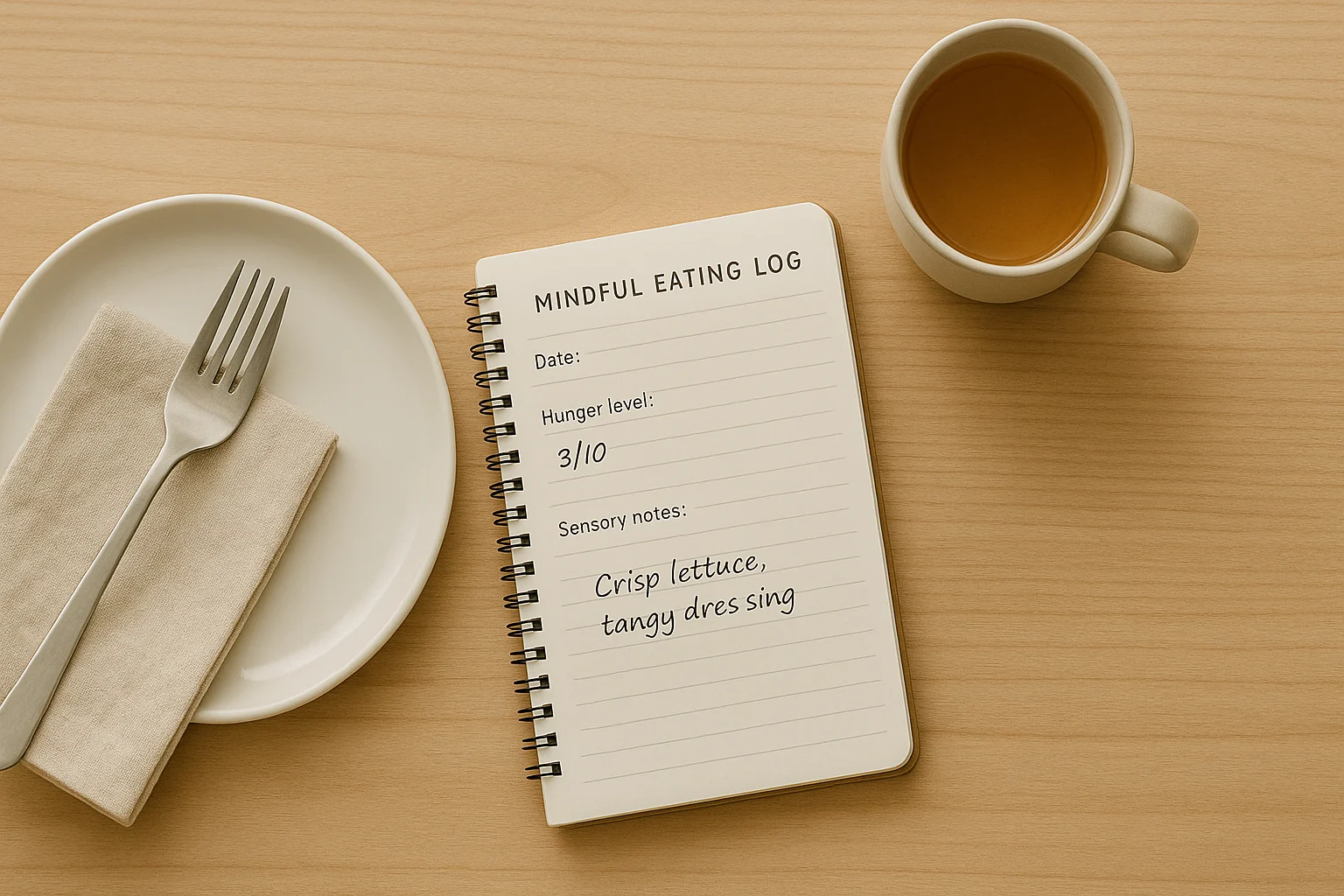
A journal is optional. If you use one, track what you notice rather than what you think you “should” have done. Example: “Crisp lettuce, tangy dressing. I started hungry and finished comfortably satisfied. TV pulled my attention away, so I returned to the taste and texture.” Patterns can become clearer over time.
Be Kind to Yourself
If you rush or lose track, notice it and return at the next bite. The practice is the return, not a perfectly mindful meal.
Take the Same Skill Into Another Practice
Try a short meditation or mindful walking to practice the same skill of noticing and returning attention.
Practical Questions About Mindful Eating
Try One Bite at Your Next Meal
At your next snack or meal, choose just one step: pause before the first bite and notice one thing—smell, texture, hunger, or fullness. If that feels useful, continue through the sequence. If not, stop after that bite. The goal is attention, not a perfectly mindful meal.