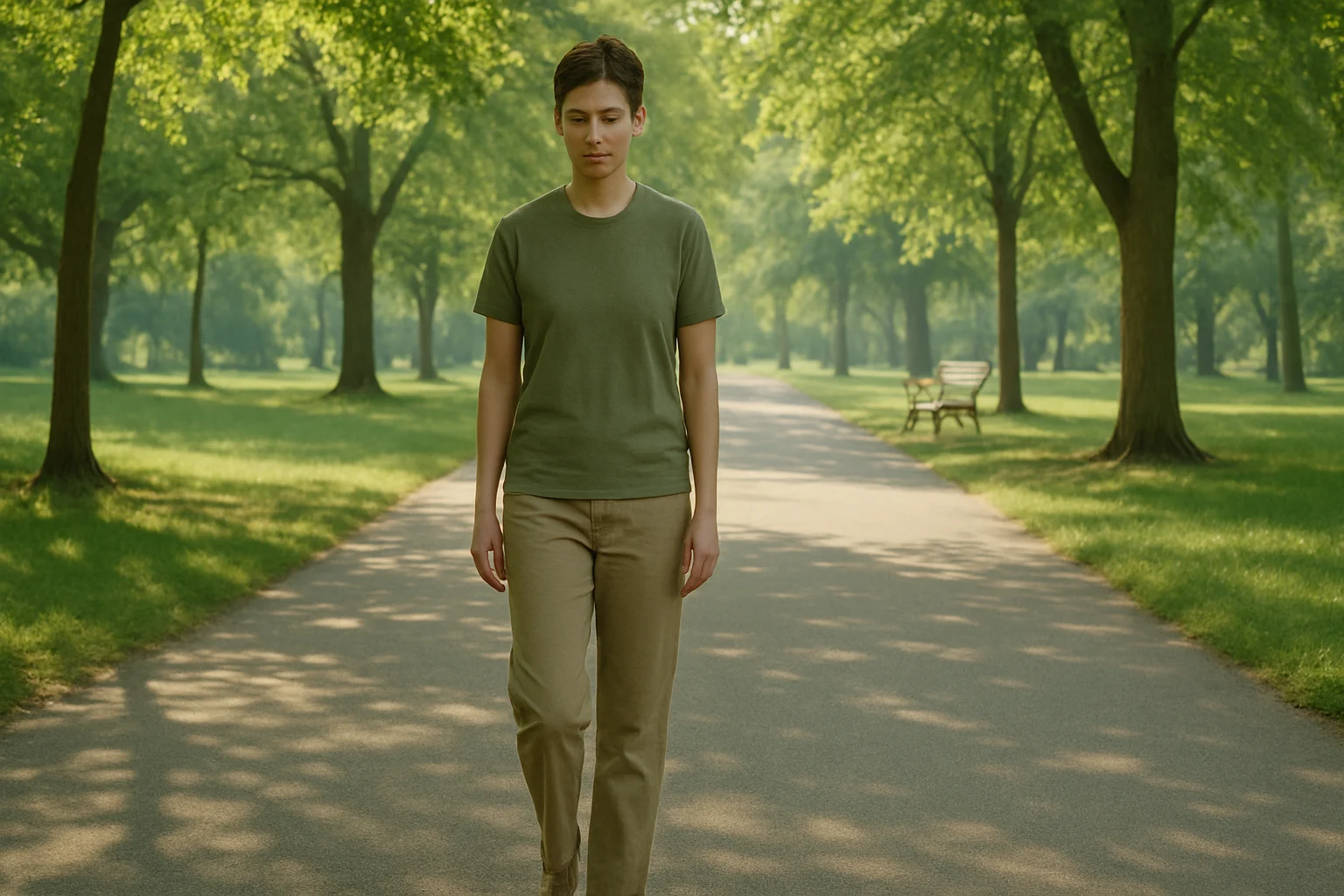
If sitting meditation makes you restless, mindfulness walking meditation gives your attention somewhere concrete to land: the feel of your feet, the rhythm of your steps, your breath, or the sounds around you. You do not need to keep your mind blank. Notice when attention wanders and return to one anchor while you keep moving—a kind of active calm.
Research is promising but still limited. In a 2024 study of 44 university students, anxiety and stress scores were lower after one guided mindful walk and mindfulness scores were higher; a single small study does not predict how everyone will respond. This guide stays practical: how to start, choose an anchor, pick a setting, handle distraction, and build a short walk. If stress relief is your main goal, start with the broader mindfulness stress relief guide.
Build Your Mindful Walking GuideTable of Contents
- What Is It?
- How to Practice Mindful Walking Step-by-Step
- Where to Practice
- Build Your Mindful Walking Guide
- Overcoming Challenges in Mindful Walking
- Frequently Asked Questions About Mindful Walking
- Take One Mindful Walk
What is Mindfulness Walking Meditation?
Walking meditation is a form of mindful movement: you use the sensations and rhythm of walking as the practice itself. Instead of daydreaming, you deliberately notice each step, your breath, or your surroundings without judging every sensation. That can be a formal back-and-forth practice on a short path or an ordinary walk where you deliberately return attention to one anchor.
Walking Meditation vs. Seated Meditation
Both practices cultivate presence, but they differ significantly:
- Stillness vs. motion: Seated meditation usually keeps the body relatively still, while walking uses movement as the meditation itself.
- Accessibility: If sitting still feels uncomfortable or restless, walking offers a movement-based way to practice present-moment attention.
- Body feedback: Each step gives you concrete sensations—foot contact, weight shift, and movement—to return to.
- Fits daily life: You can fold it into a commute or quick errand—no special room required.
- Sensory engagement: Sounds, colors, and textures come forward—you simply notice without judging.
Walking Meditation Benefits
The strongest takeaway is modest: walking meditation may support short-term stress or anxiety for some people, but walking-specific research is still limited, and broader mindfulness evidence varies in quality and method.
- Sensory anchor: Focusing on foot contact gives your attention something concrete to return to when the mind drifts.
- Stress support: Mindfulness practices may help some people with stress or anxiety, but the evidence is mixed and is not all specific to walking meditation. An NCCIH evidence overview explains those limits. You can also explore other mindfulness techniques for stress.
- Attention practice: Each time you notice drifting and return to your anchor, you repeat the core attentional skill used in mindfulness practice.
- Physical activity: Walking can contribute to your overall physical activity. The health effects depend on factors such as pace, duration, and your total activity—not on the mindfulness label itself.
- Outdoor sensory variety: Outdoor routes give you changing sounds, light, air, and textures to notice; indoor and public routes can provide useful anchors too.
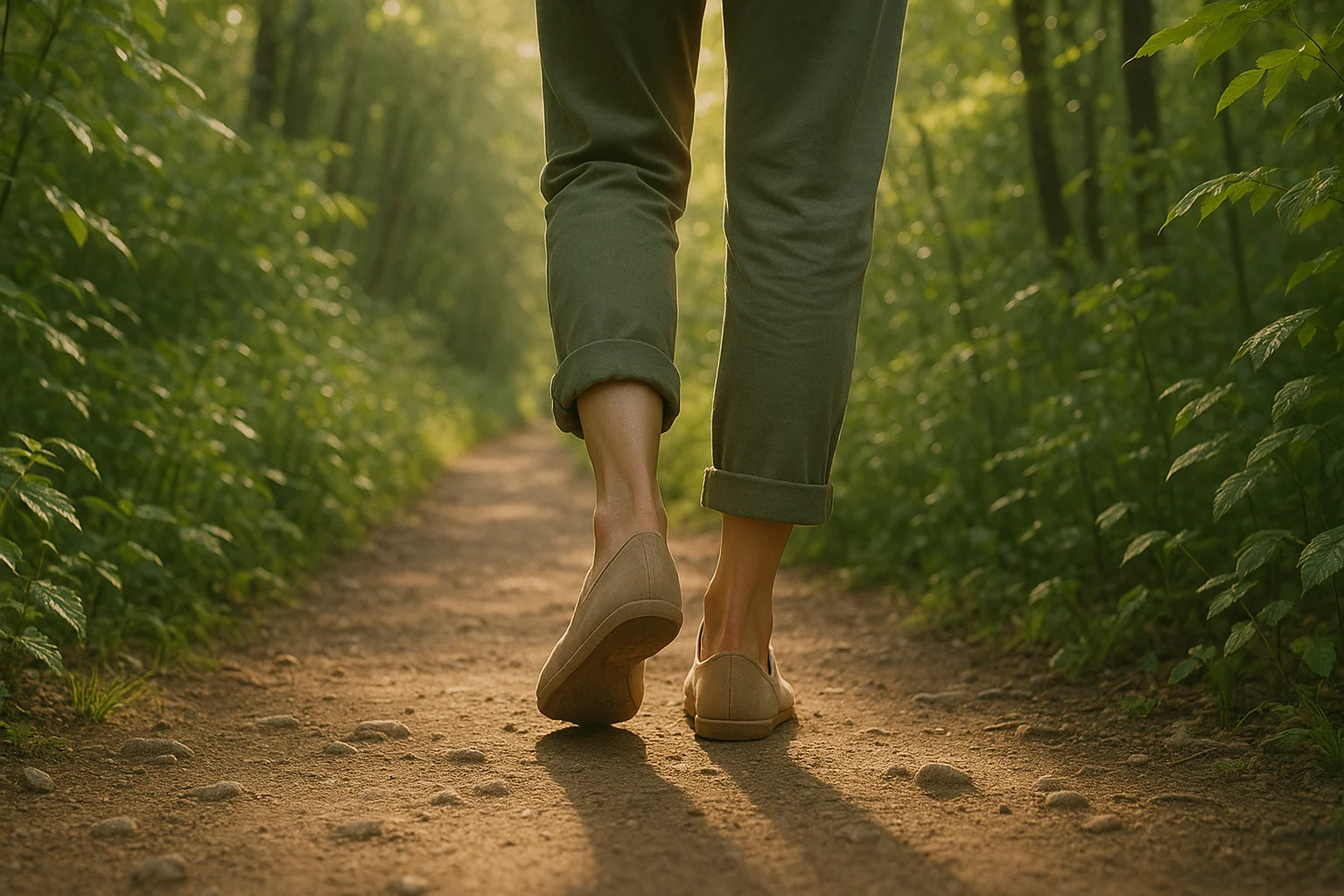
How to Practice Mindfulness Walking Meditation (Step-by-Step)
Ready to try? Here’s a simple way to begin. There’s no perfect way—just steady attention.
1. Prepare for your practice
Choose a familiar route where you can move without rushing. Clear obvious obstacles, silence notifications if that helps, and use the footwear or mobility aid you normally rely on. If you use a wheelchair, the same practice can be adapted for wheelchair users: handrim contact, the push-and-release motion, or the chair’s rolling direction can become the movement anchor.
2. Adopt a mindful posture
Let your posture be easy rather than rigid. Keep your gaze far enough ahead to notice the path and obstacles while staying aware of your steps.
3. Set a deliberate pace
Start slowly enough to feel each step—lift, move, place. Once you have the anchor, let a natural rhythm emerge. Slow walking is a way to learn the practice, not a rule; use a pace that still lets you notice where you’re going.
4. Sync with your breath
Let your breath be easy. If it helps, match two steps per inhale and two per exhale—only if it feels natural.
5. Choose your focus anchor
Your anchor keeps you present. Try one of these:
Feet sensations
Feel the sequence: lift, swing, place. Notice heel strike and weight shift. Gently label it: “Lift, move, place.”
Body movements
Notice your arms, hips, and the brush of fabric. Stay with sensation rather than analyzing it.
Surrounding sounds
Hear birds, traffic, or footsteps without adding a story. A quiet label—“sound, sound”—can help.
Visual cues
Let colors and shapes register, then return to your feet if the mind starts chasing details.
6. Expand your awareness
Widen your focus to sounds, sights, or smells. However, return to your anchor (e.g., feet) if your mind drifts. Observe without judgment.
7. Refocus when distracted
Your mind will wander—it’s normal! Acknowledge, “Thinking,” and refocus on your anchor. Each return builds mindfulness.
8. End with intention
Ease your pace, pause, and take a fuller breath. Notice what feels steady and bring that with you.
Where to Practice Walking Meditation: Outdoor, Indoor, and Public Settings
You can practice in very different environments. Choose a setting where you can keep enough attention on your route while still noticing the sensations of walking.
Outdoor settings: more sensory cues
Outdoor mindfulness gives you plenty of sensory cues to work with. In a park, trail, or backyard, notice one thing at a time—the crunch of leaves, shifting light, breeze, or ground texture—while keeping enough awareness for the route itself.
A backyard works too—quiet and close. Change your route now and then to keep it fresh, and check the forecast before you head out.
Indoor settings: more control
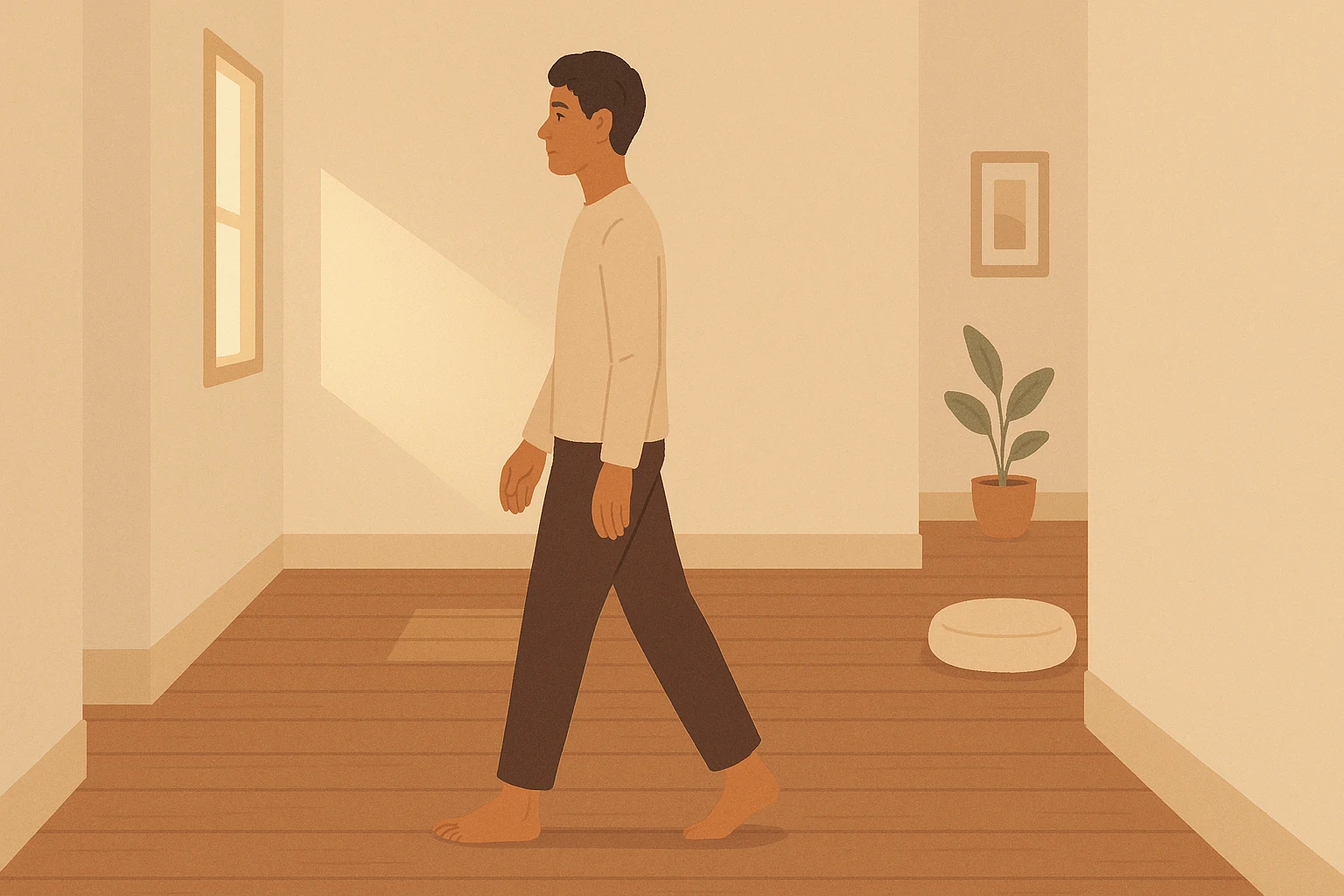
A hallway or small room can make pace and distractions easier to manage. With fewer changing cues, lean into foot sensations. A treadmill can work if you already use one comfortably—keep the pace easy and stay oriented to the machine.
Public spaces: practice amid activity
Try it on a commute or quick errand. Keep a natural pace, notice the soundscape, and come back to your feet when attention scatters. The goal is to practice attention without losing ordinary awareness of people, crossings, and obstacles.
| Setting | Best for | Considerations | Tips |
|---|---|---|---|
| Outdoor | Sensory variety | Weather, crowds, uneven ground | Use sounds, breeze, or ground texture as an anchor |
| Indoor | More control over pace and distractions | Limited space, repeated turns | Emphasize foot contact and weight shift |
| Public | Practice during ordinary routines | People, crossings, obstacles, traffic | Keep a natural pace and broad situational awareness |
Once you know where you’ll walk, use the guide below to turn that setting and your available time into a simple practice.
Build Your Mindful Walking Guide
Choose where you’ll walk and how much time you have to build a simple practice you can follow. Use a route you already feel steady using, and use your usual mobility aid if you need one.
Choose a setting and duration to build your guide.
Overcoming Challenges in Mindful Walking
Most difficulties do not mean you’re doing the practice wrong. Match the fix to what is getting in the way: wandering attention, boredom, discomfort, distractions, or consistency.
Handling a Wandering Mind
The mind wanders—that’s normal. When you notice, mark it with a gentle “thinking,” then return to your feet or breath. Every return builds the skill.
Managing Boredom or Impatience
If slow walking feels dull, try five minutes at first. Switch anchors (feet, then sounds) to keep it fresh.
Easing Physical Discomfort
Keep your posture easy rather than rigid. If something aches, slow down or pause. Let comfort set the pace.
Navigating Distractions
Noise will tug at attention. Name it—“sound”—and come back to your anchor. Treat it as part of the walk, not a problem.
Building Consistency
To make the practice easier to repeat, attach a short mindful walk to something you already do—after breakfast, during a break, or before you head home. Keep it short enough that repeating it feels realistic.
Frequently Asked Questions About Mindful Walking
Take One Mindful Walk
You do not need a perfect route or a long session. On your next familiar walk, choose one anchor and stay with it for the first few minutes; when attention wanders, return without restarting. If you want a ready-made structure, build your mindful walking guide and follow the version that matches your setting and available time.