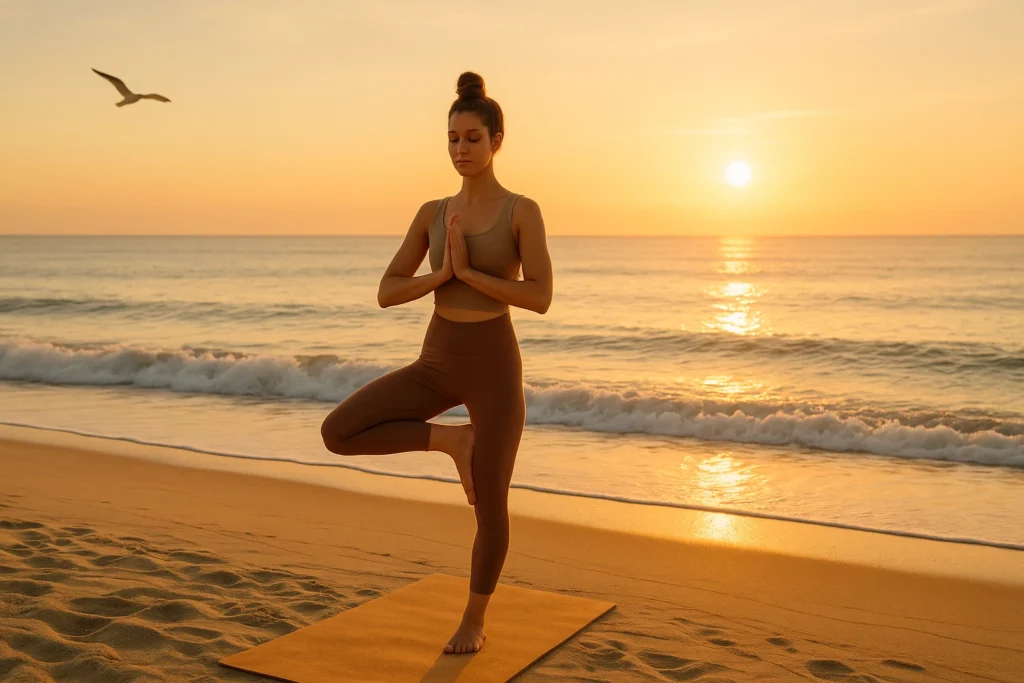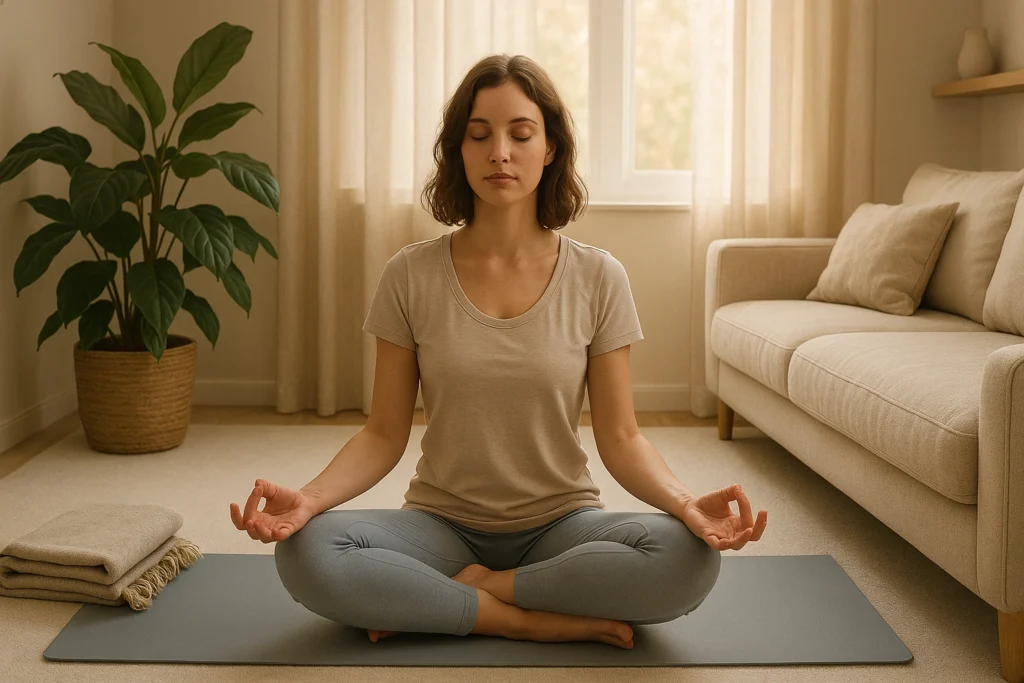
Feeling stretched thin by work or life can show up as racing thoughts, body tension, restlessness, or simply too much mental noise. Mindfulness gives your attention one clear place to land—breath, body, senses, movement, or a kind phrase—without requiring the stress to disappear first.
Below are six mindfulness techniques for stress you can try in a few minutes or longer. Use the practice picker for a starting point, or go straight to the steps that feel most workable. Research suggests mindfulness-based approaches may help some people with stress, but results vary, so treat these as options rather than guarantees. If you want the bigger picture, our guide to mindfulness for stress relief shows how these techniques fit into a broader routine.
Table of Contents
- Find a Mindfulness Practice for Right Now
- 6 Mindfulness Techniques for Stress to Try
- What Research Says About Mindfulness and Stress
- How to Make Mindfulness Easier to Repeat
- Common Questions About Mindfulness and Stress
- Choose One Practice and Start Small
Find a Mindfulness Practice for Right Now
Choose how stressed you feel and how much time you have. You’ll get one low-pressure place to start and a direct link to the steps.
Choose both answers to get a starting practice.
If you’d rather compare before choosing, keep reading—the six practices are explained step by step below.
6 Mindfulness Techniques for Stress to Try
These six practices use different anchors: breath, body sensations, the senses, imagery, movement, and compassion. None is a universal best choice. Treat them as stress relief exercises to experiment with, and stop or switch approaches if a practice makes you feel worse.
1. Mindful Breathing
Mindful breathing involves focusing on the breath’s natural rhythm. Because your breath is always available, it can be a practical attention anchor. For more on combining breath with movement, explore yoga-based breathing exercises.
How to Try It
- Find a comfortable position: Sit or stand in a way you can maintain easily; keep your eyes open or soften your gaze.
- Notice your breath: Feel it in your nostrils, chest, or belly without controlling it.
- Follow the cycle: Observe the inhale, pause, exhale, and pause again.
- Redirect wandering thoughts: Gently return to your breath when your mind drifts.
Try 1–5 minutes, and stop sooner if focusing on the breath feels uncomfortable.
Try It When
- Quick pause: Try it when you want a brief reset during a stressful moment.
- Before a task or as part of a bedtime wind-down.
- At a desk, in a waiting room, or while parked—anywhere you can safely turn some attention inward.

2. Body Scan Meditation
A body scan involves moving attention through different parts of the body and noticing sensations such as tension, warmth, pressure, or ease without forcing them to change.
How to Try It
- Get comfortable: Lie down or sit in a supported position; keep your eyes open or closed.
- Start with your toes: Notice sensations without judgment.
- Move upward slowly: Scan feet, legs, torso, arms, and head.
- Stay gentle around tension: Let your breath stay natural and notice whether an area softens without forcing it.
Rest for a moment after scanning, feeling your whole body.
Try It When
- Body tension: Try it when you want to notice where you are holding effort.
- As a quiet wind-down before bed.
- After a long day or when you feel disconnected from body sensations.
3. Five-Senses Grounding (5-4-3-2-1)
This technique uses the senses to give your attention an external anchor when thoughts feel fast, scattered, or hard to follow.
How to Try It
- 5 Things You See: Name details (e.g., wall texture).
- 4 Things You Feel: Notice your chair, clothes, or air.
- 3 Things You Hear: Identify sounds like traffic or breathing.
- 2 Things You Smell: Notice any scents you can detect.
- 1 Thing You Taste: Notice any taste that is already present.
If one sense gives you nothing obvious, skip it rather than forcing an answer. The point is to notice what is actually around you, not to complete the sequence perfectly.
Try It When
- Scattered attention: Try it when you want a concrete external focus.
- In busy settings such as an office or public transport.
- Before or after a stressful event when noticing the environment feels manageable.

4. Guided Imagery
Guided imagery uses imagination to hold attention on a scene that feels neutral or calming. If visualization makes you more tense or distracted, choose another practice.
How to Try It
- Settle somewhere comfortable: Sit or lie down, and close your eyes only if that feels better.
- Imagine a peaceful scene: Picture a beach, forest, cozy room, or another place that feels steady to you.
- Engage senses: See colors, hear sounds, feel textures.
- Stay with it: Spend 5–15 minutes with the scene, returning to its details when your attention wanders.
Try It When
- As part of a bedtime wind-down.
- When you want a structured mental focus.
- Ahead of a stressful moment if imagining a steady setting feels helpful.
5. Mindful Walking or Stretching
Mindful movement simply means paying close attention as you walk or stretch—linking gentle motion with mindfulness meditation. For a deeper dive, try mindfulness walking meditation.
How to Try It (Mindful Walking)
- Walk slowly: Feel your feet touching the ground.
- Notice your body: Sense your arms, legs, and gait.
- Engage senses: Observe sights and sounds without judgment.
- Redirect thoughts: Return focus to movement.
How to Try It (Mindful Stretching)
- Start gently: Begin with a shoulder roll or a light arm stretch.
- Feel sensations: Notice muscle stretch or release.
- Breathe with movement: Let your breath stay easy and avoid using the exhale to force a deeper stretch.
Try It When
- Restlessness: Try it when sitting still feels like extra work.
- After sitting for a while or when you want a physical anchor for attention.
- As part of a gentle morning or midday routine.
6. Loving-Kindness Meditation
This practice invites you to repeat kind wishes for yourself and others. The aim is to practice a kinder way of relating to what you feel, not to manufacture a particular emotion.
How to Try It
- Sit comfortably: Close your eyes or soften your gaze and let your breath stay natural.
- Repeat phrases: Silently say, “May I be happy, may I be healthy, may I be at peace.”
- Extend to others: Include loved ones, acquaintances, or even difficult people.
- Notice your response: Warmth may arise, but it is fine if the phrases simply feel neutral.
Try It When
- When stress is tied to self-criticism or relationship tension.
- When you want a compassion-based practice rather than a sensory one.
- After conflict, once you have enough space to practice without forcing forgiveness or calm.
What Research Says About Mindfulness and Stress
Mindfulness is widely studied for stress and related concerns, but the evidence is more nuanced than a simple “switch off the stress response” story. The National Center for Complementary and Integrative Health (NCCIH) says mindfulness and meditation may help with stress, anxiety, depression, and other concerns, while also noting that many studies are preliminary, varied in quality, or difficult to compare. That makes may help a more accurate promise than guaranteed calm.
- Stress and mood: Reviews have found benefits from some mindfulness-based approaches, but results vary by population, program, and study quality. See the NCCIH evidence overview.
- Cortisol: A 2024 systematic review and meta-analysis of randomized trials found that mindfulness and meditation interventions were associated with changes in cortisol. That supports a possible physiological effect, but it does not mean one brief practice will reliably lower cortisol on demand. View the review on PubMed.
- Safety: Meditation and mindfulness are generally considered to have few risks, but negative experiences can occur. If a practice increases anxiety, distress, or other difficult symptoms, stop and choose a different approach or seek qualified support.
How to Make Mindfulness Easier to Repeat
The goal is not a perfect streak. Give one practice a small, predictable place in your day so you do not have to remember it from scratch.
Start With a Tiny Version
Use 1–2 minutes, one round of five-senses grounding, or a short mindful walk. If you naturally want to continue, you can; if not, the short practice still counts.
Tie It to a Cue You Already Have
- Notice a few breaths while coffee or tea brews.
- Walk mindfully for part of a commute when it is safe to do so.
- Try a short body scan after getting into bed.
A phone reminder can help at first, but treat it as a cue rather than another obligation.
Judge the Practice by Usefulness, Not Perfection
Mind wandering is not failure; noticing it and returning is part of the practice. Afterward, ask whether the exercise gave your attention a clearer anchor. If it did, repeat it. If it did not, try a different kind of anchor next time. If a practice consistently increases agitation or distress, stop or switch to something more outward-facing, such as five-senses grounding.
Common Questions About Mindfulness and Stress
If mindful movement is the practice you’re most likely to repeat, the routine below gives you a concrete 10-minute sequence instead of improvising one each time.
A Chair-Yoga Routine for Stiff Mornings
Confirm to get the routine and yoga tips. Unsubscribe anytime.
Something went wrong. Please check your email address and try again.
Choose One Practice and Start Small
You do not need to master all six. Pick one practice that feels manageable today, try it once, and notice what changes—or does not. If it gives you a workable anchor, repeat it. If it does not, try a different kind of anchor next time.
If one of these practices gives you a useful anchor and you want to build on it, continue with our guide to mindfulness for stress relief.