Stress can make a full yoga session feel like one more thing on the list. You don’t need a long or complicated practice. Yoga for stress relief can be as simple as one comfortable shape, a few easy breaths, and a few quiet minutes to notice how you feel.
This guide gives you five gentle poses, four breathing options, a short routine, and a quick check-in to help you choose where to start. For the broader mindfulness picture, our mindfulness stress relief guide shows how yoga fits alongside other stress-management practices.
Use the Stress Check-InThis post contains affiliate links. If you purchase through them, we may earn a commission at no extra cost to you. As an Amazon Associate, I earn from qualifying purchases. Learn more.
Table of Contents
- Stress Check-In: Choose a Gentle Starting Point
- Gentle Yoga Poses for Stress Relief
- Breathwork for Stress: Four Simple Options
- A 10-Minute Yoga and Breathwork Routine
- What Research Says About Yoga and Stress
- Let Yoga Be One Part of the Plan
- Common Questions About Yoga and Stress
- Keep Your Starting Point Simple
Stress Check-In: Choose a Gentle Starting Point
Pick the number that best matches how stressed you feel right now. You’ll get one simple place to start, with a gentler alternative when useful.
This is a personal check-in, not a diagnosis. Use your own sense of how you feel.
Selected: /10
Your starting point
You’re in the middle of your own check-in. Pick one calming shape plus a steady breath instead of stacking several techniques.
Try Child’s Pose for 5–10 breaths. If kneeling is not comfortable, skip the pose and use the breathing practice instead.
Gentle Yoga Poses for Stress Relief
If movement sounds good right now, start with the shape that feels easiest to enter and leave. Floor poses are optional: if getting down or back up is the hard part, stay seated or use the breathing section instead. Nothing here should require pushing through pain.
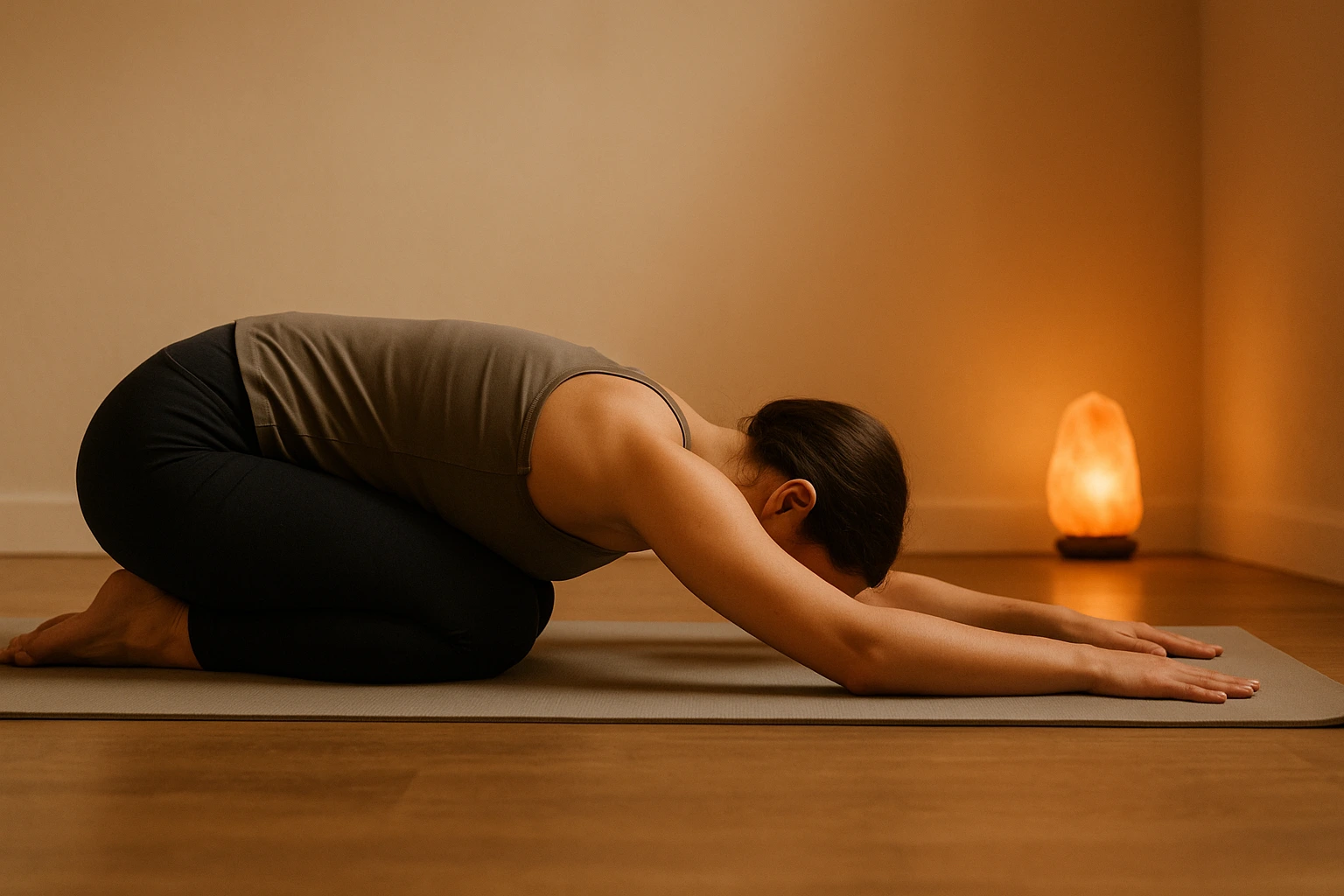
Child’s Pose: A Restful Starting Point
This restful shape can give the back and hips a comfortable stretch while letting the head and arms settle.
To try it, kneel with your knees at a comfortable width, sit back toward your heels, and fold forward only as far as feels easy. Rest your forehead on the floor or on support, and keep your arms wherever your shoulders relax. Stay for several comfortable breaths.
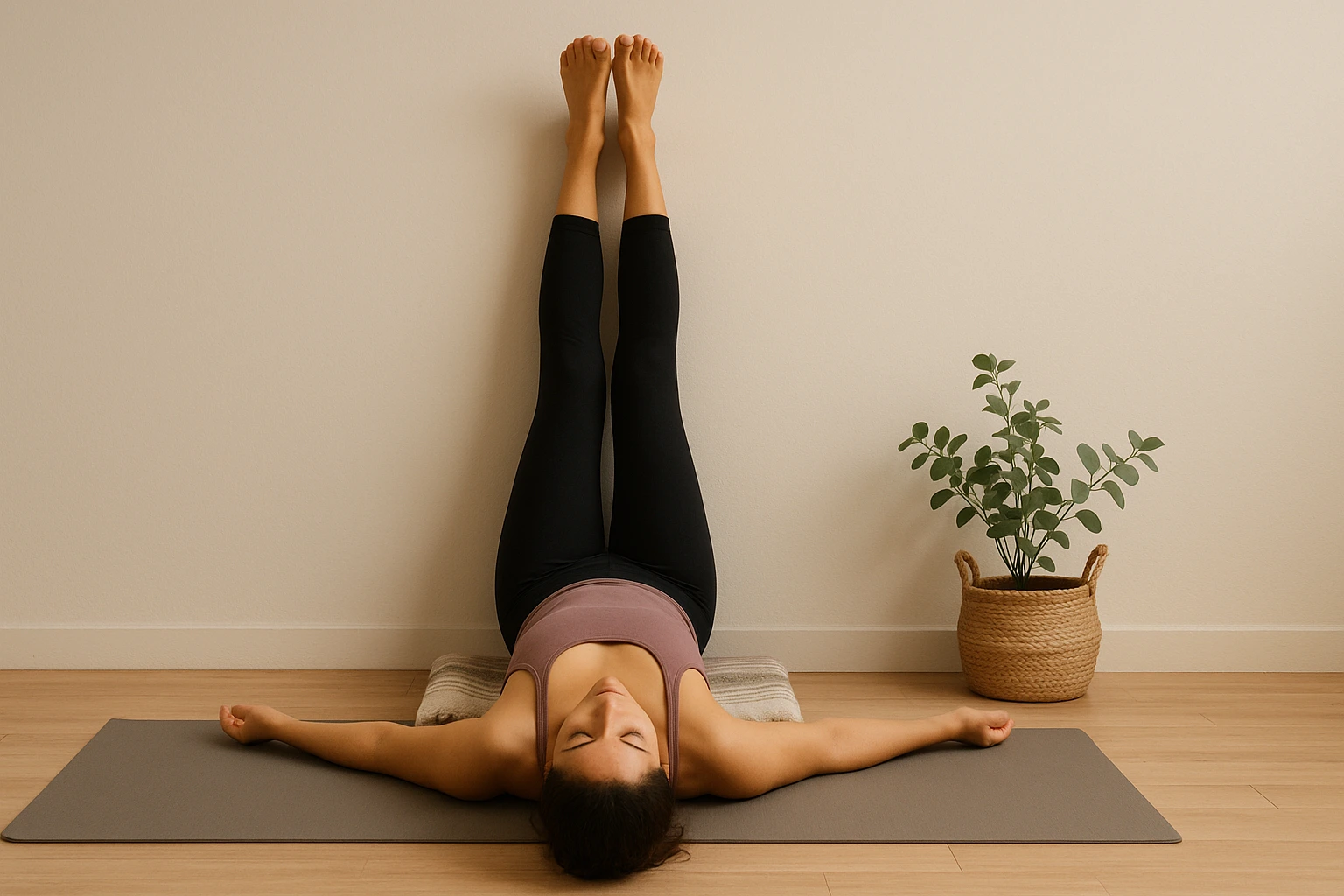
Legs-up-the-Wall: Low-Effort Rest
Resting with your legs supported by a wall gives you a quiet position without asking you to hold yourself up. The appeal is the low effort and stillness, especially when you do not want to hold yourself in an active pose.
To try it, sit sideways near a wall, lower yourself back, and bring your legs up the wall. Adjust your distance until your hips and hamstrings feel comfortable, then rest your arms and stay only while the position feels easy.
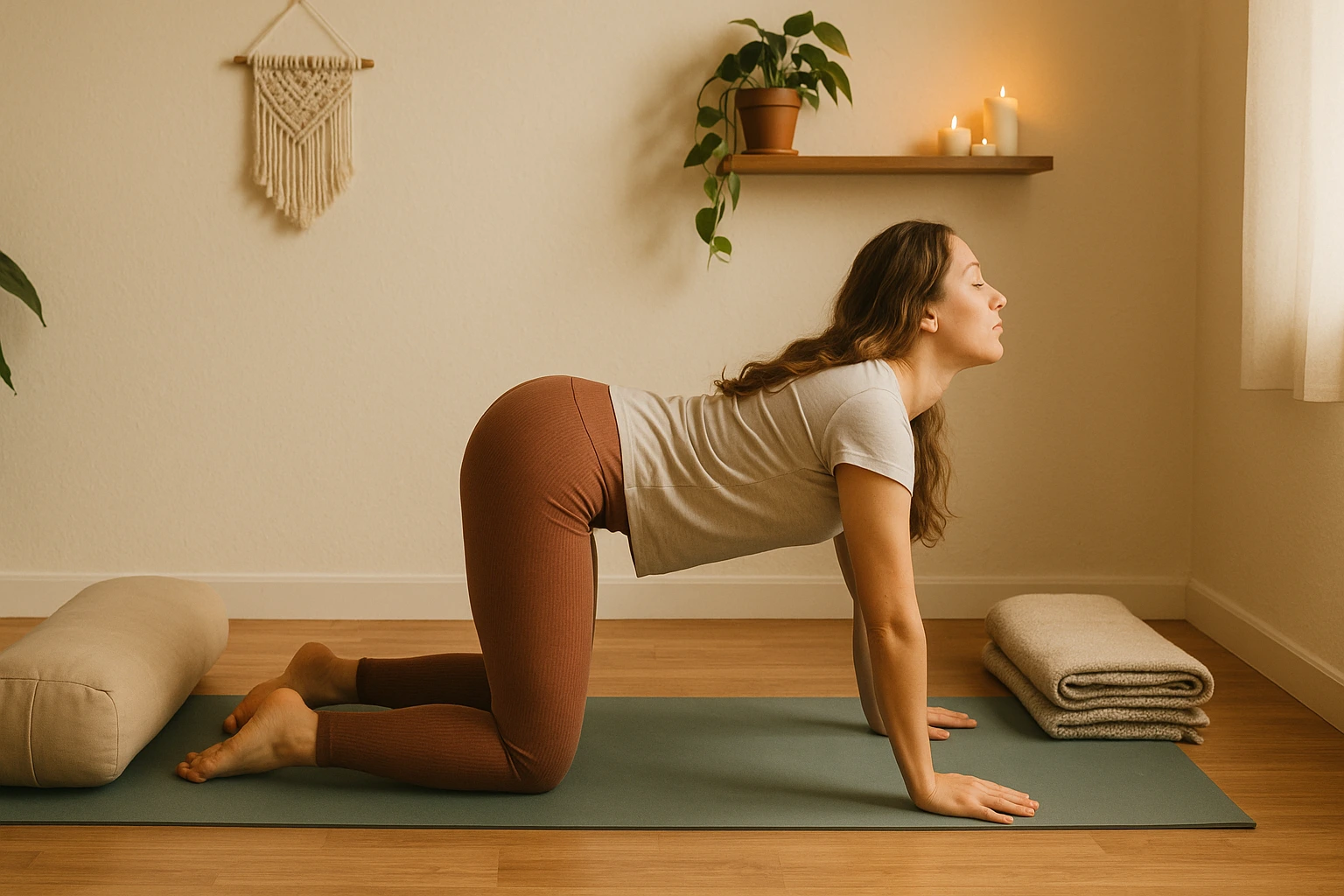
Cat-Cow: Gentle Movement With the Breath
Cat-Cow gives you slow spinal movement to pair with breathing, which can be useful when sitting still feels harder than moving.
To try it, start on hands and knees with hands under shoulders and knees under hips. Inhale as your chest opens and your spine gently arches; exhale as you round the spine. Keep the range small enough to feel smooth.
Forward Fold: A Quiet Back-Body Stretch
A standing forward fold stretches the hamstrings and back body. It does not need to be deep to be useful.
To try it, stand with feet about hip-width apart, hinge from the hips, and bend your knees as much as needed. Let your head and arms hang without pulling yourself lower, then come up slowly.
Savasana: Rest Without Doing More
Savasana is simply a resting position at the end of practice. If lying flat is uncomfortable, bend your knees or add support rather than forcing a traditional shape.
To try it, lie in a comfortable resting position, let your arms settle, and allow your breathing to return to its natural rhythm. Stay as long as the position remains comfortable.
No prop is required. A folded blanket or firm pillow can add support in Child’s Pose or Savasana. If you prefer a purpose-built cushion, the Gaiam Yoga Bolster is designed for restorative yoga and floor sitting.
Yoga Pose Cheat Sheet
| Pose | What it offers | Simple cue |
|---|---|---|
| Child’s Pose | Restful shape with a gentle hip and back stretch | Fold forward only as far as comfortable and support your head if needed. |
| Legs-up-the-Wall | Low-effort resting position with the legs supported | Adjust your distance from the wall until the position feels easy. |
| Cat-Cow | Gentle spinal movement coordinated with breathing | Move slowly between a comfortable arch and round. |
| Forward Fold | Back-body stretch with room to bend the knees | Hinge from the hips and avoid pulling yourself deeper. |
| Savasana | Still resting position at the end of practice | Choose a supported position you can leave easily. |
If stillness feels better than movement today, go straight to the breathing options instead.
Breathwork for Stress: Four Simple Options
Breathwork for stress means deliberately changing how you breathe for a short period. Think of these as simple breathing exercises, not a test of how long you can hold or control your breath. The useful rule is simple: easier is better than forcing a pattern. If deliberate breathing makes you lightheaded, air-hungry, or more tense, return to your normal breathing.
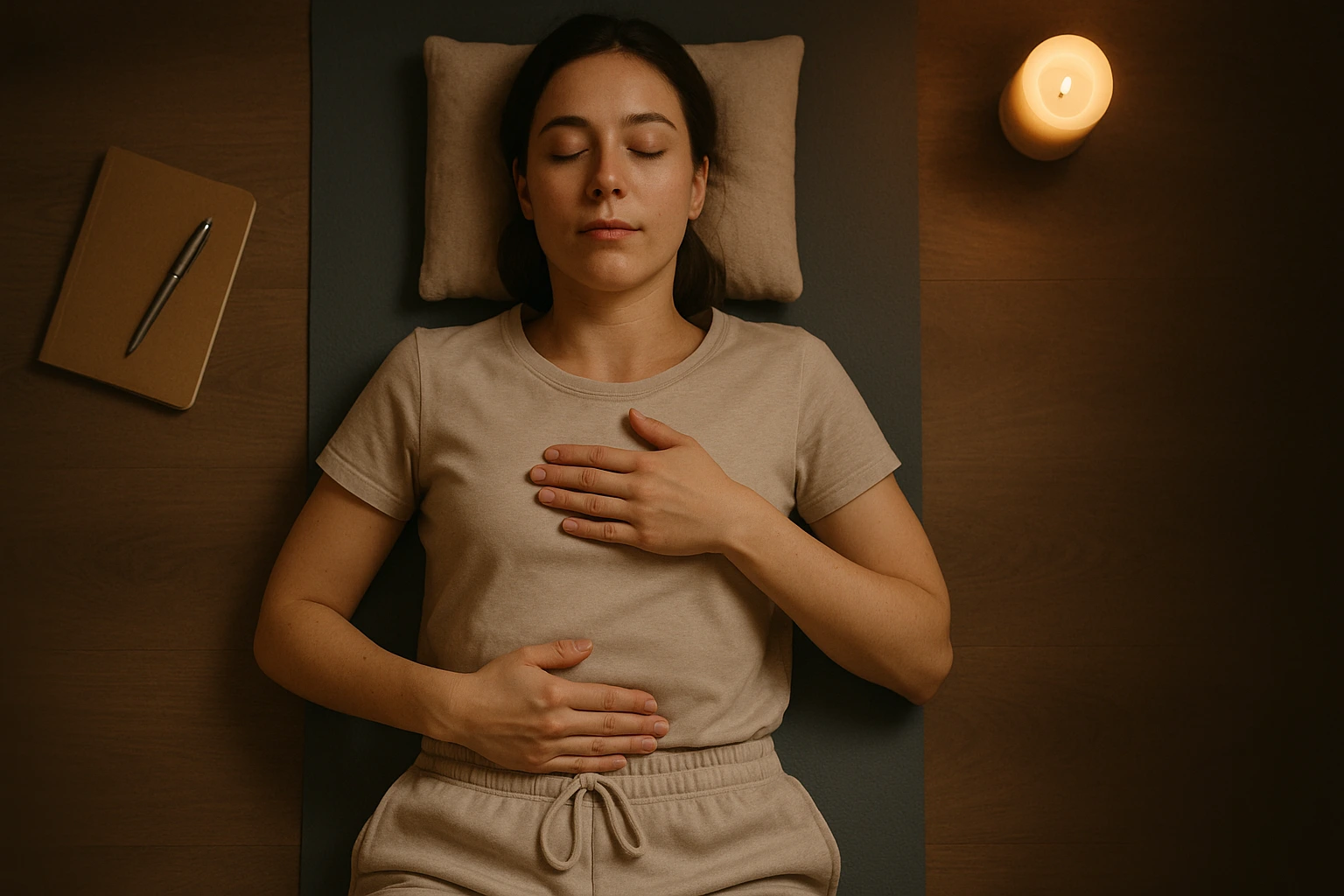
Diaphragmatic Breathing: The Simplest Place to Start
This slower belly-breathing pattern is the least complicated option in the section, so it is a good default when you do not want to think through a sequence.
To try it, sit or lie comfortably and rest a hand on your abdomen. Breathe in gently through your nose and let the abdomen expand, then exhale without forcing the air out. Start with a handful of slow breaths.
Alternate Nostril Breathing: A More Structured Rhythm
This traditional practice alternates the nostril you breathe through. Use it only if the hand position and rhythm feel easy rather than distracting.
To try it, sit upright. Close the right nostril and inhale through the left; switch sides and exhale through the right. Inhale through the right, switch, and exhale through the left. Continue for a few comfortable rounds.
Box Breathing: A Counted Pattern
Box breathing uses equal counts for the inhale, pause, exhale, and pause. The breath holds are optional; if they feel uncomfortable, use diaphragmatic breathing instead.
To try it, sit comfortably and use an easy count such as four in, four pause, four out, four pause. Keep the count shorter if needed, and stop the pattern rather than pushing through discomfort.
Lion’s Breath: A More Active Option
Lion’s Breath is more expressive than the other techniques, so it fits better when you want an active release than when you want the quietest possible practice.
To try it, sit or kneel comfortably, inhale through the nose, then exhale through an open mouth with a relaxed “ha.” Repeat a few times without straining your throat or breath.
Breathwork Cheat Sheet
| Technique | Best fit | Simple cue |
|---|---|---|
| Diaphragmatic breathing | Simple, slow starting point | Let the abdomen expand on an easy inhale, then exhale without forcing. |
| Alternate nostril breathing | Readers who like a structured hand-and-breath rhythm | Alternate sides at a comfortable pace. |
| Box breathing | Readers who find counting steadying | Use equal counts only while the pauses feel comfortable. |
| Lion’s Breath | A more active, expressive breathing option | Exhale through an open mouth with a relaxed “ha.” |
Once you know which movement and breathing pattern feel easiest, combine them into one short routine instead of trying to use everything at once.
A 10-Minute Yoga and Breathwork Routine
Start with one short sequence and adjust it by skipping any shape that does not fit your body that day.
- Settle — 1 minute: Sit or lie in a comfortable position and take a few easy diaphragmatic breaths.
- Cat-Cow — 2 minutes: Move slowly with the breath. If hands-and-knees is not comfortable, stay with the breathing practice.
- Child’s Pose — 2 minutes: Use support if it helps, or skip this step and keep breathing.
- Legs-up-the-Wall — 3 minutes: Let the wall support your legs and choose a distance that does not create strain.
- Savasana — 2 minutes: Finish in a resting position that feels easy to leave.
Make the Routine Easier to Repeat
The best routine is the one you can return to without bracing for it. Attach it to a time that already exists in your day, keep any mat or prop where it is easy to reach, and treat a missed day as a missed day—not a failed habit.
If you want a longer practice, add Forward Fold or a few comfortable rounds of alternate nostril breathing rather than making the sequence more complicated. If you prefer a completely prop-free practice, the no-equipment yoga routine is the cleaner next step.
What Research Says About Yoga and Stress
Yoga combines physical postures, breathing techniques, and often meditation or mindful attention. The National Center for Complementary and Integrative Health (NCCIH) says research suggests yoga may support stress management, mental and emotional well-being, sleep, and other aspects of wellness.
That evidence is supportive, not absolute. NCCIH also notes that research on yoga for anxiety disorders is not conclusive, so yoga is better framed as a stress-management or adjunctive practice than as a replacement for appropriate mental-health care. For more on the mindfulness side of practice, see the benefits of mindful movement.
Let Yoga Be One Part of the Plan
Yoga can be useful without having to carry the whole job of stress management. CDC guidance on managing stress also points to basics such as enough sleep, regular movement, time outside, and staying connected with people you trust.
- Protect sleep: Adults generally need 7 or more hours per night, and a regular sleep schedule can help.
- Keep moving: A walk or another manageable form of activity can count; it does not need to be another workout.
- Stay connected: Talk with people you trust instead of making stress a solo project.
- Make room to unwind: Protect a small pocket of time when you can, rather than turning yoga into another task to squeeze in.
When Stress Feels Bigger Than a Self-Care Problem
If stress feels persistent, overwhelming, or hard to manage, or if you are worried about your mental or physical health, a yoga routine is not the only next step. Consider talking with a qualified health professional or another appropriate source of support.
Common Questions About Yoga and Stress
If getting down to the floor is what makes a short practice harder to start, a chair-based routine can give you the same low-friction way to begin.
A Chair-Yoga Routine for Stiff Mornings
Confirm to get the routine and yoga tips. Unsubscribe anytime.
Something went wrong. Please check your email address and try again.
Keep Your Starting Point Simple
You do not need every pose or breathing pattern in this guide. Choose one movement that feels comfortable and one breathing practice that feels easy, then return to that combination when you need a pause. If the stress check-in points you toward a gentler option, take it.
The goal is not to perform relaxation perfectly. It is to leave with one practice you can return to without making your day harder.