
If you want to plan a yoga retreat in Baja, the first useful decision is not the venue—it is which part of Baja you mean. Todos Santos, Los Cabos, La Paz, and the East Cape are in Baja California Sur, while Valle de Guadalupe is in Baja California farther north. That choice changes airports, ground transfers, weather planning, venue options, and cost.
This guide gives you a practical seven-step sequence: define the retreat, choose the region, vet the venue, build the program and budget, market it, then lock down travel and local requirements. If you are still comparing retreat types rather than organizing one, the complete yoga retreat guide is the better starting point.
Table of Contents
- Step 1: Define the Retreat
- Step 2: Choose the Right Part of Baja
- Check Your Baja Retreat Plan
- Step 3: Vet the Venue
- Step 4: Build the Program
- Get the 10-Minute Chair Yoga Routine
- Step 5: Build the Budget
- Step 6: Market the Retreat
- Step 7: Lock Down Logistics
- Frequently Asked Questions
- Before You Put the Retreat on Sale
Step 1: Define the Retreat Before You Book Anything
Good yoga retreat planning starts with a one-page brief, not a venue search. If you cannot describe who the retreat is for and what they are coming for, every later choice—hotel, class schedule, price, marketing—turns into guesswork.
Write a one-page retreat brief
- Participants: Who is this for, and what experience level, mobility needs, room preferences, and budget range should the plan accommodate?
- Core promise: Is the retreat mainly practice, rest, study, surf-and-yoga, community, or another clearly defined format?
- Length and pace: Decide whether you are building a short weekend, a four- or five-day retreat, or a longer stay—and how much unscheduled time belongs in it.
- Group size: Pick a realistic maximum before you compare venues; capacity changes room blocks, practice space, meals, transport, and break-even math.
- Must-haves: Separate requirements from nice-to-haves. A covered practice space may be essential; a spa, surf lesson, or ceremony may not be.
That brief does not need polished sales copy. It only needs to be specific enough that two different venues would give you meaningfully different yes-or-no answers.
Step 2: Choose the Right Part of Baja
Baja is not one compact retreat destination. Southern options such as Todos Santos, Los Cabos, La Paz, and the East Cape create a very different travel plan from Valle de Guadalupe in northern Baja California. Choose the region before you fall in love with a property.
Shortlist by logistics, not just scenery
| Area | Planning angle | Check first |
|---|---|---|
| Todos Santos | Pacific-side town with an arts-and-culture feel and smaller-property options. | Ground transfer, venue access, and whether the property can actually host group practice. |
| Los Cabos | Useful when international-airport access and broad resort infrastructure are priorities. | Budget, transfer plan, and whether a resort setting matches the retreat you defined. |
| La Paz | Sea of Cortez setting with city services nearby. | How the whole group will arrive and whether activities or beach use add local requirements. |
| East Cape | More remote coastal planning for groups that want nature and fewer built-up surroundings. | Road conditions, transfers, backup plans, and what the venue provides on site. |
| Valle de Guadalupe | Northern Baja wine-country setting; treat it as a separate northern itinerary. | Airport and transfer plan, group transport, and whether alcohol-focused activities fit the retreat promise. |
If Todos Santos is on your shortlist, the Todos Santos yoga retreat guide gives you a closer look at that destination. Wherever you choose, compare the full arrival day—not just the flight—with your participants’ budget, mobility, and tolerance for long transfers.

Once you know the retreat you are building and where in Baja it belongs, use this quick check to decide which operational area needs attention next.
Check Your Baja Retreat Plan
Mark each planning area as Not started, In progress, or Ready for now. The checker will point you to the section that deserves your attention next.
Answer all four planning checks to see your next priority.
Step 3: Vet the Venue Before You Pay a Deposit
A retreat center, small hotel, resort, or private villa can all work. The important question is whether the property explicitly allows the kind of group programming you are planning and can support it without hidden compromises.
Questions to settle before you pay
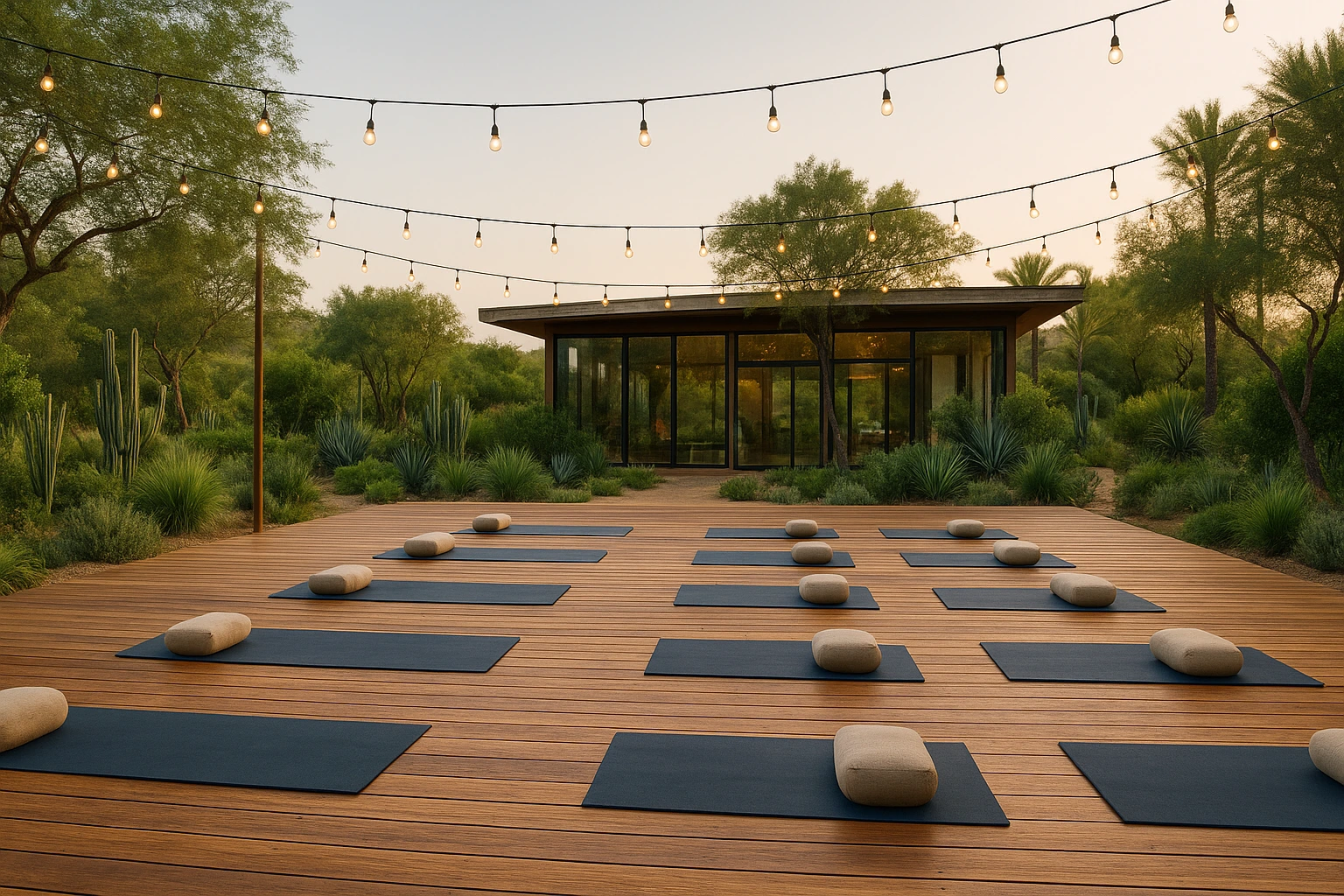
- Practice space: Is it large enough for the real group size? Ask for usable dimensions plus current photos or video of the space set up for a group, and confirm an indoor or covered backup for wind, heat, or rain.
- Rooms and access: Confirm bed configurations, stairs, walking distances, accessible rooms, and what happens if the group does not fill every room.
- Meals: Ask for sample menus, meal times, dietary-accommodation limits, water arrangements, and whether outside catering is allowed.
- Transport: Confirm where vans can load, how luggage is handled, and whether the venue can coordinate airport or activity transfers.
- Equipment: Get a written inventory of mats, blocks, straps, blankets, sound equipment, and anything you would otherwise need to source.
- Event rules: Ask about quiet hours, outside facilitators, beach or public-space use, vendor restrictions, alcohol, music, and any municipal or Protección Civil requirements the venue expects you to meet.
- Money terms: Clarify deposit dates, minimum spend or occupancy, cancellation terms, refunds, taxes or service charges, and which costs can change.
- Responsibility: Ask what insurance the venue carries and what coverage, participant terms, or safety planning remains your responsibility as organizer.
Put verbal promises into the contract or an attached scope. If a venue cannot answer a material question before the deposit, treat that uncertainty as part of the cost rather than assuming it will work out later.
Step 4: Build a Program People Can Actually Follow
A good retreat schedule makes the promise clear without filling every hour. Start with the main practice and meals, then add optional activities and workshops only where they improve the retreat rather than turning it into an endurance test.
- Anchor the day: One main yoga session gives the schedule a center; a second gentler session can be optional when it suits the group.
- Protect downtime: Leave real gaps for showers, naps, beach time, journaling, or simply not being in a group.
- Build in buffers: Meals, vans, room changes, equipment setup, and late starts all take longer with a group.
- Make extras optional: Surfing, hikes, spa time, workshops, or excursions should not make the core retreat inaccessible to someone who skips them.
- Match the people leading it: Only advertise practices, workshops, or therapeutic-style claims that the actual facilitators are qualified and prepared to deliver.
A sample day with breathing room
| Time | Activity | Planning purpose |
|---|---|---|
| 7:00 AM | Quiet meditation or breath practice | A gentle start before the main class. |
| 7:30 AM | Morning yoga | The day’s primary practice. |
| 9:00 AM | Breakfast | Enough time to eat without rushing into the next activity. |
| 10:30 AM | Workshop or free block | Use for a real teaching goal—or leave it open. |
| 12:30 PM | Lunch | Keep the middle of the day spacious. |
| 2:00 PM | Free time or optional activity | Rest, explore, or join an excursion. |
| 5:00 PM | Gentle practice or reflection | A lower-intensity second session when appropriate. |
| 7:00 PM | Dinner | Unhurried group time. |
| 8:30 PM | Optional wind-down | Keep it optional rather than extending every day by default. |
Before you publish the itinerary, have each facilitator check the timing and leave enough room for setup, transport, meals, and people arriving with different energy levels.
If you’re planning for a mixed group, try the free chair-yoga routine yourself before you decide what a gentler session should feel like. Treat it as participant-side experience, not a lesson plan for the retreat.
Get the 10-Minute Chair Yoga Routine
Confirm to get the routine and yoga tips. Unsubscribe anytime.
Something went wrong. Please check your email address and try again.
Step 5: Build the Budget Before You Set the Price
Do not start by copying another retreat’s price. Build your own break-even point first, using a realistic number of paying guests rather than the venue’s maximum capacity.
- Fixed costs: Venue buyout or deposit, facilitator fees and travel, website or booking tools, insurance, admin, and any costs that do not fall when one guest cancels.
- Variable cost per guest: Lodging, meals, transfers, activities, supplies, gifts, payment processing, or other costs that rise with attendance.
- Contingency: Set a buffer based on the risks in your actual plan—weather, transport, exchange rates, cancellations, or vendor changes—rather than using a percentage you cannot justify.
Break-even price per guest: fixed costs divided by realistic paying guests, plus the variable cost per guest and the contingency you assign per guest. Add the compensation or margin you need only after that break-even number is visible. Run the same calculation again with one or two fewer paying guests; if the numbers only work at a perfect sellout, you have very little room for cancellations or unsold rooms.
If the price lands above what your intended group can reasonably pay, change the cost structure, room mix, group size, duration, or included extras. Do not hide a broken budget behind an early-bird discount.
Step 6: Market a Retreat People Can Understand
Marketing works better once the dates, location, venue, price, inclusions, schedule, and cancellation terms are clear enough to explain without vague promises. As a working benchmark, Insight Timer’s retreat-marketing guide recommends starting about four to six months in advance; venue contracting and operational planning may need to begin earlier.
What the sales page needs to answer
- Who it is for: State the experience level, pace, group size, and any material physical or activity expectations.
- What is included: Be explicit about rooms, meals, classes, excursions, transfers, taxes, and anything that costs extra.
- What a typical day looks like: Show enough of the schedule that a cautious guest can picture the pace.
- Who is leading it: Use real facilitator credentials and experience; if this is a first retreat, let clarity and verified expertise do the trust-building instead of invented social proof.
- How booking works: Put deposits, payment dates, cancellation terms, required travel documents, and the contact route where people can find them before paying.
Use email, social channels, partner communities, and the facilitators’ existing audiences where they genuinely reach the people this retreat is for. A smaller number of clear, consistent messages is more useful than changing the retreat promise from post to post.
Step 7: Lock Down Travel, Risk, and Local Requirements
This is the point where the retreat stops being an idea and becomes an operation. Confirm the details that participants cannot solve for themselves after arrival.
- Arrival plan: Give the exact meeting point, transfer windows, late-arrival plan, luggage expectations, and a contact method that will work on travel day.
- Food and water: Reconfirm dietary needs, meal timing, drinking-water arrangements, and what the venue can and cannot accommodate.
- Mats and props: Tell participants what the venue supplies, what must be brought, and what can be rented locally. Do not make everyone fly with gear the venue already has.
- Rooming and payments: Finalize room assignments, balances, roommate expectations, and any remaining participant information before the deadline becomes urgent.
- Emergency contacts: Keep participant emergency contacts, venue contacts, local medical information, and facilitator responsibilities organized and accessible.
- Weather backup: Decide what changes if wind, heat, rain, or another local condition makes the planned outdoor session or excursion impractical.
- Current travel information: Recheck destination weather, transport conditions, and relevant government travel advisories as the date approaches.
Before you accept final payments
- Venue and vendor contracts: Confirm scope, dates, payment terms, cancellation terms, and who is responsible when a service changes.
- Local permissions: Ask the venue and relevant municipality whether your event, beach or public-space use, vendors, group activities, or setup requires permits, licensing, or Protección Civil review.
- Insurance: Confirm organizer or event coverage with a qualified insurer rather than assuming the venue’s policy covers you.
- Participant terms: Use clear booking terms and ask qualified local counsel what waivers, disclosures, or other agreements are appropriate for your specific setup.
- Tax and business obligations: Confirm any local or home-country obligations with qualified professionals before collecting money across jurisdictions.
Frequently Asked Questions
Before You Put the Retreat on Sale
Put the plan onto one page before you announce it: who the retreat is for, the exact Baja region, dates and length, maximum group size, venue requirements, and the price range your budget can support. Then confirm that the venue, schedule, and local requirements can all work together. If one of those three breaks the plan, change the region, date, scope, or price before adding more activities.
Finally, pressure-test the offer from the guest’s side with our guide on how to choose a yoga retreat. If your sales page does not clearly answer the same questions a cautious guest will ask—level, location, schedule, room setup, what is included, and what happens if plans change—fix those gaps before you promote it. A retreat plan is ready to sell when a careful reader can understand what they are buying without emailing you for the basics.