Does your mat feel fine for the first few minutes, then turn slick as your palms get damp? Dry grip and wet grip are not the same thing. If sweat is the problem, look for a surface designed to manage moisture—not just a mat that feels sticky when dry.
Three practical routes cover most of the decision: a sweat-focused mat, a rubber- and latex-free value option, or keeping your current mat and adding a towel. This guide shows when each route makes sense, then gives you a quick matcher for the two new-mat options and model-specific care guidance. For blocks, straps, and other setup choices, see the yoga gear guide.
This post contains affiliate links. If you purchase through them, I may earn a commission at no extra cost to you. As an Amazon Associate, I earn from qualifying purchases. Learn more.
Heavy-sweat option: Manduka GRP Adapt 2.0.
Its Satin Grip™ PU surface and moisture-absorbing construction are built around wet grip. Choose it when heavy sweat is the main problem; if value or avoiding natural rubber or latex matters more, compare the Gaiam Dry-Grip below.
Table of Contents
- Why Grip Matters When Your Hands Sweat
- What Makes a Yoga Mat Grippy When You Sweat
- How to Choose a Non-Slip Yoga Mat for Sweaty Hands
- Find Your Best Grip Match
- Manduka GRP Adapt 2.0 vs Gaiam Dry-Grip
- When a Towel or Grip Aid Makes More Sense
- Caring for Your Non-Slip Yoga Mat
- Frequently Asked Questions
- Choose the Grip Setup That Fits Your Sweat
Why Grip Matters When Your Hands Sweat
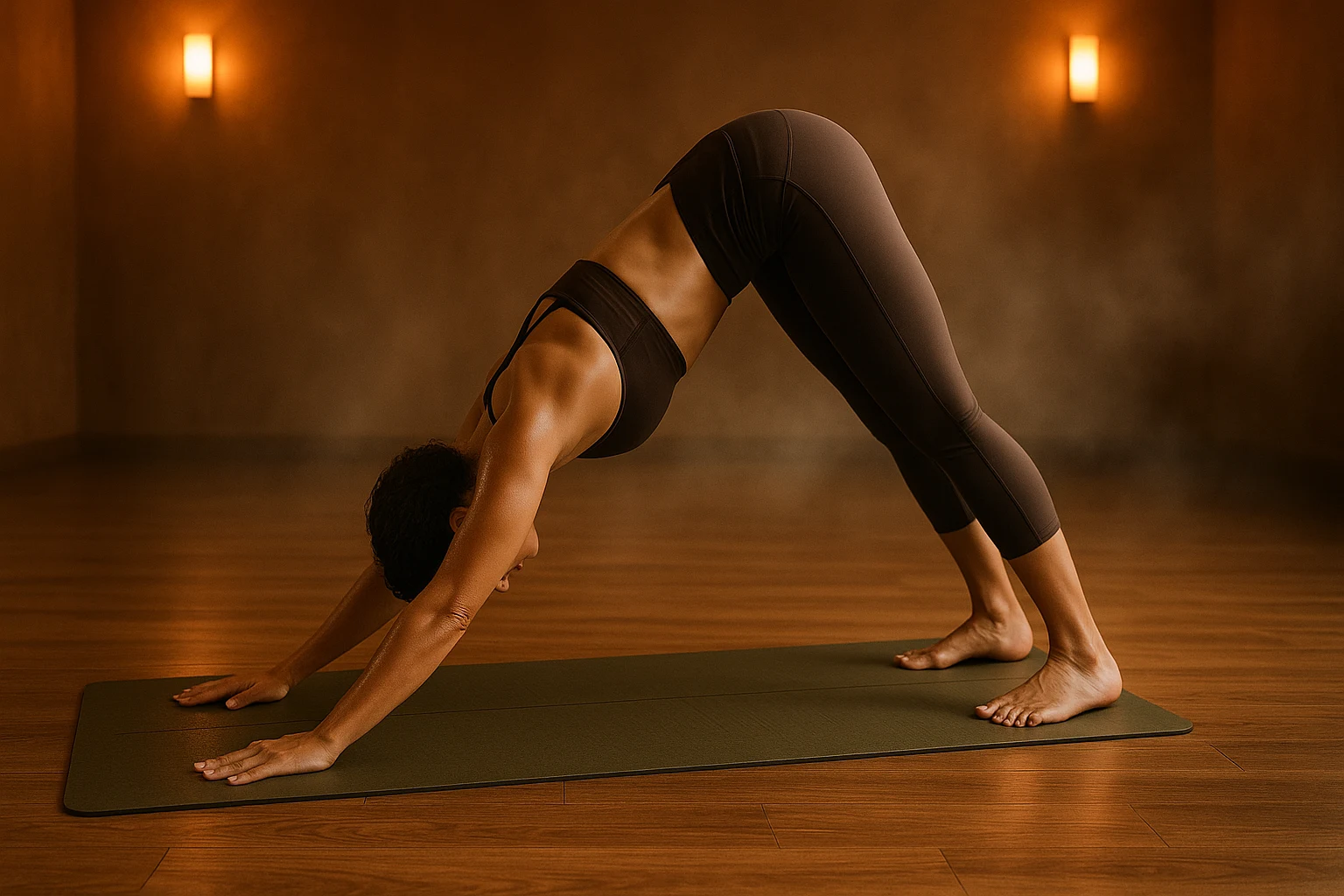
When your hands slide forward in Downward-Facing Dog, the problem is not that you need to squeeze the mat harder. You need a setup that keeps hand placement predictable once moisture appears. That may mean a sweat-ready mat, a full-length towel, or simply cleaning a surface that has picked up oil and residue.
If a mat feels secure while dry but noticeably slick once damp, treat that as a wet-grip problem. The useful question is not “Which mat is stickiest?” but “How does this surface handle the amount of sweat and heat in my practice?”
Before replacing anything, clean and fully dry your current mat using its maker’s instructions, then test it in a normal session. If it feels secure while dry but repeatedly turns slick once your palms dampen, you are likely dealing with a wet-grip mismatch; if cleaning fixes the problem, keep the mat.
What Makes a Yoga Mat Grippy When You Sweat
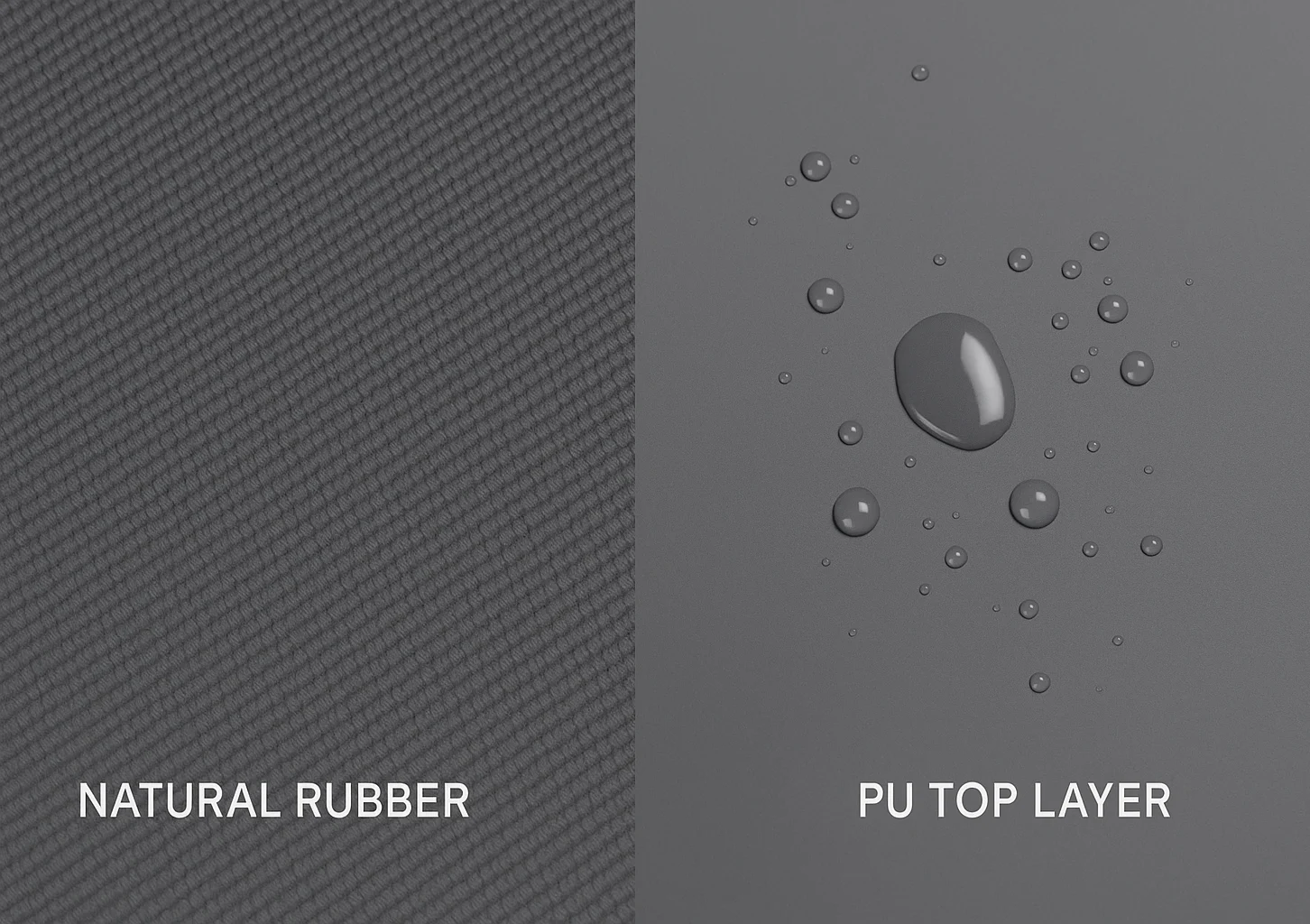
Wet grip depends on the surface treatment and how the mat handles moisture. The material name alone is not enough: two PVC mats or two PU mats can behave very differently because their coatings, texture, and cell structure differ.
Natural Rubber
Natural rubber can provide a stable, grippy base, but wet performance varies with the surface design. It is often heavier than synthetic alternatives, and it is not a fit for people who need to avoid latex.
- Useful when: You want a grounded feel and the mat’s surface is designed for your sweat level.
- Watch for: Weight, rubber odor, material sensitivity, and brand-specific care rules.
Polyurethane (PU)
PU top layers are common on sweat-focused mats because they can combine a smooth feel with strong moisture handling. The trade-off is care: highly absorbent PU surfaces can be easier to damage with the wrong cleaner.
- Useful when: Wet grip is the main problem you are trying to solve.
- Watch for: Manufacturer-specific cleaning instructions and natural-rubber bases on some models.
Microfiber or Fabric Tops
Towel-like surfaces generally work best once they are damp. They can be a good fit for very sweaty practice, but some feel slippery before enough moisture reaches the surface.
- Useful when: You sweat heavily or already prefer a towel-like feel.
- Watch for: Dry-start traction, bunching, drying time, and the maker’s washing instructions.
PVC and Coated Closed-Cell Mats
PVC is not automatically a poor wet-grip choice. The Gaiam Dry-Grip in this guide is a PVC mat with a moisture-wicking topcoat, which is a good reminder to judge the actual surface rather than the base material alone.
- Useful when: You want a wipe-clean surface or need a rubber- and latex-free option.
- Watch for: The specific topcoat and how it behaves once your hands become damp.
Texture and Surface Design
Texture can add mechanical traction, while absorbent or moisture-wicking surfaces manage the sweat itself. For heavy sweaters, the second job matters more than a pattern that only feels grippy when dry.
Thickness and Density
Thickness does not determine wet grip; it changes cushioning and floor feel. Around 4–5 mm is a common middle ground. Thicker mats can feel more cushioned, while thinner mats usually feel firmer and pack more easily.
How to Choose a Non-Slip Yoga Mat for Sweaty Hands
Start with the problem that actually makes you lose traction. Sweat level and practice temperature matter more than brand reputation, and material sensitivities can rule out an otherwise strong mat.
Your Practice Temperature
- Hot yoga or heated power flow: Prioritize a surface designed to keep working as moisture builds.
- Active room-temperature flow: Wet grip still matters, but you may not need the most absorbent premium surface.
- Gentle or restorative practice: Comfort and stability may matter more than maximum sweat handling.
If most of your practice is heated, the broader hot-yoga mat guide compares more heat-focused setups.
Your Sweat Level
- Heavy sweat: Look for an absorbent or moisture-managing surface and consider a full-length towel as a backup.
- Moderate sweat: A good moisture-wicking topcoat may be enough without moving to the most aggressive wet-grip surface.
- Light sweat: Prioritize comfort, floor feel, portability, and maintenance as long as the mat stays predictable when damp.
Portability vs. Cushioning
A thinner mat is easier to carry and usually gives a firmer connection to the floor. A thicker mat adds cushioning but can feel softer under balance poses. Choose the trade-off you notice in practice rather than assuming thicker is always better.
Material Sensitivities and Care
Manduka lists the GRP Adapt 2.0 as polyurethane, natural rubber, and latex and says it is not recommended for latex sensitivities. Gaiam labels the Dry-Grip rubber- and latex-free. If material sensitivity is the main constraint, compare the options in the hypoallergenic yoga mat guide before buying.
Budget
Prices change, so use budget as a tie-breaker rather than relying on fixed price bands. Compare the current price when you are ready to buy, then spend more only when the material, wet-grip performance, size, or latex/rubber requirements solve a problem you actually have.
If your current mat feels good except for sweat, see when a towel makes more sense before replacing it. A full-length towel can be the smaller change when cushioning, size, and floor feel already work for you.
If you are choosing a new mat, use the selector below before comparing the two options in detail. It weighs how much you sweat, how hot your practice gets, and whether grip, value, or avoiding natural rubber matters most.
Find Your Best Grip Match
Choose one answer for each question. Your result appears automatically and points to the same two mats compared in the next section.
Manduka GRP Adapt 2.0 vs Gaiam Dry-Grip
VSQuick pick: Choose Manduka when heavy sweat or hot practice makes wet grip the priority. Choose Gaiam when you want the value route or need a rubber- and latex-free mat.
| Mat | Manduka GRP Adapt 2.0 | Gaiam Performance Dry-Grip |
|---|---|---|
| Wet-grip approach | Satin Grip™ PU surface with moisture-absorbing construction | Dry-Grip topcoat designed to wick moisture |
| Thickness | 5 mm | 5 mm |
| Choose when | Hot classes, heavy sweat, or wet grip is your top priority | You want the value route or need rubber-/latex-free construction |
| Consider | Uses natural rubber; skip if that material does not suit you | Shorter 68 × 24 in footprint |
| Amazon |
When a Towel or Grip Aid Makes More Sense
You do not always need a new mat. If you already like the cushioning, size, and floor feel of your current one, solve the sweat problem with the lightest change that works.
- Full-length yoga towel: A practical first add-on for very sweaty classes when the mat itself still feels good. Many towel-style surfaces grip better once damp and can bunch if they are not anchored well.
- Grip socks: Useful when foot traction is the main issue or you want a travel-friendly option, but they change the direct foot-to-mat feel.
- Grip gloves: A niche option for hand traction. They can help some readers but feel less natural than changing the mat surface or using a towel.
Caring for Your Non-Slip Yoga Mat
Grip surfaces can be more sensitive to cleaners than ordinary closed-cell mats, so care for the exact model you own rather than using one universal DIY recipe.
Care for the Two Mats Compared Here
- Manduka GRP Adapt 2.0: Wipe away sweat with a clean damp cloth and use Manduka’s Mat Wash & Refresh when cleaning the surface. Let it air dry completely before rolling it up. Manduka says not to soak it, use harsh chemicals, or clean this GRP surface with soap.
- Gaiam Performance Dry-Grip: Gaiam recommends spot-cleaning with its mat wash or a damp cloth with cold water and mild detergent, then drying the mat flat. Avoid extended sun exposure, which the brand says can fade or make the mat brittle.
- Other mats and towels: Follow the maker’s care instructions for that exact material rather than assuming vinegar, soap, or machine washing is safe for every grippy surface.
Three Habits That Protect Grip
- Remove sweat after practice: Do not leave a damp absorbent mat rolled up.
- Let it dry fully: Air-dry before storage and keep it away from prolonged heat or direct sun when the maker warns against it.
- Use the right cleaner: If you are unsure, check the manufacturer’s instructions before trying a household cleaner.
Frequently Asked Questions
Choose the Grip Setup That Fits Your Sweat
The best grippy yoga mat is not simply the one that feels stickiest in a dry room. Match the surface to the amount of sweat you actually produce: Manduka GRP Adapt 2.0 when heavy sweat and wet grip are the priority, Gaiam Dry-Grip when you want the value or rubber-/latex-free route, and a full-length towel when your current mat otherwise works. Once you have a setup that stays predictable when damp, stop researching and get back to practice.