If you’re looking for a hypoallergenic yoga mat because your current mat leaves you itchy, rashy, or bothered by a strong odor, the useful question is not “Which mat is hypoallergenic?” A mat can look “natural” and still hide a rubber base. Start with the material you already know you need to avoid, then check the whole construction before you compare grip and cushioning.
In this guide, “hypoallergenic” is not a universal product category. A useful choice depends on what you need to avoid: natural-rubber latex is a known allergen, while other problems can come from friction, fragrance, coatings, or a specific product. Use the selector below to narrow by material first and practice style second. For the rest of your setup, the yoga gear guide covers the other essentials.
Find a Mat That FitsThis page contains affiliate links. As an Amazon Associate, I earn from qualifying purchases, at no extra cost to you. Learn more.
Table of Contents
- What “Hypoallergenic” Means for a Yoga Mat
- Why a Yoga Mat Can Feel Irritating
- Yoga Mat Materials: What to Check
- How to Choose After You Rule Out a Trigger
- Find a Mat That Fits Your Material Needs
- Three Yoga Mats to Compare by Material
- Reduce Irritation Beyond the Mat
- Frequently Asked Questions
- Choose by Material First, Then by Practice
What “Hypoallergenic” Means for a Yoga Mat
There is no single yoga-mat material that is guaranteed to be hypoallergenic for everyone. If a product is sold as an “allergy-safe yoga mat,” treat that as a prompt to check the full material stack, not as a universal guarantee. The useful goal is narrower: avoid a known trigger, verify the full construction of the exact mat, and then choose the performance features you actually need.
Quick rule:
- Known latex allergy: avoid natural-rubber mats rather than relying on a broad “latex-free rubber” claim.
- Strict PVC avoidance: verify every layer. A cork or PU surface can still sit on a different base material.
- No known material trigger: choose for grip, cushioning, portability, and care—then check the exact material stack before buying.
Why a Yoga Mat Can Feel Irritating
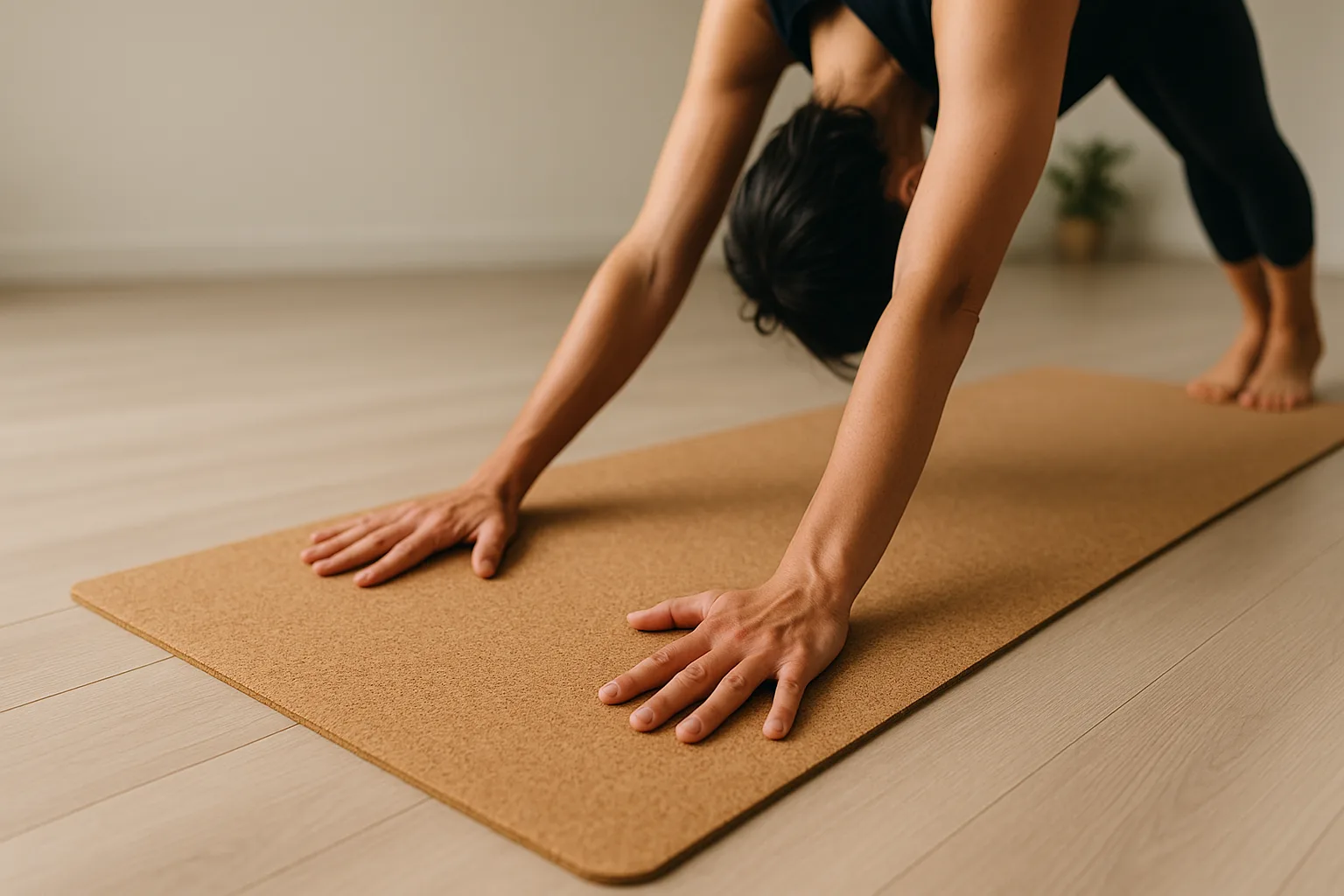
If you’re choosing a yoga mat for sensitive skin, the material label alone does not tell you what caused the problem. “Sensitive skin” can describe several different issues, so separate a known allergy from a strong odor, friction, or a product-specific sensitivity before you shop.
Latex Allergy Is a Specific Trigger
The AAAAI explains that natural-rubber latex contains proteins that can trigger allergic reactions in sensitized people. If latex is a known trigger for you, a natural-rubber base is an important skip condition—even when the top surface is cork or PU.
Strong Odor Is a Different Problem
A noticeable smell does not by itself diagnose an allergy. If a new mat has a strong chemical odor, ventilate the space and stop using it if it makes you feel unwell. The EPA notes that exposure to some VOCs can cause irritation, headaches, or nausea, while effects vary by chemical and exposure level.
Friction, Finishes, and Cleaners Can Matter Too
A surface that rubs your skin, a fragranced cleaner, or a coating you react to can be a different issue from latex allergy. When one mat causes a problem, note the exact mat and anything used to clean it instead of assuming every mat made from the same headline material will behave the same way.
Yoga Mat Materials: What to Check
The front-of-box material is only part of the decision. Check the surface, base, coatings, adhesives, and care products—and treat sustainability claims as product-specific rather than a shortcut for allergy fit.
PVC: Latex-Free Does Not Mean PVC-Free
If you’re searching for a latex-free yoga mat, check the exact construction rather than assuming every PVC mat qualifies. The verified PVC options in this guide are documented as latex-free, but that is a different requirement from wanting a PVC-free mat. Treat “latex-free” and “PVC-free” as separate filters rather than interchangeable safety labels.
Natural Rubber: Grip With a Latex Trade-Off
Natural rubber is commonly used for traction and cushioning, but it comes from rubber-tree latex. That makes it a poor default for someone with a known latex allergy.
Choose it when: natural rubber is acceptable and grip matters. Skip it when: latex is a known trigger.
Cork: Check the Backing
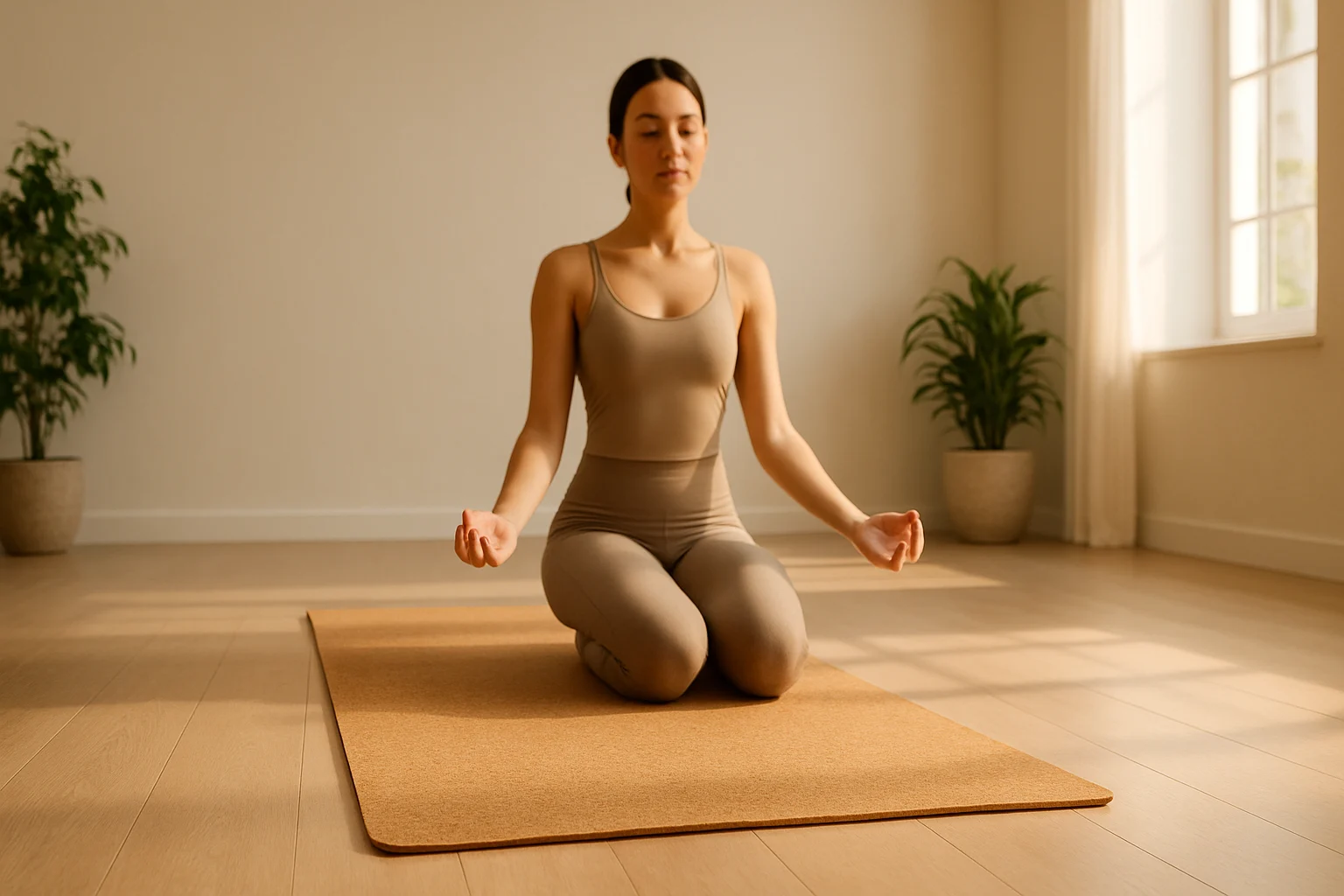
Cork is usually the top surface rather than the whole mat. Many cork mats use natural rubber underneath, so a cork surface can still fail a latex-avoidance requirement.
Choose it when: you want a cork surface and the backing also fits your needs. Skip it when: the base contains a material you need to avoid.
TPE and PU: Check the Exact Construction
TPE is a broad material category, while PU often appears as a grippy top layer. Either can be combined with other materials. Verify the exact model’s full material stack instead of assuming TPE or PU is universally latex-free, PVC-free, low-VOC, or sustainable.
Cotton or Jute: Check the Weave and Backing
Woven cotton and jute can work well for slower or gentler practice, but grip, cushioning, and washability depend on the weave and any backing. A rug-style mat is not automatically the same thing as a washable cotton towel.
Choose it when: texture, breathability, or a fabric surface matters more than maximum cushioning. Check: backing, washing instructions, and traction on your floor.
Dyes, Coatings, and Cleaners Are Product-Specific
If you already know you react to a fragrance, dye, adhesive, or finish, look for explicit information about that exact product. An “eco-friendly yoga mat” or “non-toxic yoga mat” label is too broad to substitute for a material disclosure.
How to Choose After You Rule Out a Trigger
Once the material constraint is clear, the rest is ordinary mat fit: grip, cushioning, portability, and cleaning. This is where practice style should influence the choice—not override the material you need to avoid.
Grip for Your Practice
If sweat is the main problem, look for a product that is specifically designed for wet grip rather than assuming one material always performs best.
Cushioning and Stability
Thickness is only one part of comfort; density and surface stability matter too. More cushioning can feel kinder under pressure points, while a firmer or thinner mat may feel steadier for balance. If you need to change the height of the floor in specific poses, yoga-block exercises can be a more targeted option than simply choosing the thickest mat.
Portability and Durability
Check the listed weight, dimensions, and construction of the exact mat you are considering. A mat that lives at home can prioritize dense support; a studio or travel mat may need to be lighter and easier to carry.
Cleaning and Storage
Follow the maker’s care instructions for the exact surface and backing. If fragrance is one of your triggers, use an unscented compatible cleaner. Let the mat dry fully before rolling or storing it.
Find a Mat That Fits Your Material Needs
Choose what you need to avoid and how you practice most often. I’ll show a verified match from this guide when one fits cleanly—and a check-first path when it doesn’t.
1. What material do you need to avoid?
2. How do you practice most often?
Three Yoga Mats to Compare by Material
Your selector narrows the shortlist; these cards show the material trade-off and skip condition behind each match. If you got a check-first result, keep that constraint first rather than forcing a product.
If sweat—not sensitivity—is the main problem, the hot-yoga mat guide compares more grip-focused options.
Reduce Irritation Beyond the Mat
The mat is only one surface touching your skin and sharing your practice space. A few low-fuss habits can make it easier to identify what is actually bothering you.
- Keep cleaning simple: use a cleaner that matches the mat’s care instructions, and choose an unscented option if fragrance is a known trigger.
- Notice clothing and detergent: if irritation appears where fabric—not the mat—touches your skin, the mat may not be the only variable.
- Let the mat dry: store it only after the surface is fully dry and the practice area is ventilated.
- Change one thing at a time: switching the mat, cleaner, clothing, and detergent together makes it harder to identify the real trigger.
- Stop when something clearly bothers you: persistent skin or breathing symptoms deserve a proper medical evaluation rather than a product-label guess.
If gentler or restorative practice is the better fit, try a chair-based routine before deciding whether a floor mat belongs in every session.
Get the 10-Minute Chair Yoga Routine
Confirm to get the routine and yoga tips. Unsubscribe anytime.
Something went wrong. Please check your email address and try again.
Frequently Asked Questions
Choose by Material First, Then by Practice
Start with the material you know you need to avoid. Then compare grip, cushioning, weight, and care, and check the surface and base together before you buy.
If you’re still not sure which constraint matters most, run the material-first mat finder. A check-first result is a useful result: when the verified shortlist does not meet your constraint, don’t force a purchase.