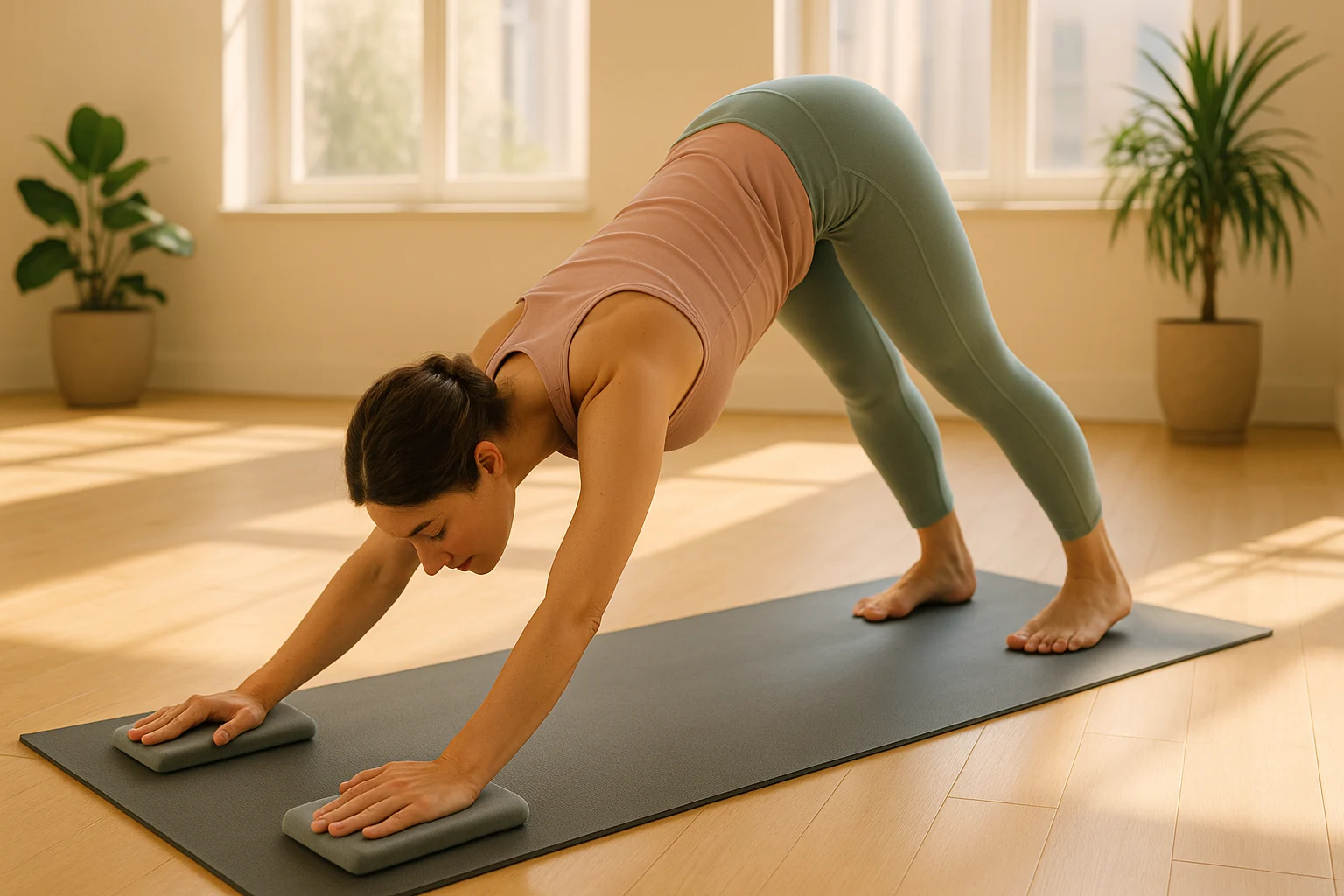
Downward Dog or Plank bothering your wrists? Yoga wrist supports do different jobs: wedges and palm-lift pads change wrist angle, wraps and braces add external stability, and gloves help with grip. The useful question is not “Which support is strongest?” but “What do I need to change?”
Start by matching the support to the problem, then test one change at a time rather than stacking more gear. The two-question finder below narrows the options once you have enough context to answer it. If you also need help choosing mats, blocks, straps, or other props, see our yoga gear guide.
This page contains affiliate links. As an Amazon Associate, I earn from qualifying purchases. If you buy through one of these links, I may earn a commission at no extra cost to you. Learn more.
Table of Contents
- Why weight-bearing poses can bother your wrists
- Types of yoga wrist supports
- Find your wrist-support starting point
- How to test a wrist support in practice
- FAQ: yoga wrist supports
- Use the smallest change that actually helps
- Get the 10-minute chair yoga routine
Why Weight-Bearing Poses Can Bother Your Wrists
Plank, Downward Dog, and Chaturanga all ask the hands to take load with the wrist bent backward, a position called wrist extension. If that position is uncomfortable, first reduce the load or angle rather than forcing the shape. Spreading the fingers and using the whole hand can make the setup feel more stable, but a prop is still a modification—not proof that pain is safe to ignore.
If carpal tunnel syndrome is part of your situation, use our yoga for carpal tunnel relief guide as a companion to your clinician’s advice rather than treating a wrist prop as the treatment itself.
When Wrist Symptoms Need More Than a Prop
Do not use a wrist support to override warning signs. AAOS guidance on carpal tunnel syndrome lists numbness and tingling among common nerve-compression symptoms, while its wrist-sprain guidance recommends medical evaluation when an injury does not improve quickly or pain persists. If weight-bearing causes sharp pain, persistent numbness or tingling, swelling after an injury, or worsening symptoms, stop loading the wrist and get qualified medical advice.
A Gentle Warm-Up Check
If unloaded movement feels comfortable, try a few slow wrist circles, gentle finger lifts, and small tabletop rocks before putting more weight through your hands. Treat the warm-up as a comfort check, not a test to push through symptoms. For more ideas, see our yoga wrist stretches for mobility.
Types of Yoga Wrist Supports and What They Change
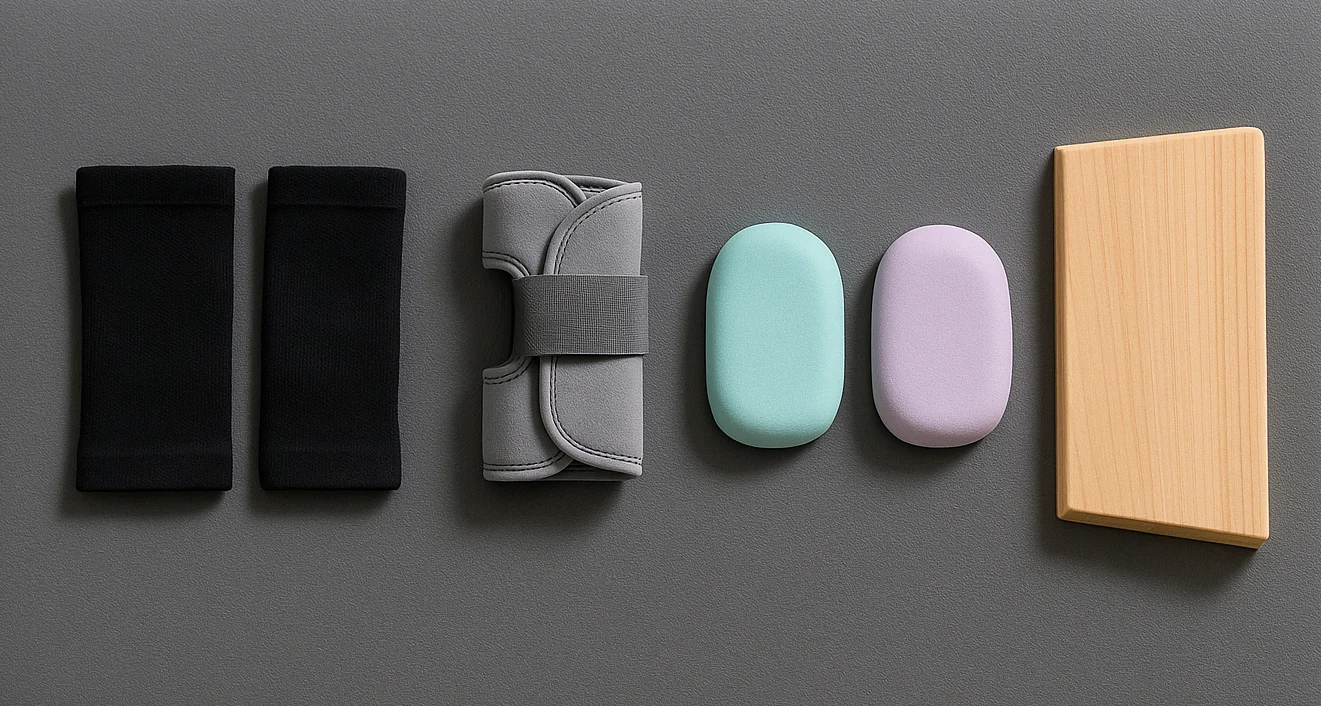
Start with the job, not the product label. The main differences are whether an aid changes wrist angle, limits motion, adds light compression, or improves grip.
| Type | What It Changes | Useful When | Important Limit |
|---|---|---|---|
| Compression Sleeves/Wraps | Light compression and warmth | Light compression or warmth is the goal | Does not reduce wrist extension or treat an injury |
| Soft/Medium Braces | Limits motion and adds external stability | External stability is the main goal | Can restrict a pose; injury or diagnosed conditions need clinician guidance |
| Wrist Cushions/Pads | Lifts the heel of the hand to reduce extension | You want a small palm lift to reduce extension | Placement must stay stable and comfortable |
| Yoga Wedges | Changes the hand-to-floor angle | You want a sloped surface to reduce extension | Not a recommendation for severe or unexplained pain |
| Yoga Gloves | Improves grip | Sweaty or slipping hands are the main problem | Does not change wrist extension or stabilize an injury |
Compression Sleeves and Wraps
Sleeves and wraps add light compression and warmth, but they do not meaningfully change the wrist angle or diagnose the reason it hurts. Treat them as a comfort option, not as a way to keep loading a painful or recently injured wrist.
Soft to Medium Wrist Braces
Braces usually use straps and may include a splint that limits wrist motion. AAOS notes that keeping the wrist in a straight or neutral position can reduce pressure on the median nerve in carpal tunnel syndrome, but that does not make a brace a universal yoga solution. If you are recovering from an injury or managing persistent symptoms, ask a clinician whether bracing during practice is appropriate for you.
Wrist-Friendly Props: Cushions and Pads
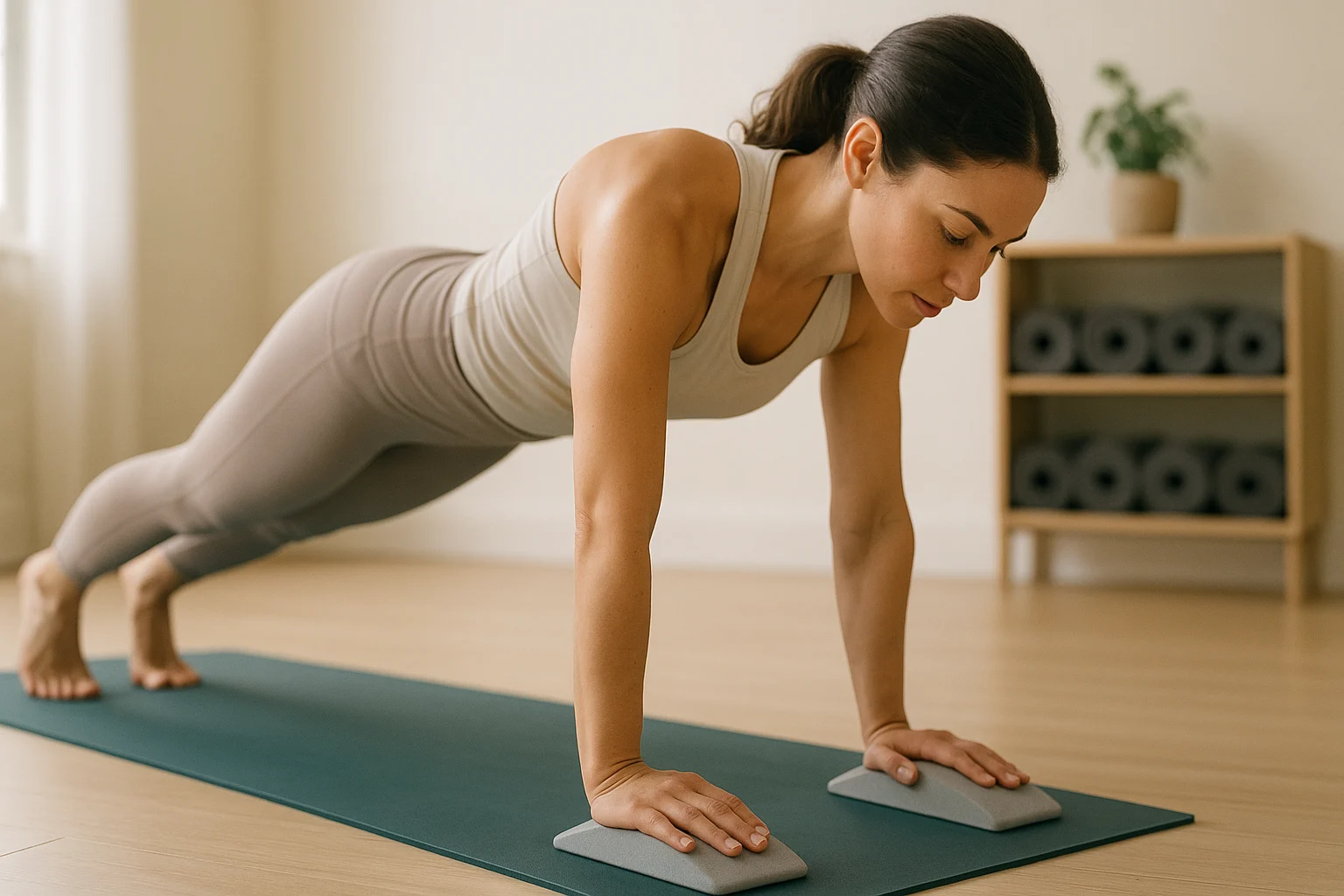
Foam or gel pads lift the base of the palm so the wrist does not extend as far in hand-loaded poses. That makes them an angle-and-comfort option rather than a treatment for carpal tunnel syndrome or another wrist condition.
Yoga Wedges for Less Wrist Extension
Slanted wedges change the angle between the hand and floor, which can reduce how far the wrist extends in poses such as Downward Dog. They make the most sense when angle is the problem you are trying to change—not as a recommendation for severe or unexplained pain.
Pair of Wrist Wedges vs One-Piece Wedge
VSQuick pick: Start with the StrongTek pair if you want to position each hand independently. Choose the Gaiam one-piece wedge if you prefer both hands on one continuous slope.
| Format | StrongTek Yoga Foam Wedge Blocks (pair) |
Gaiam Yoga Block Wedge (one-piece) |
|---|---|---|
|
Choose the pair when you want to set the spacing and position under each hand separately. |
Choose the one-piece format when you want both hands supported on the same continuous wedge. |
|
| Setup |
|
|
| Why choose this |
|
|
| Consider |
|
|
| Shop |
Angle & setup tips: Start with a modest angle and keep the position comfortable. If weight-bearing brings on sharp pain, numbness, or tingling, stop loading the wrist rather than trying to solve the symptom by increasing or changing the prop.
Yoga Gloves for Grip
Gloves and other grip aids mainly address slipping from sweaty hands. They do not reduce wrist extension or stabilize an injured joint. If grip is the actual problem, pairing them with a non-slip yoga mat may be more relevant than moving to a stronger wrist support.
If you’re still deciding which type of wrist aid matches your main goal, use the two-question finder below. It gives you a practical starting point and a section to read next; it does not diagnose wrist pain or injury.
Find Your Wrist-Support Starting Point
Start with the symptom check. If there are no red flags, choose the change you want most during weight-bearing poses.
How to Test a Wrist Support in Practice
Once you know whether you are changing wrist angle, external stability, or grip, test one setup at a time. The goal is to find a modification that feels more comfortable without using gear to override pain.
Check Fit and Placement
A support should feel secure without pinching, numbness, or tingling. Pads and wedges need stable contact under the hand; braces should be snug rather than restrictive and should not interfere with the pose. If the setup remains painful, reduce the load or leave the pose rather than tightening or stacking more support.
Change One Variable, Then Reassess
Adjust the fit, angle, hand placement, pose variation, or amount of weight through the hands one at a time so you can tell what actually helps. If a change makes symptoms worse, back out of it. When the wrist is comfortable and there is no injury-related restriction, increase load gradually rather than using a support as permission to do more than the joint tolerates.
FAQ: Yoga Wrist Supports
They can be useful when you want to change wrist angle, add light external support, or improve grip. If you are recovering from an injury or managing a diagnosed wrist condition, follow your clinician’s guidance rather than choosing a support from pain level alone.
No wrist aid is automatically right for daily use. Fit, the pose, and the reason you are using it all matter. Do not use a support to push through sharp pain, numbness or tingling, or a recent injury; persistent or concerning symptoms deserve medical guidance.
They can change the mechanics of a pose. Wedges and palm-lift pads reduce wrist extension, while braces add external support and gloves mainly address grip. Whether that feels better depends on why the pose is uncomfortable; none of these treats the underlying cause of wrist pain.
A soft brace can limit wrist motion and add external stability, but whether it belongs in a yoga pose depends on the brace, the pose, and your reason for wearing it. If you are recovering from injury or using a brace for a diagnosed condition, ask your clinician whether weight-bearing practice is appropriate.
Raising the hands on blocks can change the wrist angle and how you load the pose. That may feel more comfortable for some people, but a block is not a treatment for wrist pain and it does not create the same continuous slope as a wedge.
In yoga, common options include sleeves or wraps, braces, cushions or palm-lift pads, wedges, and grip-focused gloves. The useful distinction is what the aid changes: compression, motion, wrist angle, or grip.
Use the Smallest Change That Actually Helps
If your wrist is comfortable enough to experiment, choose one variable—angle, stability, or grip—and test it in an easier version of the pose. Keep the support only if it makes the movement more comfortable without creating pinching, numbness, tingling, or a new problem elsewhere.
You do not need the strongest support; you need the smallest useful change. If symptoms are sharp, persistent, worsening, or tied to a recent injury, stop the weight-bearing work and get qualified medical advice instead of escalating the gear.
If floor-based poses are not what you want to focus on today, keep this short chair-yoga routine for stiff mornings when you want a seated option.
Get the 10-Minute Chair Yoga Routine
Confirm to get the routine and yoga tips. Unsubscribe anytime.
Something went wrong. Please check your email address and try again.