If the floor feels too far away, your hands do not comfortably reach, or sitting on the mat becomes the hardest part of the pose, the answer is not automatically to stretch farther. With props yoga, you change the setup instead—bring the pose to your body instead of forcing your body to the pose.
This yoga prop guide shows how to use the main yoga accessories and props, which problem each one solves, what you can often improvise at home, and what is worth buying only when the same need keeps showing up. For mats and broader equipment, the yoga gear guide covers the rest of the setup.
This page contains Amazon affiliate links. As an Amazon Associate, I earn from qualifying purchases. Learn more.
Table of Contents
- What Yoga Props Actually Change
- Quick Match: Which Prop Solves Which Problem?
- How to Use Yoga Props: Blocks, Straps, Bolsters & More
- How to Choose Your First Yoga Props
- Try a Chair-Based Practice
- Frequently Asked Questions
- Your Next Practice: Test One Adjustment
What Yoga Props Actually Change
Think of these as yoga practice tools, not a collection you have to graduate into. Most props do one of four jobs: change the distance to the floor, extend your reach, support part of your body, or add cushioning.
- Bring the floor closer: a block can shorten the distance between your hand and the floor in standing or seated poses.
- Extend your reach: a strap can connect your hands to your feet or to each other without asking for extra range.
- Support more of your body: a bolster can hold part of the torso, hips, or legs in restorative shapes.
- Add cushioning or a small height change: a folded blanket can soften pressure under the knees, hips, or head.
Quick Match: Which Prop Solves Which Problem?
If you are unsure where to start, match the problem you keep meeting in practice to the lightest useful adjustment.
| What keeps getting in the way? | Start with | What it changes |
|---|---|---|
| The floor feels too far away | Yoga block | Raises the contact point so you do not have to reach as low. |
| Your hands cannot comfortably reach your feet or each other | Yoga strap | Reduces the distance without turning the pose into a pulling contest. |
| Knees, hips, or the head need cushioning | Folded blanket | Adds padding and small, adjustable changes in height. |
| You want more support in a restorative pose | Bolster | Supports a larger area of the body so you do not have to hold the shape yourself. |
| Getting down to the floor is the main barrier | Chair-based practice | Moves the starting position to a seated or standing setup instead of making floor work the entry requirement. |
How to Use Yoga Props: Blocks, Straps, Bolsters & More
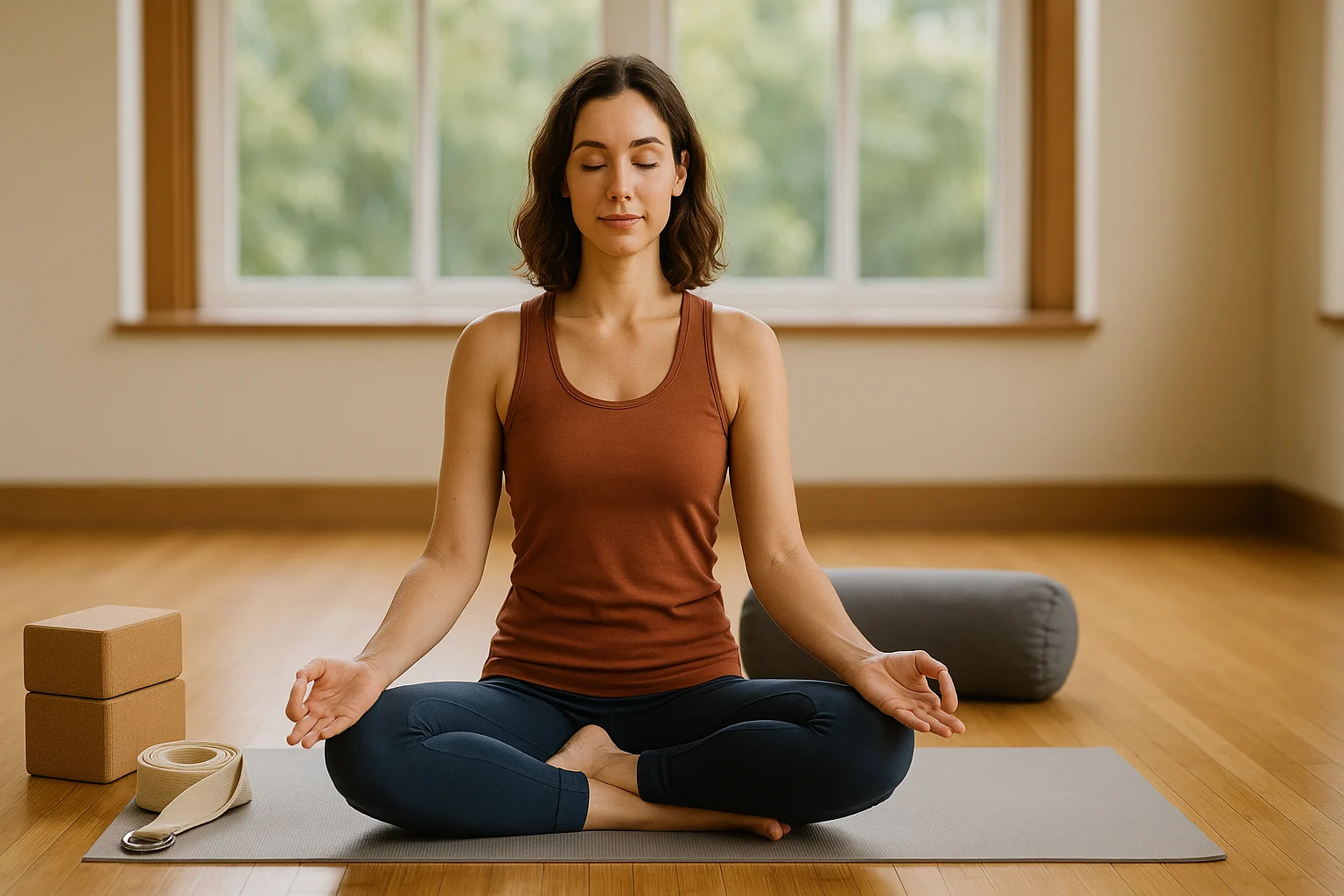
If you are starting from scratch, the highest-utility setup is usually two blocks and a strap. A bolster earns its place when restorative or supported seated practice is something you do regularly; a blanket can often be borrowed from home before you buy anything special. If you prefer one coordinated kit, compare the beginner yoga prop sets before buying pieces separately.
Yoga Blocks: Bring the Floor Closer
A block is useful when the floor is farther away than your current range comfortably allows. In Triangle Pose, for example, placing a block under the lower hand gives you a higher contact point instead of making floor contact the goal.
A block can also raise the hips in a seated pose. That small change may make it easier to sit upright without turning the pose into a test of hip or hamstring range.
| Material | What it feels like | Main trade-off | Useful for |
|---|---|---|---|
| Foam | Lighter and slightly softer | Can compress under load | Beginners and restorative practice |
| Cork | Firmer and more planted | Heavier to carry | Standing and seated support |
| Wood | Very firm and rigid | Harder surface and heavier feel | People who specifically prefer rigid support |
Yoga Straps: Extend Your Reach
A strap adds reach without requiring you to grab a foot or bind your hands before that range is available. In Seated Forward Fold, keep enough slack that you can hinge from the hips and breathe normally rather than pulling yourself farther forward.
Dedicated strap: Manduka AligN Yoga Strap, 8 ft
The eight-foot length gives useful room for seated folds and shoulder work, and the buckle is designed to hold the strap securely. Skip a dedicated strap if you already have a stable non-stretch option that serves the same gentle reach job.
For more technique examples, see the guide to using a yoga strap for flexibility.
Yoga Bolsters: Support Restorative Shapes
A bolster supports a larger area than a block. In Supported Fish Pose or other restorative shapes, it can carry part of the torso so the setup depends less on how far you can open.
A rectangular bolster can also support the knees, hips, or back during seated and reclined practice. A folded blanket under the head can fine-tune the setup if the neck wants a little more height.
Restorative option: Gaiam Rectangular Yoga Bolster
This Gaiam bolster has a rectangular shape, cotton-batting fill, a removable machine-washable microfiber cover, and a carry handle. Choose it when restorative, seated, or reclined support is a regular part of your practice; if firm pillows and folded blankets already do the job, skip it.
Yoga Blankets: Cushion and Fine-Tune Height
A folded blanket can soften pressure under the knees, raise the hips in a seated pose, support the head in Savasana, or add warmth during rest. It is one of the easiest prop jobs to test with something you may already own.
Yoga Wheels: Optional, Not a Starter Essential
A yoga wheel can be useful for specific mobility or backbend drills, but it also adds height, instability, and range. If you are new to yoga, stiff, or unsure how much support you need, it is reasonable to skip the wheel until you have a specific use for it.
How to Choose Your First Yoga Props
Start with the recurring problem, not the shopping list. If the same reach, pressure, or support issue shows up across several practices, that is a stronger reason to buy a prop than one pose you rarely do.
- Start with blocks if height, balance, or reaching the floor is the main issue.
- Add a strap if reach is the limiter in folds, shoulder work, or binds.
- Use a blanket first for padding, small height changes, and warmth when something you already own can do the job.
- Add a bolster when restorative or supported seated practice is a regular part of your week.
- Leave a wheel for later unless you already know the exact drill or pose it is meant to support.
If getting down to the floor is the main obstacle, do not treat that as a reason to buy more floor props. A sturdy chair can become the base of the practice, with a block or strap kept within easy reach; the chair yoga guide shows a seated starting route.
If you want one coordinated setup rather than separate pieces, the yoga prop set guide compares beginner bundles. That keeps this page focused on what each prop does while the roundup handles the buying decision.
Buying rule: the smallest setup that solves your recurring practice problem is usually the best place to start.
If that floor-access barrier sounds familiar, try one chair-based practice before buying more floor props.
Get the 10-Minute Chair Yoga Routine
Confirm to get the routine and yoga tips. Unsubscribe anytime.
Something went wrong. Please check your email address and try again.
Frequently Asked Questions
Your Next Practice: Test One Adjustment
On your next practice, notice one moment where distance, reach, pressure, or support gets in the way. Change just that one thing—raise the floor, shorten the reach, add cushioning, or add support—and see whether you can breathe and stay in control more easily. You do not need to collect every prop before you know what helps. For mats and broader equipment choices, return to the yoga gear guide.