If you’re building a home practice, a yoga prop set can make the floor feel closer, balance feel steadier, and longer holds more comfortable. You do not need every prop at once. For most beginners, two blocks and a strap cover the broadest range of everyday support; a bolster becomes more useful when restorative practice is a real priority.
This guide explains what each prop actually does, how to choose between common materials, and when a bundle makes more sense than buying pieces separately. If your body feels stiff or a pose feels out of reach, the goal is support, not forcing more range.
For a broader look at mats, props, and other yoga gear, see the yoga gear guide. Otherwise, use the starter-prop matcher below or keep reading to compare the core options.
Find Your Starter PropsThis page contains affiliate links. As an Amazon Associate, I earn from qualifying purchases. If you buy through these links, I may earn a commission at no extra cost to you. Learn more.
Table of Contents
- What’s Actually in a Beginner Yoga Prop Set?
- How to Choose the Best Yoga Prop Set
- Find Your Best Starting Prop Setup
- How to Use the Core Yoga Props
- Using Props in Different Yoga Styles
- Get the 10-Minute Chair Yoga Routine for Stiff Mornings
- Frequently Asked Questions About Yoga Prop Sets
- Build the Smallest Prop Setup You’ll Actually Use
What’s Actually in a Beginner Yoga Prop Set?
Start With the Core, Then Add by Need
Yoga prop kits vary widely from one seller to another. For a beginner, the useful question is not whether a box looks “complete”—it is whether the pieces solve the jobs you actually have.
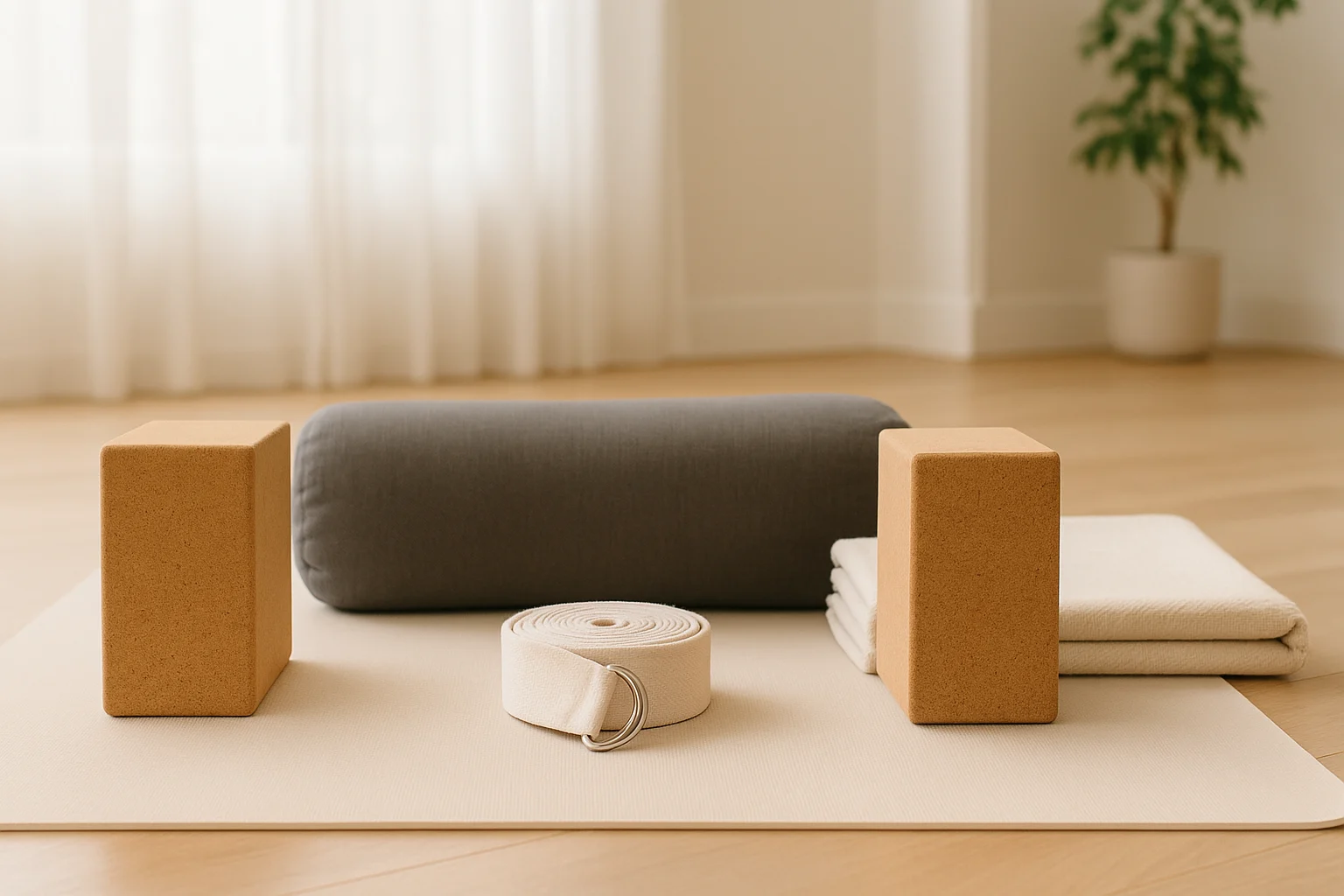
- Yoga blocks (usually two): Add height and a stable surface when the floor feels too far away. Foam is lighter and a little softer; cork is heavier and firmer.
- Yoga strap: Extends your reach in hamstring, shoulder, and binding work without asking you to force the end range.
- Yoga bolster: A larger, firmer cushion for restorative positions and longer supported holds. Useful, but not essential for every beginner.
- Yoga blanket: Adds padding, warmth, or adjustable height. A firm household blanket can often do the job while you decide whether you need a dedicated yoga blanket.
- Yoga wheel (optional): A specialty prop for supported backbending and balance work. It is not a core starter purchase.
If you’re starting from zero, the next question is whether a bundle gives you those core pieces without adding extras you will not use.
How to Choose the Best Yoga Prop Set
Choose the Material by Feel and Use
Before comparing bundles, decide what you want each prop to do:
- Blocks: Foam is lighter and a little softer; cork is heavier and firmer. Standard 9 × 6 × 4-inch blocks are common, but comfort and stability matter more than chasing one material.
- Straps: Check length, webbing feel, and whether the buckle is easy for you to tighten and release. D-ring and interlocking buckles can both work well.
- Bolsters: Compare shape, firmness, size, and whether the cover can be removed for cleaning.
- Blankets: Look for something that folds into stable layers and can be cared for according to its label.
What Yoga Props Do Beginners Actually Need?
For most beginners, two blocks plus a strap are the most flexible core setup. Add a bolster when restorative practice is important enough to justify the extra space. A blanket can be useful, but you may already own a firm, foldable substitute at home.
Find Your Best Starting Prop Setup
Answer two quick questions. I’ll point you to the simplest starting setup based on what you already own and what you want help with most.
Your result will point to the matching option in the buying table below.
Start With a Bundle or Build Your Own?
If you’re starting from zero, a block-and-strap bundle is the simplest place to start. If you already own one or two props, buy only the gap—you don’t need a matching kit. Before you compare prices, check exactly what is included and compare the same pieces separately; block material and size, strap length and buckle, and bolster shape and firmness matter more than the word “complete.”
| Best fit | Product | How to decide | Amazon |
|---|---|---|---|
| Starting from zero | Syntus Yoga Block and Yoga Strap Set | Two 9 × 6 × 4-inch blocks plus an 8-foot D-ring strap in one set. Choose this when you are starting from zero and want the core reach-and-support tools together. Skip it if you already own blocks or a strap you like; add a bolster separately only if restorative practice matters to you. | |
| Already have a strap | Gaiam Yoga Blocks — EVA foam, 2-pack | Choose these if you already own a strap or prefer lighter foam blocks for everyday support and reach. | |
| Already have blocks | Manduka Align Yoga Strap — 8 ft | Choose this if blocks are already covered and extra reach is the main thing missing from your practice. Manduka uses a secure interlocking buckle rather than a D-ring. | |
| Restorative focus | Gaiam Yoga Bolster — rectangular | Choose this when supported rest or slower restorative poses are a regular part of how you practice, not just an occasional extra. Skip it if a firm pillow or folded blanket already gives you the support you need. |
How to Use the Core Yoga Props
Each prop solves a different problem: blocks add height and steadiness, straps add reach, and bolsters add broader support for slower positions. Use the examples below as starting points rather than targets to force.
Yoga Blocks: Height and Steady Support
Blocks can bring the floor closer or create a stable surface under a hand, seat, or supported position. For a longer practice list, see this yoga block workout guide.
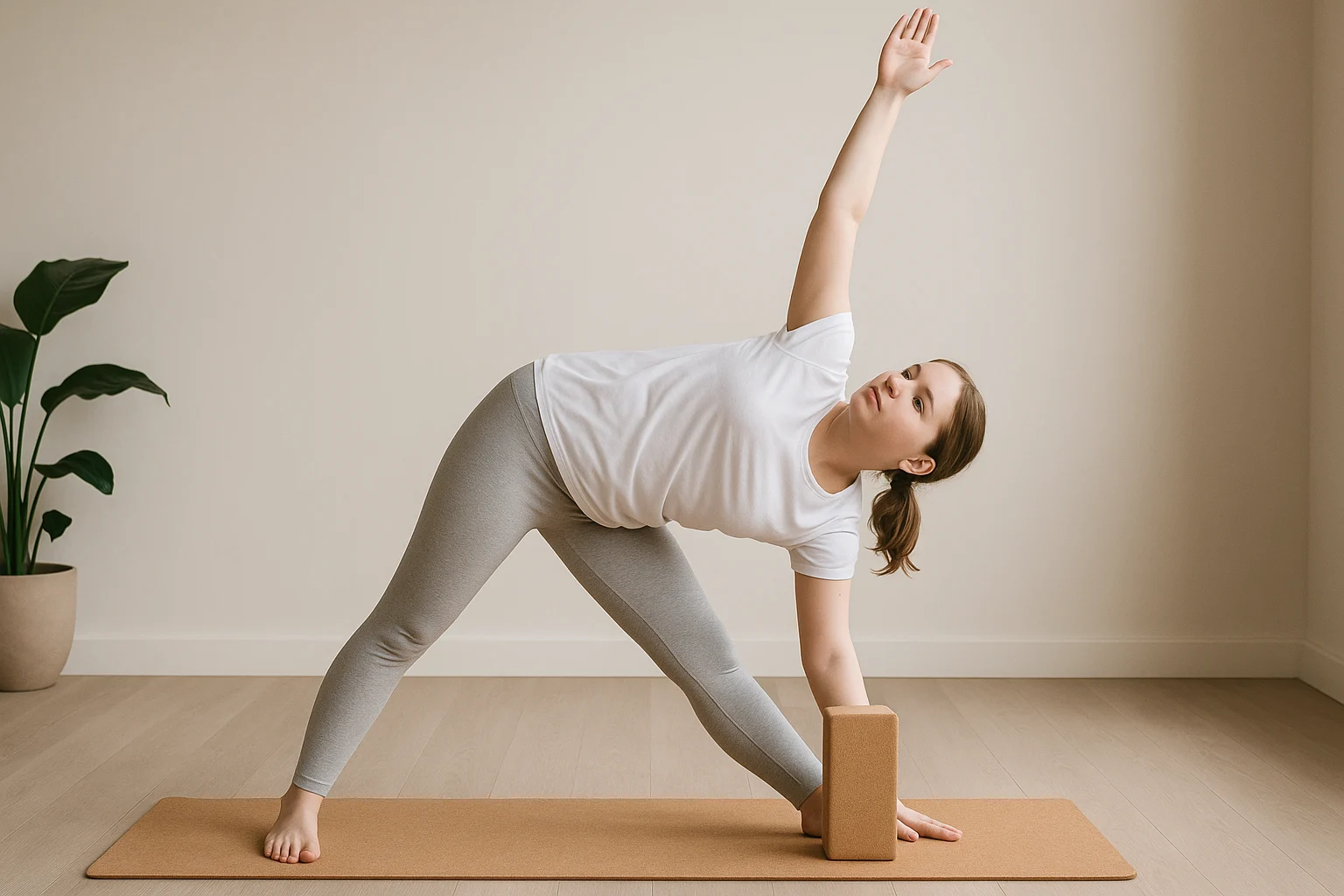
- Triangle Pose: Place a block under your lower hand at a height that lets you keep the torso long without reaching for the floor.
- Supported Bridge: If this variation is appropriate for you, place a stable block under the sacrum and come out if the position feels uncomfortable.
- Half Moon: Use one block under the lower hand when you want a higher, steadier contact point with the floor.
Foam or cork? Foam is lighter and a little softer; cork is heavier and firmer. Neither is universally better—the useful difference is how much weight, firmness, and feedback you prefer.
Yoga Straps: More Reach Without More Strain
A strap works best as an extension of your arms, not as a way to yank yourself farther into a stretch. For more examples, see this yoga strap flexibility guide.
- Hamstring stretch: Loop the strap around your foot in Reclined Hand-to-Big-Toe Pose and keep the grip comfortable.
- Shoulder work: Hold the strap wide enough that the movement stays smooth rather than forcing the hands closer.
- Cow Face arms: Hold the strap between the hands if they do not comfortably meet behind your back.
Length and buckle matter more than branding. An 8-foot strap gives most beginners generous working length; choose a buckle that holds securely and is easy for you to adjust.
Yoga Bolsters: Broader Restorative Support
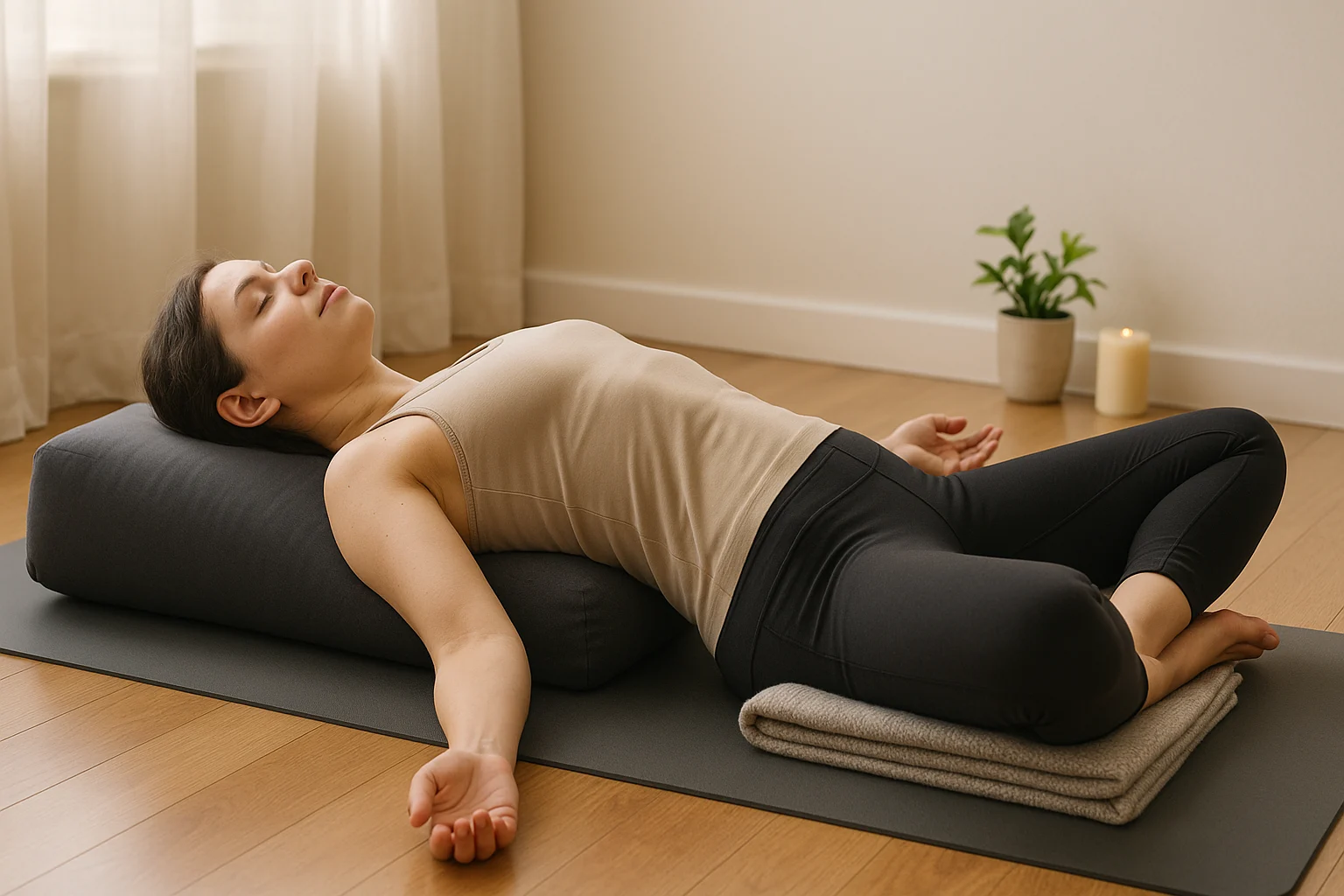
Bolsters support a larger area than blocks, which is why they are most useful for restorative practice and longer supported positions. You can see more supported shapes in these restorative yoga poses.
- Supported rest: Use a bolster under the torso when the shape is comfortable and stable.
- Savasana: Rest it under the knees if that position feels more comfortable for your lower back.
Choose by shape and firmness. A rectangular bolster gives a broad, stable surface; also check whether the cover is removable and how the manufacturer says to clean it.
You Don’t Graduate From Props
As your practice changes, the same prop can do a different job. A block that first brings the floor closer may later support balance work; a strap that first helps with reach may later help you control shoulder movement. Using less support is not automatically “more advanced.”
Using Props in Different Yoga Styles
Vinyasa and Hatha: Keep Support Close
In more active styles, blocks are useful when the floor is just out of reach in poses such as Pyramid or Triangle. A strap can help with shoulder preparation or hamstring work, and a folded blanket can cushion a sensitive knee in Low Lunge.
Restorative Yoga: Prioritize Broad Support
Bolsters and blankets do more of the work here because the goal is often to settle into a supported shape for longer. Blocks can also change the height of a bolster or support a setup when the surface remains stable.
Yin Yoga: Make Long Holds Adjustable
For longer holds, use props to reduce the amount of effort required to stay in the shape. A bolster can support the torso or a thigh, while blocks can bring the floor up to the forearms or hands.
The useful part of owning your own props is consistency: you know their height, firmness, and feel, and you can adjust the setup as your body or practice changes. You do not need a “complete” kit for that—just the pieces that solve your recurring needs.
If stiff mornings are part of why you want a more adaptable practice, try adapting the practice itself before adding more gear.
Get the 10-Minute Chair Yoga Routine
Confirm to get the routine and yoga tips. Unsubscribe anytime.
Something went wrong. Please check your email address and try again.
Frequently Asked Questions About Yoga Prop Sets
Build the Smallest Prop Setup You’ll Actually Use
If you own nothing, two blocks and a strap cover the broadest range of everyday beginner needs. Add a bolster when restorative practice is frequent enough to justify the space; if you already own one of those pieces, buy the gap instead of duplicating gear for the sake of a matching set.
The best yoga prop set is the one that makes practice easier to adapt to your body. If you still need a mat or want to compare the rest of your setup, continue with the yoga gear guide.