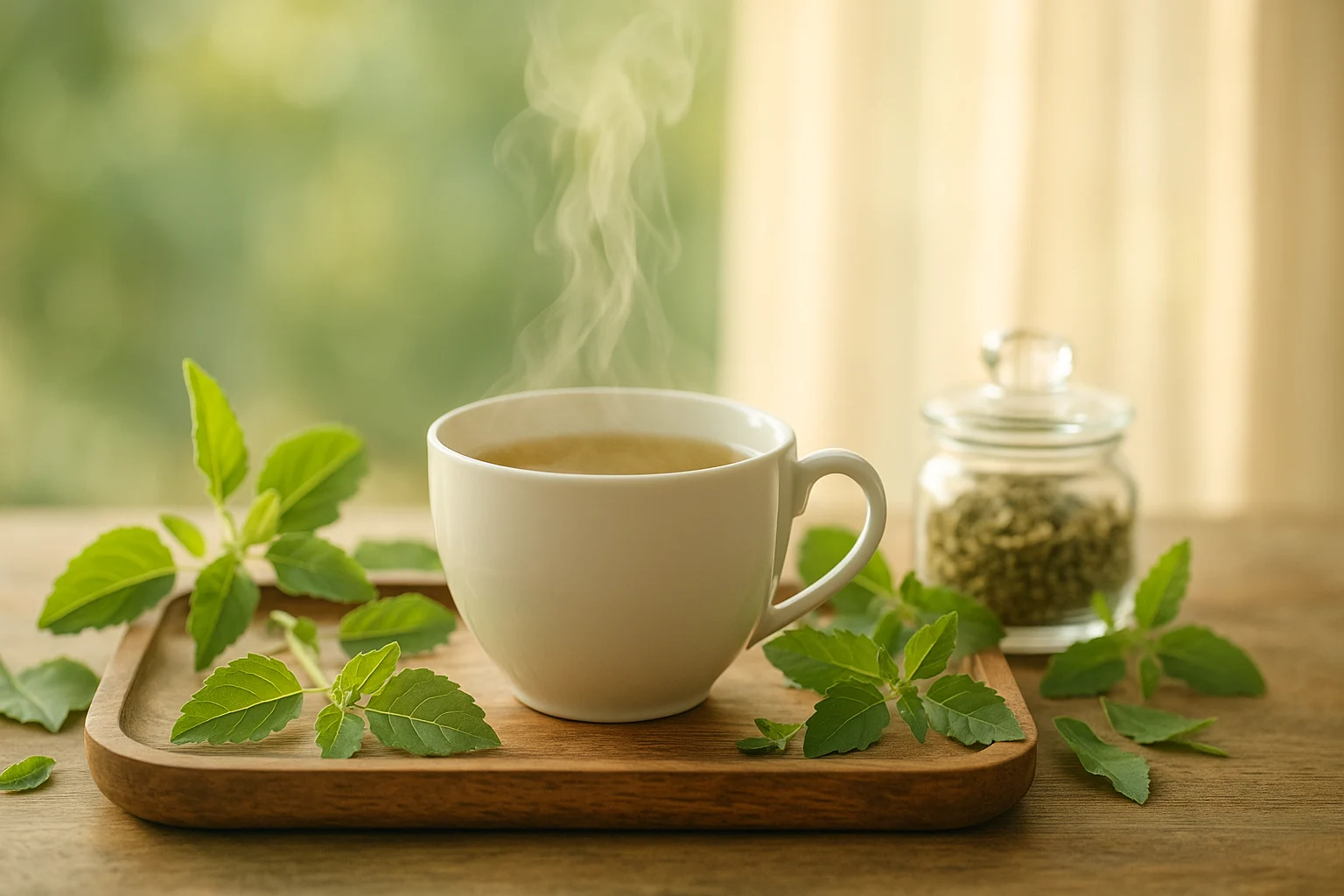
Many lists of benefits of tulsi tea blur together three different things: traditional Ayurvedic use, laboratory findings, and human studies of concentrated extracts. An ordinary cup is less proven than those lists often make it sound. Tulsi, or holy basil, is a caffeine-free herbal infusion; the clearest human signals come from standardized preparations rather than brewed tea.
So the useful questions are simpler: what can you reasonably expect from a cup, how should you brew it, and when should you be cautious? This guide separates those answers, then shows how to fit tulsi into a routine without turning it into a treatment claim. If you want the wider context first, start with our Ayurvedic daily practices.
This page contains affiliate links. As an Amazon Associate, I earn from qualifying purchases at no extra cost to you. Learn more.
Table of Contents
- Tulsi Tea Benefits: What the Evidence Supports
- What Is Tulsi Tea?
- What Human Research Actually Shows
- How to Brew Tulsi Tea and When to Drink It
- Potential Side Effects & Precautions
- Frequently Asked Questions About Tulsi Tea
- Should You Try Tulsi Tea?
Tulsi Tea Benefits: What the Evidence Supports
- Best-supported human signal: small clinical trials of standardized holy basil preparations suggest possible support for perceived stress; that is not the same as proving the effect for brewed tea.
- Immune claims are preliminary: one small trial found changes in immune markers after an ethanolic leaf extract, not a tea infusion.
- Many popular “benefits” are not tea-specific: antioxidant and anti-inflammatory findings often come from laboratory, animal, or extract research.
- Low-claim use is straightforward: tulsi can simply be a warm, caffeine-free herbal drink and part of a personal routine.
- Safety deserves equal weight: pregnancy, trying to conceive, breastfeeding, and regular medication use are reasons to check the precautions before making tulsi a daily habit.
What Is Tulsi Tea?
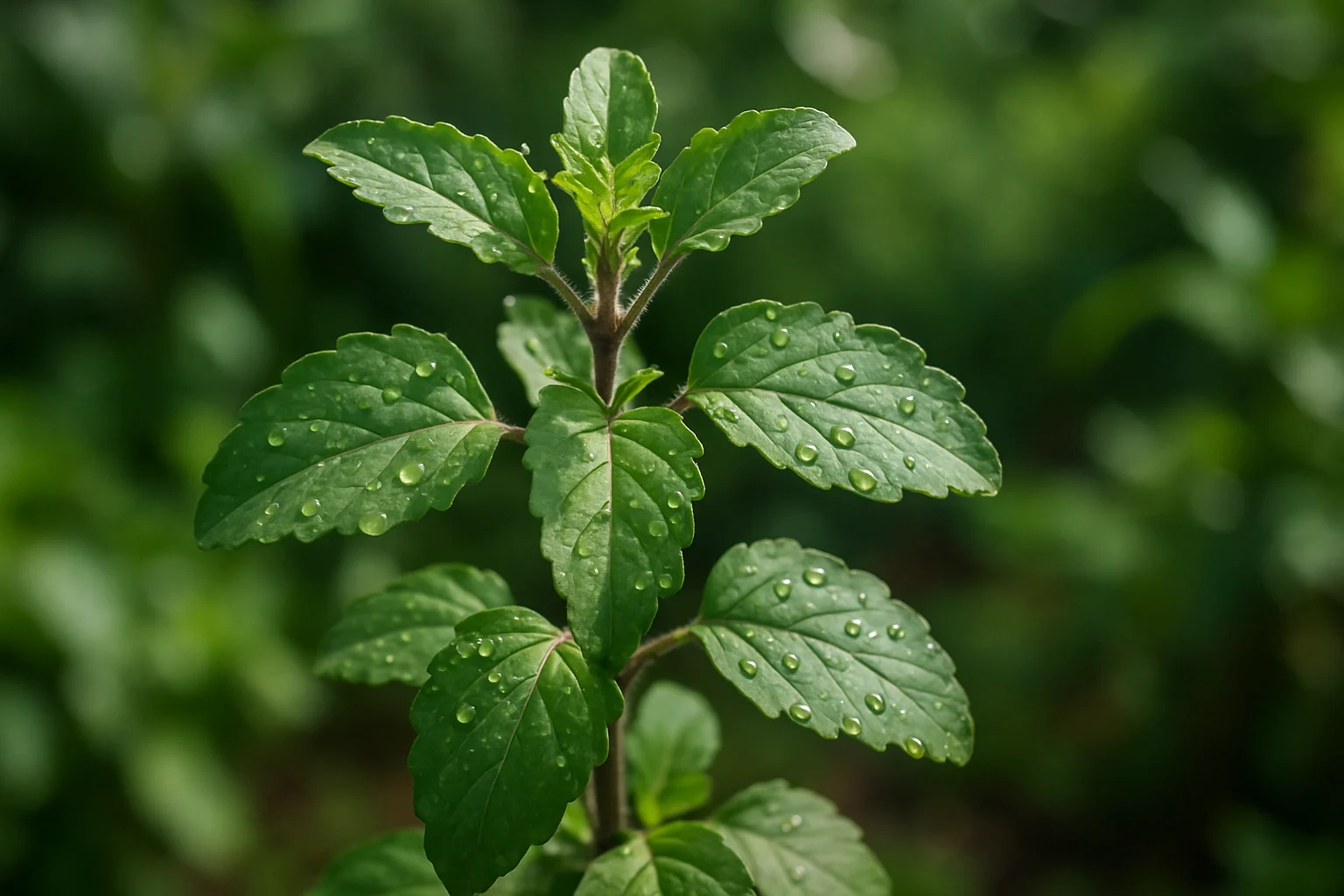
Tulsi tea, also called holy basil tea, is an herbal infusion made from Ocimum tenuiflorum (also widely published as Ocimum sanctum). Commercial tulsi teas often use Rama, Krishna, Vana, or blends of these types, and the flavor can range from soft and floral to peppery or clove-like. Human studies have tested several preparations and doses, so their findings should not automatically be generalized to brewed tea. For the broader tradition, see our guide to Ayurvedic wellness.
Traditional Ayurvedic Use
In Ayurvedic tradition, tulsi has a revered place and is commonly described through concepts such as the doshas and traditional ideas of purification and mental clarity. Those descriptions belong to the traditional framework; they are not the same as clinical evidence that tulsi tea “detoxes” the body, balances a measurable medical condition, or sharpens cognition.
What Human Research Actually Shows
Tulsi contains many plant compounds, including eugenol and polyphenols, but the presence of a compound is not proof of a clinical benefit from tea. The most useful way to read the evidence is by the preparation actually studied.
Stress and Sleep: Promising Extract Research, Not Proof for Tea
A 2022 randomized placebo-controlled trial tested a standardized Ocimum tenuiflorum extract for eight weeks in adults experiencing stress and sleep complaints. Some stress and subjective sleep measures improved, but the researchers also called for further work. A broader 2017 review of human tulsi studies likewise found encouraging signals across several preparations while noting the need to clarify dose and dosage form. Neither source proves that a normal cup of tulsi tea will reproduce those results.
If an evening cup helps you create a calmer routine, that can still be useful without treating it as a sleep or anxiety remedy. For the non-herbal part of that routine, see these mindfulness techniques for stress.
Immune Markers: One Small Extract Study
A 2011 double-blind crossover trial tested 300 mg of an ethanolic tulsi-leaf extract in a small group of healthy volunteers and reported changes in T-helper cells, natural killer cells, and several cytokines. That is interesting early evidence, but it is formulation-specific and too small to establish that brewed tulsi tea “boosts immunity.”
Antioxidant and Anti-Inflammatory Claims: Keep Them in Context
Tulsi and compounds such as eugenol show antioxidant and anti-inflammatory activity in laboratory and animal research. Human clinical evidence is much thinner, especially for ordinary tea. A warm herbal drink may feel comforting, but there is not strong evidence that brewed tulsi tea treats cramps, soreness, inflammation, or another ongoing symptom.
If your main goal is simply a caffeine-free drink, the next useful step is how to brew it. If regular medication, pregnancy, breastfeeding, trying to conceive, or uncertainty about interactions applies to you, read the precautions before making it a habit.
How to Brew Tulsi Tea and When to Drink It
Brewing does not need to be complicated, and stronger is not automatically better. For packaged tea, follow the product directions. For a simple herbal infusion:
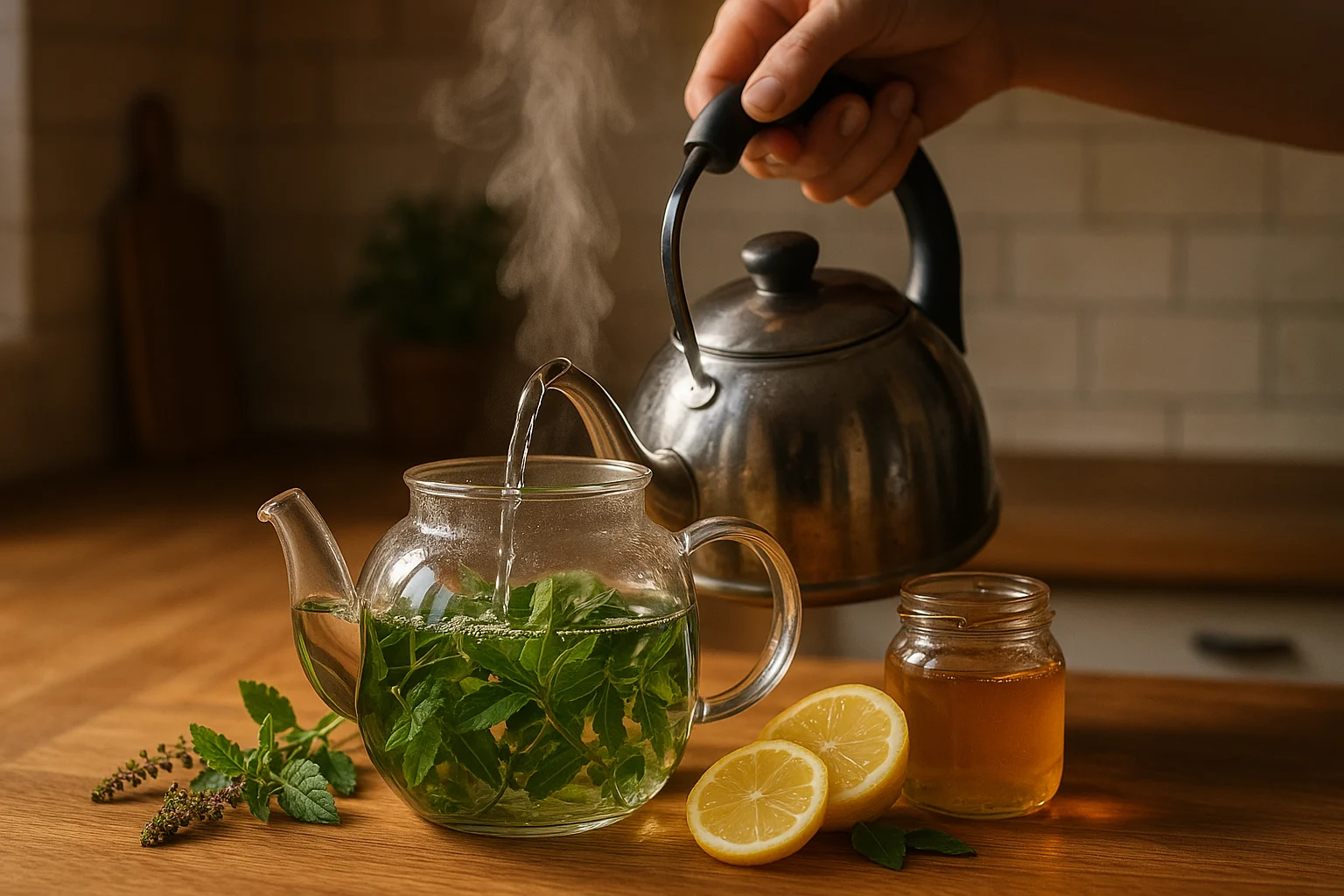
- Heat Water: Bring fresh water to a boil.
- Add Tulsi: Use the amount listed on the tea-bag or loose-leaf directions.
- Steep Covered: For the Organic India Tulsi Original product used on this page, the current manufacturer directions say to cover and steep for about 5–8 minutes.
- Finish to Taste: Remove or strain the leaves; add lemon, ginger, or a sweetener if you enjoy it.
There is no well-established evidence-based “daily cup” target for brewed tulsi tea. If you drink it regularly, keep the serving within the product directions and use the precautions below rather than assuming more is better.
Loose-leaf tulsi: strength and straining
If you brew loose-leaf tulsi, adjust the amount to taste while following the product directions rather than assuming a stronger brew is better. An extra-fine infuser can help keep smaller leaves out of the cup.
Tip: Rinse the infuser promptly and let it air-dry to limit residue.
When to Drink Tulsi Tea
If tulsi suits you, timing is mostly a preference. Use it for the drink itself rather than for a promised outcome:
- Morning: Use it when you want a warm caffeine-free drink.
- Midday: Choose it as a non-caffeinated alternative to another hot beverage.
- Evening: Make the cup part of a wind-down ritual without treating it as a sleep treatment.
If you keep drinking it, judge the habit by taste and routine fit—not by whether you can “feel” a promised benefit on a timetable.
Potential Side Effects & Precautions
Safety is less settled than many wellness summaries make it sound. A 2023 Norwegian Institute of Public Health risk assessment found substantial uncertainty around safe intake because holy-basil composition varies and much of the toxicity evidence comes from animal studies.
- Pregnancy or trying to conceive: The assessment concluded that precaution is warranted with holy-basil teas and supplements.
- Breastfeeding: The same assessment advised avoiding these products during lactation because specific safety studies are lacking.
- Blood sugar: Human studies have reported glucose-lowering effects from some holy-basil preparations. If you have diabetes or use glucose-lowering medicine, check with your clinician or pharmacist before regular use.
- Other medicines: Herb–drug interaction evidence is incomplete. If you take regular prescription medicine, ask a clinician or pharmacist whether tulsi is appropriate for you.
- Children: The 2023 assessment also advised avoiding holy-basil teas and supplements in children because child-specific safety studies are lacking.
If you want plain tulsi without measuring loose leaf: Organic India Tulsi Original (25 count).
Amazon marketplace seller, delivery, and return terms can vary, so check the current listing details before ordering. If any of the precautions above apply to you, check with your clinician before making tulsi a regular habit.
Frequently Asked Questions About Tulsi Tea
Should You Try Tulsi Tea?
If you want a caffeine-free herbal drink and none of the precautions above gives you a reason to pause, tulsi is best approached as a beverage you may enjoy—not as a treatment you need to believe in. The strongest human evidence comes from standardized preparations, so judge a cup by taste, routine fit, and how well it agrees with you rather than by a checklist of promised health outcomes.
If medication, pregnancy, breastfeeding, trying to conceive, or another health condition changes the safety question, check with a clinician or pharmacist before regular use. If you want to compare tulsi with other Ayurvedic tea options before choosing one, see our guide to the best Ayurvedic teas.