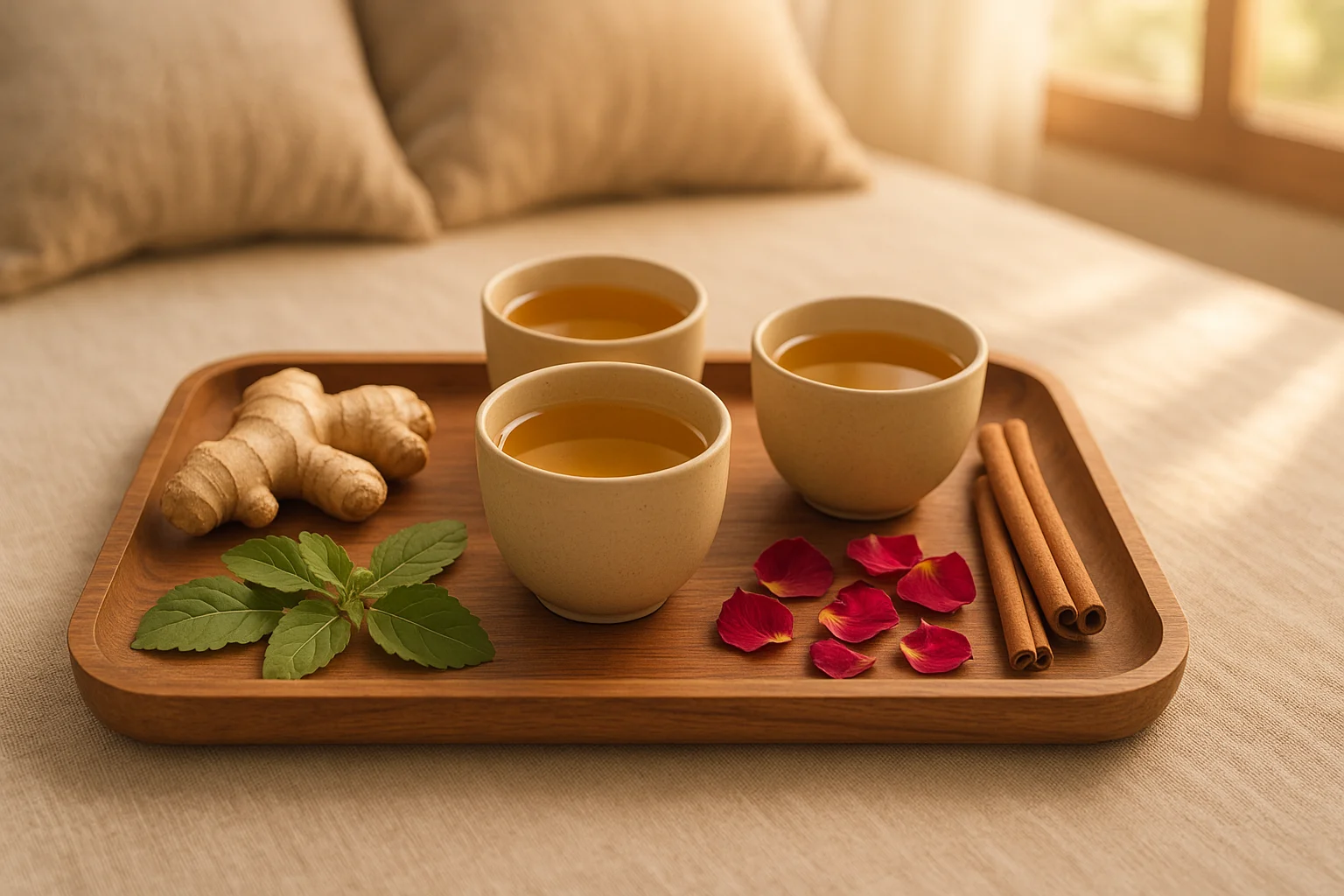
Choosing among Ayurvedic teas gets confusing quickly because discussions of Ayurvedic tea benefits often mix traditional dosha language, everyday herbal tea, and modern health claims. A better starting point is simpler: pick a tea you’ll actually enjoy drinking, then check the preparation and cautions before making it a routine.
These are herbal infusions inspired by Ayurvedic tradition, not a substitute for medical care. If you want the broader philosophy behind doshas and daily routines, start with our Ayurvedic wellness guide. Here, the focus is practical: taste, routine, traditional context, and what current evidence can honestly support.
This post contains affiliate links. As an Amazon Associate, I earn from qualifying purchases. If you buy through these links, I may earn a commission at no extra cost to you. Learn more.
Table of Contents
- Match a Tea to Your Goal and Taste
- How to Choose an Ayurvedic Tea
- What Are Ayurvedic Teas?
- Ayurvedic Tea Guide: 9 Teas
- Frequently Asked Questions
- Choose the Tea You’ll Actually Use
Not sure which tea section to read first? Use this quick matcher, then jump to the exact tea notes and cautions that fit your choices.
Match a Tea to Your Goal and Taste
Choose what you want from the tea ritual and the flavor profile you prefer. This is a preference guide, not a diagnosis or treatment recommendation.
Choose both options to see the closest match in this guide.
How to Choose an Ayurvedic Tea
When people search for Ayurvedic tea benefits, traditional use and modern evidence can blur together. Four filters keep the choice practical:
- Start with taste: Warm-spicy, mild-herbal, floral-sweet, and bitter-astringent profiles narrow the field faster than a long list of promised benefits.
- Match the routine: Decide whether you want an after-meal cup, a caffeine-free evening ritual, a warming spice tea, or simply something different from your usual drink.
- Treat doshas as traditional context: Vata, Pitta, and Kapha are part of Ayurvedic teaching; they are not medical diagnoses or validated body types.
- Check safety before habit: Many herbal wellness teas are caffeine-free, but caffeine-free does not mean interaction-free or appropriate for everyone.
What Are Ayurvedic Teas?
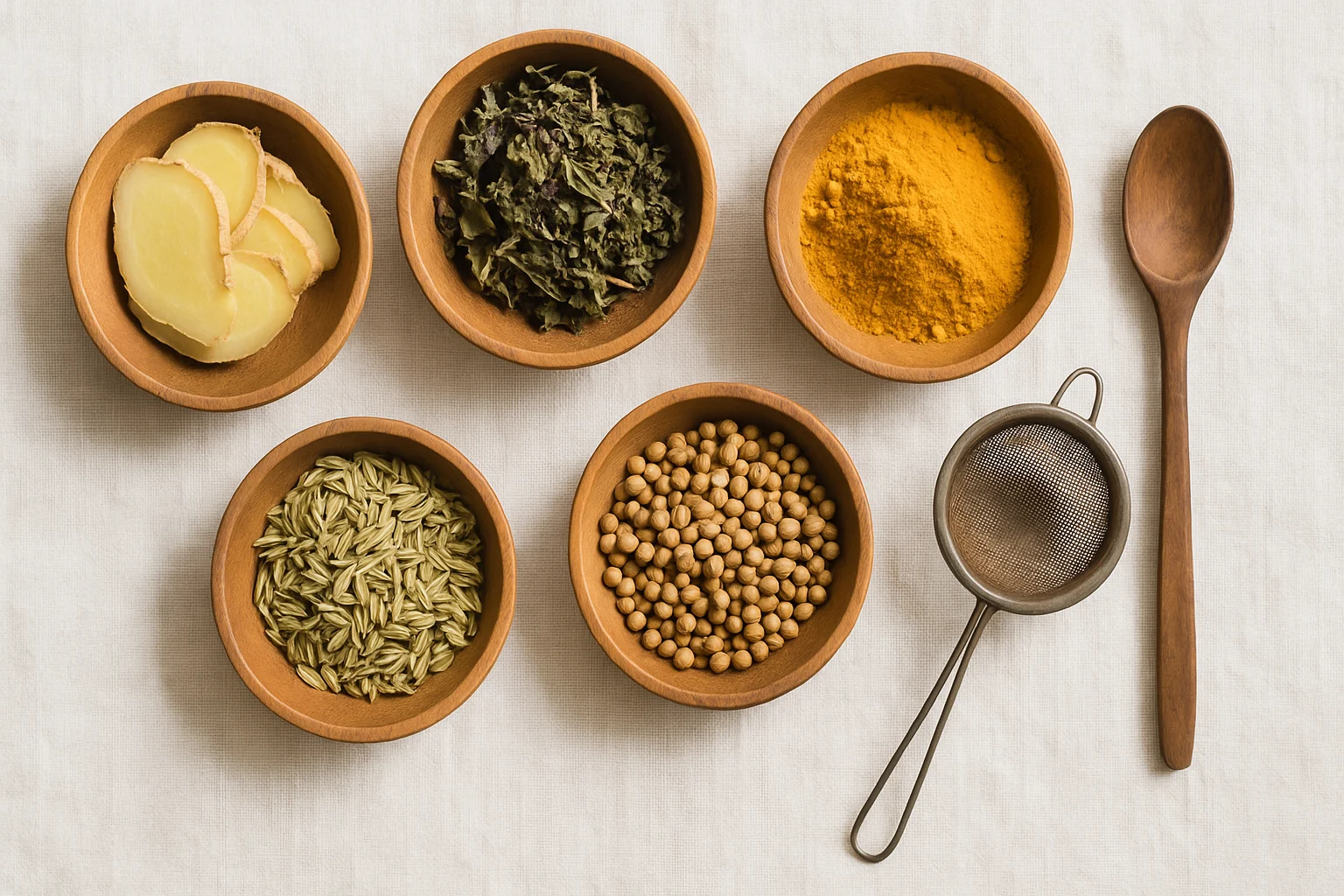
Ayurveda is a traditional health system from India that uses diet, lifestyle practices, herbs, and other approaches. In tea form, that often means herbal infusions or decoctions built from ingredients such as ginger, cumin, coriander, fennel, tulsi, cinnamon, rose, or licorice.
Ayurvedic descriptions often use the three doshas—Vata, Pitta, and Kapha—and qualities such as warming, cooling, heavy, light, dry, or oily. In this guide, those terms describe the traditional framework; they do not diagnose a condition or prove that a tea will treat one.
Evidence check: The National Center for Complementary and Integrative Health says scientific evidence for Ayurveda is limited for most health issues, and herbal products can have safety or interaction concerns. See NCCIH’s Ayurveda overview for the evidence-and-safety perspective. For the traditional framework itself, Banyan Botanicals’ introduction explains doshas and Ayurvedic qualities.
Throughout the guide, “warming,” “cooling,” and dosha language are used only as traditional descriptions; modern evidence is called out separately rather than blended into those terms.
Ayurvedic Tea Guide: 9 Teas by Routine and Flavor
There is no single “best” tea for every reader. Use the matcher for a quick route, then compare flavor, preparation, traditional context, and cautions here before deciding what belongs in your routine.
All nine plain herbal preparations in this guide are caffeine-free, but packaged blends can include other ingredients, so check the label rather than assuming every product is identical.
After-meal teas
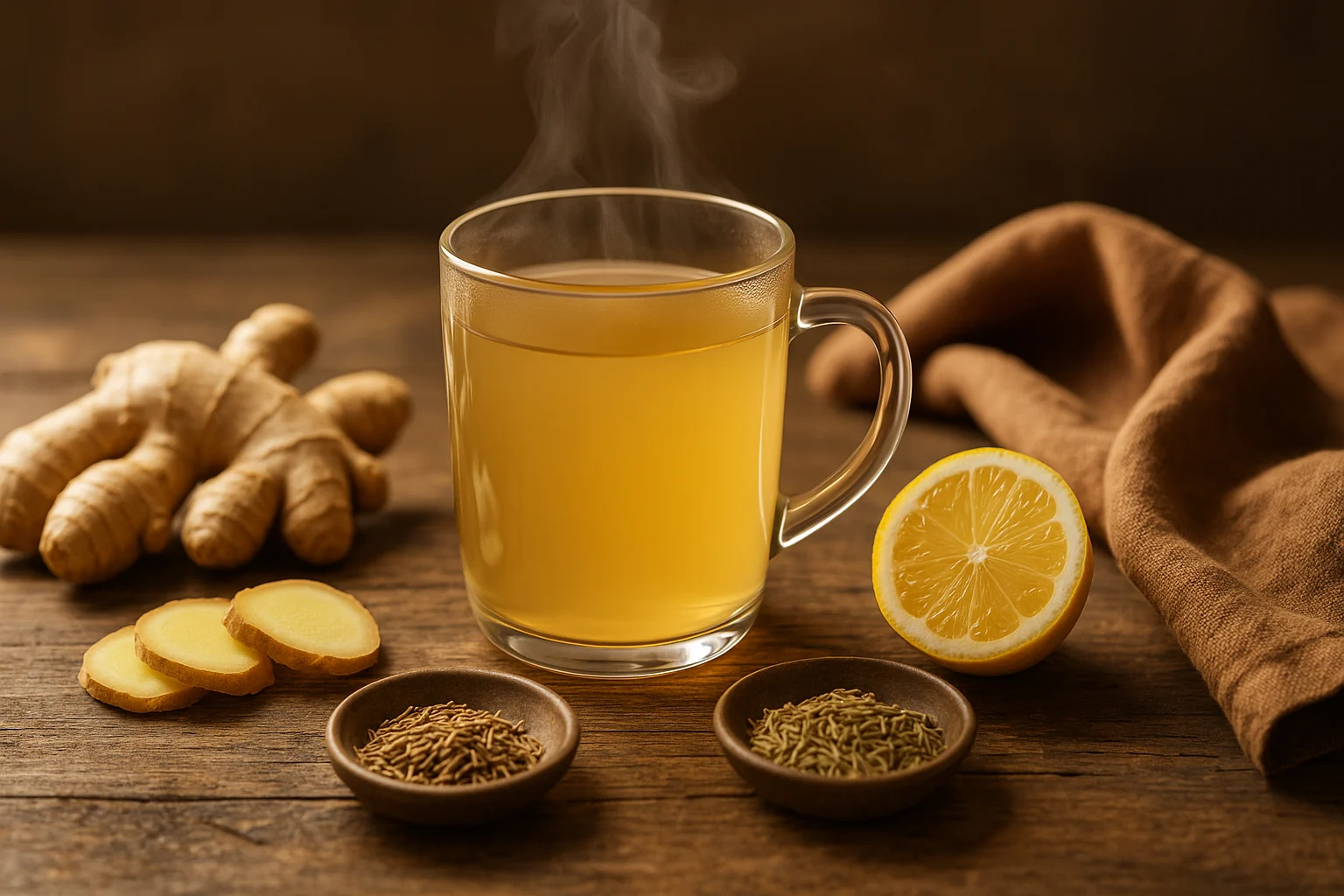
Ginger and cumin-fennel-coriander (CCF) are common after-meal choices in Ayurvedic traditions. Here, the recommendation is about flavor and routine—not a promise to treat digestive symptoms.
Ginger Tea (Adrak Chai)
- Taste: Hot, spicy, aromatic, and easy to brighten with lemon.
- Traditional context: Ginger is treated as a warming ingredient and has a long history of use for digestive discomfort.
- Prep: Simmer a 1-inch slice of fresh ginger in water for 5–10 minutes. Strain; add lemon or honey if desired.
- When it fits: After meals or on cold days when you want a stronger spice-forward cup.
- Evidence & cautions: NCCIH’s ginger overview notes evidence for some forms of nausea, especially pregnancy-related nausea, but most studies used ginger supplements rather than tea. Ginger can also cause heartburn or abdominal discomfort and may interact with medicines; check with a healthcare provider if you are pregnant or use medicines regularly.
Cumin-Fennel-Coriander (CCF) Tea
- Taste: Mild, savory, lightly sweet from fennel, and much gentler than ginger.
- Traditional context: Cumin, fennel, and coriander are commonly paired in Ayurvedic after-meal routines.
- Prep: Simmer ½ tsp each of cumin, fennel, and coriander seeds in 2 cups water for 5–10 minutes. Strain and sip.
- When it fits: When you want a mild caffeine-free blend and do not want a strongly spicy cup.
- Evidence & cautions: Treat the blend’s digestive and “cleansing” reputation as traditional context; the three-seed combination is not well established as a medical treatment. If you are pregnant, nursing, taking medicines, or using concentrated herbal products regularly, check with a healthcare provider.
Pre-mixed option: Banyan Botanicals CCF Tea is easier if you do not want to source and combine cumin, coriander, and fennel separately; you still measure the blend.
Herbal teas for a quieter ritual
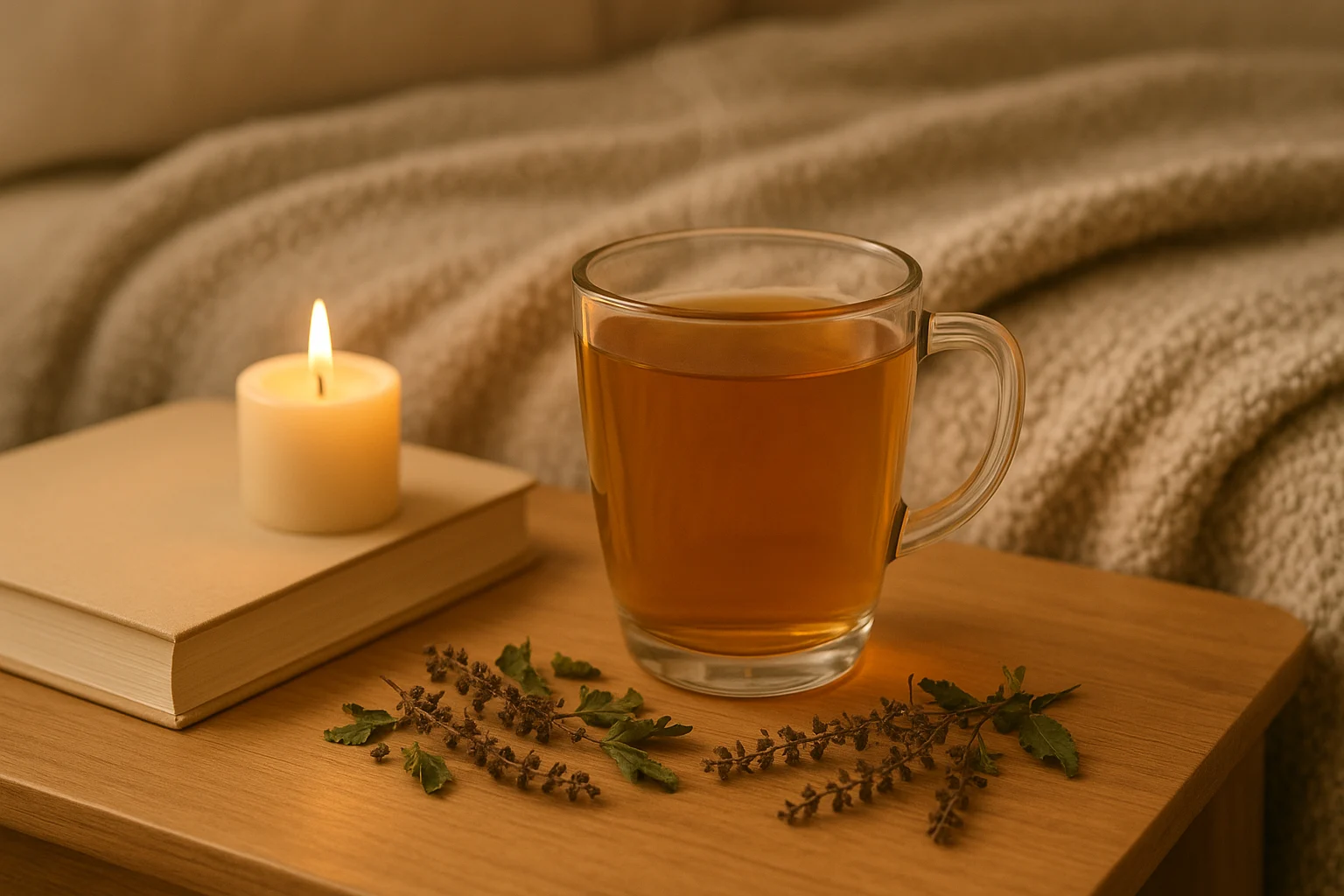
If the goal is a calmer evening routine, the ritual itself may be part of the appeal. Tea can sit beside gentle movement or breathwork as part of an evening routine without asking the drink to act like a treatment.
Tulsi (Holy Basil) Tea
- Taste: Herbal, slightly peppery or clove-like, and usually milder than ginger.
- Traditional context: Tulsi is widely used in Ayurvedic traditions and is often framed as a daily herbal ritual.
- Prep: Steep 1 tsp dried tulsi leaves (or 5–6 fresh leaves) in hot water for 5–10 minutes.
- When it fits: Morning or evening when you want a caffeine-free herbal cup rather than a strong spice tea.
- Evidence & cautions: Modern studies use different tulsi preparations and doses, so tea should not be presented as a proven stress or immune treatment. If you are pregnant, nursing, or taking medicines, check with a healthcare provider before regular medicinal use.
If you prefer tea bags to measuring loose tulsi, choose a plain tulsi product and check the ingredient list; packaged blends can include other herbs or spices.
Brahmi (Bacopa monnieri) Tea
- Identity: “Brahmi” can refer to more than one plant in different regions. This section means Bacopa monnieri; check the botanical name on any product rather than relying on “brahmi” alone.
- Taste: Bitter and astringent, so it is a poor fit if you want a naturally sweet tea.
- Traditional context: Bacopa is associated with learning and contemplative practices in Ayurvedic traditions.
- Prep: If using dried Bacopa sold specifically for infusion, follow the supplier’s preparation directions; concentrated extracts are not the same thing as tea.
- Evidence & cautions: Research on Bacopa generally involves standardized preparations rather than a casual cup of tea, so do not assume the same effects or dose. Check with a healthcare provider before regular medicinal use, especially if you are pregnant, nursing, taking medicines, or managing a health condition.
A traditional cleansing-style blend
“Cleansing” and ama are traditional Ayurvedic concepts. I would not use them as shorthand for removing medically defined toxins from the body.
Triphala Tea
- What it is: A three-fruit Ayurvedic formula made from amalaki, bibhitaki, and haritaki; it is often mixed into water rather than steeped like leaf tea.
- Taste: Bitter and astringent.
- Traditional context: Commonly associated with regularity and cleansing-style routines in Ayurveda.
- Prep: If using a prepared triphala powder, follow the product directions rather than treating it like a culinary spice tea.
- Evidence & cautions: Do not treat “detox” language as proof of toxin removal. If you are pregnant, nursing, taking medicines, or using triphala specifically for bowel symptoms, discuss it with a healthcare provider first.
Warming spice teas
Cinnamon and clove make bold, warming cups. Choose them for flavor and ritual rather than for circulation, blood-sugar, congestion, or pain claims.
Cinnamon Tea (Dalchini Chai)
- Taste: Sweet-smelling, woody, and warming.
- Traditional context: Cinnamon is a warming spice in Ayurveda and many other food traditions.
- Prep: Simmer 1 cinnamon stick or ½ tsp powder in 1 cup water for 10–15 minutes.
- When it fits: When you want a naturally sweet-leaning spice tea without caffeine.
- Current evidence: NCCIH’s cinnamon overview says research does not clearly support using cinnamon to manage any health condition, including diabetes.
- Cautions: Food-level amounts are generally considered safe, but larger or long-term amounts can cause side effects. Cassia cinnamon can contain more coumarin, which may be a concern for people with liver disease; check with a healthcare provider if you use medicines or plan regular medicinal amounts.
Tea-bag option: LeafLea Pure Cinnamon Tea Bags give you a single-ingredient cinnamon option without simmering a stick or dealing with loose powder.
Clove Tea (Laung Chai)
- Taste: Strong, pungent, numbing, and more intense than cinnamon.
- Traditional context: Clove is used as a warming spice in food and traditional herbal preparations.
- Prep: Simmer 2–3 whole cloves in 1 cup water for 5–7 minutes.
- When it fits: Cold-weather blends or when you specifically enjoy a bold clove flavor.
- Evidence & cautions: Do not use clove tea as a substitute for care for congestion, sore throat, or tooth pain. Check with a healthcare provider before regular medicinal use if you are pregnant, nursing, taking medicines, or managing a health condition.
Floral and naturally sweet teas
Rose and licorice sit at the softer end of this list: rose is floral, while licorice is distinctly sweet. Neither needs an “anti-inflammatory” label to earn a place in the guide.
Rose Tea (Gulab Chai)
- Taste: Floral, light, and gently sweet.
- Traditional context: Rose is described as cooling in Ayurvedic traditions.
- Prep: Steep 1–2 tsp food-grade dried rose petals in hot water for 5–10 minutes.
- When it fits: Warm weather or whenever you want a lighter floral cup.
- Evidence & cautions: Evidence for specific health effects from rose tea is limited. Use petals sold for food or tea, and stop if you notice an allergic or digestive reaction.
Licorice Root Tea (Mulethi Chai)
- Taste: Naturally very sweet, with a lingering root-like flavor.
- Traditional context: Licorice root has a long history of traditional use.
- Prep: Simmer 1 tsp licorice root in 1 cup water for 10–15 minutes.
- When it fits: When you want a naturally sweet herbal cup and none of the safety cautions below apply.
- Current evidence: NCCIH’s licorice overview says there is not enough high-quality evidence to clearly support licorice for any health condition.
- Cautions: Licorice containing glycyrrhizin can raise blood pressure and cause serious adverse effects, especially with large or long-term use. Avoid regular use during pregnancy, and check with a healthcare provider if you have high blood pressure, heart or kidney disease, or take medicines.
Optional brewing tools
You can make every tea in this guide with basic kitchen equipment. If fine spices slip through a standard strainer, Reinmoson extra-fine tea strainers are a practical upgrade; for loose herbs or seed blends you want fully contained, reusable cotton tea filter bags are the simpler option.
If you often brew several cups at once, the HIWARE 1000 ml glass teapot with infuser gives you more capacity without changing the basic brewing method.
Frequently Asked Questions About Ayurvedic Tea
Choose the Tea You’ll Actually Use
Use flavor and routine to narrow the field, then let the caution line veto a choice that does not fit. If two teas still sound good, compare their detailed sections rather than trying to find a single “perfect” dosha match.
The best choice here is the one you enjoy enough to brew again and can use safely. An herbal tea can be a pleasant ritual without needing to function as a treatment.