Ayurvedic face care gets complicated fast when every dosha seems to need a different cleanser, toner, oil, and mask. You do not need a shelf full of products to use the tradition thoughtfully. This Ayurvedic skincare guide starts with a simple routine, then uses Vata, Pitta, and Kapha as traditional prompts for noticing dry, reactive, oily, or mixed patterns—not as a skin diagnosis.
Start with gentle cleansing, moisturizer, and broad-spectrum SPF 30+ sun protection during the day, then add optional Ayurvedic-inspired ingredients one at a time. That same simple foundation appears in the AAD’s basic skin-care guidance. For the wider philosophy behind the dosha framework, see our Ayurvedic wellness guide.
Find Your Skin-Care Starting PointThis page contains affiliate links. As an Amazon Associate, I earn from qualifying purchases. Learn more.
Table of Contents
- Ayurvedic Face Care: The 4-Step Baseline
- Use Doshas as a Traditional Skin-Care Lens
- Find Your Ayurvedic Skin-Care Starting Point
- Your Daily Ayurvedic Face Care Ritual: AM & PM
- Ayurvedic-Inspired Ingredients by Skin Pattern
- Optional Ayurvedic-Inspired Weekly Rituals
- Ayurvedic Face Care FAQ
- Keep the Routine Gentle and Flexible
Ayurvedic Face Care: The 4-Step Baseline
- Cleanse gently: Use lukewarm water, avoid scrubbing, and stop if a cleanser leaves your skin tight or irritated.
- Moisturize for what your skin is doing now: Choose richer texture for dryness, simpler formulas for reactivity, or lighter texture when heaviness worsens oiliness or congestion.
- Protect during the day: Use broad-spectrum SPF 30+ sun protection on exposed skin.
- Add Ayurvedic-inspired extras slowly: Try one optional ingredient or ritual at a time so you can tell whether it actually helps your comfort—or irritates your skin.
Use Doshas as a Traditional Skin-Care Lens
In Ayurveda, dosha is a traditional constitutional framework. Modern dermatology does not classify skin as Vata, Pitta, or Kapha, so this guide uses those terms only as shorthand for familiar skin-care patterns—not as a cause, diagnosis, or medical skin type. NCCIH’s Ayurveda overview describes Ayurveda as a traditional medical system and notes that strong clinical evidence is limited for many uses.
For a traditional overview of the categories, see the Ayurvedic Institute dosha overview. For your face-care routine, let your skin’s actual behavior make the final decision.
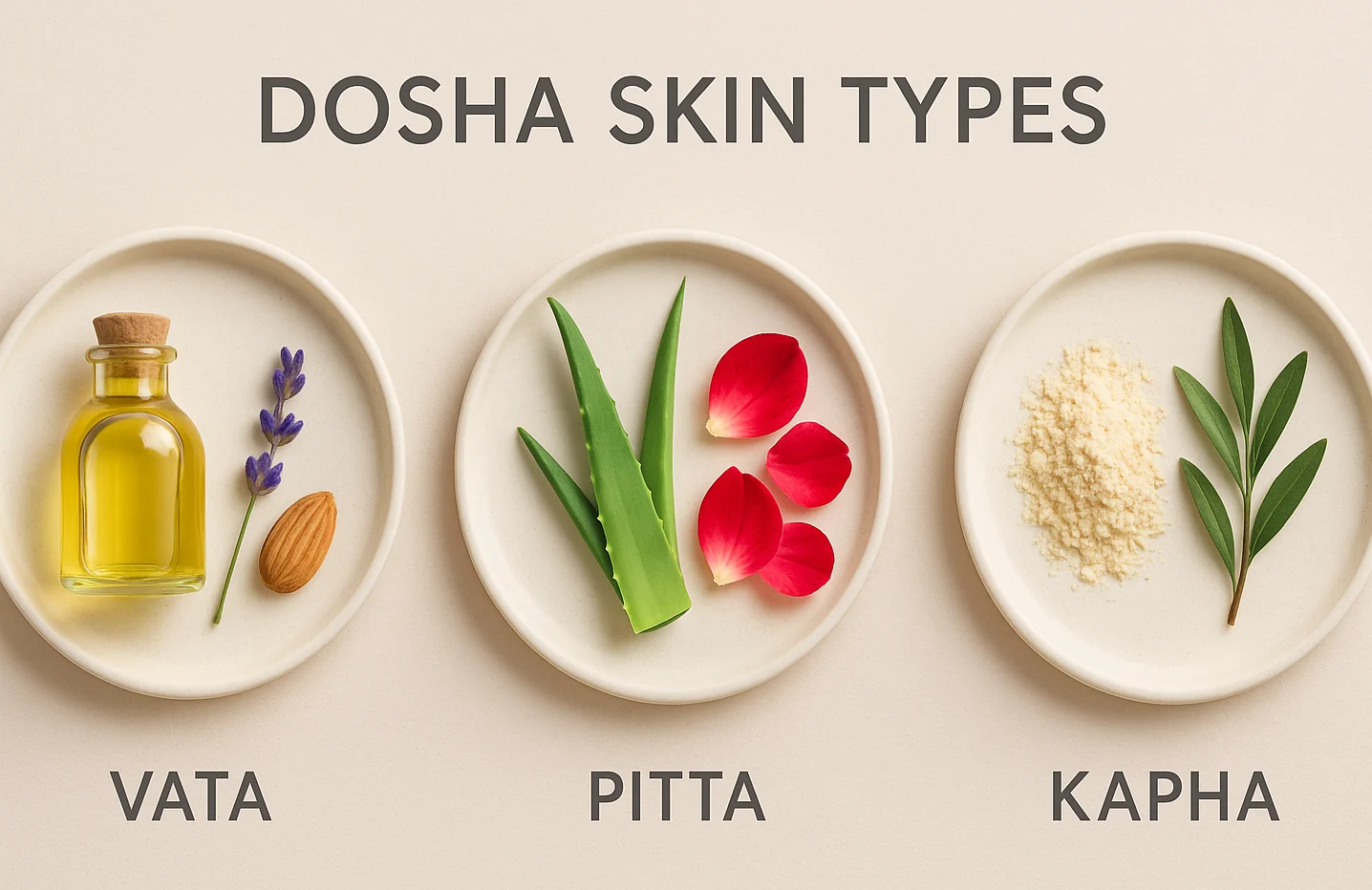
Vata-Style Pattern: Dry or Rough
Think tightness, flaking, rough texture, or a dehydrated feel. The practical priority is comfort: cleanse gently, use enough moisturizer to reduce tightness, and treat rose water, hydrosols, or facial oils as optional extras rather than requirements.
Pitta-Style Pattern: Reactive or Easily Irritated
Think stinging, flushing, warmth, or frequent product reactions. The practical priority is simplicity: fewer products, fragrance-free options when possible, and cautious testing before adding aloe-, rose-, or botanical-based extras.
Kapha-Style Pattern: Oily or Congestion-Prone
Think shine, oiliness, or a tendency to feel clogged, especially through the center of the face. The practical priority is lightness without stripping: gentle cleansing, a lighter non-comedogenic moisturizer, and no assumption that heavy oils belong in the routine because they are traditional.
If you recognize more than one pattern—or your skin changes by area or season—use the mixed result in the quiz. You do not need to force your skin into one dosha category.
Find Your Ayurvedic Skin-Care Starting Point
Answer three skin-focused questions to find a practical starting point. This is a reflection tool—not a diagnosis or full dosha assessment.
Question 1 of 3
1. After cleansing, how does your skin most often feel?
2. Which pattern do you notice most often?
3. What does your routine need most right now?
If you have persistent redness, painful acne, a rash, or ongoing irritation, use this as general routine guidance only and consider getting personalized advice from a dermatologist or other qualified clinician.
Your Daily Ayurvedic Face Care Ritual: AM & PM
A Simple Baseline Before the Dosha Variations
Use the dosha language to choose texture and simplicity—not to stack products. Wash gently with lukewarm water and your fingertips, avoid scrubbing, and change one product at a time when possible.
Test unfamiliar products before using them routinely, and do not assume “natural” means non-irritating. AAD’s patch-testing guidance recommends small-area testing for new skin-care products.
Morning Routine: Cleanse, Moisturize, Protect ☀️
- Cleanse gently: Use a mild cleanser that leaves your skin comfortable rather than tight, squeaky, or more irritated.
- Moisturize: Let your quiz result guide texture—richer when dryness is the main issue, simpler when reactivity is the main issue, and lighter when heavy layers worsen oiliness or congestion. Applying moisturizer while skin is still slightly damp can help reduce water loss.
- Protect: Finish with broad-spectrum SPF 30+ sun protection on exposed skin during the day.
If your skin is normal to oily and you specifically want neem in the cleansing step, a finished rinse-off cleanser is the simpler route. Dry or reactive skin may do better with a different gentle cleanser.
Himalaya Purifying Neem Face Wash
Neem-and-turmeric cleanser for normal-to-oily skin.
Toner or hydrosol is optional. If you enjoy rose water, aloe, or another traditional-style addition, keep it only when it feels comfortable and does not make the routine harder to troubleshoot.
Evening Routine: Cleanse, Moisturize, Then Add Optional Rituals 🌙
- Cleanse: A gentle cleanser is enough for many evenings. If you wear makeup or water-resistant sunscreen, an oil or balm cleanse followed by your gentle cleanser can help remove it without scrubbing.
- Moisturize: Use the same texture rule as the morning and keep the formula as simple as your skin needs.
- Add an optional oil or massage only if it earns a place: Use a few drops of a facial oil you already tolerate, keep pressure light, and skip oil when it feels heavy or seems to worsen congestion. Prefer a tool to fingertip massage? The BAIMEI IcyMe Jade Roller & Gua Sha is an optional add-on. Skip it if you prefer a hands-only routine.
Ayurvedic-Inspired Ingredients by Skin Pattern
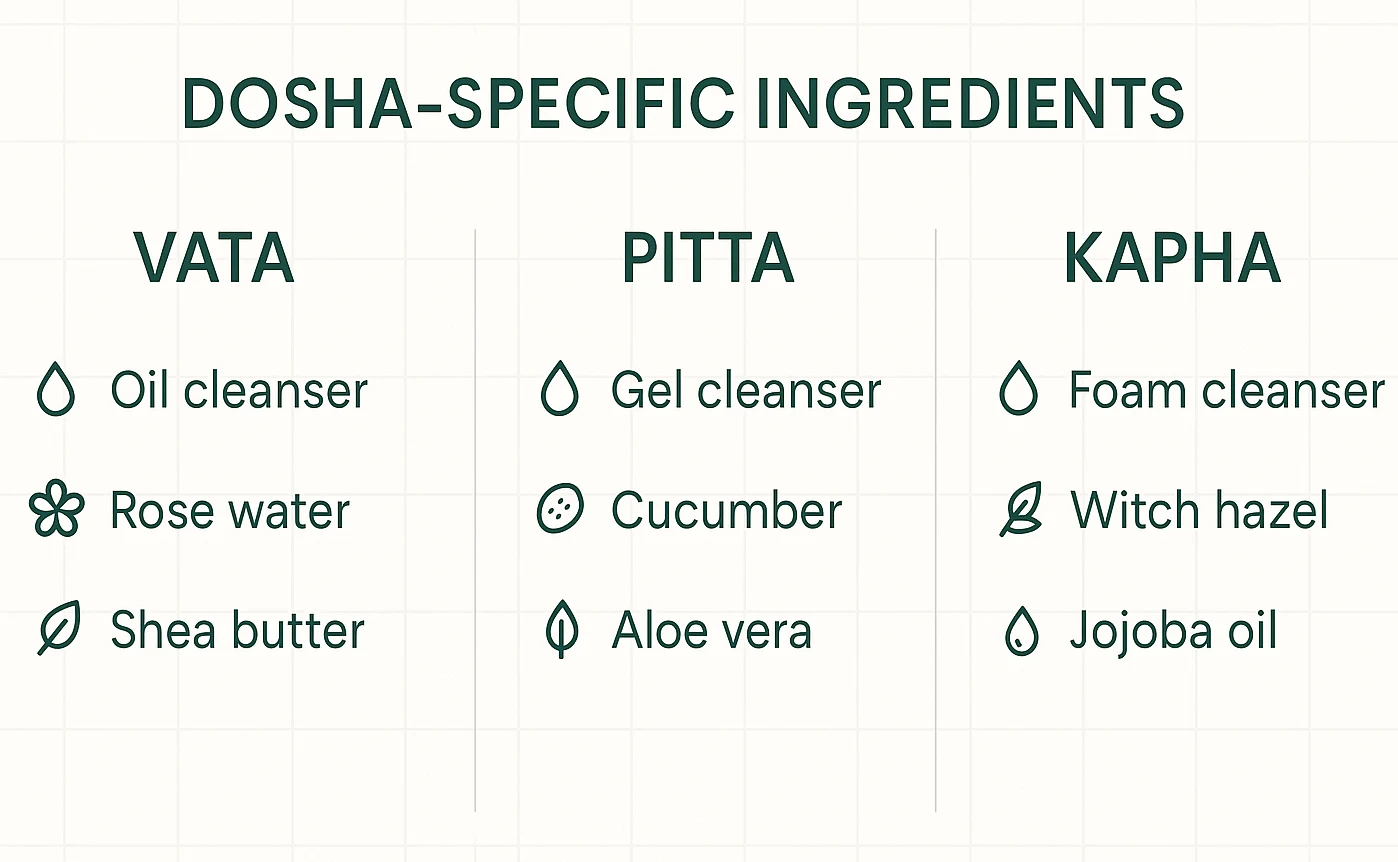
The daily routine already covers the essentials. Use this table only when you want one optional Ayurvedic-inspired addition, and introduce it separately so you can tell what your skin tolerates.
| Pattern | Optional Ideas | Slow Down or Skip When |
|---|---|---|
| Vata-style / dry | Rose water or a simple hydrosol; a small amount of facial oil you already tolerate | Anything leaves skin tighter, itchy, or more irritated |
| Pitta-style / reactive | Aloe- or rose-based products only after a tolerance test | A product stings, feels hot, or makes redness or itching worse |
| Kapha-style / oily | A simple chickpea-flour face pack or a very small amount of jojoba if tolerated | Heavy layers worsen shine, congestion, or clogged-looking pores |
| Mixed / changing | Choose one idea for the area or pattern that actually needs it | You are adding several extras at once or cannot tell what caused a reaction |
Optional Ayurvedic-Inspired Weekly Rituals
Natural face care does not require a weekly mask, steam step, or facial oil. If your daily cleanser, moisturizer, and sunscreen already leave your skin comfortable, keep those extras optional rather than adding them just because they are traditional.
Ubtan-Style Face Pack
An ubtan is traditionally made from flours, herbs, and a liquid base. For an at-home version, keep the formula simple and use only ingredients you already tolerate.
- Simple base: Chickpea flour or finely ground oat flour mixed with water can create a basic paste.
- Optional additions: Use rose water, aloe, or another cosmetic ingredient only if you have already tolerated it.
- Skip harsh add-ins: Avoid lemon juice, undiluted essential oils, and gritty scrubbing.
- Rinse gently: Do not rub a dried mask off the face. Rinse with lukewarm water, and wash it off promptly if it burns, stings, or itches.
Skip Bowl-of-Boiling-Water Facial Steaming
Putting your face over a bowl of boiling water or trapping hot steam under a towel adds burn risk without being necessary for cleansing. Steam and hot water can cause scald injuries, including to the face. If warmth feels pleasant, keep it comfortably lukewarm rather than hot. See the American Burn Association’s scald guidance for the burn-risk context.
Gentle Facial or Marma-Inspired Massage
If massage is part of the ritual you enjoy, keep it light and brief. Use clean fingertips or a tool without dragging the skin, and stop if pressure or an oil causes discomfort or irritation. Treat this as a relaxation practice rather than a treatment for acne, swelling, or another skin condition.

Ayurvedic Face Care FAQ
Keep the Routine Gentle and Flexible
Your next step is intentionally small: build the cleanser–moisturizer–sun-protection baseline first, then add at most one Ayurvedic-inspired extra when you have a clear reason to try it. Use Vata, Pitta, and Kapha as prompts for texture and simplicity, not rules your face has to follow. If your skin changes, change the routine rather than forcing the label; persistent redness, painful acne, a rash, swelling, or repeated reactions are reasons to get personalized advice from a dermatologist.
Disclaimer: This article is general educational information, not medical advice or a diagnosis. Read product labels, test new skin-care products cautiously, and stop anything that causes a reaction. Seek medical care for persistent or severe skin symptoms, and ask a qualified clinician about herbal products if you have relevant allergies, health conditions, are pregnant or nursing, or take medications.