
Hot yoga exposes a mat fast. A surface that feels secure in a dry class can become distracting once sweat builds. If you searched for h yoga mat, you are probably looking for a mat that handles hot, sweaty classes. This guide compares grip, cushioning, care, and cost, then helps you choose between two verified 5 mm options.
Use the Mat Finder for a quick two-product match, or compare Manduka GRP Adapt and Gaiam Dry-Grip directly; the later buying guide explains the trade-offs in surface, thickness, weight, latex, and care. For broader mat, block, and prop choices, see the Yoga Gear Guide.
This page contains affiliate links. As an Amazon Associate, I earn from qualifying purchases. If you buy through an Amazon link, I may earn a commission at no extra cost to you. Learn more.
Table of Contents
- Quick Answer: What Matters in a Hot-Yoga Mat
- Hot Yoga Mat Finder
- Manduka GRP Adapt vs Gaiam Dry-Grip
- Why Hot Yoga Changes the Mat Decision
- What to Look For in a Hot-Yoga Mat
- Hot-Yoga Mat Materials: What to Check
- Caring for Your Yoga Mat
- When Is a Hot-Yoga Mat Worth Paying More For?
- FAQs About Yoga Mats for Heated Practice
- Which Hot-Yoga Mat Should You Choose?
Quick Answer: What Matters in a Hot-Yoga Mat
There isn’t one best hot yoga mat for every practice. Choosing a yoga mat for hot yoga starts with what sweat does to grip, then thickness and care.
- Wet grip comes first: judge the exact surface and finish, not just the base material; sweat handling varies by construction.
- Thickness is a trade-off: 5 mm gives more cushion than a thin travel-style mat, while a thinner mat can feel lighter and closer to the floor.
- Care can decide the winner: absorbent surfaces may need stricter cleaning and drying rules, so check the exact maker instructions before buying.
Hot Yoga Mat Finder
Answer three quick questions to compare the two 5 mm picks below. If neither is a clean fit, the result will point you back to the right buying criteria instead of forcing a product.
Use your match as a starting point, then confirm the size, care, and main trade-off in the side-by-side comparison below before you choose.
Manduka GRP Adapt vs Gaiam Dry-Grip: Which Fits Your Hot-Yoga Practice?
The real split is moisture-handling priority versus price. Manduka GRP Adapt 2.0 is the step-up; Gaiam Dry-Grip is the lower-cost 5 mm route. Check the size and care differences below before you choose.
Two routes for sweaty classes
VSQuick pick: Choose Manduka when hot-yoga-specific moisture handling is the priority; choose Gaiam when you want a lower-cost dry-grip option.
| Format | Manduka GRP Adapt 2.0 5 mm · 71×26 in · Satin Grip surface |
Gaiam Dry-Grip 5 mm · 68×24 in · dry-grip topcoat |
|---|---|---|
| Why choose | Hot-yoga-specific upgrade with a surface designed around moisture handling. | Lower-cost route when you want a 5 mm dry-grip mat without stepping up to the premium option. |
| Consider | Higher-price tier; check the current listing before buying. | Smaller 68×24 in footprint than Manduka; check the dimensions if you want more room. |
| Shop |
Why Hot Yoga Changes the Mat Decision
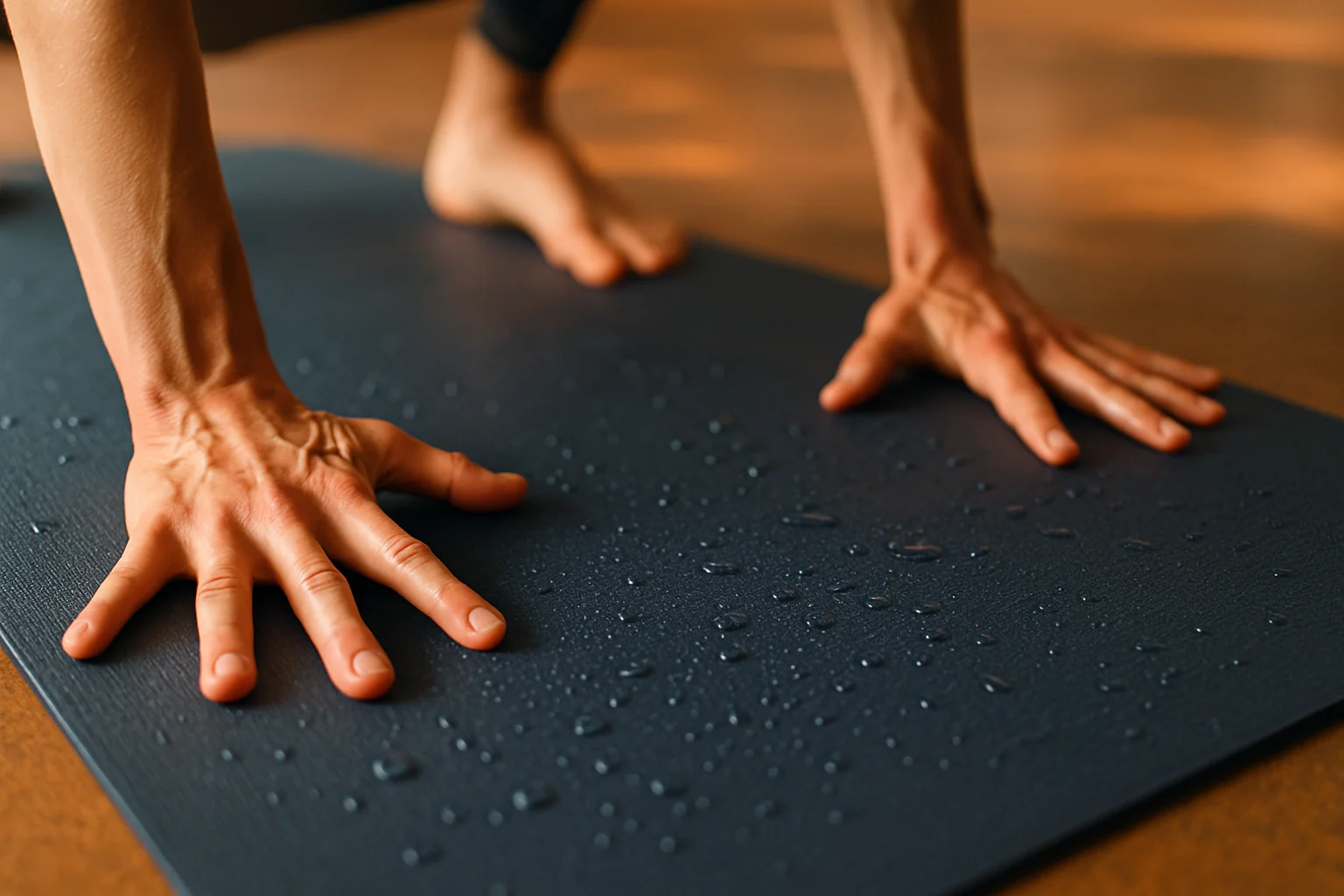
Hot yoga changes the buying question because sweat can alter how a surface feels and because some sweat-focused surfaces demand stricter care. Even the top yoga mats for general practice are not automatically the best fit once sweat becomes the main problem. The useful comparison is the exact model—not a broad “premium,” “eco,” or material label.
The Manduka GRP Adapt 2.0 uses an absorbent polyurethane-based surface, while Gaiam’s Dry-Grip uses PVC with a moisture-wicking topcoat. Different constructions can address the same sweaty-class problem, so compare the maker’s moisture-handling claim, thickness, care rules, and material warnings rather than relying on a simple “PU good, PVC bad” shortcut.
What to Look For in a Hot-Yoga Mat
Use yoga mat reviews as a filter, not the final answer. For your yoga mat selection, prioritize details you can verify on the exact model: moisture handling, thickness, listed weight, latex or material warnings, and care instructions. Broad material labels are useful only as a first filter.
Grip & Sweat Handling
A hot-yoga surface should give you enough traction as sweat builds without demanding a care routine you will not follow. Manduka describes the GRP Adapt 2.0 as moisture-absorbing, while Gaiam describes the Dry-Grip topcoat as moisture-wicking. Different constructions can solve the same sweaty-class problem in different ways. If sweaty hands are the bigger problem even outside heated classes, the yoga mats for sweaty hands guide compares a broader grip-first set of options.
Thickness & Cushioning
The two recommended mats in this guide are both 5 mm, which keeps the comparison focused. Choose that middle-ground cushion if it suits your practice; go thinner when portability or a closer-to-the-floor feel matters more. If joint sensitivity makes thickness important, comfort and stability matter more than an “advanced” or “beginner” label.
Weight & Portability
Check the listed weight and packed size of the exact mat instead of guessing from material alone. Manduka’s US product page lists the standard GRP Adapt 2.0 at 5.8 lb; Gaiam lists the standard Dry-Grip at 4.25 lb. That difference matters if you carry your mat to class or travel with it.
Sustainability & Latex Checks
Treat sustainability and allergy claims as product-specific. Manduka lists latex in the GRP Adapt 2.0 and says it is not recommended for people with latex sensitivities, while Gaiam describes the Dry-Grip as latex-free. If sensitivity is part of your decision, verify the exact model rather than relying on the material name alone; the hypoallergenic yoga mat guide compares that constraint more directly.
If your current mat is otherwise usable but gets slick when wet, a full-length towel can add absorbency without forcing a mat replacement. Check the mat maker’s guidance before adding moisture or a towel to an absorbent surface.
Hot-Yoga Mat Materials: What to Check
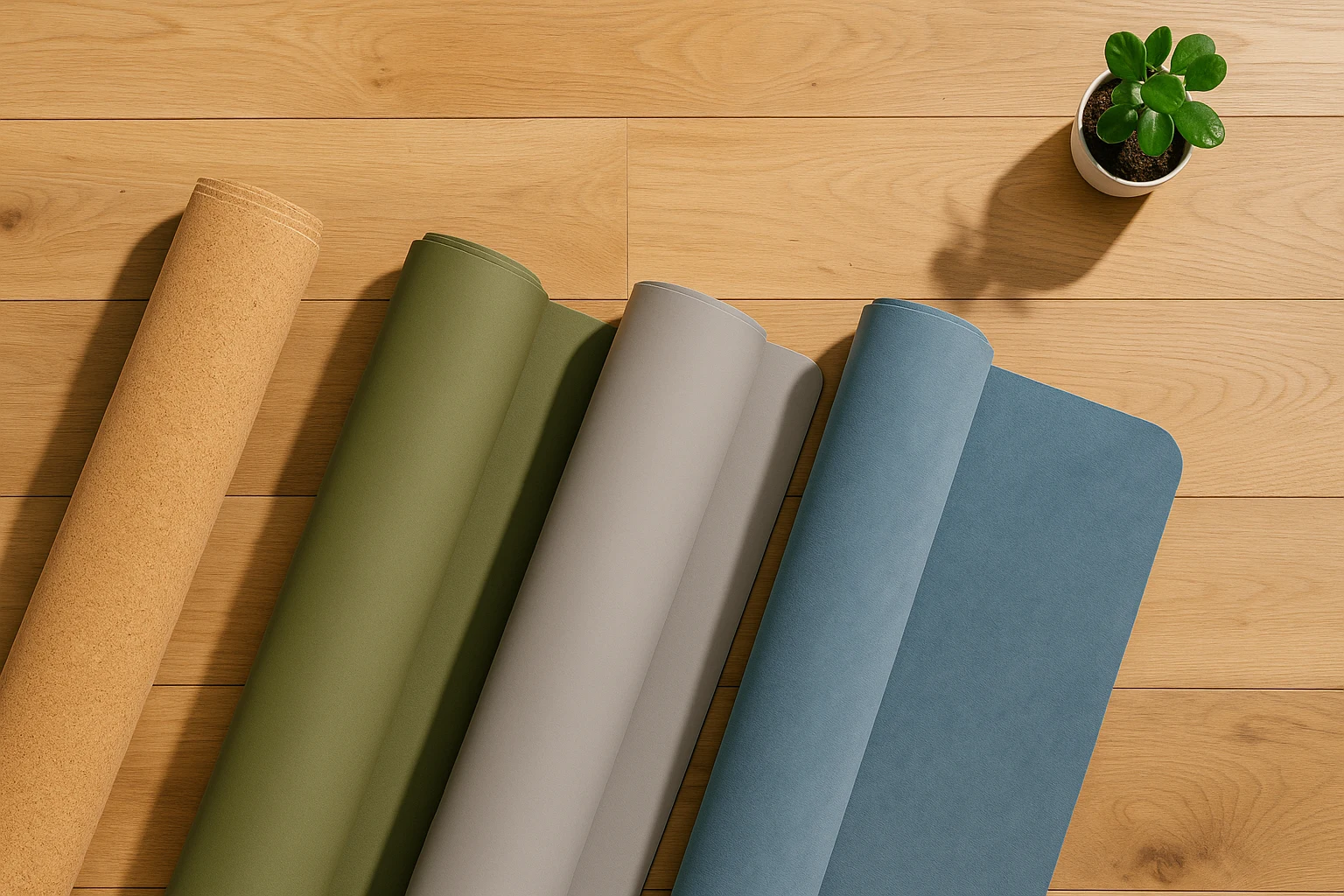
Material family can narrow your options, but finish, backing, density, and care rules often matter just as much. Use this as a checklist, not a guarantee:
| Material family | What to verify | Watch for |
|---|---|---|
| Natural rubber | Traction, firmness, exact latex content | Check listed weight; latex sensitivity may rule out some mats |
| Polyurethane (PU) / PU-topped | Wet-grip and moisture-handling claim for the exact surface | Some absorbent surfaces require stricter cleaning |
| Microfiber / suede-style | Dry-versus-damp grip behavior | Feel and drying time can change once the surface gets wet |
| TPE | Texture, density, listed weight | Material name alone does not establish wet grip or durability |
| Cork | Surface finish, backing, and the maker’s wet-grip claim | Backing and surface finish can change feel and cushioning |
Caring for Your Yoga Mat
Proper care helps protect your mat’s surface and grip:
- Wipe After Use: Follow the maker’s care directions for your exact mat. Manduka says to wipe the GRP Adapt with its mat cleaner and a clean damp cloth, then air-dry it fully; Gaiam allows a damp cloth with cold water and mild detergent for the Dry-Grip.
- Air Dry Fully: Manduka says the GRP Adapt should be fully dry before rolling; Gaiam says the Dry-Grip should dry flat.
- Deep Clean Carefully: Do not soak or submerge a mat unless its manufacturer specifically allows it. Wash removable microfiber covers only according to their own care label.
- Store Properly: Keep the mat away from prolonged direct sun or heat and follow the maker’s rolling or storage directions.
Prefer a ready-made cleaner? ASUTRA makes a dedicated yoga-mat cleaner. Use it only when your mat’s care instructions permit a general-purpose cleaner; Manduka GRP owners should follow Manduka’s specified cleaner and care process instead.
When Is a Hot-Yoga Mat Worth Paying More For?
Paying more is easiest to justify when sweat is the reason your current mat stops feeling secure, you practice heated classes often enough to value dedicated moisture handling, and the mat’s thickness, weight, and care routine fit your habits. A premium 5 mm mat is a weaker upgrade if your current surface already stays secure, if you want something thinner, or if the extra care would make the mat annoying to own.
Compare the exact surface, dimensions, care requirements, and current price before deciding; price alone does not make a mat better for hot yoga.
FAQs About Yoga Mats for Heated Practice
Which Hot-Yoga Mat Should You Choose?
Start with the problem sweat creates for you. In this comparison, the Manduka GRP Adapt 2.0 is the stronger step-up when moisture handling is the priority; the Gaiam Dry-Grip is the lower-cost 5 mm route when you do not need that step-up. If 5 mm itself is not a fit, neither is the right answer—use the thickness guidance rather than forcing a purchase. Whichever mat you choose, follow its exact care instructions so the surface keeps performing as intended.