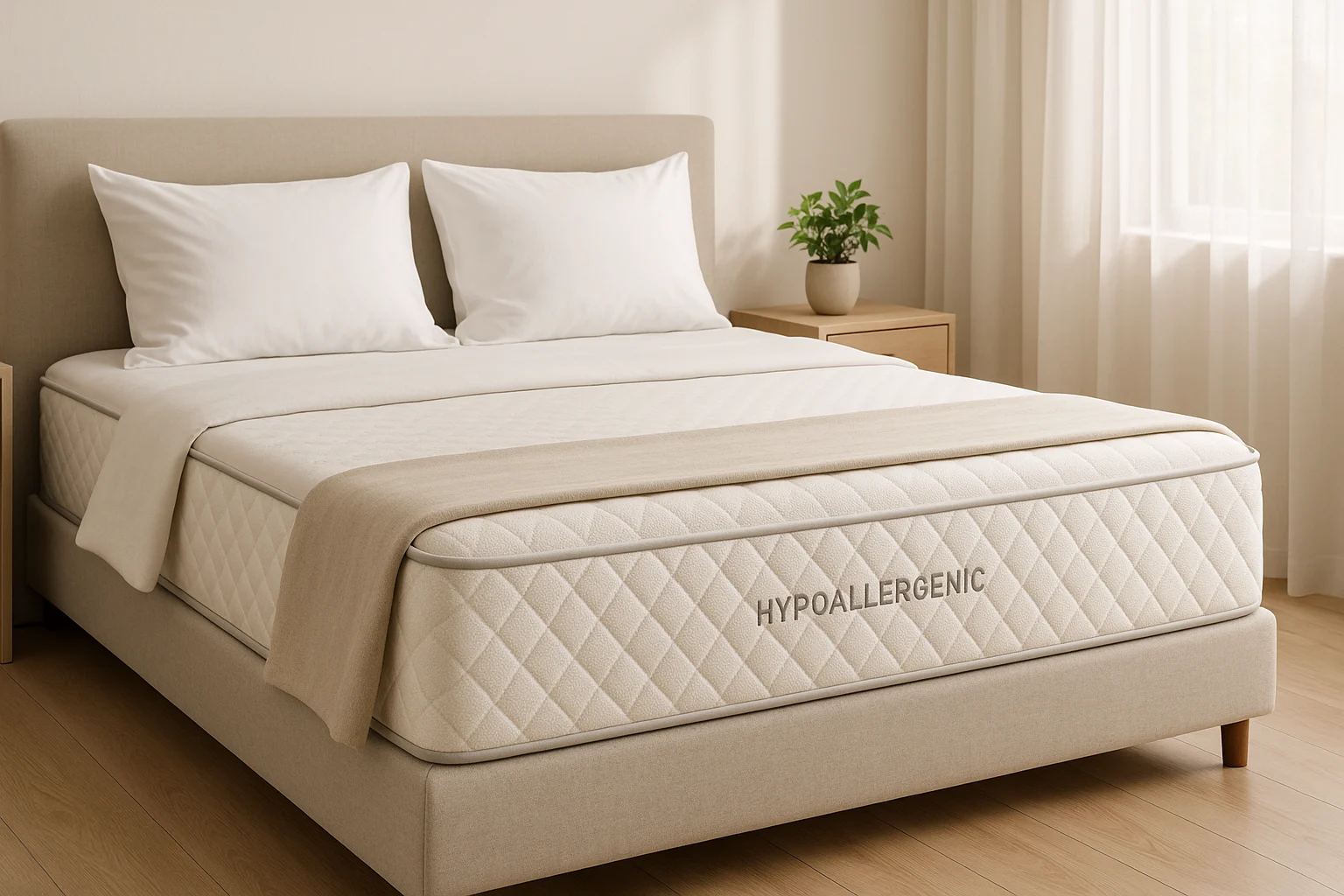
Start with the trigger, not the “hypoallergenic” label. If you’re shopping for a hypoallergenic mattress, the useful question is what you are actually trying to manage: dust mites, a known latex allergy, dampness, pet dander, or a material you prefer to avoid.
The mattress decision and the allergy-control decision are related, but they are not the same. Choose the mattress for comfort, verifiable materials, and return terms; then use the bedroom controls that match the trigger. This guide compares five models, explains what certifications do and do not prove, and gives you a quick finder to narrow the type worth researching.
This post contains affiliate links. If you purchase through them, we may earn a commission at no extra cost to you. As an Amazon Associate, I earn from qualifying purchases.
Table of Contents
- What Matters Before You Compare Mattresses
- Narrow Your Mattress Type by Material and Feel
- 5 Mattress Models to Compare by Material and Feel
- Match the Mattress to the Trigger You’re Managing
- Mattress Materials and Certifications: What They Actually Tell You
- How to Choose Between the Models
- Beyond the Mattress: Build a Lower-Allergen Bedroom
- Frequently Asked Questions About Hypoallergenic Mattresses
- Your Buying Rule: Trigger First, Mattress Second
What Matters Before You Compare Mattresses
- The label is not the treatment: no mattress material replaces an allergen-control plan for bedding, humidity, cleaning, and known triggers.
- Dust-mite control starts around the mattress: AAFA recommends zippered allergen-barrier covers and weekly hot-water washing of bedding.
- Certifications have narrow jobs: CertiPUR-US covers flexible polyurethane foam for content, emissions, and durability; GOTS covers organic textile processing and manufacturing. Neither proves that a mattress will treat allergies.
- Known latex allergy changes the shortlist: “hypoallergenic” does not mean latex-free, so verify the complete material list before buying.
- Comfort still matters: choose firmness and construction for your sleep position and preferences, then use allergy controls separately.
If you already know whether latex is off the table and which mattress feel you prefer, the finder can narrow the type to research before you compare individual models.
Narrow Your Mattress Type by Material and Feel
Answer 3 quick questions. This narrows the type to research first; it does not diagnose an allergy or tell you that a mattress is safe for a known allergy.
If you have a diagnosed latex allergy, avoid natural rubber latex and verify the complete material list. “Hypoallergenic” does not mean latex-free.
5 Mattress Models to Compare by Material and Feel
These are five models worth researching, not mattresses I have personally tested. Use them as different material-and-feel lanes: Avocado and Birch are responsive latex hybrids; Nectar Classic is conventional memory foam; Purple RestorePremier uses a grid-and-coil hybrid design; and Naturepedic EOS adds customization plus a separate latex-free configuration. None is a universal allergy-safe winner.
The comparison uses current manufacturer-published construction, certifications, and feel information. Prices, promotions, trial terms, and availability can change, so recheck the exact configuration before buying.
Avocado Green Mattress
- Why compare it: Avocado currently lists finished-product certifications including GOTS, OEKO-TEX Standard 100 Class I, MADE SAFE, EWG Verified, GREENGUARD Gold, and UL Formaldehyde-Free validation.
- Feel options: the current Green Mattress line is offered in multiple firmness configurations, so the model is broader than the old single “6.5/10” description.
- Watch for: standard Green Mattress configurations use natural latex and wool; this is not a latex-free route.
- Verify current Avocado Green Mattress details.
Birch Natural Mattress
- Why compare it: Birch currently lists a medium-firm feel, GOLS-certified organic latex, GREENGUARD Gold certification, organic cotton, wool, and individually wrapped coils.
- Feel: supportive and responsive, with less sink than many memory-foam beds.
- Watch for: Birch itself markets the latex as hypoallergenic, but that marketing should not be treated as a guarantee for someone with a latex allergy.
- Verify current Birch Natural Mattress details.
Nectar Classic Memory Foam Mattress
- Why compare it: it adds a conventional all-foam option to a list that otherwise leans heavily toward latex and hybrid constructions. Nectar currently describes the Classic as a 12-inch, medium-firm memory-foam mattress.
- Feel: closer contouring and more sink than the responsive latex-hybrid options above.
- Watch for: this is a comfort/material alternative, not an allergy-specific recommendation. The Gear Bank records CertiPUR-US and OEKO-TEX Standard 100 claims for the current Amazon listing; treat those as scope-limited certification facts, not proof that the whole mattress prevents allergy symptoms.
Choose this lane for the feel, not because it carries an allergy guarantee. If the materials and current return terms still fit what you need, you can check the exact Amazon listing.
Purple RestorePremier Hybrid
- Why compare it: Purple currently describes a soft-feel hybrid with a 3-inch GelFlex Grid, CoolFlex coils, and CertiPUR-US-certified foams.
- Feel: deep pressure relief with a distinct grid response rather than a latex feel.
- Watch for: Purple uses “hypoallergenic” in its own marketing, but certification and material claims do not replace dust-mite encasements, washing, or humidity control.
- Verify current Purple RestorePremier Hybrid details.
Naturepedic EOS Classic
- Why compare it: Naturepedic currently offers the EOS Classic as a customizable GOTS-certified organic mattress with selectable firmness, including split-firmness options.
- Material choice: the standard EOS Classic uses latex and coils, while Naturepedic also sells a separate EOS Classic Latex-Free model built around coils and microcoils.
- Watch for: choose the exact configuration by material tolerance; “EOS Classic” alone does not tell you whether the version is latex-free.
- Verify the standard EOS Classic or compare the latex-free EOS Classic.
Match the Mattress to the Trigger You’re Managing
The most useful shortlist starts with the trigger rather than the mattress material. AAFA identifies dust mites as a common indoor allergy trigger, but dust mites are only one reason a bedroom may be uncomfortable.
- Dust mites: prioritize a zippered allergen-barrier mattress encasement, pillow covers, weekly hot-water bedding care, and humidity control. Choose the mattress itself for comfort and a material list you understand.
- Known latex allergy: shortlist only a genuinely latex-free mattress and verify the full construction. Do not assume “organic,” “natural,” or “hypoallergenic” means latex-free.
- Mold or dampness: fix the moisture source and manage room humidity. A breathable mattress cannot compensate for a damp room.
- Pet dander: keeping pets out of the bedroom and washing bedding regularly is more direct than choosing a mattress because of its foam or latex type.
- Material or odor concerns: read the full construction and use certifications only for the specific claims they verify; this is a different decision from dust-mite or pet-dander control.
Mattress Materials and Certifications: What They Actually Tell You
There is no single material that makes an allergy-friendly mattress for every sleeper. If you are comparing “hypoallergenic” or “non-toxic mattress” claims, start with the full material list and the scope of each certification rather than the marketing label.
What to Verify Before You Buy
- Full material disclosure: check foam, latex, wool, cover fabrics, adhesives, and fire-barrier materials rather than relying on one front-of-page label.
- Washable or protectable sleep surface: a removable cover can be convenient, but for dust mites AAFA specifically emphasizes zippered allergen-barrier encasements around mattresses and pillows.
- Scope-specific certifications: CertiPUR-US applies to flexible polyurethane foam and evaluates content, emissions, and durability. It does not certify an entire mattress as allergy-safe.
- Organic-textile certification: GOTS covers organic fibres and textile processing/manufacturing; it is useful sourcing evidence, not proof that a mattress prevents allergy symptoms.
Decision rule: use certifications to verify what they actually test, then manage dust mites, humidity, pets, or a known material allergy with the controls specific to that trigger.
Natural Latex
Latex mattresses tend to feel responsive and can be breathable, and some models use GOLS-certified organic latex. But natural rubber latex itself is an allergen for some people. AAFA advises people with latex allergy to avoid latex products and specifically warns that “hypoallergenic” does not mean latex-free.
Compare latex when you like a buoyant feel and do not need to avoid natural rubber latex. Verify whether latex appears anywhere in the comfort layers, cover, adhesives, or other components.
Polyurethane and Memory Foam
Memory foam can provide close contouring and pressure relief. When the foam is CertiPUR-US certified, the certification applies to the flexible polyurethane foam and its content, emissions, and durability—not to the entire mattress and not to allergy outcomes.
Compare it when you prefer deeper contouring or want to research a foam-based route. Verify the full mattress material list, current certification status, and whether the feel and heat retention suit you.
Hybrid Mattresses
Hybrids combine coils with latex, polyurethane foam, or both. The word “hybrid” does not tell you whether latex is present, so read the layer-by-layer construction.
Compare a hybrid when you want more bounce or airflow than a solid-foam build. Verify the exact comfort-layer materials and any component-specific certifications.
Covers and Encasements
Organic cotton or wool can be useful material preferences, but a mattress cover is not the same thing as a dust-mite barrier. For dust-mite control, use a dedicated zippered allergen-barrier encasement and wash the bedding on top of it as recommended.
How to Choose Between the Models
Once you have ruled out any material you need to avoid, use comfort, budget, and trial terms to make the final comparison.
Sleep Position and Firmness
Side sleepers often prefer more shoulder and hip pressure relief, while many back and stomach sleepers prefer firmer support. Treat those as starting points, then use the trial period to judge comfort for your own body.
Budget
Price does not tell you how allergy-friendly a mattress is. Spend for the construction, comfort, and return terms you value rather than paying extra for a vague “hypoallergenic” label.
Trial, Return, and Warranty Terms
There is no single ideal trial length. Read the current minimum break-in period, pickup or removal fees, refund conditions, and warranty exclusions before ordering; those details vary substantially by brand.
Beyond the Mattress: Build a Lower-Allergen Bedroom
For dust mites and indoor allergens, the bedroom routine can matter more than the marketing label on the mattress. AAFA’s indoor-allergen guidance and EPA indoor-air guidance support a practical setup:
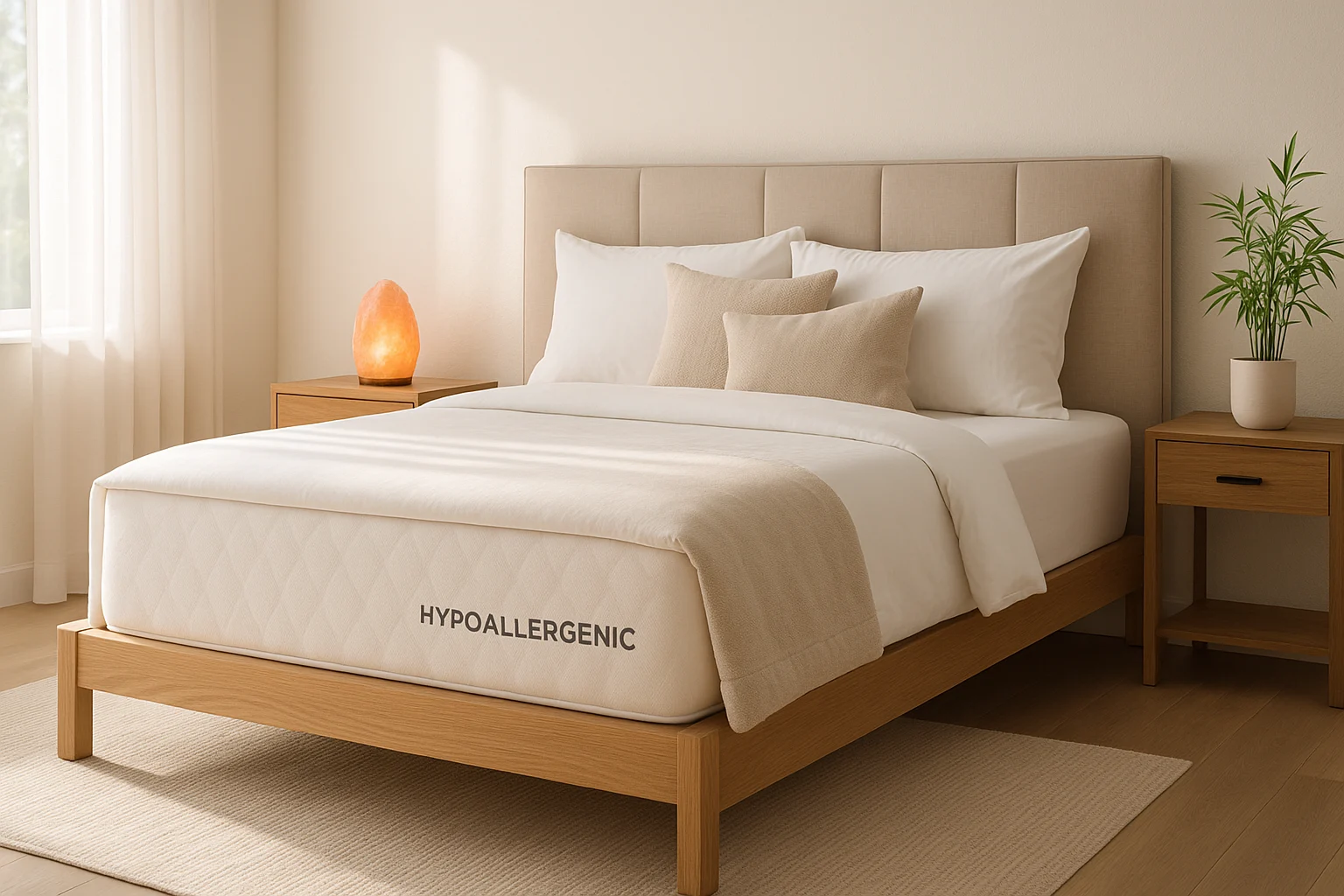
- Encasements: use zippered allergen-barrier covers on the mattress and pillows when dust mites are a trigger.
- Weekly washing: AAFA recommends washing bedding in water at least 130°F (about 54°C) and drying it hot for dust-mite control; follow the care label so you do not damage the fabric.
- Humidity: EPA recommends keeping indoor relative humidity ideally around 30–50% to reduce conditions that favor mold and dust mites.
- Cleaning: use a vacuum cleaner with a HEPA filter weekly to help keep dust mites and their waste from returning to the air. Vacuuming alone is not enough for dust-mite control, so keep the bedding and encasement routine in place too.
- Air filtration: a freestanding air cleaner only filters a limited area, so treat it as a supplement to source control rather than the main dust-mite strategy. Avoid devices that treat air with heat, electrostatic ions, or ozone.
- Pets: if pet dander is a trigger, keeping pets out of the bedroom reduces one major source of exposure.
Frequently Asked Questions About Hypoallergenic Mattresses
Your Buying Rule: Trigger First, Mattress Second
Before you buy, separate the two jobs. Choose the mattress for comfort, material tolerance, and return terms; choose the bedroom controls for the trigger. For dust mites, that means encasement, weekly bedding care, and humidity management. For a diagnosed latex allergy, it means verifying a genuinely latex-free construction.
Recheck the manufacturer page for the exact model and configuration you are considering. If symptoms are persistent, severe, tied to asthma, or connected to a diagnosed allergy, let your clinician help identify the trigger rather than asking a mattress label to do that job. Once the bedroom decision is settled, the yoga gear guide covers mats, blocks, and other practice equipment separately.