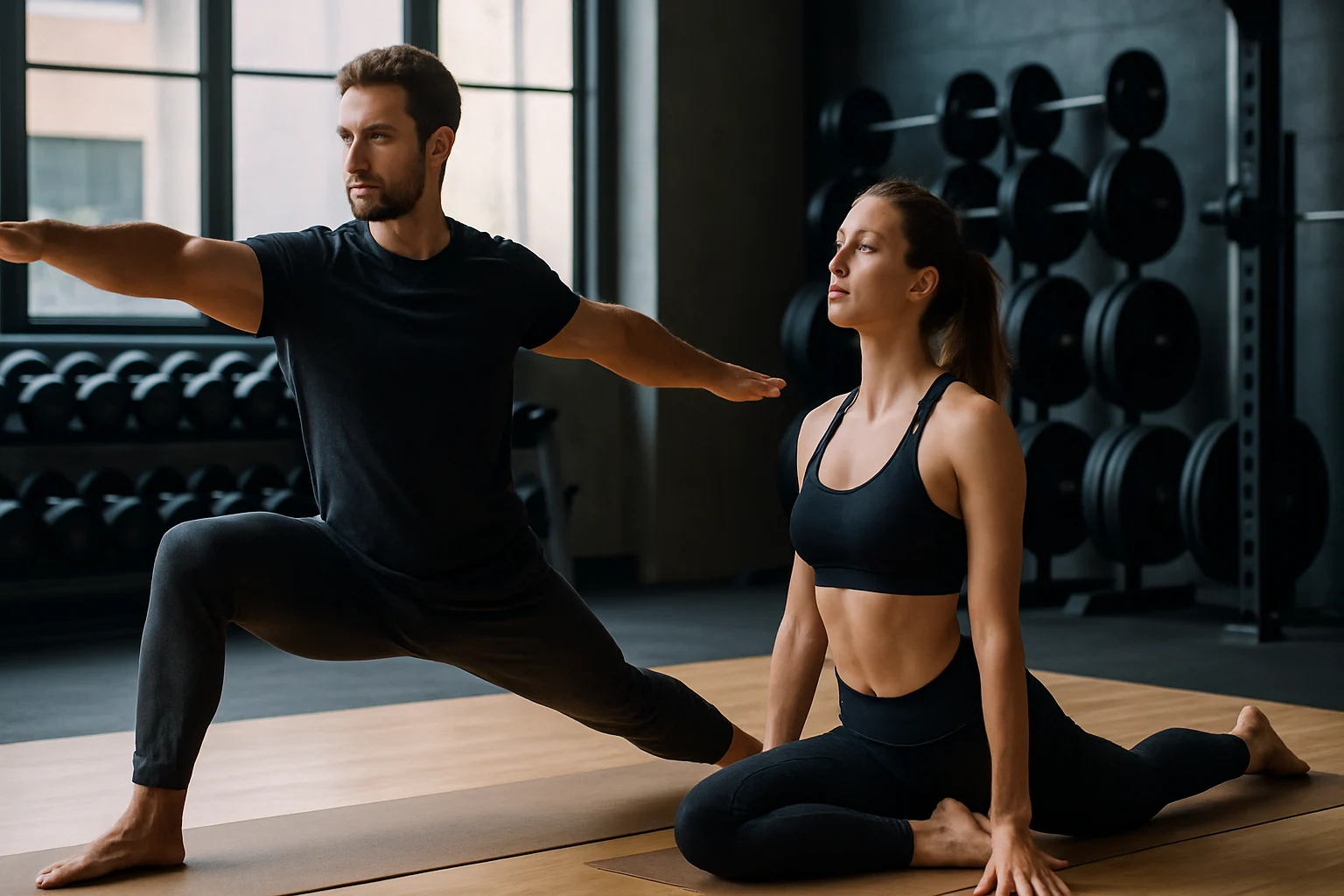
Yoga for weight training works best as a complement, not a second training program. Before lifting, use brief, dynamic movements that prepare the ranges you are about to use. After lifting or on a rest day, slower and more comfortable mobility work usually fits better. Yoga can help you practice mobility, balance, breathing, and controlled movement, but it is not a shortcut to more strength, faster tissue recovery, or injury-proof training.
This guide shows seven lifter-friendly poses, how to fit them around a strength program, and a simple plan builder for choosing a starting point. If you mainly want to work on stiffness rather than decide when yoga fits around lifting, the complete yoga flexibility guide is the better place to start.
Build Your Yoga + Lifting PlanTable of Contents
- What Yoga Can Add to Strength Training
- How to Fit Yoga Around Lifting
- 7 Yoga Poses Lifters Can Use for Mobility
- Your Yoga and Lifting Questions Answered
- Make Yoga Support Your Lifting
What Yoga Can Add to Strength Training
Keep your lifting plan as the main driver of strength and muscle; use yoga to practice mobility, balance, and controlled movement. That keeps the roles clear without asking every gym session—or every yoga session—to do every job.
More Comfortable Range of Motion
Resistance training does not automatically make you inflexible, but some lifters do notice that particular ranges feel restricted. Harvard Health notes that regular stretching can help maintain flexibility and joint range of motion. Yoga for weight training can be one way to practice those ranges alongside your strength work; it should complement, not replace, the lifting program that builds your strength.
Mobility Is Not Injury Insurance
Yoga can help you practice balance, mobility, and controlled movement, but it cannot guarantee that you will avoid lifting injuries. The National Center for Complementary and Integrative Health notes that yoga is generally safe for healthy people when practiced appropriately, while sprains and strains can still occur. Treat yoga as movement practice—not as a substitute for sound lifting technique, sensible training load, or care for an existing injury.
Recovery Support, Not a Shortcut
Gentle yoga can work as low-intensity movement after training or on a rest day, especially when you enjoy it and it helps you unwind. Keep the goal modest: move comfortably, breathe, and finish fresher than you started. Do not treat stretching or yoga as a guaranteed way to erase soreness or speed tissue repair; your overall training load, sleep, food, and true rest still matter.
Movement Variety Beyond Your Main Lifts
A lifting program is built around the movements and muscle groups it prioritizes. Yoga can expose you to different positions, balance demands, and controlled ranges of motion, but it is not a shortcut for correcting a true strength deficit. If a muscle group needs to get stronger, progressive resistance work is still the direct tool; strength-building yoga can sit alongside it as movement practice.
Breathing and Attention
Yoga also gives you a structured chance to slow your breathing and pay attention to position, tension, and effort. That can make an easy session feel mentally different from heavy training without promising that it will add kilos to your lifts. If the attention side is what interests you most, these mindfulness techniques for focus go deeper.
After a heavy lower-body day: try two easy minutes of hip and upper-back movement. If a position makes you feel worse rather than looser, stop instead of forcing more range.
How to Fit Yoga Around Lifting
You do not need long yoga sessions to make the practice useful. Before lifting, favor brief, dynamic, comfortable movements that prepare the ranges you are about to use rather than treating long static holds as the whole warm-up. Longer comfortable holds fit better after training or in a separate easy session. Pair yoga for weight training with restorative yoga poses when you want a calmer recovery-day option, and keep the intensity low enough that the session does not become another hard workout.
- Pre-Workout (5–10 minutes): Use dynamic, comfortable movements such as Low Lunge transitions, Thread the Needle, or gentle Down Dog movement; keep long static holds out of the main warm-up.
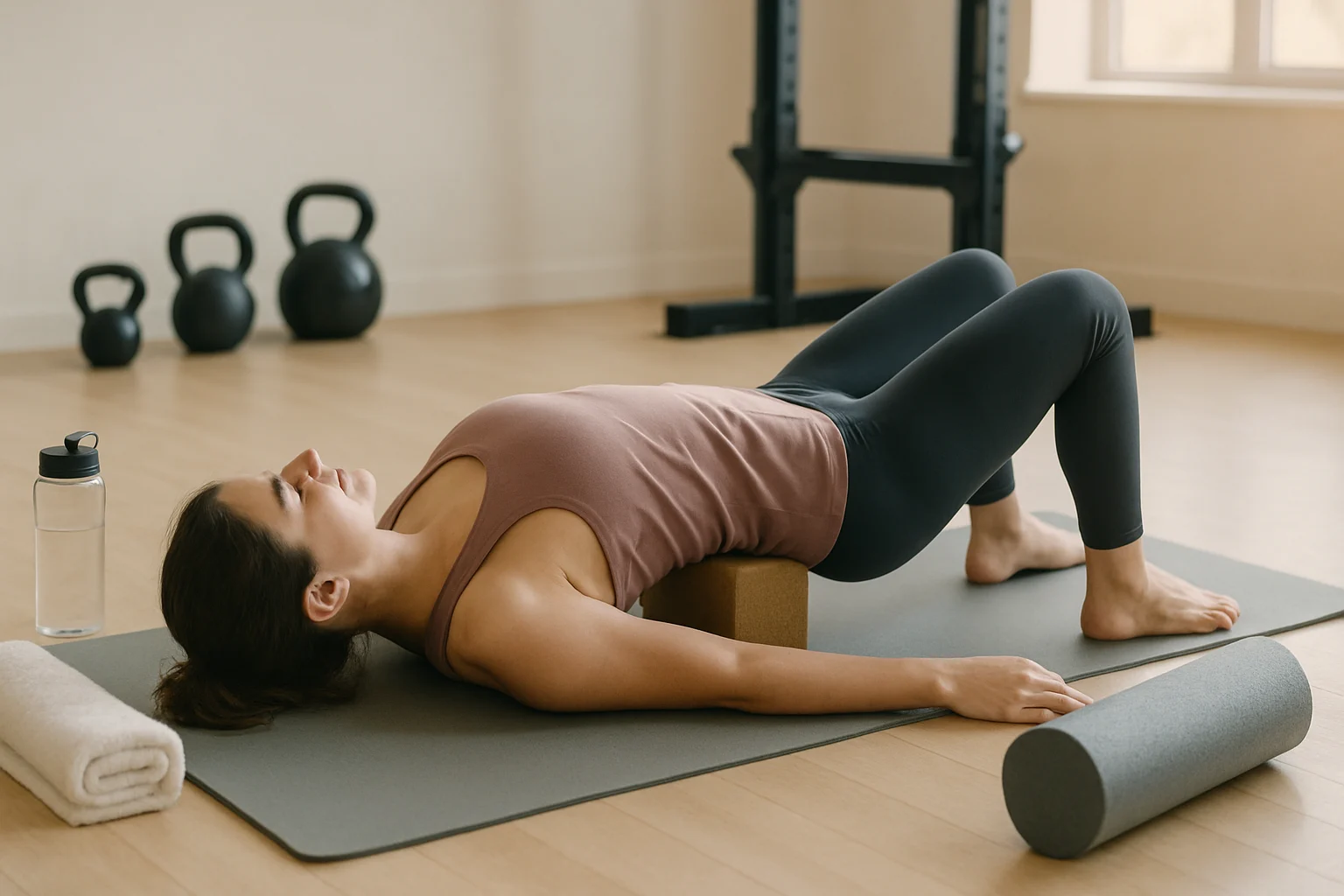
- Post-Workout (10–20 minutes): Slow down with comfortable positions such as Child’s Pose or Supported Bridge; stop before a stretch becomes painful or aggressive.
- Rest Day (20–30 minutes): Use a gentle flow or slower mobility session if it helps you feel better, but keep a true rest day when that is what your training needs.
- Adjust to the Training Day: If yoga leaves you more fatigued, sore, or reluctant to lift, reduce the volume or move the longer session away from hard training.
Build Your Yoga + Lifting Plan
Choose when yoga fits your training day and how much time you realistically have. You’ll get a simple starting plan using poses from this guide.
Use the plan as a starting point. Then choose from the seven poses below based on the timing you picked and what feels comfortable.
7 Yoga Poses Lifters Can Use for Mobility
Tight hips or shoulders after heavy days? These poses give you several ways to work on the ranges lifters commonly want to revisit. Go easy, pay attention, and skip anything that feels sharp, pinchy, or otherwise wrong for you.
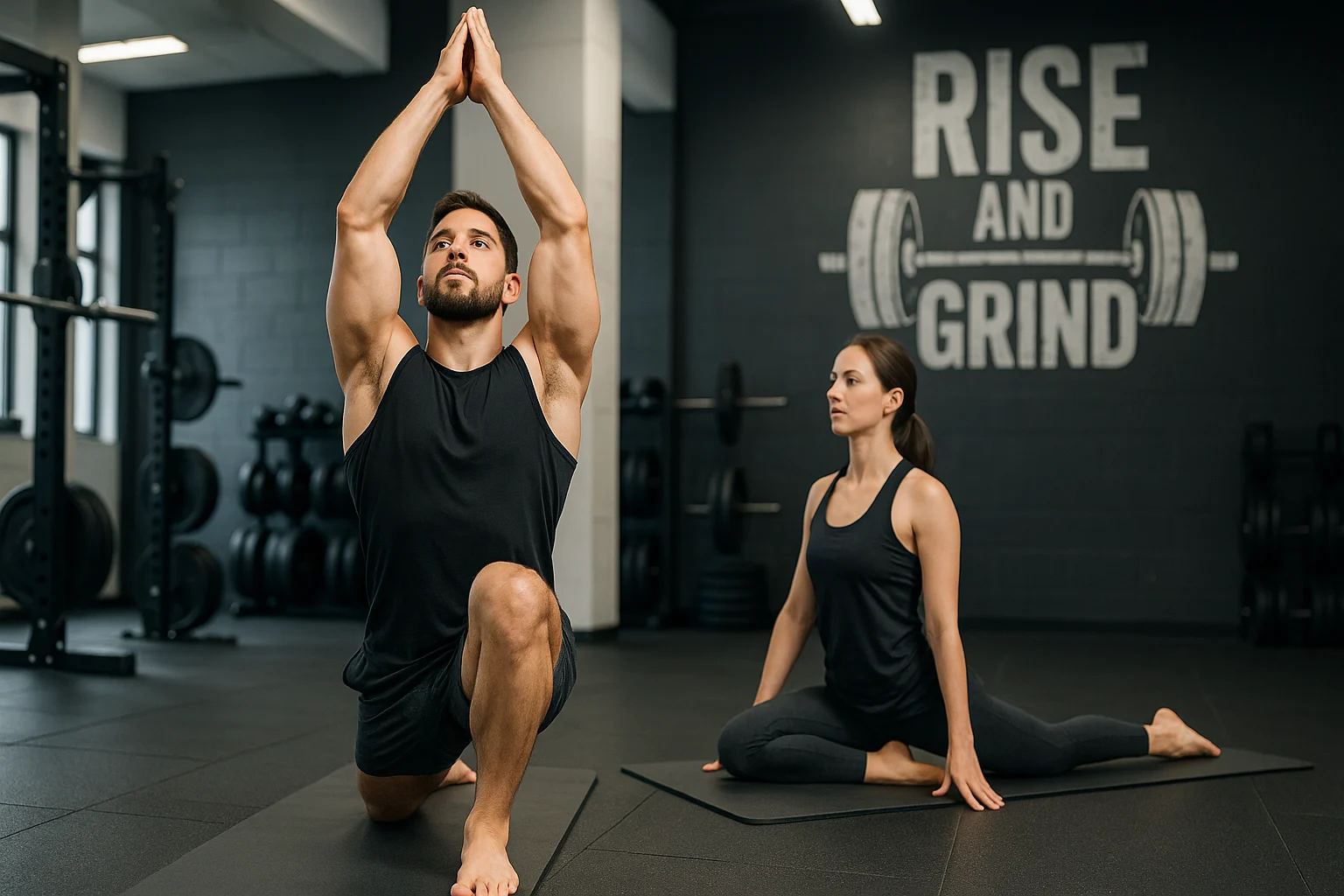
If you use yoga before lifting, keep the movements dynamic: move in and out of Low Lunge, use gentle Thread the Needle repetitions, or pedal through Down Dog instead of settling into long holds. The instructions below show the slower versions that fit better after training or on an easy day.
1. Low Lunge (Anjaneyasana)
- Focus: Hip flexors, quads, glutes.
- Why it helps: Gives you a controlled way to work on hip extension and front-of-hip mobility after training or in a separate mobility session.
- How to:
- Start in a plank or on all fours.
- Step your right foot forward, knee over ankle.
- Drop your left knee to the mat and pad it if needed.
- Ease your hips forward until you feel a comfortable stretch at the front of the left hip.
- Take 3–5 comfortable breaths, then switch sides.
- Make it easier: Rest your hands on blocks by your front foot for balance.
2. Pigeon Pose (Eka Pada Rajakapotasana)
- Focus: Glutes, deep hip muscles.
- Why it helps: Creates a strong hip and glute stretch for readers who tolerate the position comfortably. If back or sciatic-type pain is the real issue, use the lower back guide rather than treating Pigeon as a fix.
- How to:
- From a plank, bring your right knee toward your right wrist.
- Angle your right shin toward your left hip and extend your left leg back.
- Support your right hip with a block or folded blanket if that makes the position more comfortable.
- Stay for 3–5 comfortable breaths, then switch sides.
- Make it easier: Skip this pose if your knee or hip feels pinchy; choose a gentler hip stretch instead.
3. Supported Bridge Pose (Setu Bandhasana)
- Focus: Front of the hips and chest.
- Why it helps: Offers a supported way to open the front of the body and rest in gentle hip extension after training.
- How to:
- Lie on your back with knees bent and feet about hip-width apart.
- Lift your hips just enough to place a yoga block on its low setting under your sacrum—the flat, bony back of the pelvis below the lumbar curve.
- Lower your pelvis onto the block and take 5–10 comfortable breaths.
- Lift your hips, remove the block, and lower slowly.
- Make it easier: Keep the support under the sacrum, not under the lumbar spine, and come out if the position feels uncomfortable.
4. Thread the Needle (Parsva Balasana variation)
- Focus: Shoulders, upper back, neck.
- Why it helps: Gives you a gentle way to rotate through the upper back and ease into a shoulder stretch after pressing or pulling.
- How to:
- Start on all fours in tabletop position.
- Slide your right arm under your body and rest your shoulder and head on the mat or on support.
- Take 3–5 comfortable breaths, then switch sides.
- Make it easier: Put a folded towel or blanket under your shoulder or head for extra support.
5. Downward-Facing Dog (Adho Mukha Svanasana)
- Focus: Hamstrings, calves, shoulders, spine.
- Why it helps: Combines shoulder work with a calf-and-hamstring stretch. Bend your knees as needed rather than chasing a straighter shape; if hamstring tightness is the main limiter, use the hamstring stretch guide for more targeted options.
- How to:
- Start on hands and knees with your fingers spread comfortably.
- Push your hips up and back to form an upside-down “V.”
- Let your heels move toward the floor without forcing them and take 5–10 comfortable breaths.
- Make it easier: Bend your knees as much as you need. If your wrists are the limiting factor, the wrist mobility guide gives you gentler options.
6. Child’s Pose (Balasana)
- Focus: Hips, thighs, back.
- Why it helps: A quiet position to wind down after a hard session or between more active mobility drills.
- How to:
- Kneel with your big toes together and knees wide or closer together, whichever feels better.
- Sit back toward your heels and fold forward.
- Rest your forehead on the mat or on support and stay for several comfortable breaths.
- Make it easier: Use a bolster under your chest for support.
7. Standing Forward Fold (Uttanasana)
- Focus: Hamstrings, calves, back of the legs.
- Why it helps: Gives you a simple standing hamstring-and-calf stretch without requiring floor work.
- How to:
- Stand with feet about hip-width apart.
- Hinge forward at your hips and keep a comfortable bend in your knees.
- Take 3–5 easy breaths, then come up slowly.
- Make it easier: Rest your hands on blocks or another stable support so you do not have to reach for the floor.
If you want a seated option for the days between sessions, the free 10-minute chair-yoga routine gives you a complete practice to try.
A Seated 10-Minute Routine for Rest Days
Confirm to get the routine and yoga tips. Unsubscribe anytime.
Something went wrong. Please check your email address and try again.
Your Yoga and Lifting Questions Answered
Make Yoga Support Your Lifting
Start with one small job this week: five minutes of dynamic mobility before a lift, or a short easy session after training or on a rest day. If you are unsure which version fits, use the plan builder and keep the result modest enough that your lifting still feels like the main event.
The useful test is simple: yoga should leave you better prepared to train, more comfortable moving, or more relaxed on an easy day—not give you another performance target to chase. The same principle applies when you use yoga for strength or as part of yoga for athletes: it should support the main training, not compete with it. If general stiffness is the bigger problem, the complete yoga flexibility guide is the better next step.