If the backs of your legs feel tight, the useful question is not how far you can fold—it is which version lets you feel a mild stretch without fighting the pose. These four yoga hamstring stretches are built around that idea: bend your knees, use support, and choose the setup that fits today. You do not need to touch your toes.
When I started yoga, bending to tie my shoes felt like a workout. What helped was treating range as adjustable instead of pass-or-fail. Start with the setup below that removes the biggest obstacle today; if you want the bigger picture, our yoga flexibility guide takes a broader look at yoga for leg flexibility.
This post contains affiliate links. If you purchase through them, we may earn a commission at no extra cost to you. As an Amazon Associate, I earn from qualifying purchases. Learn more.
Table of Contents
- Start Here: 5 Rules for Tight Hamstrings
- Which Hamstring Stretch Should You Start With?
- 4 Yoga Hamstring Stretches for Tight Legs
- Hamstring Stretch Summary
- Build a Hamstring Stretch Routine That Fits Your Day
- Why Hamstrings Feel Tight—and What Stretching Can Do
- Frequently Asked Questions on Hamstring Stretching
- Start with One Comfortable Stretch Today
Start Here: 5 Rules for Tight Hamstrings
- Make the pose fit you: Bend your knees and use a strap, block, blanket, wall, or chair when it reduces strain.
- Warm up if you are cold: Start with 5–10 minutes of easy walking or other light movement before a longer static stretch.
- Stay below pain: Aim for a mild, steady stretch and ease out from sharp or worsening discomfort.
- Breathe normally: Let your breathing stay steady; do not use an exhale as permission to push farther.
- Repeat what feels manageable: Short, regular practice matters more than forcing a deeper position.
If reach is the main problem, a yoga strap can help, but a towel or robe belt is a perfectly reasonable way to try the same idea first.
Which Hamstring Stretch Should You Start With?
Pick the setup that removes the biggest obstacle today. This is not a diagnosis; it simply routes you to the easiest matching option in this guide.
Start with Reclining Hand-to-Big-Toe.
This floor-based version removes the balance demand and lets you adjust both the knee bend and strap length. Choose it when you want minimal balance demand.
Jump to the supported floor stretch4 Yoga Hamstring Stretches for Tight Legs
The four poses below give you different setups rather than four levels you must progress through. Keep each hold comfortable and pain-free; there is no single duration you have to hit for the stretch to count.
1. Seated Forward Fold (Paschimottanasana): Easiest to Scale
Why It Works: This seated option puts the stretch directly at the back of the legs and is easy to scale with bent knees, a blanket, or a strap.
- Sit tall with legs extended, toes flexed toward the ceiling.
- Place a folded blanket under your sitting bones if your back rounds.
- Inhale, lengthening your spine like a string pulls your head up.
- Exhale, hinge from your hips only as far as you can keep the front of your torso long.
- Rest hands on shins, ankles, or a strap around your feet.
- Bend knees as much as needed to keep the stretch manageable.
- Relax neck and shoulders, breathing deeply.
- Inhale and return upright slowly.
Modifications for Tight Hamstrings
- Bend knees generously to keep your spine straight.
- Sit on a blanket to ease hip hinging.
- Use a strap to extend reach comfortably.
Alignment Tips
- Keep spine long, avoiding rounding.
- Fold from hips, not waist.
- Keep knees soft rather than locked.
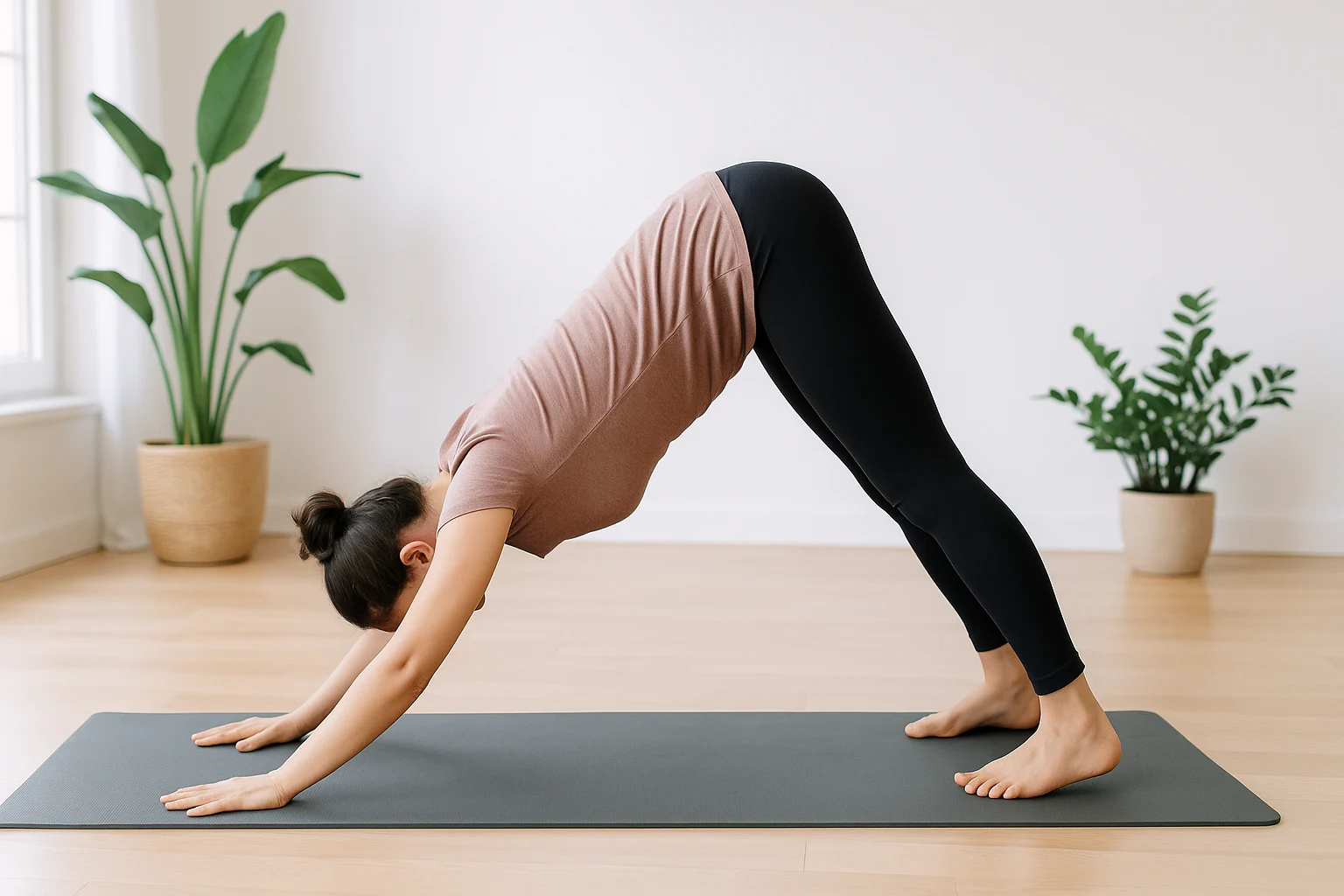
2. Downward-Facing Dog (Adho Mukha Svanasana): Weight-Bearing Option
Why It Works: This weight-bearing pose combines upper-body work with a stretch through the calves and backs of the legs.
- Start in tabletop, wrists under shoulders, knees under hips.
- Spread fingers, press through palms.
- Tuck toes, exhale, lift hips to form an inverted V.
- Bend knees deeply to lengthen spine.
- Lengthen your spine and let your heels stay lifted if that keeps the pose comfortable.
- Straighten your legs only if it happens without strain or a rounded, forced fold.
- Lower knees to exit.
Modifications for Tight Hamstrings
- Bend knees deeply to prioritize spine length.
- If your wrists do not tolerate weight-bearing, skip this pose and choose Reclining Hand-to-Big-Toe instead.
- Alternate knee bends if gentle movement feels better before settling into the pose.
Alignment Tips
- Press evenly through fingers.
- Keep spine long, not rounded.
- Rotate upper arms outward to broaden shoulders.
3. Pyramid Pose (Parsvottanasana): Standing Option
Why It Works: This standing option targets one hamstring at a time, with more balance demand than the seated or reclining poses.
- Start in Mountain Pose.
- Step the right foot back a comfortable distance, keeping the left foot forward.
- Turn the back foot slightly out to a comfortable angle.
- Turn your hips generally toward the front without forcing them perfectly square.
- Inhale, lengthen spine.
- Exhale, hinge from the left hip until you feel a mild stretch in the back of the front leg.
- Place hands on shin, blocks, or floor.
- Keep spine long, bend front knee if needed.
- Engage core, inhale to lift up, repeat on other side.
Modifications for Tight Hamstrings
- Bend front knee slightly.
- Use blocks, a chair, or a wall for support.
- Shorten stance for less intensity.
Alignment Tips
- Keep legs active, not locked.
- Keep the pelvis comfortably oriented forward rather than twisting into the pose.
- Maintain long spine.
4. Reclining Hand-to-Big-Toe Pose (Supta Padangusthasana): Most Supported
Why It Works: This supported floor option removes the balance demand and makes it easy to adjust the knee bend and strap length.
- Lie on back, knees bent, feet flat.
- Extend right leg along floor, or keep bent.
- Bring left knee to chest.
- Loop a strap around left foot’s ball, or hold calf.
- Extend left leg toward ceiling, knee soft if tight.
- Use the strap to extend your reach rather than to pull the leg toward you.
- Relax shoulders, breathe deeply.
- Release strap, lower leg, repeat on other side.
Modifications for Tight Hamstrings
- Bend lifted knee generously.
- Keep bottom leg bent, foot flat.
- Use a scarf if no strap is available.
Alignment Tips
- Keep hips and lower back grounded.
- Flex lifted foot, toes toward face.
- Relax upper body.
Flexibility isn’t about touching your toes; it’s about moving freely and comfortably.
Hamstring Stretch Summary
| Pose Name | Setup | Main job | Key Modification |
|---|---|---|---|
| Seated Forward Fold | Seated / supported | Back-of-leg stretch with easy knee-bend options | Bend knees generously |
| Downward-Facing Dog | Weight-bearing | Calf and hamstring stretch with upper-body loading | Bend knees deeply |
| Pyramid Pose | Standing / balance | Single-leg hamstring focus | Use blocks, chair, or wall |
| Reclining Hand-to-Big-Toe | Floor / supported | Hamstring stretch with minimal balance demand | Bend lifted knee |
You do not need a strap if your hands already reach comfortably, and a towel or robe belt can work as a free substitute. If you want a dedicated prop that gives you more reach in the seated and reclining variations, the 8-foot Manduka Align Yoga Strap is a practical option.
Build a Hamstring Stretch Routine That Fits Your Day
Good hamstring stretch routines are simple enough to repeat. If your goal is more flexible hamstrings, pick one or two setups that feel manageable and adjust the routine to how your body responds instead of trying every pose every time.
If You Want No Floor Work: Chair Hamstring Stretch
- Sit near the front of a sturdy chair with both feet planted.
- Extend one heel forward, keep that knee soft, and point the toes up.
- Keep your back long and hinge forward from the hips until you feel a mild stretch behind the extended leg.
- Return upright, switch sides, and stop if the position causes pain.
If standing balance feels comfortable, Pyramid Pose with a chair or wall for support is another no-floor option.
If You Run or Strength Train
Before training, favor easy movement and a dynamic warm-up rather than a long static hold. Once you are already warm, choose one of the supported stretches above when it feels useful. If you prefer a guided practice instead of assembling your own sequence, try one of our gentle yoga sequences.
How Often and When to Practice
- Frequency: A few short sessions each week is a practical starting point; adjust to how your body responds.
- Morning: Start gently if your body feels stiff after waking.
- After activity: Static holds may feel more natural once you are already warm.
- Between sessions: Change positions during long periods of sitting, keep some strength work in your routine, and give irritated or unusually sore areas time to settle.
If the chair option above feels like your easiest way to practice, a chair-based routine is a simpler next step than building a sequence yourself.
Get the Chair Routine for No-Floor Days
A 17-page seated sequence you can follow without getting down onto the floor.
Confirm to get the routine and yoga tips. Unsubscribe anytime.
Something went wrong. Please check your email address and try again.
Why Hamstrings Feel Tight—and What Stretching Can Do
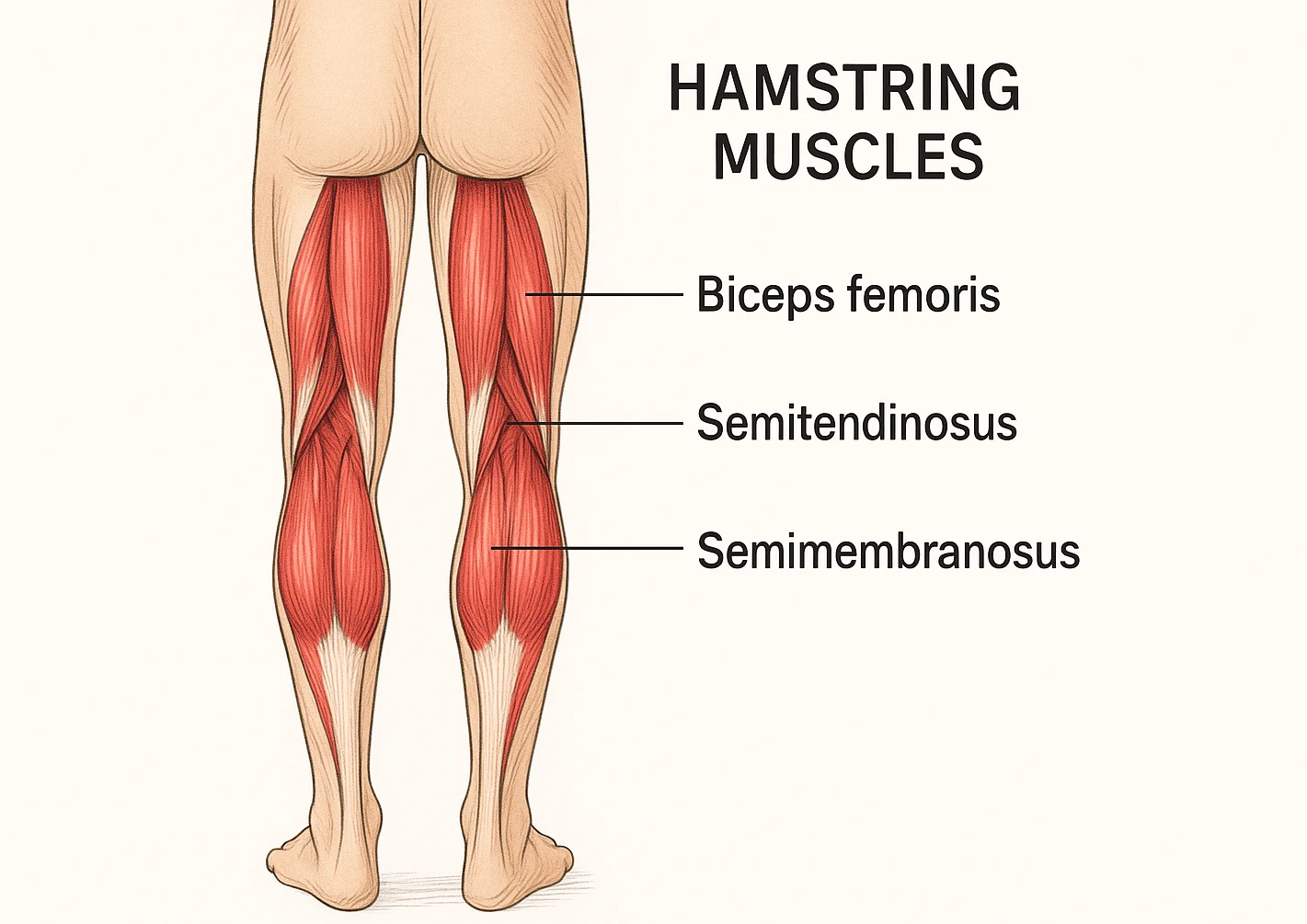
The hamstrings are three muscles along the back of the thigh that help bend the knee and extend the hip. A feeling of tightness does not reveal one single cause: time spent in one position, training load, and your current mobility can all change how a stretch feels.
Stretching can improve flexibility and joint range of motion, but deeper is not automatically better. Hamstring tightness can also occur alongside lower-back discomfort without being the sole cause of it, so treat these stretches as one movement option rather than a universal fix for back or knee pain.
Frequently Asked Questions on Hamstring Stretching
Start with One Comfortable Stretch Today
Choose one version that fits the body and setup you have today: the chair stretch when you want no floor work, Reclining Hand-to-Big-Toe when you want the most support, Seated Forward Fold when sitting on the floor feels fine, or Pyramid and Downward Dog when standing or weight-bearing feels comfortable.
One pose you can repeat calmly is more useful than a deeper shape you avoid. Let easier movement and a little more usable range be the progress markers, and keep the practice ordinary enough to come back to.