Can’t touch your toes? You do not need to. This yoga flexibility guide is for building range of motion you can use comfortably—not chasing the deepest version of a pose. Start with the route that matches your body today, then use props only when they make a position easier to control.
If you feel stiff, a short gentle sequence or a focused hamstring practice is usually a more useful first step than buying more gear. If getting to the floor is the hard part, start with standing or seated variations and treat comfort, control, and easier everyday movement as real progress.
Find Your Starting RouteThis post contains affiliate links. If you purchase through them, we may earn a commission at no extra cost to you. As an Amazon Associate, I earn from qualifying purchases. Learn more.
Table of Contents
- Choose Your Flexibility Starting Point
- Find Your Flexibility Starting Route
- Build Flexibility with Strength
- How Props Can Help
- Keep a Home Practice Simple
- Safety and Best Practices
- If Floor Poses Don’t Work for You
- Frequently Asked Questions
- Start with Comfort, Not Depth
Choose Your Flexibility Starting Point
You do not need to follow this guide from top to bottom. Pick the route that matches the thing stopping you today.
If stiffness is the main problem
- Start with gentle yoga sequences when you want a full-body practice that does not assume deep range.
- Use yoga hamstring stretches when forward folds and straight-leg positions are the obvious limiter.
- Choose beginner yoga at home with no equipment when you want the simplest possible starting setup.
If you want flexibility that feels strong and controlled
- Try a yoga sequence for strength for a whole-body strength route.
- Use a core-strength yoga sequence when trunk control is the missing piece.
- Add a yoga glutes workout when hip strength is part of your goal.
- If you also lift, use yoga for weight training to fit mobility work around strength sessions.
If reach, grip, or wrist comfort is the limiter
- A yoga strap for flexibility can extend your reach without making the pose the goal.
- If weight-bearing bothers your wrists, start with yoga wrist stretches and choose positions that let you reduce pressure as needed.
If two of those routes sound equally useful, use the quick check below to narrow your first step. It combines what feels limited, how you want to practise, and whether floor work suits you today.
Find Your Flexibility Starting Route
Use the result as a starting route, not a diagnosis. If you keep reading from here, start with the basic practice pattern below; jump to the props section only when reach, support, grip, or floor distance is the problem you actually need to solve.
Build Flexibility with Both Mobility and Strength
Flexibility is more useful when you can control the range you have. Short flexibility workouts can help you practise range of motion without turning every session into a long routine. Yoga strength training can help you build control in that range instead of only stretching farther.
If you want the gentlest route, use the gentle flexibility sequence. If you want a stronger progression, follow the yoga sequence for strength and keep the range smaller whenever control disappears.
A Simple Beginner Flexibility Routine
You do not need a long sequence. Use this as a repeatable template and choose the floor, chair, wall, or prop version that makes each step easiest to control.
- Warm up with easy movement: spend a few minutes walking, gently moving the spine, or using a seated version before longer holds.
- Choose one hamstring shape: use a supported half forward fold at a wall or chair, a seated leg extension, or a reclined strap stretch. Stop at mild tension rather than the deepest range.
- Choose one hip or side-body shape: use a small supported lunge, side bend, or another position you can enter and leave without strain.
- Add one control-focused shape: use a familiar strength shape you can hold steadily in a comfortable range; a supported Chair Pose with the seat behind you is one option. If hip strength is the limiter, the yoga glutes workout is the more focused route.
- Finish by repeating what felt useful: revisit the area that felt easier to move or control—not the pose that looked deepest.
Strength and Flexibility Work Together
Strength-focused yoga practices can be useful when the problem is not simply “tightness” but feeling unstable near the edge of your range. You do not need to make every session a strength workout; the point is to keep enough control that extra range is actually usable.
What Progress Actually Looks Like
Lowering a block or shortening a strap is only one possible change, not the goal. Better signs are that you can enter and leave a position with less bracing, breathe more normally, use the same range with more control, or notice that everyday movements feel easier. Keep the prop if it helps; progress can mean using the same setup with less effort.
If seated practice is the route that feels most workable, start there before adding more floor-based stretches.
A Chair-Yoga Routine for Stiff Mornings
Confirm to get the routine and yoga tips. Unsubscribe anytime.
Something went wrong. Please check your email address and try again.
How Props Can Help When You Feel Stiff
Props are optional. Their best job is to change the geometry of a pose so you can work in a range that feels controlled: a block raises the floor, a strap extends your reach, and a bolster supports more of your weight. Flexibility also varies from person to person and from joint to joint, so one visual “standard” is not a useful finish line. UC Davis Health’s flexibility overview describes flexibility as joint-specific range of motion rather than a single whole-body score.
If tight hamstrings are the main limiter, use the focused hamstring-stretch route; the prop sections below are here to help you scale positions, not prove how far you can reach.
Props Aren’t Cheating—They Change the Starting Point
A prop does not make a pose less legitimate. In a forward fold, for example, a strap can bring your feet closer to your hands so you do not have to round forward just to make contact. Keep the stretch mild enough that you can breathe normally and change the setup if you feel sharp or joint pain.
Use Props for Control, Not Maximum Depth
Use props to make a position easier to control, then decide whether you actually need more range. In Triangle Pose, raising the lower hand on a block can reduce the reach required to the floor and give you more room to organize the torso. If steadiness is the problem rather than range, a yoga sequence for core strength is the more relevant next step.
Props Do Not Make a Stretch Automatically Safe
Props can reduce how far you have to reach, but they do not guarantee safety. Move slowly, avoid bouncing into your end range, and back out of any position that produces sharp pain, numbness, tingling, or a sense that a joint rather than a muscle is being stressed.
Yoga Mats: Grip, Cushioning, and Stability
A mat can add grip, cushioning, and a defined practice area. The useful question is not whether one material is “best for flexibility,” but whether the surface feels steady enough for standing work and comfortable enough for the floor positions you actually use.
What a Mat Changes
If your hands or feet slide, more traction can make a position easier to control. If kneeling or other floor contact feels uncomfortable, extra cushioning may help. Neither feature requires you to stretch farther.
Yoga Mat Materials and Thickness: What Changes the Feel
| Material | Typical feel | Trade-off | Useful when |
|---|---|---|---|
| PVC | Usually firm and durable | Feel and grip vary by surface finish | You want a straightforward, long-wearing mat |
| TPE | Often light and cushioned | Density and durability vary by formulation | Portability and a softer feel matter |
| Natural rubber | Often dense with strong traction | Heavier; not a fit when latex sensitivity is a concern | Grip matters more than carrying weight |
| Cork | Firm, textured surface | Usually less cushioned than softer foam-like mats | You prefer a firmer surface underfoot |
Thickness: Thinner mats often feel steadier underfoot, while thicker mats add more padding but can feel less stable in balance. Choose the trade-off that makes your normal practice easier to control.
Mat Care Tips
- Follow the cleaning instructions for your specific mat material.
- Let the mat dry completely before rolling or storing it.
- Avoid harsh cleaners unless the manufacturer says the surface can handle them.
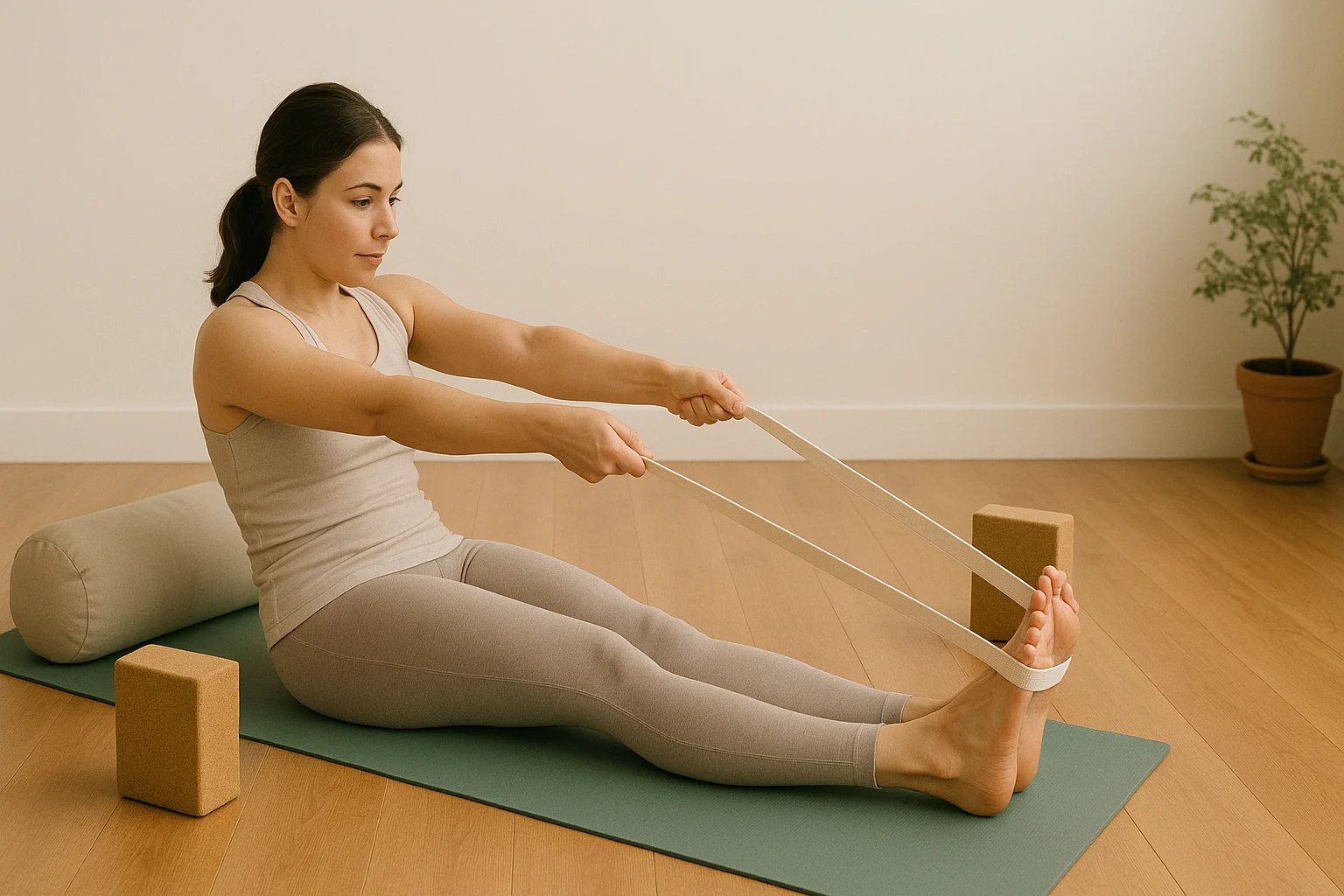
Extending Your Reach: Yoga Straps
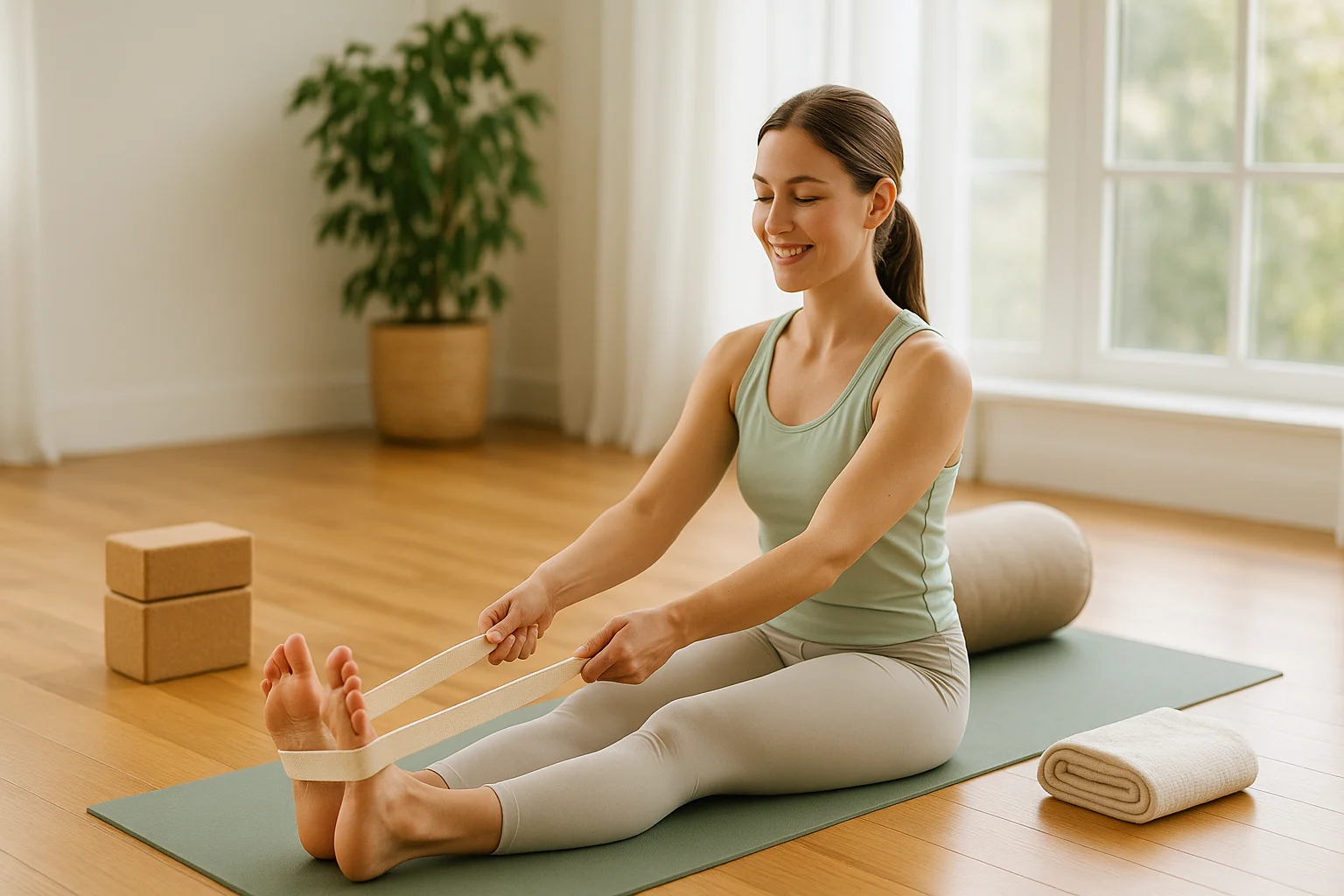
A yoga strap extends your reach. That can make a position workable when your hands cannot comfortably reach your feet or each other. For a focused set of examples, use the yoga strap for flexibility guide.
How a Strap Changes the Reach
In a seated forward fold, a strap reduces how far your hands have to travel. Use that extra reach to choose a smaller, steadier hinge rather than to pull yourself farther into the pose.
Yoga Strap Poses for Flexibility
- Reclined Hand-to-Big-Toe Pose: Lie on your back, loop a strap around one foot, and raise the leg only as far as you can keep the position comfortable. Bend either knee as needed.
- Seated Forward Fold: Sit with the strap around the feet and hinge only as far as you can stay in control. Let the strap extend your reach instead of using it to pull harder.
- Cow Face Pose (Arms): Hold the strap behind your back with one hand above and one below. Keep enough distance between the hands that the shoulder position stays comfortable.
Choosing a Strap
An 8-foot cotton strap is a useful starting point for many people; if you are very tall or need more room behind the shoulders, extra length can help. Choose a buckle you can adjust without fighting it mid-pose.
If you want one concrete option, the Manduka Align Yoga Strap fits the cotton-strap setup described above.
Bringing the Ground Closer: Yoga Blocks
Yoga blocks raise the floor so your hands or body do not have to travel as far. They are most useful when that shorter distance makes the position steadier or easier to leave.
How Blocks Change the Reach
In Triangle Pose, a block under the lower hand can shorten the reach toward the floor. In Lizard Pose, blocks under the hands or forearms can reduce how far the torso has to lower. If weight-bearing through the hands is the bigger problem, use the yoga wrist stretches route instead of relying on a block to solve it.
Block Materials
| Material | Typical feel | Trade-off | Useful when |
|---|---|---|---|
| Foam | Light and softer to the touch | More compressible than firmer blocks | You want a lighter, gentler-feeling support |
| Cork | Firm and dense | Heavier than most foam blocks | You prefer a firmer base under the hands |
| Wood | Very firm and rigid | Heavy with a hard surface | You specifically want non-compressible support |
Using Blocks for Flexibility
- Standing Forward Fold: Place blocks in front of the feet at a height that lets your hands make contact without forcing the reach.
- Lizard Pose: Use blocks under the hands or forearms when lowering all the way toward the floor would make the position harder to control.
- Seated poses: Sit on a block when raising the hips makes an upright seated position more comfortable and easier to maintain.
Supported Rest: Yoga Bolsters
Bolsters support more of your body in restorative shapes. That can make a reclined or seated position easier to settle into when holding yourself up is the part that feels demanding.
What a Bolster Changes
A bolster can support the torso, knees, or hips so less of the position depends on muscular effort. That makes it a useful option for restorative practice, but it is not required for flexibility work.
Choosing a Bolster Shape
- Rectangular or flat: gives broad, stable support under the torso, knees, or hips.
- Round: creates a more pronounced curve when you want support along the length of the spine.
- Narrow or pranayama: gives lighter support for reclining or breathing-focused positions.
Bolster Poses for Flexibility
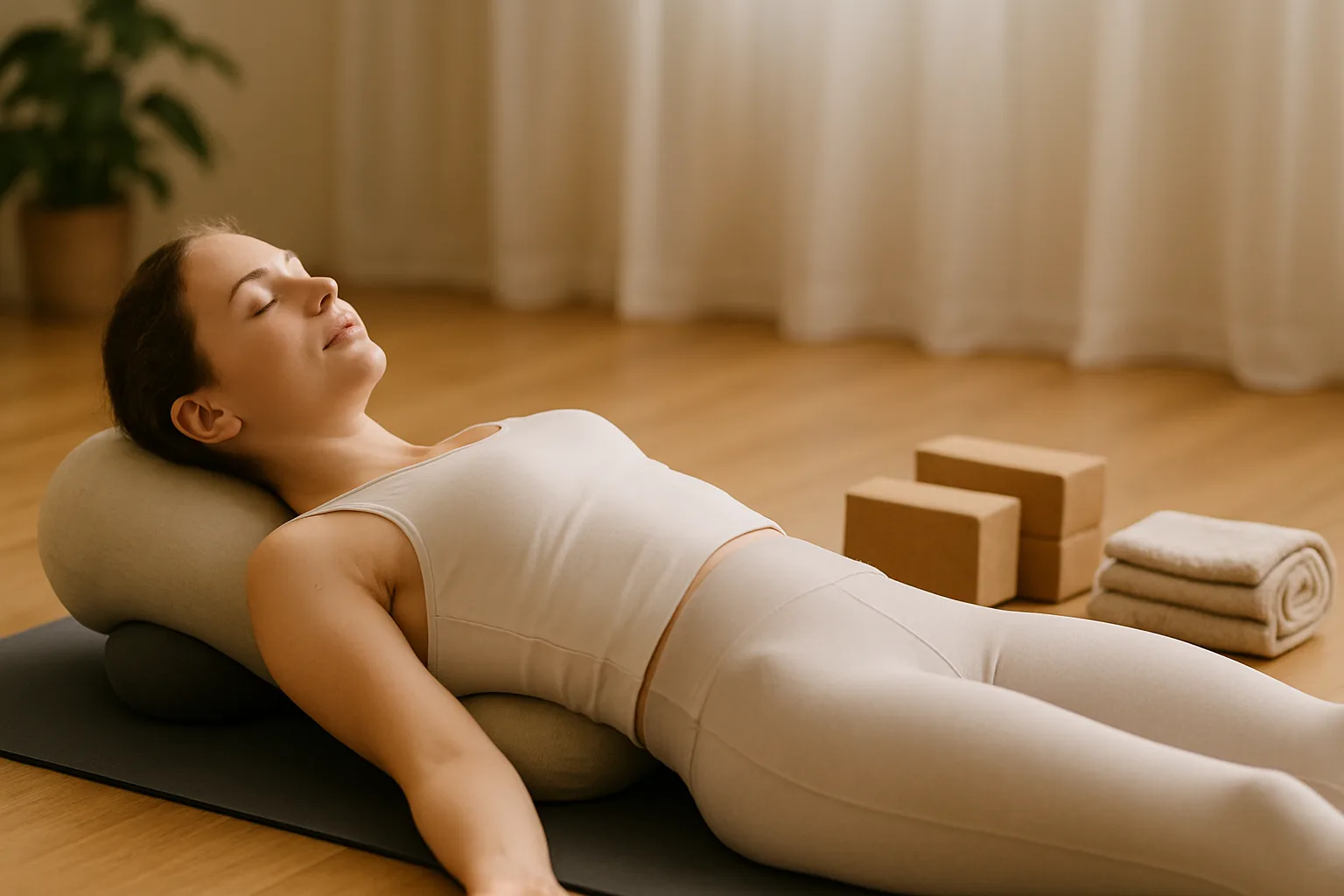
- Supported Fish Pose: Place a bolster along your spine, lie back, and keep the hold brief enough that your breathing stays easy and the position remains comfortable.
- Supine Bound Angle: Recline over a bolster, soles together, knees out. Add blocks under the thighs if that makes the position easier to settle into.
Beyond the Basics: Optional Accessories
You can ignore most accessories until a specific problem appears. A yoga towel can help when sweat reduces grip; a folded blanket can add cushioning or a little height; resistance bands add load to active mobility. A yoga wheel changes leverage in backbends and is not required for general flexibility. If none of those solves a problem you have actually noticed, skip them.
Keep a Home Flexibility Practice Simple
You need enough clear floor or chair space to move without bumping into furniture; you do not need a dedicated yoga room. Keep the setup easy enough that starting does not become its own project.
- Keep the prop you use most within reach instead of setting out every accessory.
- Choose a stable chair or wall nearby if transitions to and from the floor are difficult.
- If you prefer to start without buying anything, use the beginner yoga-at-home routine with no equipment.
Safety and Best Practices
Flexibility work should feel adjustable. If you cannot reduce the intensity by changing your position, shortening the range, or using support, the setup is probably too aggressive for that session.
Stop for Pain or Neurological Symptoms
A stretch may feel like mild pulling or tension, but it should not produce sharp pain. Stop and reassess if you feel numbness, tingling, sudden joint pain, or symptoms that persist after you leave the position.
Do Not Bounce into End Range
Move into and out of stretches slowly enough that you can stay in control. A prop is useful when it lets you reduce the range rather than push farther.
Warm Up Before Longer Holds
Use a few minutes of easy movement before longer stretches. The American Academy of Orthopaedic Surgeons recommends warming up before stretching, moving slowly and gently, and avoiding bouncing. If you lift, the yoga for weight training guide shows how to fit mobility work around strength sessions.
If Floor Poses Don’t Work for You
A flexibility practice can start seated or standing. Getting to the floor, kneeling, or bearing weight through the hands is not a requirement for useful mobility work.
- Use a chair for reach: sit near the front edge with both feet supported and work with a smaller forward hinge or side bend.
- Use a wall for balance: keep one or both hands supported so you can focus on the range rather than on staying upright.
- Use blocks to raise the floor: choose the height that lets you move without collapsing into the pose.
If pain, an injury, pregnancy, a neurological condition, or another health issue changes what movement is appropriate for you, general yoga guidance is not a substitute for individualized advice from a qualified clinician.
Frequently Asked Questions
Start with Comfort, Not Depth
The useful question is not “How flexible can I look?” but “What range can I use without forcing it?” Choose one route you can repeat and judge progress by whether the movement feels easier to enter, easier to leave, or easier to control. If you are still unsure where to begin, use the starting-route tool and follow one recommendation before adding more stretches or gear.