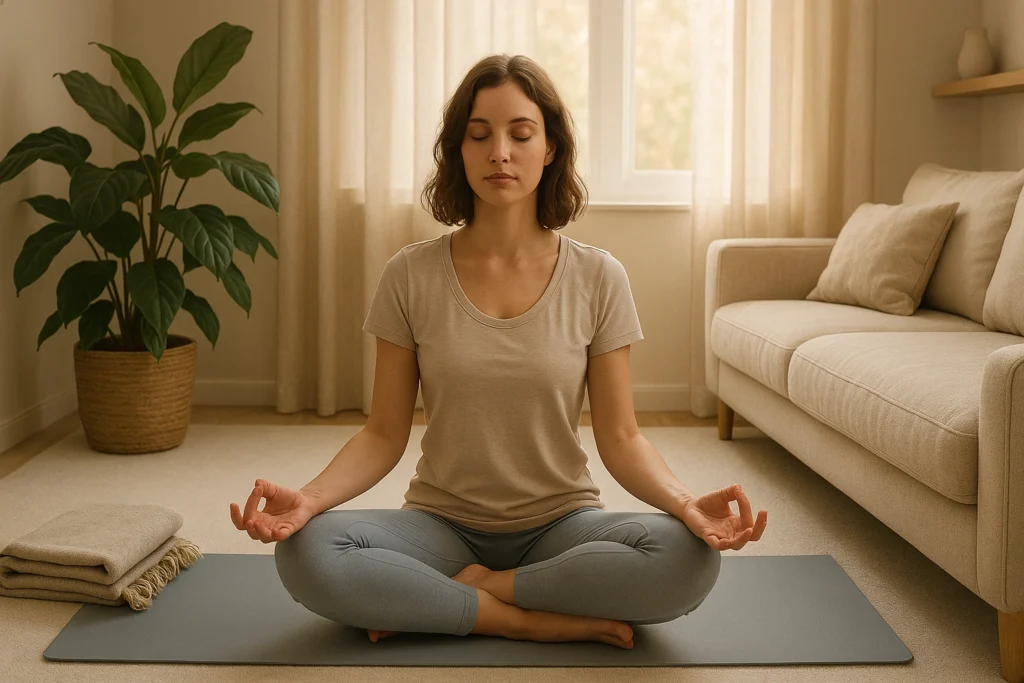
If you searched “yoga poses digestion,” you probably want a few movements you can try without turning this into a workout. Start with gentle shapes you can breathe through—Cat-Cow, knees-to-chest, an easy twist, or supported rest. You do not need a deep twist or a flexible body for this practice to be useful.
This guide gives you a quick pose picker, a true 10-minute flow, and 10 pose instructions with easier ways to scale them. Yoga is not a proven treatment for bloating, gas, or constipation; the evidence is limited, so use it as gentle movement and stress support rather than a digestive cure.
Table of Contents
- Pick a Gentle Starting Pose
- A 10-Minute Yoga Flow for Digestion
- 10 Yoga Poses to Try for Digestive Comfort
- Can Yoga Actually Help Digestion?
- Make Yoga for Gut Health More Comfortable
- What to Notice After Your Practice
- Frequently Asked Questions
- Start With the Gentlest Option That Feels Good
Pick a Gentle Starting Pose
Step 1 of 2
What sounds most useful right now?
Which setup feels better today?
Use this as a starting point, not a treatment. Persistent, severe, or new digestive symptoms are a reason to check in with a healthcare professional.
A 10-Minute Yoga Flow for Digestion
If you want the shortest useful route, use this five-part sequence. The goal is easy movement and steady breathing—not a hard stretch or a promise to change symptoms in one session.
| Practice | Time | Purpose |
|---|---|---|
| Belly breathing | 1 min | Settle into slower, comfortable breathing |
| Cat-Cow | 2 min | Add gentle spinal movement |
| Wind-Relieving Pose | 2 min | Use an easy knees-to-chest shape |
| Supine Spinal Twist | 2 min total | Rotate gently on both sides |
| Reclined Bound Angle | 3 min | Finish with supported rest |
| Total | 10 min | Five low-pressure steps |
If you have just eaten and bending or lying down feels uncomfortable, use only the breathing or an easy upright movement and come back to the rest later. There is no need to follow a fixed clock when your body is telling you a position feels too full or compressed.
10 Yoga Poses to Try for Digestive Comfort
These digestive yoga poses are ordered roughly from lower-effort options to more demanding ones. I would start with the first few and treat the later backbends as optional—not as “better” poses. None of them is proven to force digestion, so choose by comfort, breathing, and the range of motion you have today.
1. Cat-Cow Stretch (Marjaryasana-Bitilasana)
Cat-Cow is one of the easiest ways to add movement without asking for a deep twist or a long hold. Keep the motion small if your wrists or back are sensitive.
How to do it:
- Come to hands and knees with wrists under shoulders and knees under hips.
- Inhale and gently lift the chest and tailbone.
- Exhale and round the spine without forcing the belly inward.
- Move through 5–10 easy rounds at the pace of your breath.
2. Wind-Relieving Pose (Pawanmuktasana)
This simple knees-to-chest position is easy to control, and some people find the shape comfortable when the abdomen feels tight. Think of it as a gentle resting position, not a guaranteed way to release gas.
How to do it:
- Lie on your back with both legs long or knees bent.
- Draw one or both knees toward your chest.
- Hold behind the thighs or over the shins without pulling hard.
- Keep your head down and take 3–5 slow breaths.
- Release gradually.
3. Supine Spinal Twist (Supta Matsyendrasana)
A supine twist gives you rotation without asking you to support your body weight. Let the knees travel only as far as you can keep the shoulders relaxed.
How to do it:
- Lie on your back with knees bent and feet on the floor.
- Open the arms comfortably to the sides.
- Let both knees move to one side; place a cushion underneath them if needed.
- Take a few easy breaths, then return to center.
- Repeat on the other side.
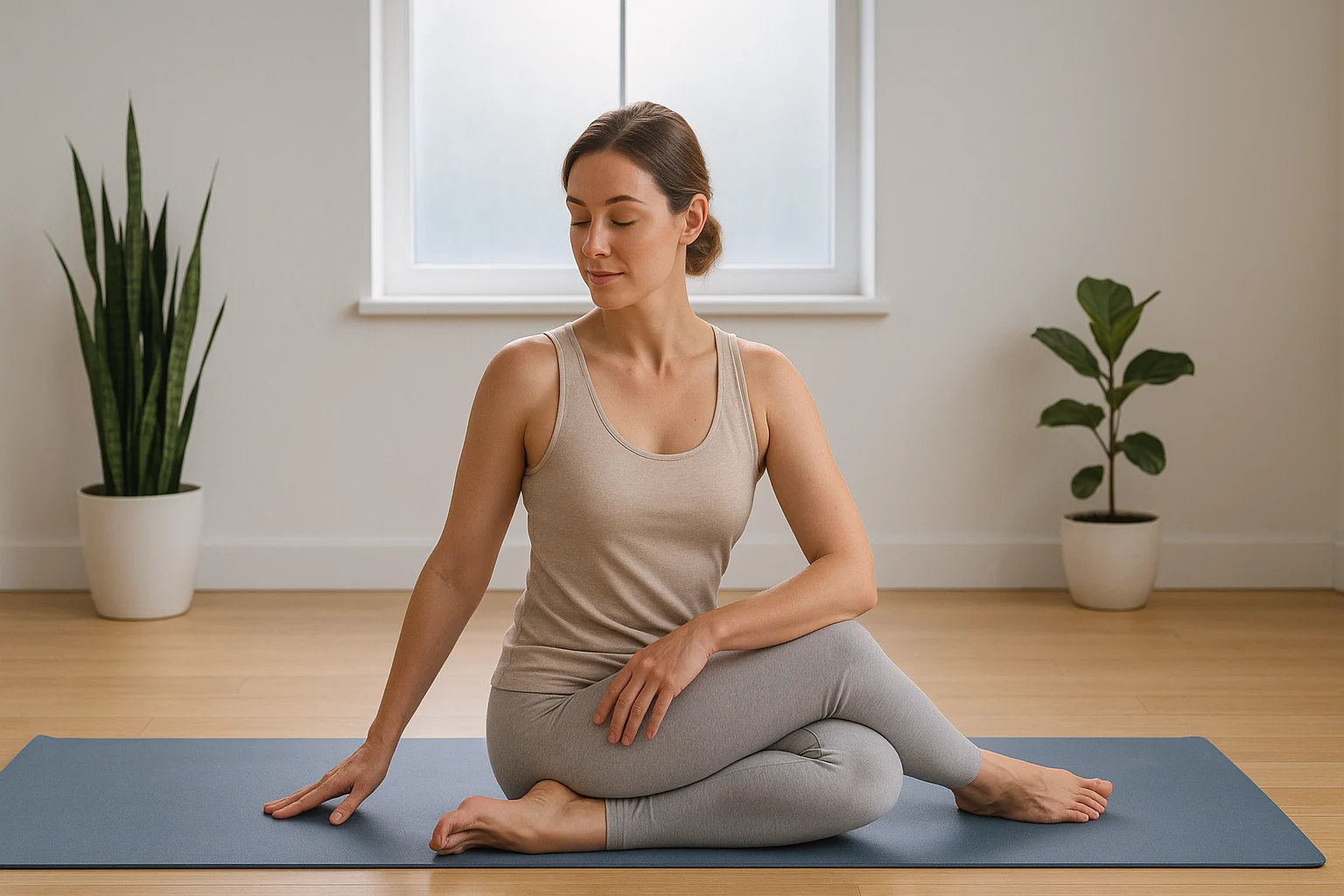
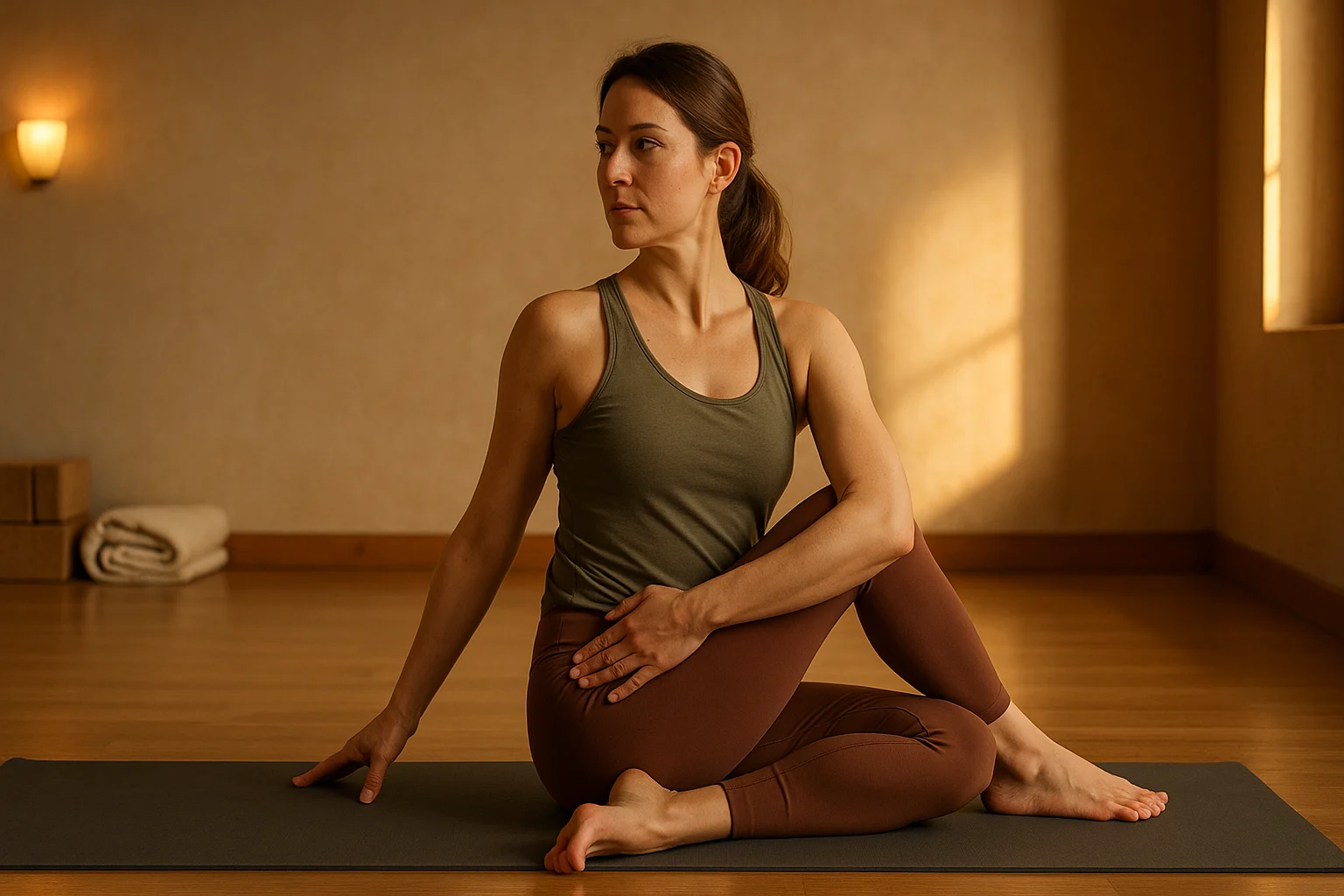
4. Seated Spinal Twist (Ardha Matsyendrasana)
This is the upright twist in the guide. Lengthen first, then rotate only as far as you can without pulling yourself deeper with the arms.
How to do it:
- Sit tall with the legs in a position that lets your pelvis feel steady.
- Place one hand behind you for light support.
- Inhale to lengthen the spine.
- Exhale and turn gently through the ribs and upper back.
- Take 3–5 breaths, unwind, and switch sides.
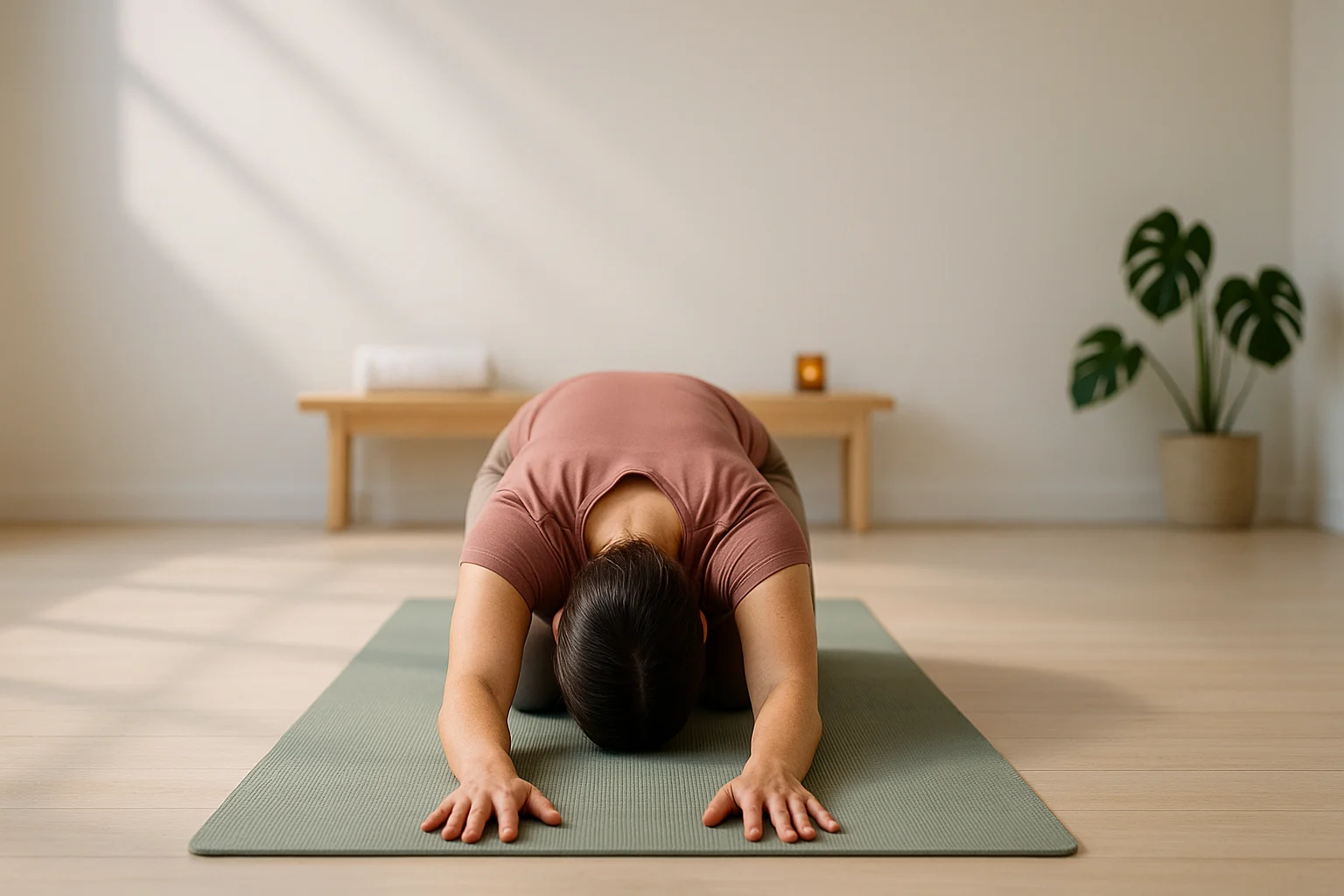
5. Child’s Pose (Balasana)
Child’s Pose can be a low-effort resting shape if kneeling is comfortable for you. Widen the knees or support the chest and forehead with cushions instead of trying to reach the floor.
How to do it:
- Kneel with the knees together or comfortably apart.
- Fold forward only as far as the hips and knees allow.
- Rest the torso or forehead on support if that feels better.
- Keep the arms forward or alongside the body.
- Stay for several comfortable breaths, then come up slowly.
6. Reclined Bound Angle Pose (Supta Baddha Konasana)
This is one of the lowest-effort options in the article. Supporting the thighs with cushions can make the position much easier to settle into.
How to do it:
- Lie on your back and bring the soles of the feet together.
- Let the knees open only as far as comfortable.
- Place cushions or folded blankets under the thighs if they feel unsupported.
- Rest your hands where they feel natural and breathe easily for 1–3 minutes.
7. Savasana (Corpse Pose)
If movement is not what you need, resting still counts. Savasana gives you a simple way to finish without adding another stretch.
How to do it:
- Lie in any comfortable resting position.
- Support the knees or head if lying flat is uncomfortable.
- Let the breath return to normal and stay for 2–5 minutes.
8. Cobra Pose (Bhujangasana)
Cobra adds a gentle front-body stretch, but the useful version is usually much smaller than a full straight-arm backbend. Skip it if lying on your abdomen or extending your back feels uncomfortable.
How to do it:
- Lie on your front with hands near the ribs or shoulders.
- Keep the legs relaxed and elbows bent.
- Lift the chest only a little, using the back rather than pushing hard through the hands.
- Take 2–3 breaths, then lower with control.
9. Seated Forward Fold (Paschimottanasana)
A forward fold can be kept very small: bend the knees, hinge from the hips, and stop well before the abdomen feels compressed. Sitting upright is the better choice when folding feels crowded or uncomfortable.
How to do it:
- Sit with the legs extended and knees softly bent.
- Inhale to lengthen the spine.
- Exhale and tip forward from the hips only as far as comfortable.
- Rest the hands on the thighs, shins, or floor without pulling.
- Stay for several breaths, then return upright slowly.
10. Bow Pose (Dhanurasana)
Bow is the most demanding option here, so I would treat it as optional rather than a beginner default. Skip it if the knees, shoulders, back, or pressure on the abdomen make the setup feel wrong.
How to do it:
- Lie on your front and bend the knees.
- If you can reach the ankles without strain, hold them lightly.
- Press the feet back as the chest lifts only as far as comfortable.
- Take 1–2 easy breaths, then lower. Skip the pose entirely if the setup feels forced.
Can Yoga Actually Help Digestion?
Most pose-specific explanations for digestion are stronger than the evidence. The NCCIH’s IBS evidence review says a small amount of evidence suggests yoga and other exercise may help IBS; it also notes that the evidence in a 2022 review was very low quality. The NIDDK constipation guidance says regular physical activity may help relieve constipation symptoms.
That supports a cautious view: yoga may help some people through general movement, relaxation, and a routine that feels manageable. It does not establish that a twist “massages” digestive organs, sends fresh blood rushing into the gut, detoxes the body, or directly triggers peristalsis.
When people talk about digestion yoga benefits or use yoga for gut health, the most defensible promise is support rather than treatment. For gas and bloating, NIDDK’s guidance focuses on causes, eating and drinking habits, and individualized treatment—not one specific pose that reliably fixes the problem.
Make Yoga for Gut Health More Comfortable
Comfort is a better guide than a rigid meal-timing rule. If you feel very full, choose breathing or easy upright movement first; save deeper folds, backbends, or belly pressure for a time when those positions feel comfortable.
- Keep the breath easy: you do not need breath holds or forceful breathing for this routine.
- Use support early: cushions, folded blankets, or a sturdy chair can reduce the effort of getting into a position.
- Choose repeatable over intense: a short, comfortable routine is more useful than a deeper version you dread repeating.
- Let the range change day to day: a smaller twist or bend still counts.
- Stop when a pose makes things worse: pain, nausea, dizziness, or increasing discomfort is a reason to come out rather than push through.
If stress is the part you notice most, a broader yoga for stress relief practice or simple beginner breathwork may be a more direct next step than adding harder poses.
What to Notice After Your Practice
Instead of asking whether a pose “fixed” your digestion, use the same three checks each time you practice:
- During: could you breathe comfortably and stay out of pain or strain?
- Afterward: do you feel more settled, unchanged, or worse? “No change” after one short session is not a failure.
- Next time: which one or two positions would you willingly repeat without needing to push deeper?
If a pose repeatedly feels worse, remove it from your routine. Persistent, severe, or changing digestive symptoms deserve medical attention rather than an increasingly aggressive yoga sequence.
If a sturdy chair is the support you are most likely to use, keep a chair-based option for stiff mornings.
A Gentle Seated Routine for Mornings
Confirm to get the routine and yoga tips. Unsubscribe anytime.
Something went wrong. Please check your email address and try again.
Frequently Asked Questions
Start With the Gentlest Option That Feels Good
You do not need all 10 poses. Pick the tool’s suggestion or use the 10-minute flow, keep the range easy, and notice how you feel afterward. If one shape feels comfortable, repeat it next time; if another increases discomfort, drop it instead of chasing a deeper version.
Move a little, breathe comfortably, and stop before strain. If a health condition or mobility limit changes what feels safe, our guide to yoga for specialized health needs has broader modification and safety ideas.