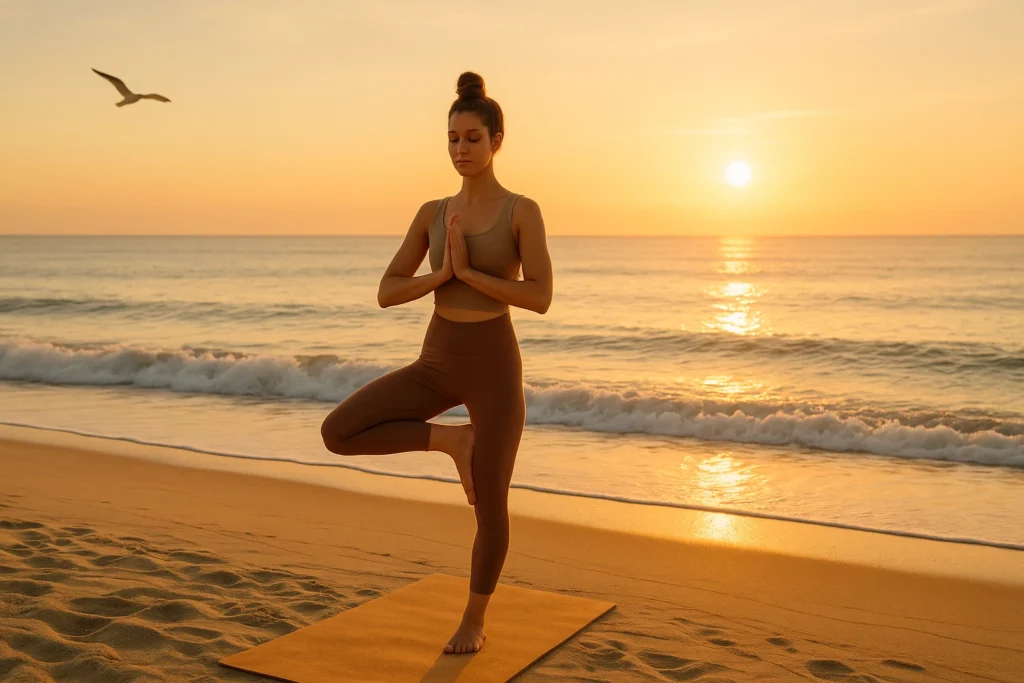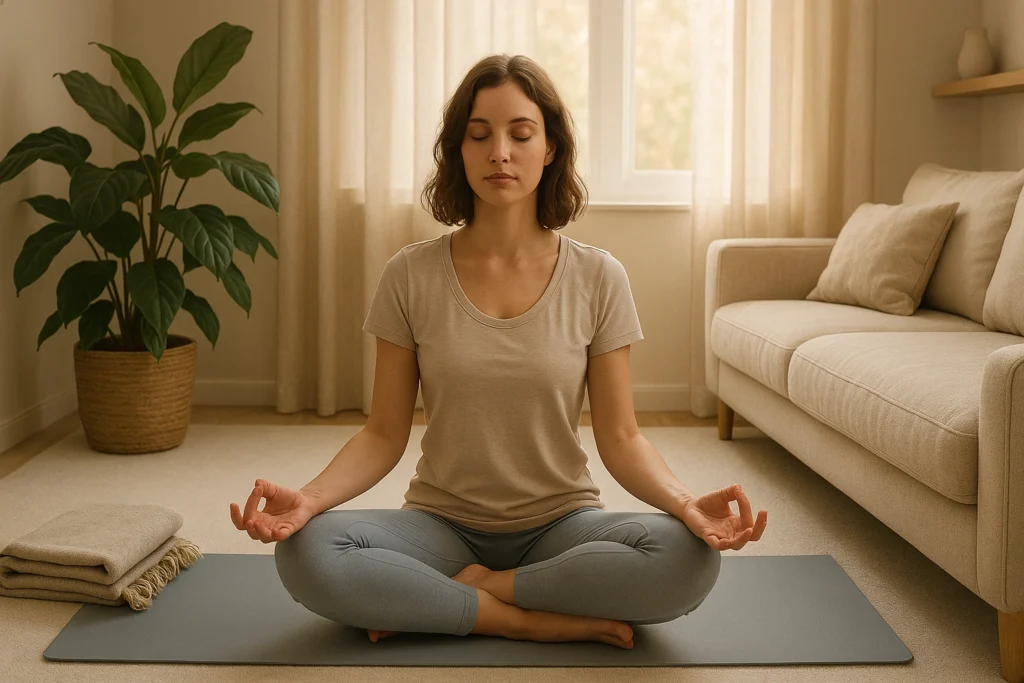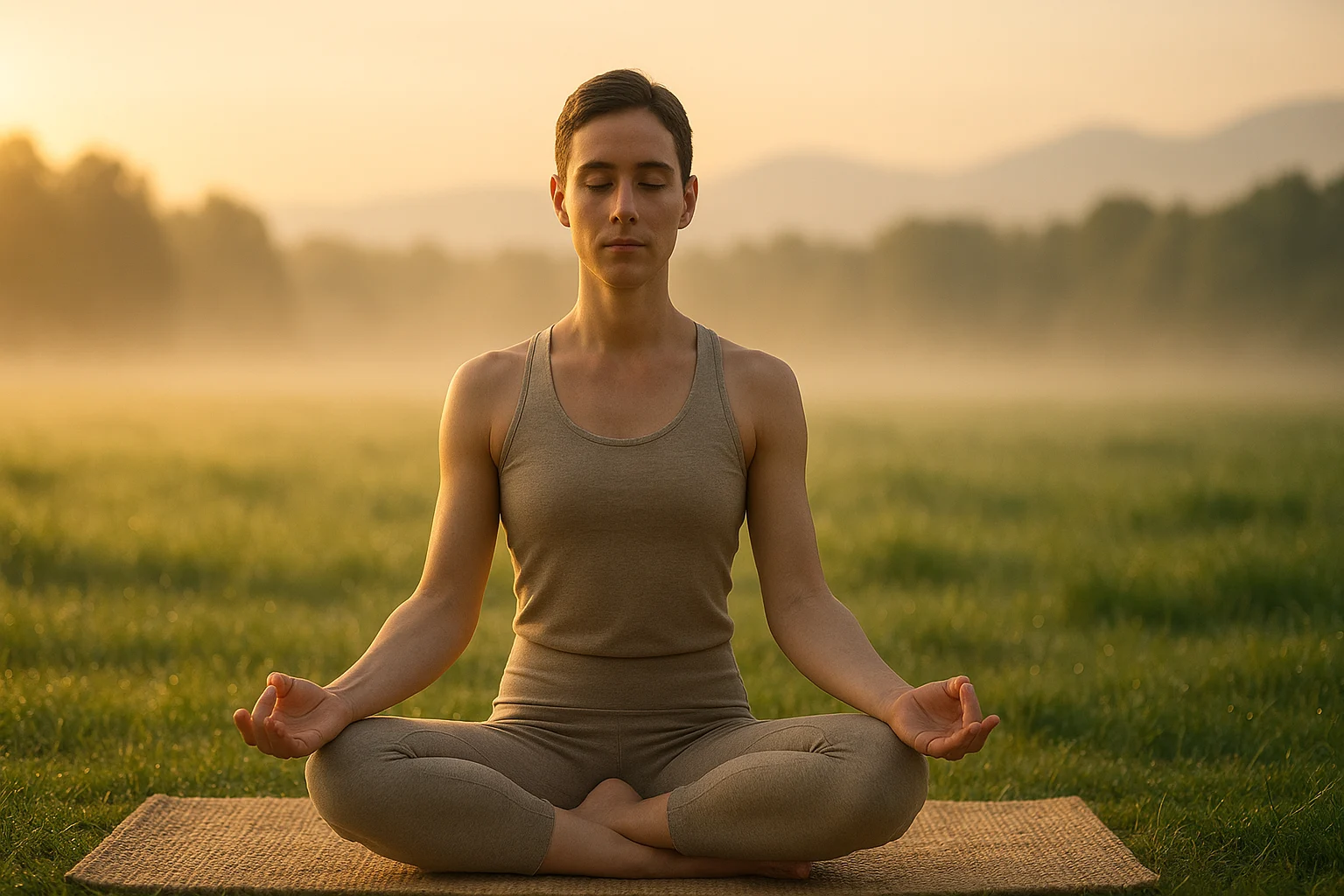
Your body does not need to match the photo for a pose to be well aligned. Yoga alignment principles are most useful when they help you create a steady base, make room for your breath, manage effort, and adapt the shape without forcing it.
Use this as a practical yoga form guide: learn five principles, test each cue against what you actually feel, then use the self-check to choose one focus for your next practice. If you want the bigger picture behind asana, breath, anatomy, and philosophy, start with our yoga philosophy guide.
Find Your Alignment FocusTable of Contents
- Yoga Alignment Principles at a Glance
- Five Core Yoga Alignment Principles
- How to Tell If an Alignment Cue Helps
- Common Alignment Mistakes
- Find Your Next Alignment Focus
- Practice Alignment Without Overthinking It
- Frequently Asked Questions
- Your Next Practice
- Free 10-Minute Chair Yoga Routine
Yoga Alignment Principles at a Glance
- Build a steady base. Use the floor, chair, wall, or prop as support instead of gripping for stability.
- Create length without rigidity. Make enough space to breathe and move rather than forcing a “long spine” at all costs.
- Use joint position as feedback. A cue should help you manage load and range; it is not a universal geometric rule.
- Let breath set the pace. If you have to hold or strain your breath to keep the shape, make the pose smaller.
- Balance effort with ease. The useful version of a pose is the one you can repeat with control, attention, and room to adjust.
Five Yoga Alignment Principles to Start With
Alignment is less about reproducing one “correct” silhouette and more about organizing the pose so you can support yourself, notice feedback, and change course when a cue is not helping. Different bodies may need different stance widths, joint angles, ranges of motion, or props to solve the same pose.
Use a cue as a test, not a command. Keep it when it gives you more steadiness, breathing room, or control. Change it when it makes you brace, hold your breath, chase range, or ignore pain.
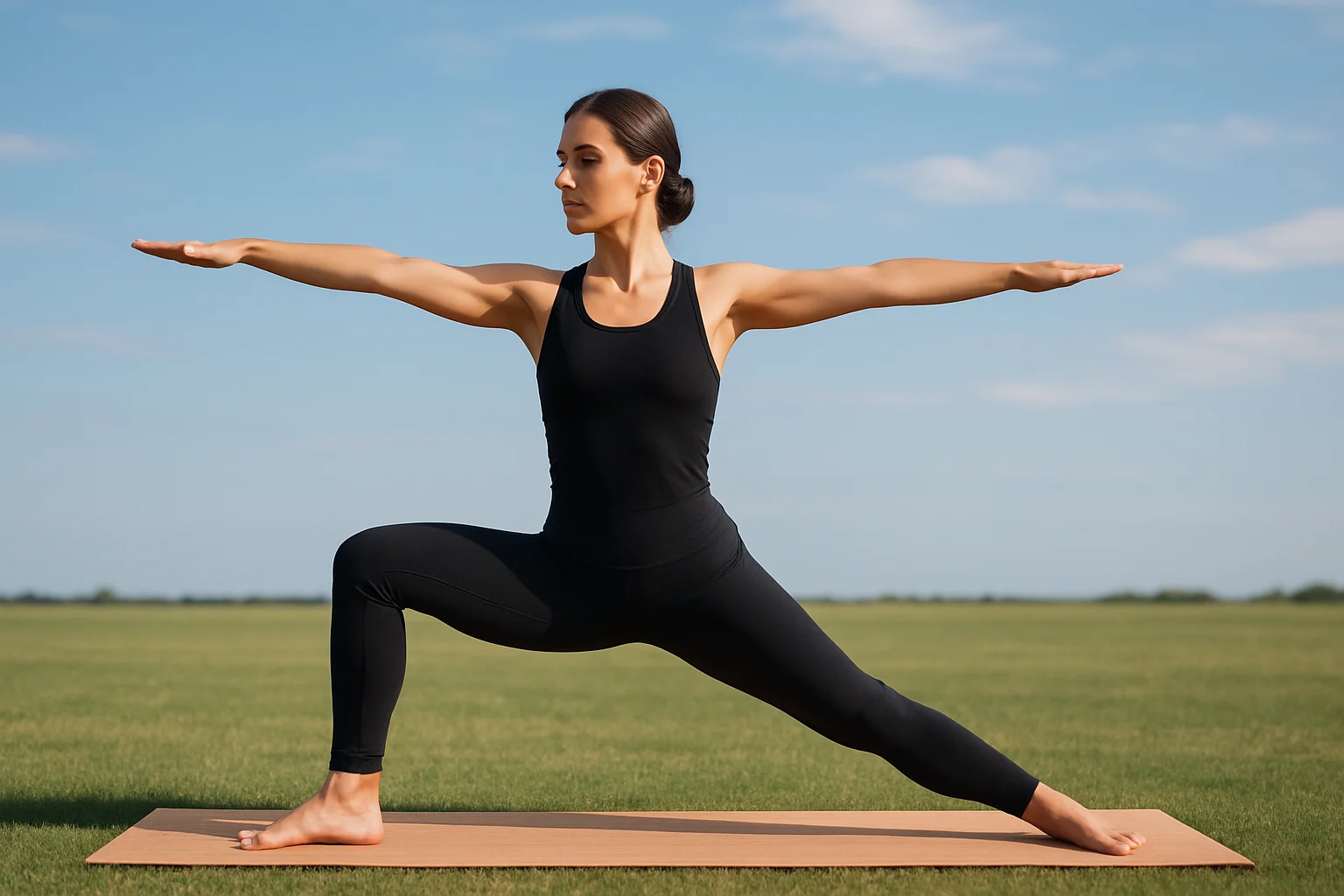
1. Grounding: Build a Base You Can Feel
Grounding means knowing where you are supported. In a standing pose, that may mean feeling the heel and the base of the big and little toes rather than gripping every toe. In a seated pose, it may mean using a folded blanket or chair so you are not fighting the floor.
- Standing: Notice whether your weight is drifting heavily to one edge of the foot. Adjust until the base feels steady enough to breathe normally.
- Hands on the floor: Spread pressure across the hand instead of dumping everything into the heel of the palm. If your wrists are sensitive, use a different hand position or reduce the load; our wrist-pain yoga guide covers more options.
- Seated or chair-based: Let the chair, cushion, or floor do some of the supporting work. You do not earn more yoga by choosing the least comfortable base.
2. Length Without Rigidity
“Lengthen the spine” is useful when it helps you make space. It becomes less useful when it turns into stiffening the back, lifting the ribs aggressively, or flattening every natural curve.
- Forward folds: Bend your knees or shorten the fold if that lets your pelvis and spine move without forcing.
- Twists: Find a comfortable upright position first, then rotate only as far as you can stay steady.
- Lunges and standing poses: Let the torso organize around your balance instead of holding one textbook angle at any cost.
3. Joint Position and Load: Look for Workable, Not Perfect
Joint-stacking cues can be useful reference points, especially in weight-bearing poses, but they are not guarantees of safety and they are not equally comfortable for every body. Use them to notice where the load is going, then adjust stance, range, support, or pose choice when something feels compressed or unstable.
- Knees: Track how the knee feels relative to the foot rather than forcing it toward one exact line. Reduce the bend or change your stance if the knee feels pressured.
- Shoulders: In Downward Dog or Plank, experiment with hand position and the amount of shoulder effort instead of trying to pin the shoulder blades into one prescribed place.
- Wrists: Spread the load, shorten the hold, use props, or choose a forearm/chair variation when full wrist extension is not working for you.
- Hips: In poses such as Pigeon, prioritize a supported, comfortable range over forcing the pelvis to look square.
4. Breath as a Pacing Signal
Your breath gives you immediate information about effort. You do not need a special breathing technique to use this principle: simply notice whether you can keep breathing without bracing, rushing, or holding your breath.
- On an inhale: notice whether you can create a little more space through the torso.
- On an exhale: soften unnecessary effort rather than automatically moving deeper.
- When breath becomes strained: shorten the range, reduce the hold, or come out of the pose and reset.
5. Effort, Ease, and Traditional Energy Language
Yoga traditions often describe practice through ideas such as prana, steadiness, and ease. Those ideas can be meaningful ways to direct attention, but they are not anatomical explanations for why a joint or muscle moves the way it does. In practical alignment work, use the language that helps you notice effort without confusing philosophy with biomechanics.
A useful bridge is the traditional pairing of sthira (steadiness) and sukha (ease): can you make the pose stable without making it rigid? If the philosophy side interests you, the yamas and niyamas guide adds another lens for practicing without turning every cue into a performance target.
Why Yoga Alignment Matters—and How to Tell If a Cue Helps
Thoughtful yoga posture alignment can make a pose easier to organize, easier to repeat, and easier to adapt. It cannot promise that an injury will never happen. Current safety guidance from the U.S. National Center for Complementary and Integrative Health notes that yoga injuries can occur and that some people may need to avoid or modify certain practices; see the NCCIH yoga safety overview for the broader guidance.
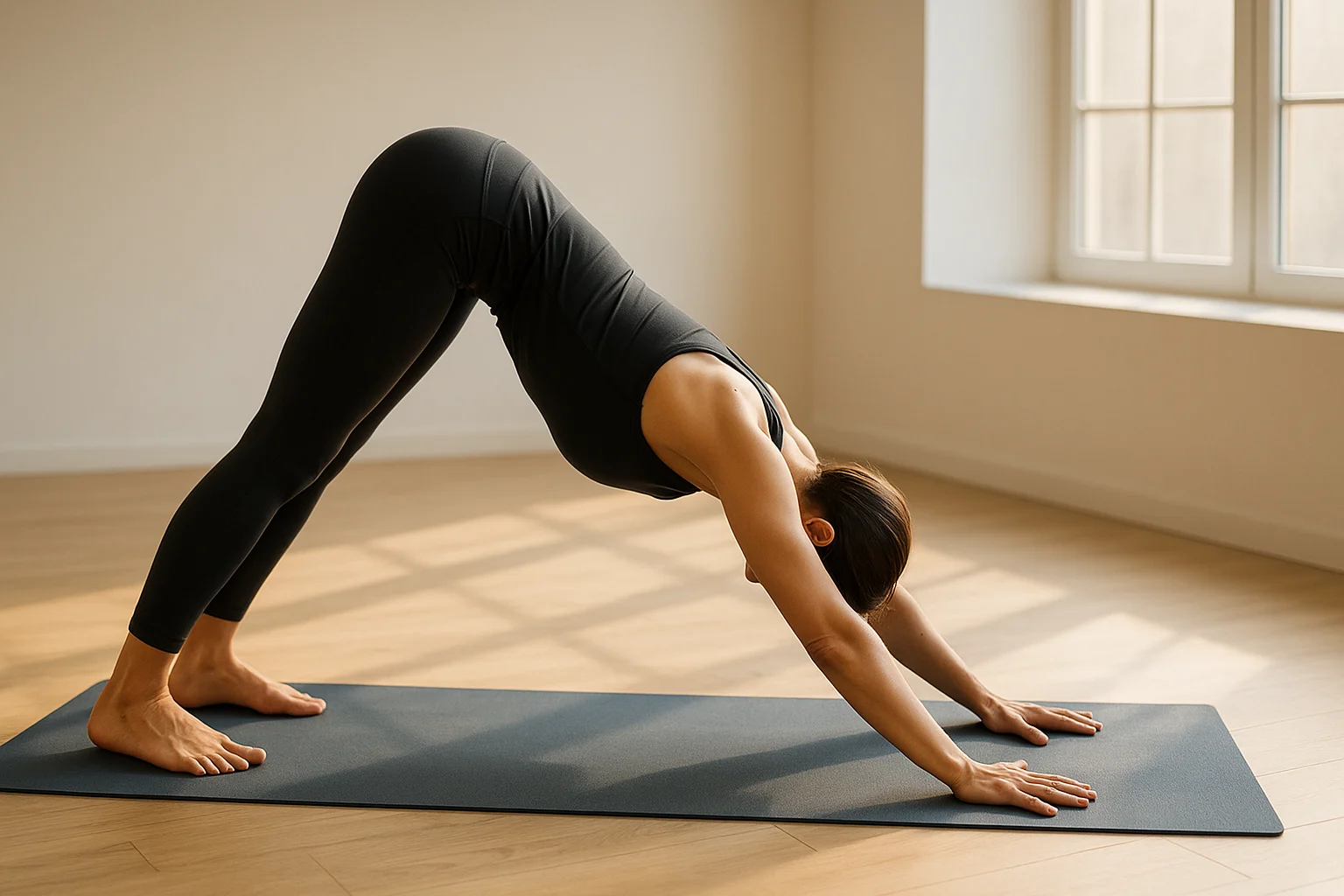
Test 1: Do You Feel More Stable?
A useful cue usually gives you a clearer base or makes the pose feel less wobbly. “More stable” does not have to mean motionless; it means you can tell where you are supported and you can change the pose without losing control.
Test 2: Can You Keep Breathing?
If a cue makes you hold your breath, brace hard, or rush to get out of the pose, it may be asking for too much range or effort. Make the shape smaller and see whether your breathing becomes easier.
Test 3: Can You Adjust Without Fighting the Pose?
A good alignment strategy leaves you options. You should be able to widen a stance, bend a knee, use a prop, shorten a hold, or choose a different variation without feeling that the pose has become “wrong.”
Common Alignment Mistakes—and Better Adjustments
The most common problem is not that people forget one magic cue. It is that a cue gets treated as a rule after it stops helping. These five mistakes are worth watching for:
- Chasing the picture. If you are forcing range to make the pose look familiar, reduce the range and rebuild the position from what you can control.
- Locking a joint to feel “aligned.” More straight is not automatically more stable. Use enough muscular support to stay in control without jamming into an end range.
- Adding five corrections at once. Change one variable—stance, range, hand position, prop, or hold time—so you can tell whether it actually helped.
- Ignoring breath and sensation. A visually tidy pose is not useful if you are holding your breath or pushing through sharp, worsening, or persistent pain.
- Treating props as a lesser version of the pose. A block, strap, wall, bolster, or chair can change leverage and bring support closer. That is adaptation, not failure.
Find Your Next Alignment Focus
Answer five quick questions about how poses feel and how you respond when they get harder. This is not a diagnosis or a test of “perfect” form—it is a way to choose one useful alignment habit to focus on next.
In standing poses, how evenly can you feel your weight through your feet?
Think about Mountain, Warrior, or any pose where your feet are your base.
In folds, twists, or lunges, what do you do when your back starts to feel compressed?
Choose the answer that best matches what you usually do, not what you think you should do.
In weight-bearing poses, what do your knees, wrists, or shoulders usually tell you?
Use your normal practice experience rather than one unusually good or bad session.
In Plank, Boat, or balance poses, can you keep breathing without bracing hard?
A shorter, steadier hold counts more here than staying longer with your breath locked up.
When a pose gets intense, what usually happens next?
Your response to effort is part of alignment too.
Your next focus
How to Practice Yoga Posture Alignment Without Overthinking It
Your self-check gives you one focus. Keep it that simple during practice: choose one cue, try it in a few familiar poses, and notice whether it improves steadiness, breathing room, or control.
- Change one variable at a time. If you move your feet, add a block, and change your shoulder position all at once, you will not know what actually helped.
- Use props early, not as a last resort. Blocks, straps, bolsters, walls, and chairs can reduce the amount of range or load a pose demands. See the yoga props guide for practical examples.
- Choose a chair when floor work is the barrier. If getting down to the floor or supporting body weight through the hands is what stops you from practicing, start with a chair-yoga routine instead of forcing the standard setup.
- Use external feedback selectively. A mirror or teacher can help you notice something you cannot feel, but visual symmetry is not the final test of whether a cue works for your body.
- Learn enough anatomy to ask better questions. If you want more detail on how joints, muscles, and breathing interact with poses, the Yoga Anatomy by Leslie Kaminoff guide is a useful next study route.
- Progress by repeatability, not drama. Add range, load, or hold time only after the simpler version feels steady enough to reproduce without forcing.
Frequently Asked Questions About Yoga Alignment
Your Next Practice: One Cue, One Test
Choose one familiar pose and one cue from this guide. Make the smallest adjustment that gives you more steadiness, breathing room, or control. Keep it if it helps; undo it if it creates more strain or makes you fight the shape.
That is proper yoga alignment in practice: not copying a picture, but building a repeatable way to notice, adjust, and move with intention. When you are ready to place asana inside the wider practice of yoga, continue with the Eight Limbs guide.
If floor work is the barrier, put this article’s main idea into practice: adapt the practice before you force the shape. The free 10-minute chair yoga routine gives you a concrete practice to try next.
Get the 10-Minute Chair Yoga Routine
Confirm to get the routine and yoga tips. Unsubscribe anytime.
Something went wrong. Please check your email address and try again.
If you have an injury, ongoing pain, a health condition, or concerns about a specific pose, get individualized guidance from a qualified healthcare professional. An experienced yoga teacher can help with non-medical pose modifications and practice options.