The yoga 8 limbs are Patanjali’s eight-part framework for practice: Yama, Niyama, Asana, Pranayama, Pratyahara, Dharana, Dhyana, and Samadhi. Only one limb is posture. The others deal with ethics, personal observances, breath, the senses, concentration, meditation, and meditative absorption.
I find the framework most useful when it is treated as a map rather than a checklist to finish. If you want the wider context around the Yoga Sutras and related ideas, start with the yoga philosophy guide.
This post has affiliate links. We may earn a commission. Learn more.
Table of Contents
- Explore a Yoga Limb
- Where the Eight Limbs of Yoga Come From
- The 8 Limbs of Yoga, Explained
- How the Eight Limbs Work Together
- Frequently Asked Questions
- A Simple Way to Start
- Get the 10-Minute Chair Yoga Routine
Explore a Yoga Limb
Choose a limb for a quick explanation and a simple practice cue. Then jump to the full section if you want the deeper context.
Prefer the full sequence? Start with the source and context below, then move through all eight limbs in order.
Where the Eight Limbs of Yoga Come From
Patanjali did not invent yoga from scratch; the Yoga Sutras systematize practices and ideas that were already part of older Indian yoga traditions. The text’s exact date is uncertain, but a scholarly overview from the Internet Encyclopedia of Philosophy places it in the early centuries of the Common Era and emphasizes that precise dating is difficult.
In Yoga Sutra 2.29, Patanjali’s eight limbs of yoga are listed as Yama, Niyama, Asana, Pranayama, Pratyahara, Dharana, Dhyana, and Samadhi. You can read the Sanskrit and an English translation in this Yoga Sutras text and translation. That eight-limbed framework is why it is called ashtanga yoga here: aṣṭa means “eight,” and aṅga means “limb.” It is one influential classical framework rather than a single outline for every yoga tradition, and it is distinct from the modern Ashtanga Vinyasa style that shares the name.
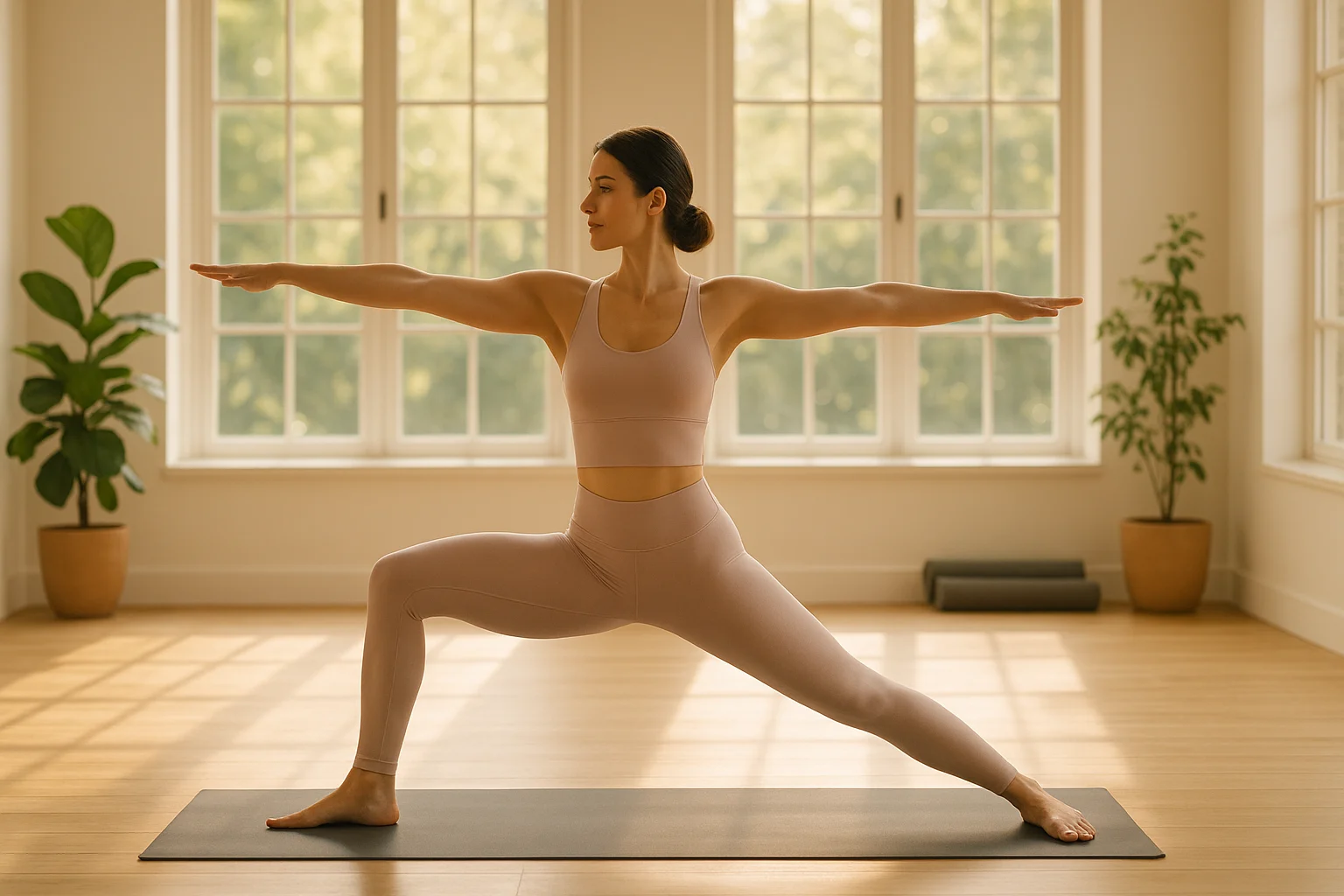
The 8 Limbs of Yoga, Explained
The first two limbs describe restraints and observances. Asana and Pranayama work with posture and breath. Pratyahara turns attention away from sensory pull, while Dharana, Dhyana, and Samadhi describe progressively deeper concentration and meditation. Because translations differ, treat the English labels below as plain-language guides rather than exhaustive definitions.
1. Yama: Ethical Restraints
Yama concerns how you relate to other people and the world around you. Yoga Sutra 2.30 names five restraints:
- Ahimsa (non-harming): reduce unnecessary harm in action, speech, and intention.
- Satya (truthfulness): be honest without using honesty as an excuse for cruelty.
- Asteya (non-stealing): do not take what is not freely given, including credit, time, or attention.
- Brahmacharya (restraint): traditionally, disciplined sexual conduct and restraint rather than unchecked impulse.
- Aparigraha (non-grasping): loosen the habit of accumulating, clinging, or treating possession as security.
Try it: Pick one yama for a day and simply notice where it becomes difficult. The observation itself is useful; you do not need to turn it into a score.
2. Niyama: Personal Observances
Niyama turns the lens toward your own habits and practice. Yoga Sutra 2.32 names five observances:
- Saucha (cleanliness or purity): care for the conditions that support clarity, inwardly and outwardly.
- Santosha (contentment): practice recognizing enough instead of making satisfaction depend on the next achievement.
- Tapas (disciplined effort): keep a chosen practice even when enthusiasm is low.
- Svadhyaya (self-study): traditionally includes study of liberating texts and mantra; reflective reading and journaling can also support self-observation.
- Ishvara Pranidhana (devotion to Ishvara): in Patanjali’s system, this is a genuinely devotional practice, not simply a synonym for “go with the flow.”
Try it: Choose one observance for a week. Keep the practice small enough that you can pay attention to what it reveals rather than chasing a dramatic result.
If you also want a modern reading habit alongside that traditional practice, Blinkist’s short book and podcast summaries are an optional way to keep learning between longer texts.
3. Asana: Posture
Asana is the posture limb, but Patanjali gives it far less space than modern yoga culture often does. Yoga Sutra 2.46 describes posture as steady and comfortable. In this framework, the point is not to collect impressive shapes; posture supports a body that can settle rather than constantly interrupt attention.
Try it: Choose a posture you can hold without forcing and notice whether steadiness and ease can exist together. For a more movement-centered approach, see the mindful movement yoga guide.
4. Pranayama: Breath Regulation
Pranayama is deliberate work with the breath. Yoga Sutra 2.49 describes it in terms of regulating inhalation and exhalation after posture has been established; the following sutras discuss qualities such as duration and restraint. That is more precise than treating pranayama as a generic “energy reset.”
Try it: Begin with three natural breaths and notice their length and texture without trying to make them bigger. If you want practical breathwork examples, the yoga and breathwork for stress relief guide gives the broader context.
5. Pratyahara: Withdrawal of the Senses
Pratyahara is often translated as withdrawal of the senses. The idea is not that sights and sounds vanish; it is that attention becomes less automatically pulled outward by them.
Try it: Put your phone out of reach for one quiet minute and notice which sound, sensation, or thought tries hardest to pull your attention away.
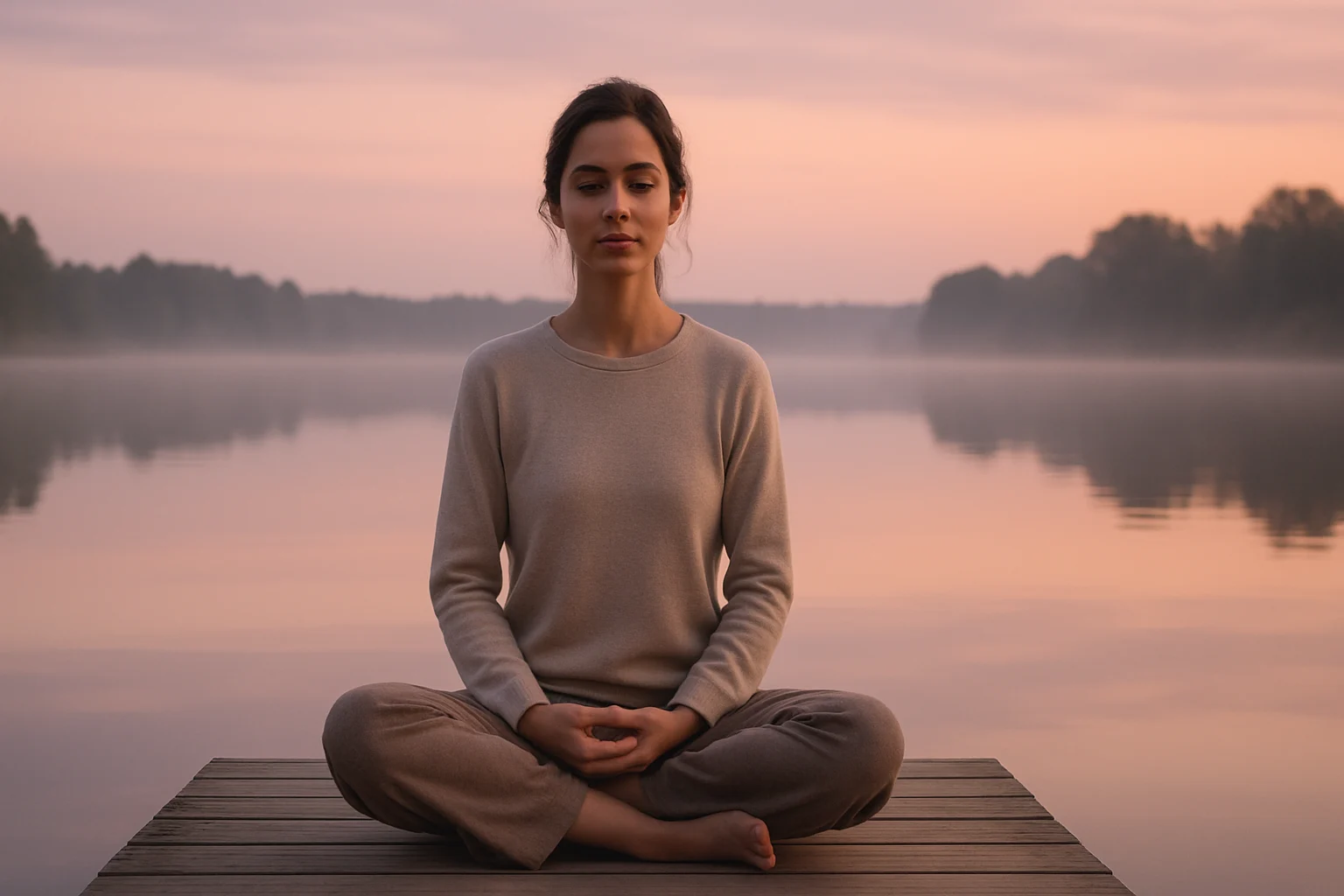
6. Dharana: Concentration
Dharana means holding attention to a chosen place or object. The object can be simple—a point in the body, a mantra, the breath, or another focus used in practice. The important distinction is that attention has somewhere specific to return.
Try it: Count ten natural breaths. When attention wanders, return to the next count without turning the distraction into a failure. For more everyday applications, see these mindfulness techniques for focus.
7. Dhyana: Meditation
Dhyana deepens Dharana. Yoga Sutra 3.2 describes a more continuous flow of attention toward the object of concentration. Dharana is the act of placing and replacing attention; Dhyana is what it begins to feel like when that flow becomes steadier.
Try it: Sit comfortably for two minutes with one simple focus. Each time you notice that attention has wandered, return without trying to force an uninterrupted state. If sitting setup is the distraction, the meditation cushion guide covers practical options.
8. Samadhi: Meditative Absorption
Samadhi is not a quick burst of happiness, a beautiful sunset, or ordinary creative flow. In Yoga Sutra 3.3, it is described as a deepening of meditation in which the object of concentration stands forth without the usual self-referential activity of the mind. That makes it a much more specific idea than “bliss.”
Try it: Do not try to manufacture Samadhi on a timer. The practical work is to keep returning to the earlier limbs—especially concentration and meditation—and let the deeper stages remain deeper stages.
How the Eight Limbs Work Together
The sequence moves from conduct and personal practice toward increasingly inward attention. Yoga Sutra 3.7 explicitly describes Dharana, Dhyana, and Samadhi as “inner” in relation to the preceding limbs. That does not make the earlier limbs disposable; it shows why yoga in this system is much broader than posture alone.
For everyday practice, you do not need to pretend you have “completed” one limb before learning about another. A useful starting point is to notice where your actual practice feels narrow. If yoga has become only exercise, revisit Yama or Niyama. If you have plenty of theory but little steadiness, work with Asana, breath, or Dharana. The framework is most useful when it changes what you pay attention to.
Frequently Asked Questions
A Simple Way to Start
You do not need eight new habits by tomorrow. Choose one limb your current routine tends to skip and stay with one small practice for a week. Re-read its section, use the practice cue, and notice what it changes in your choices or attention. Then return to the full map when you are ready for another layer.
If Asana is the limb you want to explore next and stiff mornings are part of the picture, the chair-yoga routine below gives you one concrete practice to try.
Get the 10-Minute Chair Yoga Routine
Confirm to get the routine and yoga tips. Unsubscribe anytime.
Something went wrong. Please check your email address and try again.