Yoga for pain relief is most useful as adaptable movement—not as a promise that one pose will fix the cause of pain. If movement usually feels okay for you, start with a small, comfortable range, add support when it helps, and notice how you feel during the movement and afterward. If symptoms are new, severe, spreading, or clearly worsening, skip self-guided practice and get appropriate medical advice first.
From there, this page helps you answer two practical questions: which body area needs attention, and what starting position can you access comfortably today? Use the selector or the body-area sections to choose a route. If getting down to the floor is the main barrier, start with the chair-yoga route instead of forcing a mat-based sequence.
Choose a Starting PointThis post contains affiliate links. If you purchase through them, we may earn a commission at no extra cost to you. As an Amazon Associate, I earn from qualifying purchases. Learn more.
Table of Contents
- What Yoga May Offer
- What the Research Says
- Safer Practice Principles
- Starting Point Selector
- Gentle Starting Points by Area
- A Short Starting Routine
- Using Props
- Common Mistakes to Avoid
- Frequently Asked Questions
- When to Get Medical Help
- Start Small and Reassess
What Yoga May Offer When You’re in Pain
For a pain-sensitive practice, the practical value is adaptability: you can change range, support, pace, and position instead of treating one shape as mandatory. Yoga can combine mobility, strength, breathing, balance, and attention in one practice, but the useful question is what you can do comfortably—not how deeply you can move.
- Adjustable movement: Chairs, blocks, straps, cushions, and a smaller range can make a pose fit your current ability instead of asking your body to fit the pose.
- Strength and mobility: Depending on the style and pose, yoga can train both controlled movement and muscular support.
- Breathing and attention: Slower practice can give you time to notice whether tension is settling or a symptom is becoming sharper, stronger, or more widespread.
- A repeatable routine: Short sessions are easier to adjust than an all-or-nothing workout when your comfort changes from day to day.
What the Research Says About Yoga and Pain
Research does not support treating yoga as a universal pain treatment. The evidence depends on the condition, the kind of yoga, and what it is compared with. The U.S. National Center for Complementary and Integrative Health (NCCIH) reports the clearest body of evidence for low-back pain: yoga may provide a small improvement compared with no exercise, while it is less clear that yoga works better than other forms of exercise. Evidence for neck pain is promising, while findings for headaches, arthritis, fibromyalgia, and other pain conditions are smaller or mixed.
That makes the most defensible role for yoga here supportive movement: something that may help some people with comfort, function, mobility, or coping, without pretending to diagnose the source of pain or replace treatment. See NCCIH’s current evidence summary on yoga for pain.
Why the experience can vary
“Pain” is not one problem. A sore lower back after sitting, nerve symptoms down a leg, an irritated wrist, and an arthritic knee can require very different decisions. There is no single set of pain relief poses that is right for every cause of pain.
Use the rest of this page as a guide: choose the easiest comfortable starting point, then move to the body-area guide that matches what you are dealing with.
Core Principles for a Safer Practice
When pain is part of the picture, “deeper” is not the goal. The useful version is the one you can control, breathe through normally, and leave without a clear increase in symptoms.
Use symptoms as information
- Stay out of sharp or escalating pain: If a movement feels sharp, electric, unstable, or clearly worse as you continue, come out of it rather than trying to stretch through.
- Notice spread and change: New numbness, tingling, weakness, or pain that starts travelling is different from ordinary muscular effort and deserves more caution.
- Reassess afterward: A pose that felt tolerable in the moment is not a good choice if it reliably leaves you worse afterward.
Start with the easiest version
Begin with one or two familiar movements, keep the range comfortable, and use normal breathing. Using a chair, wall, or supported floor position is not a lesser version of the practice; it is a way to match the movement to your current ability. If you are new to yoga or managing an injury or health condition, individual guidance from a qualified instructor or clinician can help you decide what to modify or avoid.
Do not use yoga to delay care
Yoga can sit alongside medical care, but it should not be used to explain away new or concerning symptoms. If pain is persistent or tied to a diagnosed condition, treat condition-specific or “therapeutic yoga” guidance here as general education and keep your clinician’s advice primary. See when to stop and get medical help for a short list of reasons to stop self-guided practice.
Choose a Starting Point That Fits Your Body Today
Choose the area that is bothering you most, then choose the starting position that feels easiest to access today. This tool suggests a gentler route through this page and its linked guides; it does not diagnose the cause of pain.
Choose one answer in each step to see a starting direction and the most useful next guide.
Gentle Starting Points by Body Area
This is intentionally a short menu, not a prescription. If one area needs more than a simple starting point, use the linked guide rather than piling more poses into this page.
Lower back
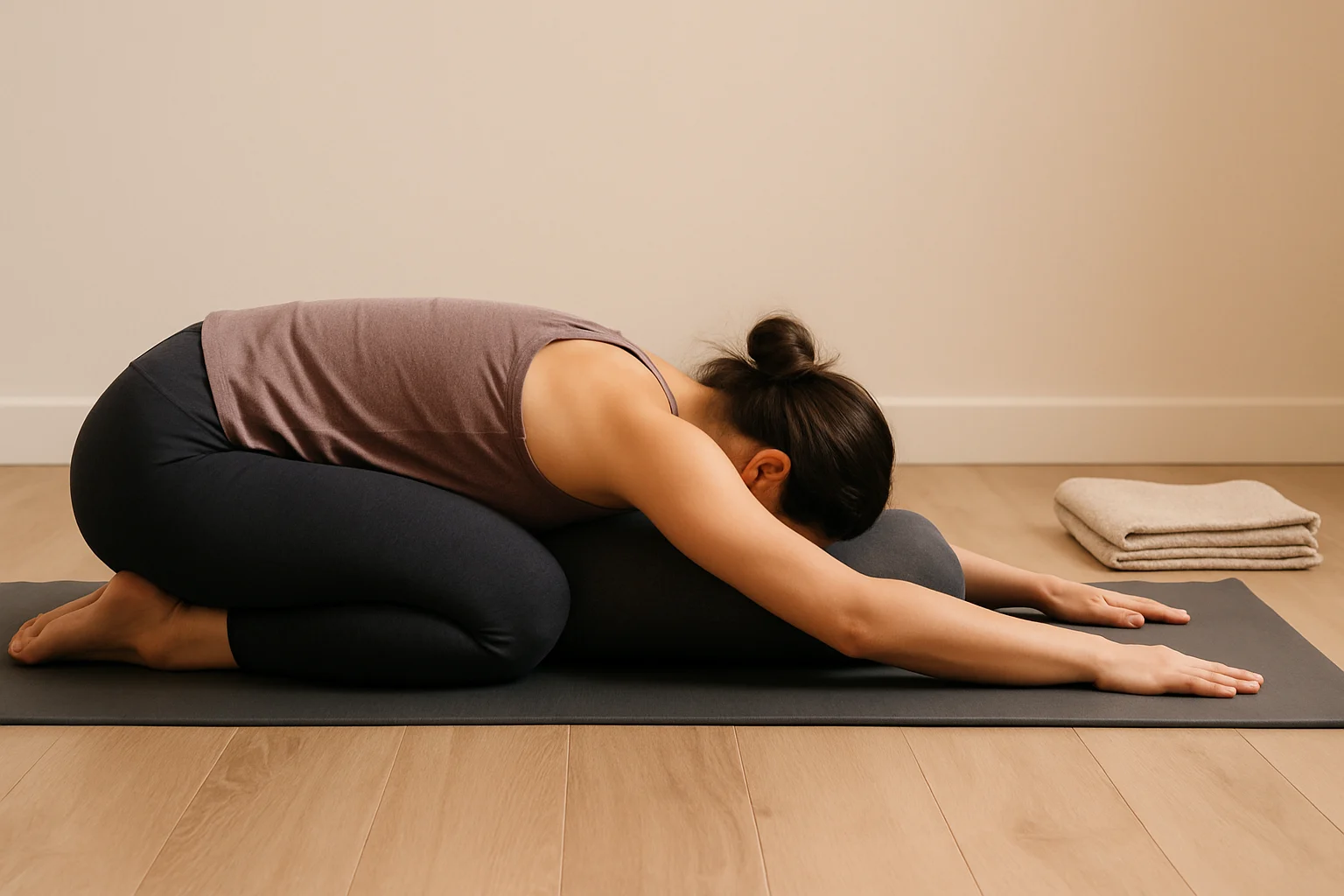
If getting to hands and knees is comfortable, a small-range Cat-Cow can be an easy way to explore spinal movement. A supported Child’s Pose may feel restful for some people, but it is optional—not a test you have to pass. For a gentler progression, use the beginner lower-back guide. If you want a visual menu, see the lower-back position guide; if you only want one simple option, use the single-pose guide.
If your symptoms travel into the leg or feel nerve-like, use the more cautious sciatica guide. Older readers who want a mix of standing and supported work can use the senior back-pain guide.
Hips
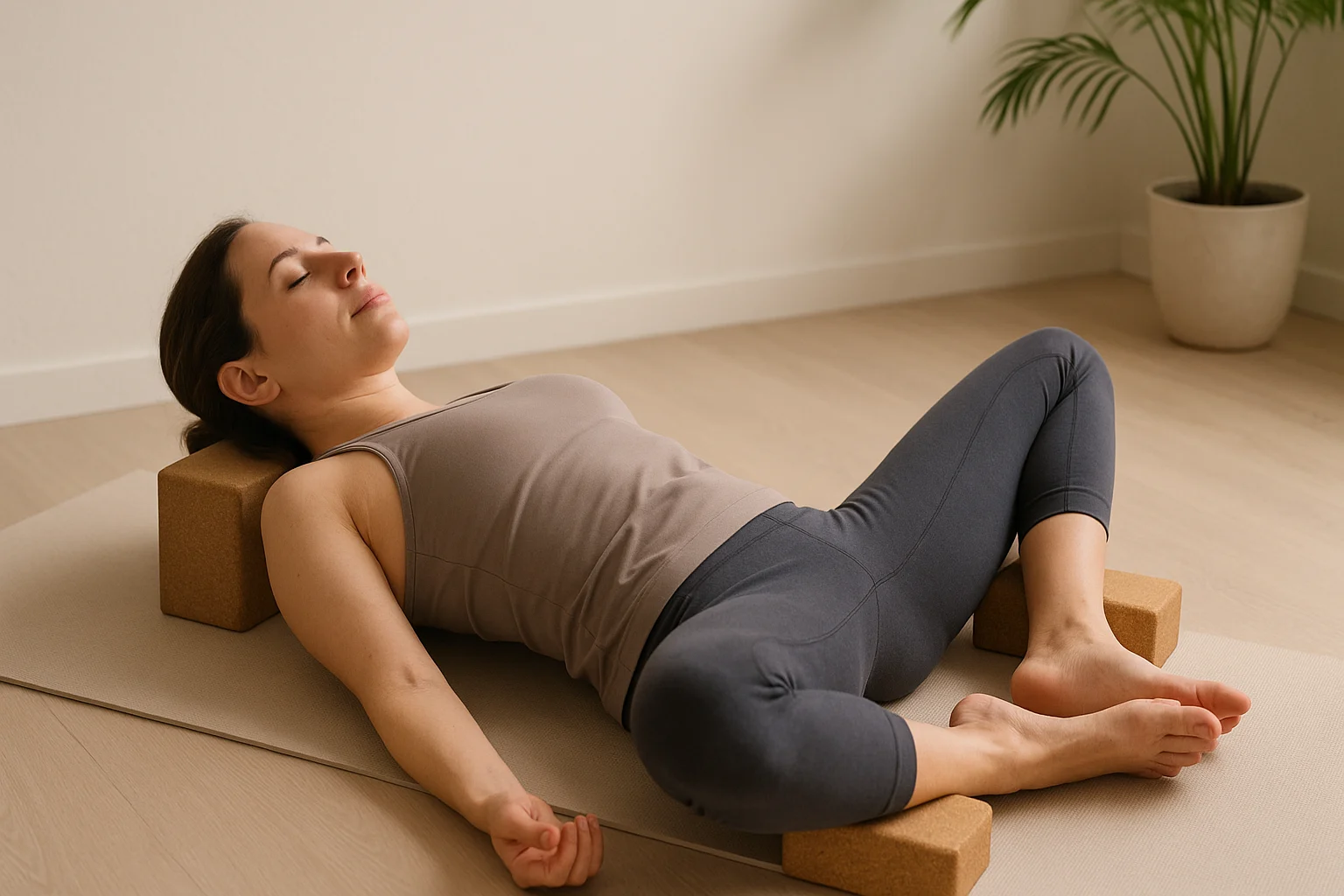
A reclined figure-four shape is usually easier to control than dropping straight into a deep Pigeon or Lizard Pose. Keep the position supported and stop before the sensation becomes sharp or pinchy. For outer-hip/piriformis-type discomfort, see the piriformis guide. If your back and hips are both involved, the combined back-and-hip guide keeps those two areas together.
Neck and shoulders
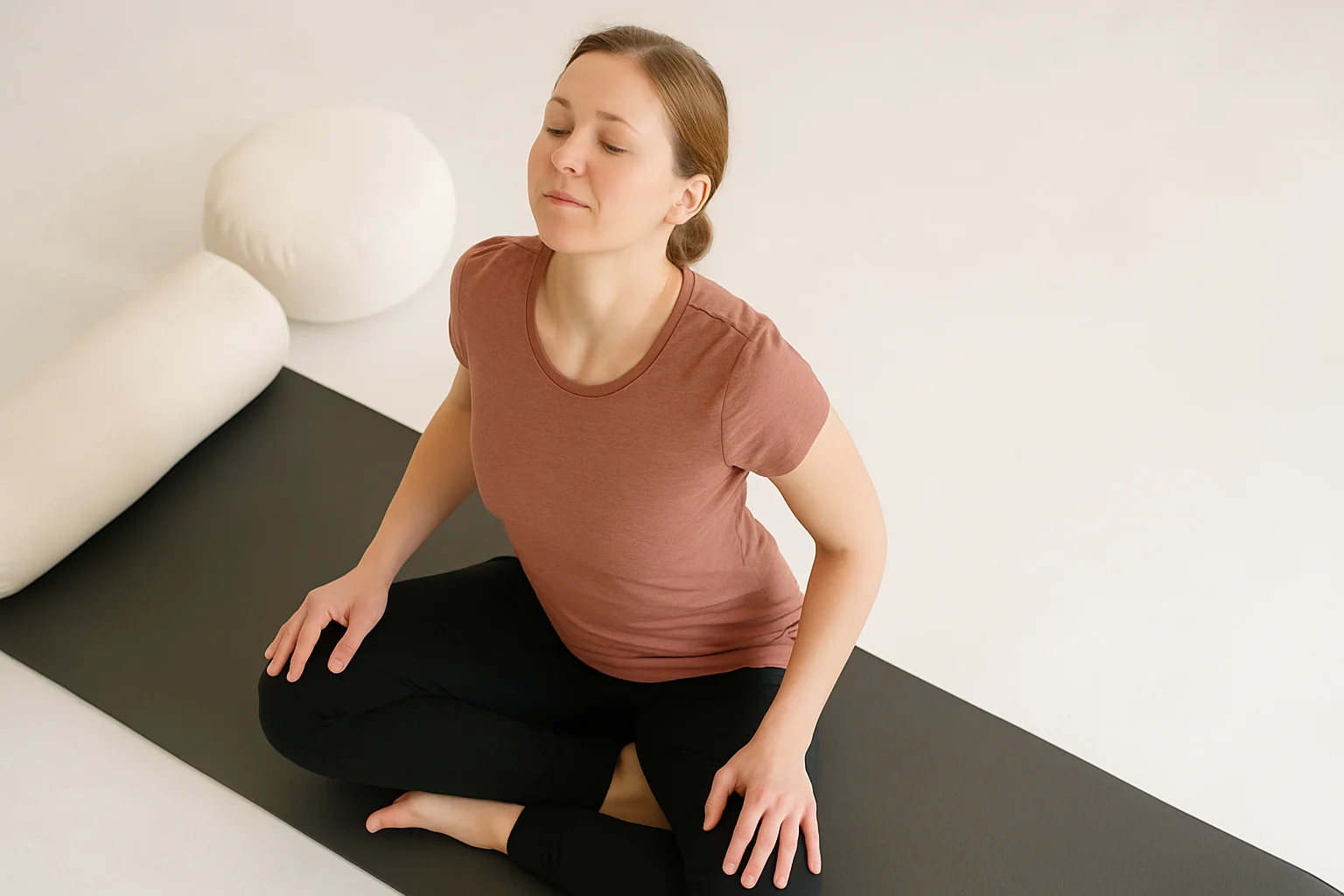
Start smaller than a full neck circle: try relaxed shoulder rolls, gentle head turns, or bringing one ear slightly toward one shoulder without pulling on the head. Keep the movement easy enough that you can breathe normally. If desk time is the main trigger, a few short, weight-free movements during the day may be more practical than saving everything for one long session.
Wrists and hands
If weight-bearing bothers your wrists, begin with the hands off the floor: finger spreads, gentle wrist motion, or a comfortable palm-to-palm position. The wrist-pain guide focuses on weight-off-wrist options; the carpal-tunnel guide is the more condition-specific route.
Knees
Use a chair or wall when balance is part of the problem, and reduce the depth of any knee bend that increases symptoms. Avoid treating a deeper squat or lunge as automatically better.
Whole-body tension
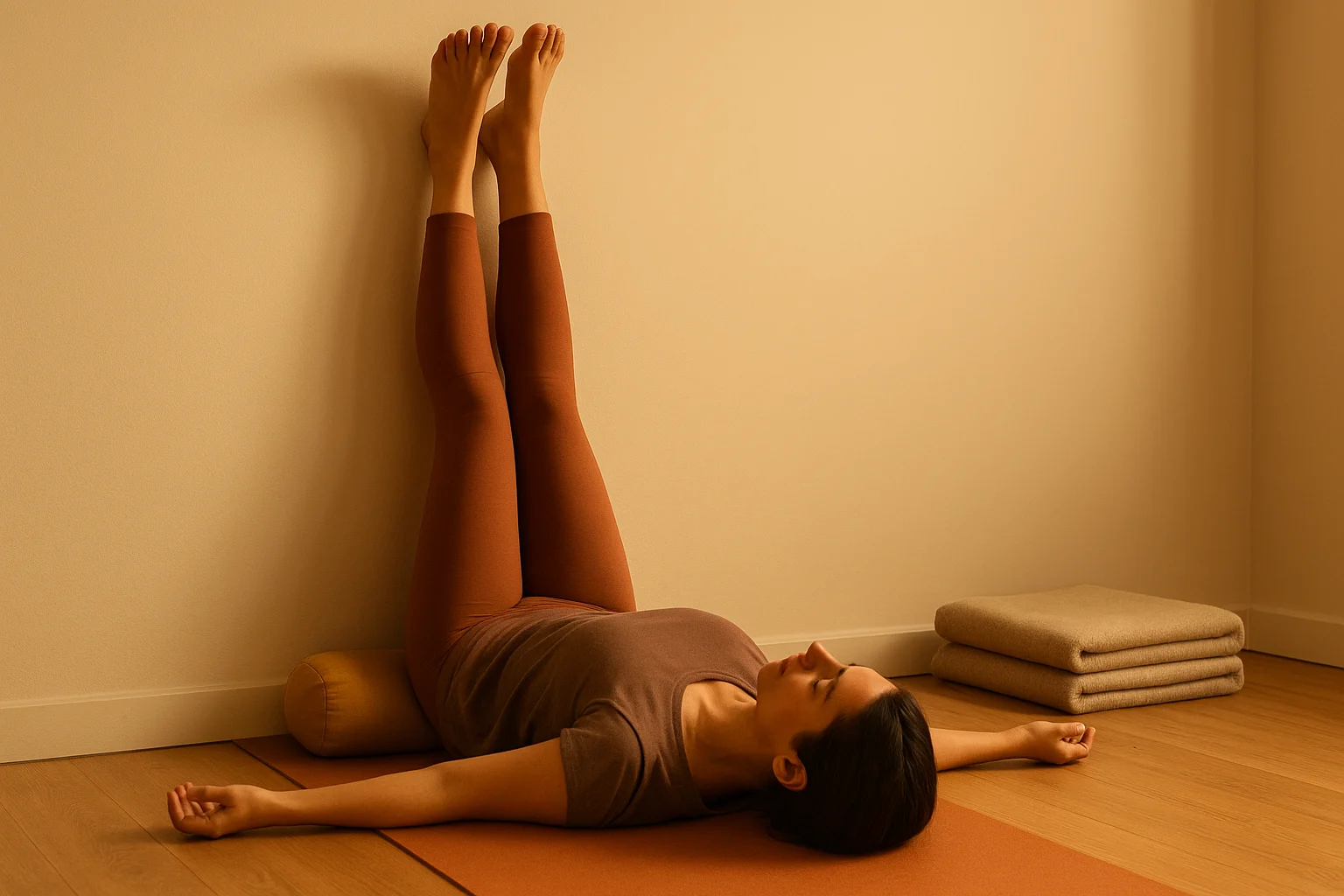
If everything feels wound up, a supported rest position and slow, comfortable breathing may be a better first step than a long sequence. The goal is to find a version you can settle into without forcing range.
Prefer to start seated? Keep this routine nearby.
10-minute chair yoga routine for stiff mornings
A simple seated routine for mornings when floor practice feels like too much.
Confirm your email to get the routine. Unsubscribe anytime.
Something went wrong. Please check your email address and try again.
A Short Routine for Testing What Feels Workable
Instead of committing to a long sequence, use a short check-in. The aim is to learn what your body tolerates today, not to hit a fixed number of poses.
| Time | What to do | What to notice |
|---|---|---|
| 1 min | Sit or lie in a comfortable supported position and breathe normally. | Where symptoms are now; whether anything feels sharp, spreading, numb, or weak. |
| 2–3 min | Choose one easy movement such as shoulder rolls, a small Cat-Cow, or a seated spinal movement. | Whether movement feels easier, unchanged, or clearly worse. |
| 2–3 min | Choose one body-area option from the section above and use support. | Whether you can keep the range controlled without forcing. |
| 1–2 min | Finish in a comfortable resting or seated position. | How you feel after the movement, not just during it. |
Using Props to Make the Shape Fit You
Props are useful when they reduce the amount of range, balance, or floor access a pose demands. A folded blanket can cushion knees, blocks can bring the floor closer, a strap can extend your reach, and a chair can turn a floor-based idea into an upright one. The prop is doing its job when the movement feels more controlled—not when it helps you force a deeper position.
A block I’ve used for years: Gaiam Yoga Block.
I’ve had this block for years and still like it for bringing the floor closer when I want a little more support. If you already have a block that works for you, there’s no need to replace it.
Common Mistakes to Avoid
Most problems here come from treating a pain-sensitive practice like a flexibility challenge.
- Forcing range: If a pose requires you to brace, hold your breath, or push through sharp symptoms, make it smaller or choose another version.
- Using one routine for every kind of pain: Back stiffness, radiating leg symptoms, wrist irritation, and knee pain do not automatically need the same movements.
- Starting with the hardest variation: Use the chair, wall, block, strap, or supported version first; remove support only when it actually improves the practice.
- Judging only by how a pose feels in the moment: Pay attention to how you feel later as well. A movement that reliably leaves symptoms worse is not earning its place.
Frequently Asked Questions
When to Stop and Get Medical Help
General yoga guidance is not enough when symptoms suggest something more serious. Seek prompt medical care for pain that is sudden or severe, follows significant trauma, or comes with new bowel or bladder problems, fever, or new weakness. Numbness or tingling—especially if it is new, spreading, or paired with weakness—also deserves medical assessment.
For back pain specifically, unintended weight loss or symptoms that are constant, intense, or worsening despite self-care are additional reasons to contact a healthcare professional. Mayo Clinic lists these and other reasons to seek care.
If your symptoms are persistent but not urgent, a clinician or appropriately qualified movement professional can help you decide which activities to modify and which are reasonable to continue.
Start Small, Then Reassess
Pick one thing you can test today: the body area that matters most, the easiest position you can access, and one small movement you can do without bracing or forcing. Judge the choice by what happens during the movement and afterward.
Use the matching body-area guide when you need more detail. If symptoms become severe, spread, include new weakness or numbness, or are clearly worsening, stop self-guided yoga and get medical help rather than searching for a harder pose. The goal is not to prove you can do yoga through pain—it is to find the version that fits your body today, and to know when yoga is not the right next step.