When your lower back has that nagging ache, a long list of poses can feel like one more thing to manage. If you’re looking for a yoga pose to relieve lower back pain, the Supine Spinal Twist is one adjustable movement to try gently—not a guaranteed fix and not a test of how far you can twist.
The goal here is simple: learn one movement well enough to know whether it belongs in your day. One comfortable pose you understand is more useful than ten you never use. If you want a broader menu of options, start with the yoga for pain relief guide.
This post contains affiliate links. As an Amazon Associate, I earn from qualifying purchases. Learn more.
Table of Contents
- Quick Answer: Comfort Beats Depth
- Why This Twist May Feel Helpful
- How to Do the Supine Spinal Twist
- Find Your Gentlest Twist Setup
- Modifications and When to Stop
- When to Use This Pose
- Frequently Asked Questions
- Use the Twist as a Check-In, Not a Cure
Quick Answer: Comfort Beats Depth
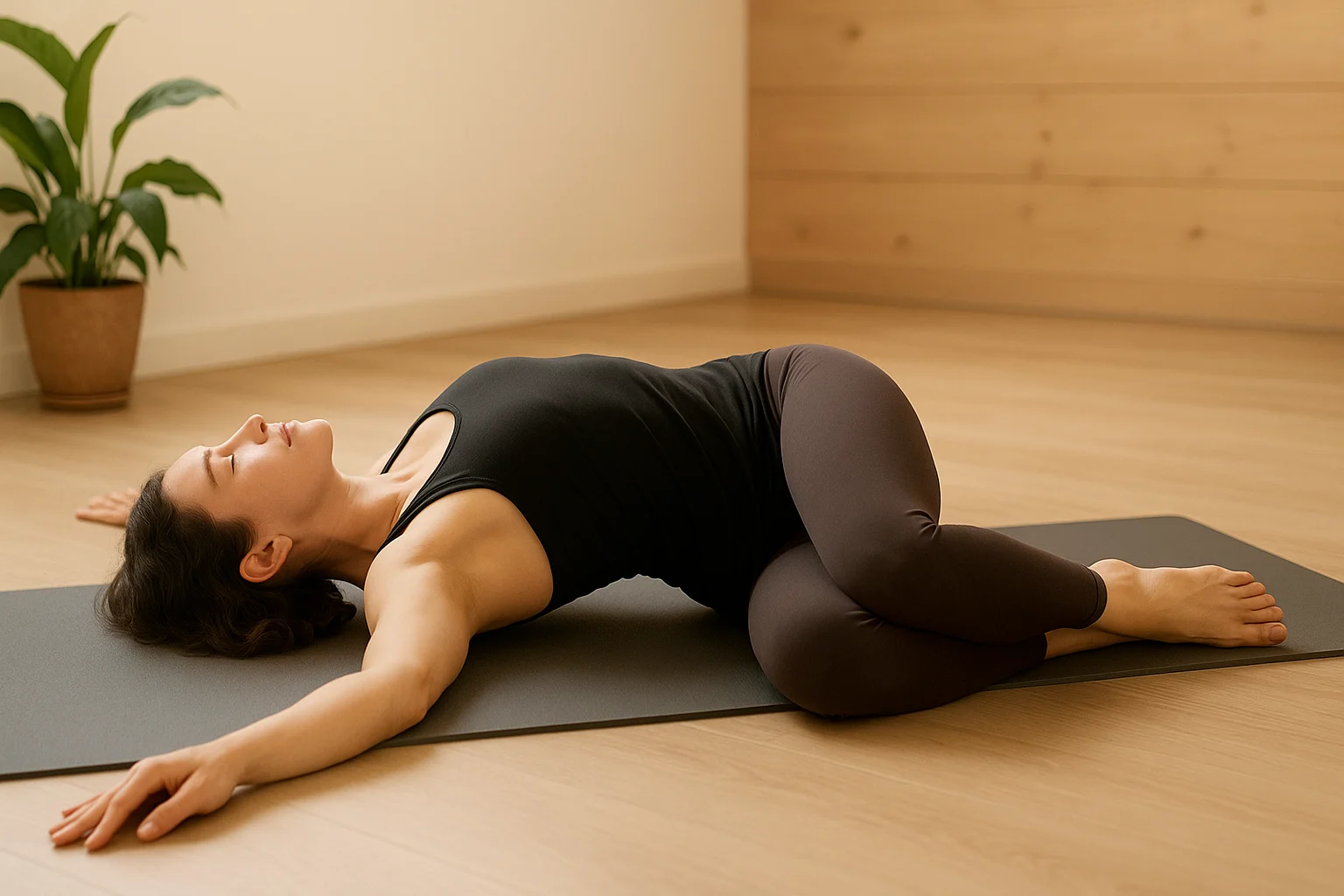
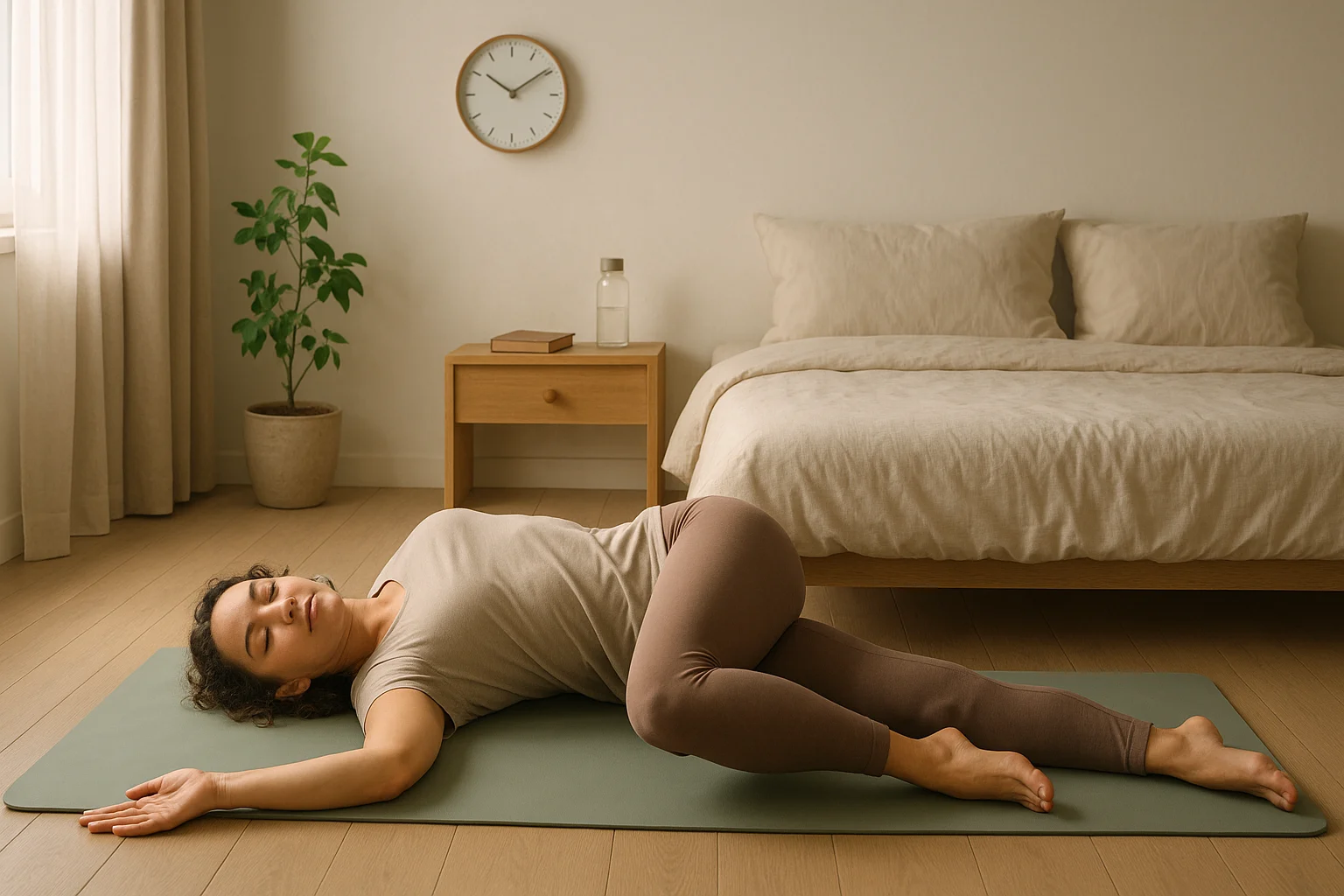
If you’re trying this yoga pose to relieve lower back pain, use the Supine Spinal Twist as a gentle movement check. Lie on your back, bring your knees up, and let them move to one side only while your breathing and shoulders can stay relaxed.
- Support before range: Put a pillow or folded blanket under your knees if they hover or your body starts bracing.
- No timer to beat: Stay only while the position feels comfortable; a longer hold is not automatically better.
- Symptoms outrank the pose: Stop if pain clearly increases or you notice sharp pain, tingling, numbness, or weakness.
Why This Twist May Feel Helpful
The Supine Spinal Twist, or Supta Matsyendrasana, gives you a controlled way to explore comfortable movement through the spine and hips while lying down. Judge it by comfort rather than depth: gentle movement may feel good when stiffness is part of what you notice, but increasing symptoms are a reason to reduce the range or come out.
The evidence has an important limit: research suggests yoga programs may offer a slight benefit for low-back pain overall, but that does not prove this specific twist treats the cause of pain or works for everyone. For the current evidence and safety guidance, see NCCIH’s yoga overview.
How to Do the Supine Spinal Twist
Start with the smallest version that lets you breathe normally and keep your shoulders easy. There is no prize for making the knees reach the floor.
Set Up
- Lie on your back: Bend your knees and place your feet on the floor.
- Bring the knees in: Draw them toward your chest only as far as that feels comfortable.
- Choose an easy arm position: Open the arms into a “T,” or bend the elbows if your shoulders prefer less stretch.
Move Into the Twist
- Let the knees drift: Move both knees slowly to one side without pulling them down.
- Keep the upper body easy: Let the opposite shoulder rest naturally instead of forcing it flat.
- Choose a comfortable head position: Look straight up or turn your head away from the knees only if your neck stays relaxed.
Stay, Breathe, and Come Out
- Use your breath as feedback: If you start holding your breath or bracing, make the twist smaller.
- Stay only while it feels comfortable: You do not need a fixed hold time or a deeper stretch.
- Return slowly: Bring your knees back to center, pause, then try the other side only if the first side felt okay.
Once you know the basic shape, use this quick check to decide whether to use the standard version, add support, or skip the twist today.
Find Your Gentlest Twist Setup
Choose what you actually feel right now. This can help you pick a starting setup; it cannot diagnose the cause of back pain.
Answer both questions to see a starting setup.
Choose the options that best match how the pose feels today.
Modifications and When to Stop
Use the result above as a starting point. The useful version is the one that reduces strain—not the one that produces the biggest twist.
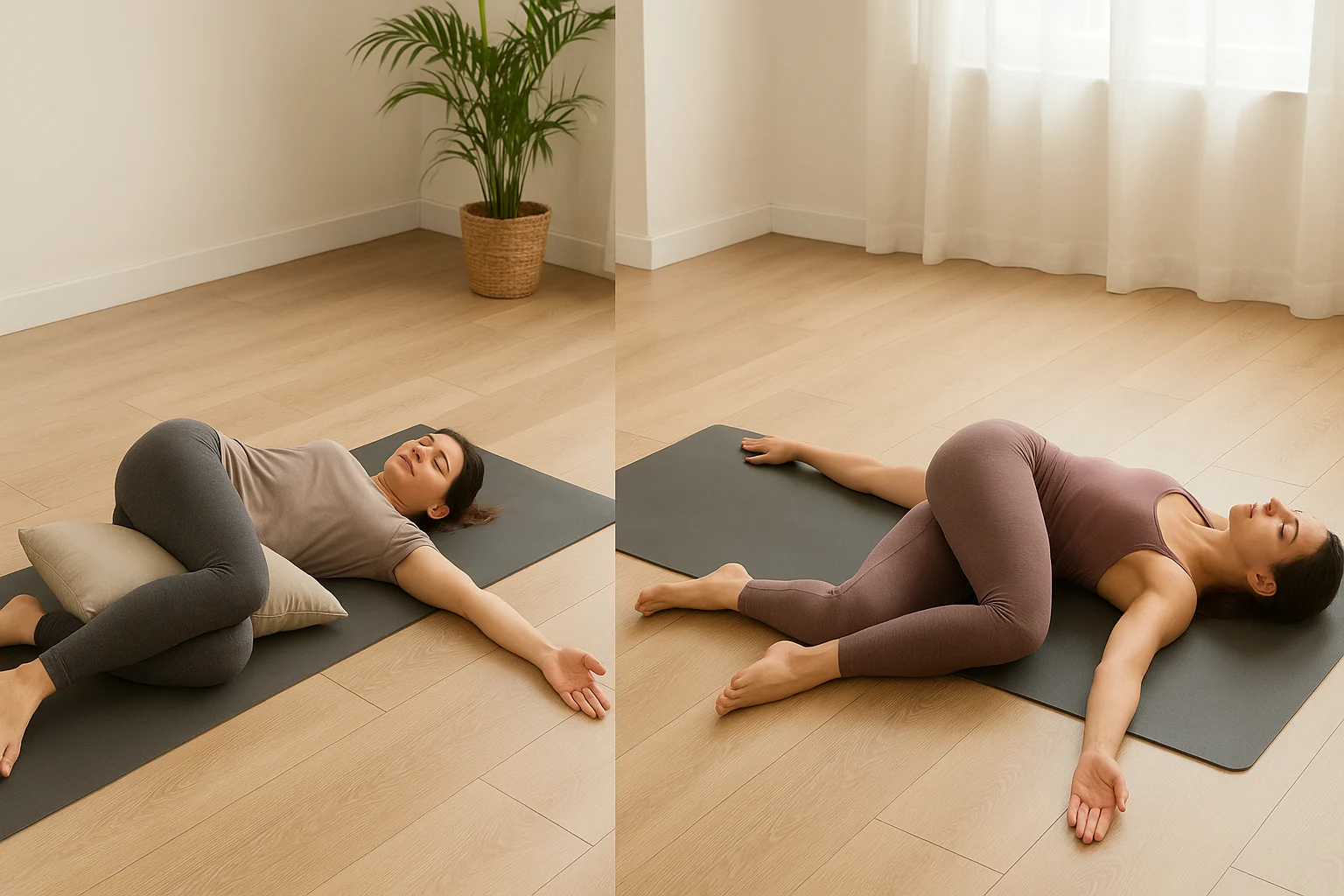
Supported Twist: When Your Knees Need Help
- Support the knees: Put a pillow or folded blanket under or between them so the legs do not hang in space.
- Try one knee at a time: Keep one leg long and move the other knee across only as far as comfortable.
- Give the shoulders room: Bend the elbows or let a shoulder lift slightly instead of pinning it down.
Use what you already have first: a pillow or folded blanket is enough. If you practise supported poses often and want a dedicated prop instead of arranging pillows, the Gaiam Yoga Bolster is one option. Skip it if the props you already own keep you comfortable.
If the Standard Setup Already Feels Easy
Easy does not mean you need to go deeper. Keep the same comfort rule:
- Let the knees settle naturally: Do not press the top thigh toward the floor.
- Keep the shoulders relaxed: More range is not worth bracing elsewhere.
- Keep the neck optional: Looking straight up is fine if turning the head adds tension.
If Getting to the Floor Is the Barrier
Do not force a floor pose just to follow this article. A seated spinal twist is a different movement, but it gives you a no-floor way to explore gentle rotation. The chair yoga guide includes a seated spinal twist and other chair-based options.
When to Back Off or Get Medical Advice
If you have sciatica or another diagnosed back condition, the gentler options in the yoga for sciatica relief guide may be a better starting point. For this twist:
- Stop if symptoms clearly worsen: More stretching is not the answer to increasing pain.
- Get medical advice for persistent or worsening symptoms: Especially when exercise repeatedly aggravates them.
- Seek urgent medical care for red flags: New bowel or bladder changes, numbness around the genitals or anus, new weakness, symptoms affecting both legs, or back pain after serious trauma need prompt assessment.
NHS guidance advises stopping back exercises if pain increases significantly and lists neurologic, bowel/bladder, and serious-trauma warning signs that need urgent assessment. See the NHS low-back-pain guidance.
When to Use This Pose (and When to Skip It)
You do not need to turn this twist into a daily routine. Keep it as one optional movement when it feels comfortable, and skip it on days when it aggravates symptoms.
- After long sitting: One gentle round may be enough; if you need a fuller movement break, try the desk yoga routine.
- Inside a broader practice: Use the twist because it feels useful that day, not because every routine needs it.
- On a flare-up day: If the movement increases symptoms, choose another comfortable activity or get medical guidance instead of trying to stretch through it.
If floor-based poses are the part you keep skipping, especially on stiff mornings, the free chair routine below is a better fit than forcing this twist into every day.
Get the 10-Minute Chair Yoga Routine
Confirm to get the routine and yoga tips. Unsubscribe anytime.
Something went wrong. Please check your email address and try again.
Frequently Asked Questions
Use the Twist as a Check-In, Not a Cure
If you came here looking for a yoga pose to relieve lower back pain, the takeaway is simple: the Supine Spinal Twist earns its place only when gentle rotation feels comfortable. You do not need to go deeper, hold longer, or do it every day for the pose to be useful.
If it feels good today, one comfortable round with support as needed can be enough. If it does not, that is useful information too—choose another movement from the yoga positions for lower back pain guide instead of forcing this one to fit.
Disclaimer: This blog post is for informational purposes only and does not constitute medical advice. Stop any exercise that clearly worsens your symptoms, and seek medical advice for persistent, severe, or worsening back pain or the urgent warning signs described above.