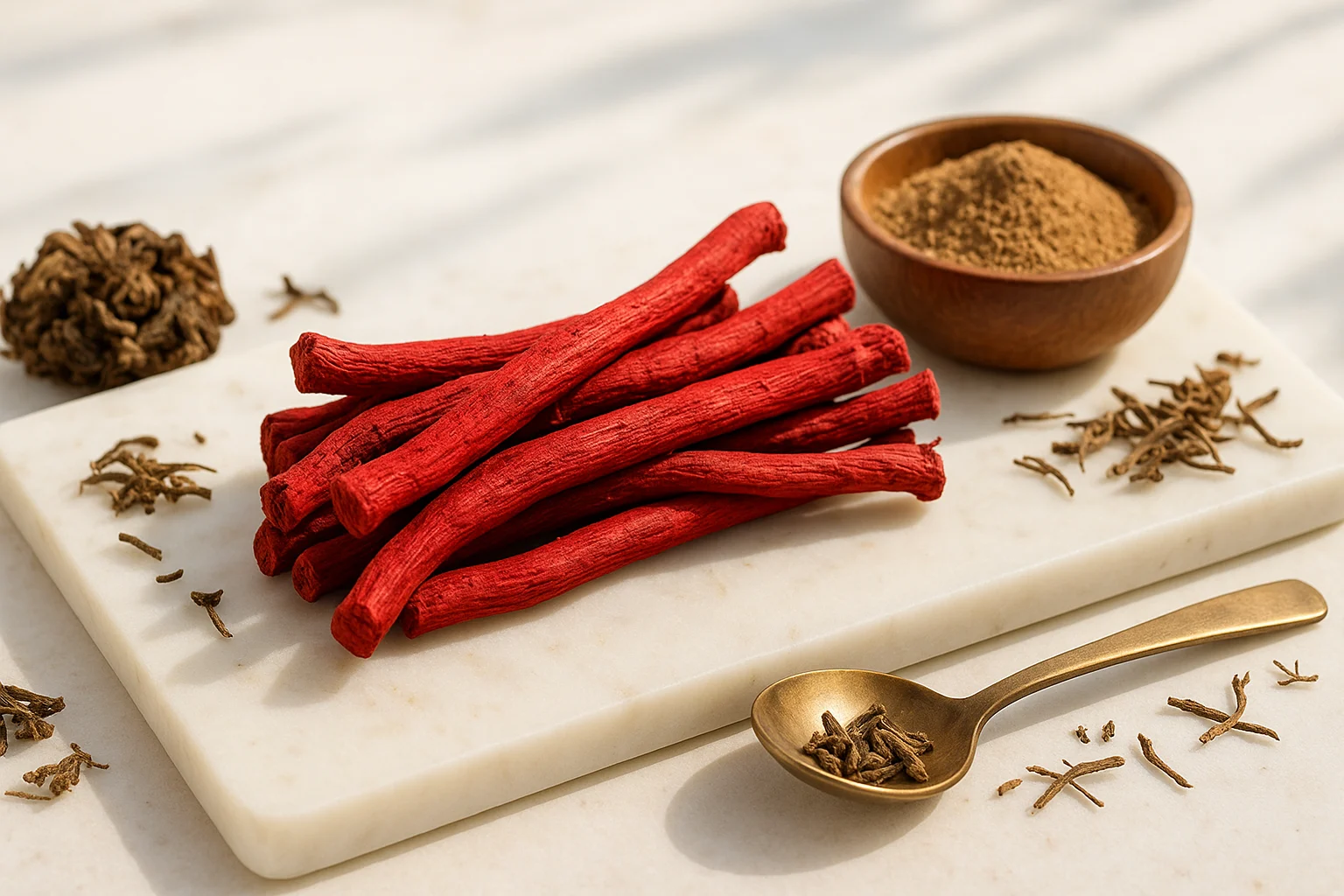
If you’re searching for the benefits of manjistha, the short answer is that most popular claims come from Ayurvedic tradition or preclinical research—not strong human trials. Manjistha (Rubia cordifolia) has a long history around skin, blood, and cleansing, but evidence that it improves acne, lymph flow, liver function, hormones, or pain in people remains limited.
This guide separates traditional manjistha health uses from what research has actually established, then covers common forms, dosing limits, and safety questions. For the broader Ayurveda context, see our Ayurvedic wellness guide.
Check Manjistha Evidence & SafetyThis page contains paid/affiliate links. As an Amazon Associate we earn from qualifying purchases, and we may earn commissions from other partners—at no extra cost to you. Links marked with ‘#ad’ are affiliate links, meaning we may earn a commission at no extra cost to you. Learn more.
Table of Contents
- Key Takeaways: Benefits of Manjistha at a Glance
- Manjistha Evidence & Safety Check
- What Is Manjistha?
- What Research Actually Shows About Manjistha
- Benefits of Manjistha: Traditional Uses vs. Evidence
- Manjistha Forms and Dosing Limits
- Safety Precautions for Manjistha Use
- Frequently Asked Questions
- Bottom Line: What the Evidence Supports
Key Takeaways: Benefits of Manjistha at a Glance
- Traditional use: Ayurveda has long used manjistha in formulas described as supporting blood, skin, and cleansing.
- Evidence level: Antioxidant, anti-inflammatory, antimicrobial, and other effects have been studied mostly in laboratory or animal models; established human benefits remain limited.
- Skin, liver, lymph, and hormonal claims: These should not be treated as proven outcomes in people.
- Safety: Clinical safety data for Rubia cordifolia are limited, so medication use, pregnancy or breastfeeding, and medical conditions warrant extra caution.
- Forms: Manjistha is sold as powder, capsules, and tea/root preparations, but there is no well-established evidence-based self-care dose.
Manjistha Evidence & Safety Check
Use this as a shortcut through the guide. It does not diagnose a condition or tell you that manjistha is safe for you; it points you to the evidence or safety section that matters most for your question.
Answer both questions to get the most relevant reading path through this guide.
If you prefer to read straight through, start with what manjistha is, then move into the research before deciding whether any supplement use makes sense for you.
What Is Manjistha?
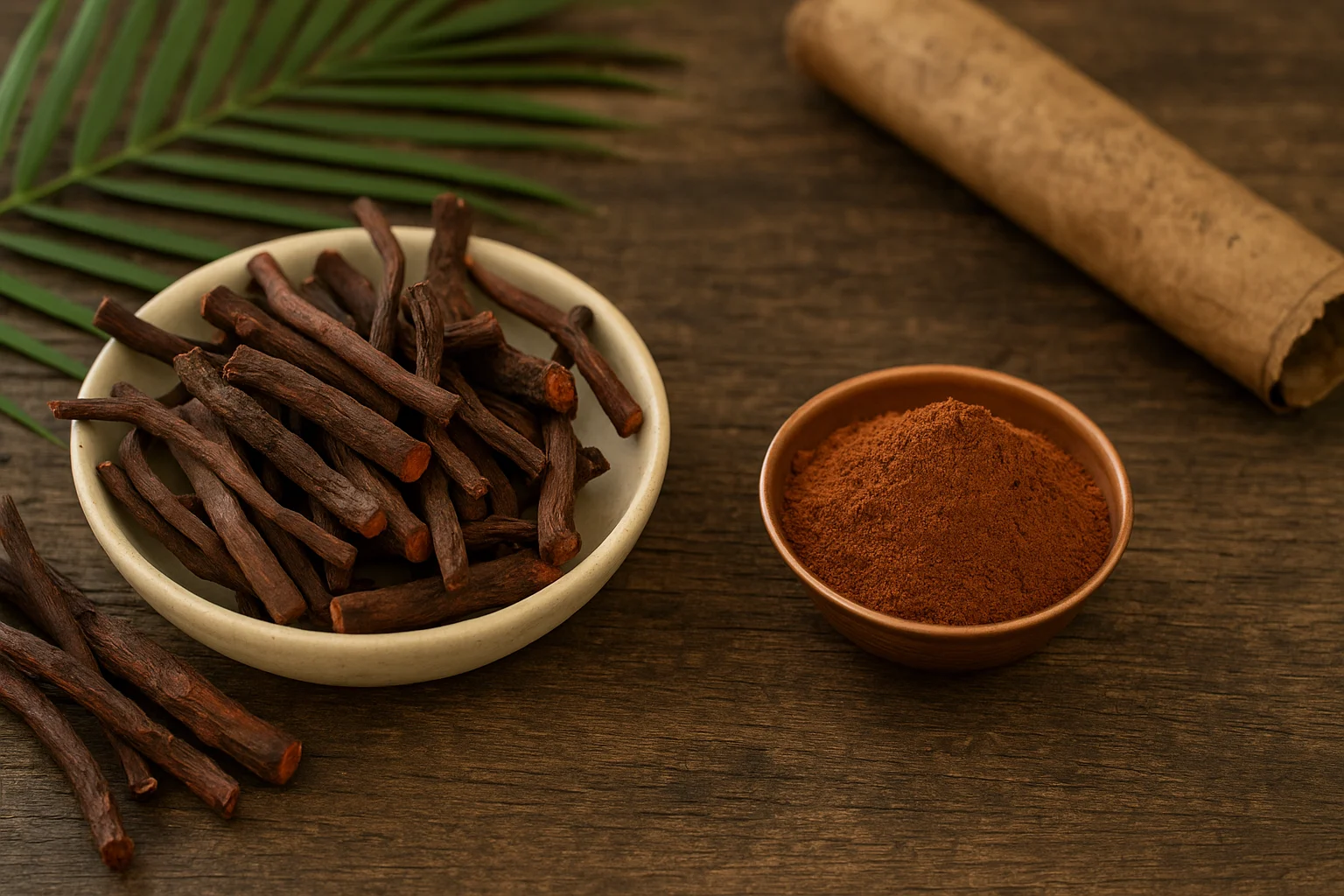
Manjistha, or Rubia cordifolia, is a climbing plant used in South Asian and other traditional medicine systems. Its root contains anthraquinones and other compounds. In Ayurveda, manjistha is associated with “Raktashodhana,” often translated as “blood purifying,” and with cleansing and rejuvenation formulas.
Those terms describe a traditional medical framework, not a modern clinical finding that manjistha “detoxes” or purifies the blood. Traditional sources also associate it with cooling, circulation, and complexion-oriented uses. These traditions help explain why manjistha remains part of Ayurvedic practice, but they do not establish a treatment effect in humans.
What Research Actually Shows About Manjistha
Ayurveda has long described manjistha’s uses, while modern research has examined Rubia cordifolia and several of its constituents. A 2022 comprehensive review concluded that most pharmacology studies were preclinical and that clinical safety data were lacking.
A 2026 review of medicinal Rubia plants summarizes R. cordifolia alongside R. yunnanensis and R. tinctorum and notes meaningful phytochemical differences between them. It is useful current context, but findings from another Rubia species should not automatically be treated as findings about manjistha.
- Preclinical signals: Antioxidant, anti-inflammatory, antimicrobial, antiplatelet, and other activities have been reported in laboratory or animal research.
- Human evidence: The evidence base is too limited to treat popular claims about acne, eczema, “detox,” lymph drainage, liver support, hormonal balance, or everyday pain relief as established benefits.
- Safety evidence: Human pharmacokinetic and toxicity data remain limited, which makes precise safety, interaction, and dosing claims difficult to support.
The practical takeaway is to treat manjistha as a traditional herb with interesting early research—not as a clinically proven treatment for the conditions discussed below.
Benefits of Manjistha: Traditional Uses vs. Evidence
Popular manjistha health uses fall into different evidence buckets. The useful question is not simply “what is manjistha used for?” but whether a claim comes from tradition, preclinical research, or established human evidence.
| Claim | Why it comes up | What the evidence supports |
|---|---|---|
| “Blood purifying” / detox | Traditional Ayurvedic cleansing and “Raktashodhana” language. | Modern evidence does not establish that taking manjistha detoxes or purifies blood in healthy people. |
| Lymphatic support | A common modern wellness claim. | Human evidence does not establish improved lymph drainage, reduced puffiness, or stronger immune function. |
| Skin concerns | Traditional skin-focused use plus preclinical anti-inflammatory and antimicrobial findings. | There is not good human evidence that oral manjistha treats acne, eczema, redness, or uneven skin tone. |
| Liver / hormonal claims | Preclinical liver-related research and traditional gynecological uses. | Human evidence does not establish improved liver function, hormonal balance, menstrual symptoms, or hormonally driven breakouts. |
| Inflammation / discomfort | Anti-inflammatory activity reported in preclinical research. | That signal does not establish symptom relief for joint pain, digestive discomfort, or other inflammatory complaints in people. |
| Other traditional uses | Historical circulation, bleeding, gynecological, and urinary uses. | These are traditional-use context, not evidence-based self-care recommendations or proof of safety. |
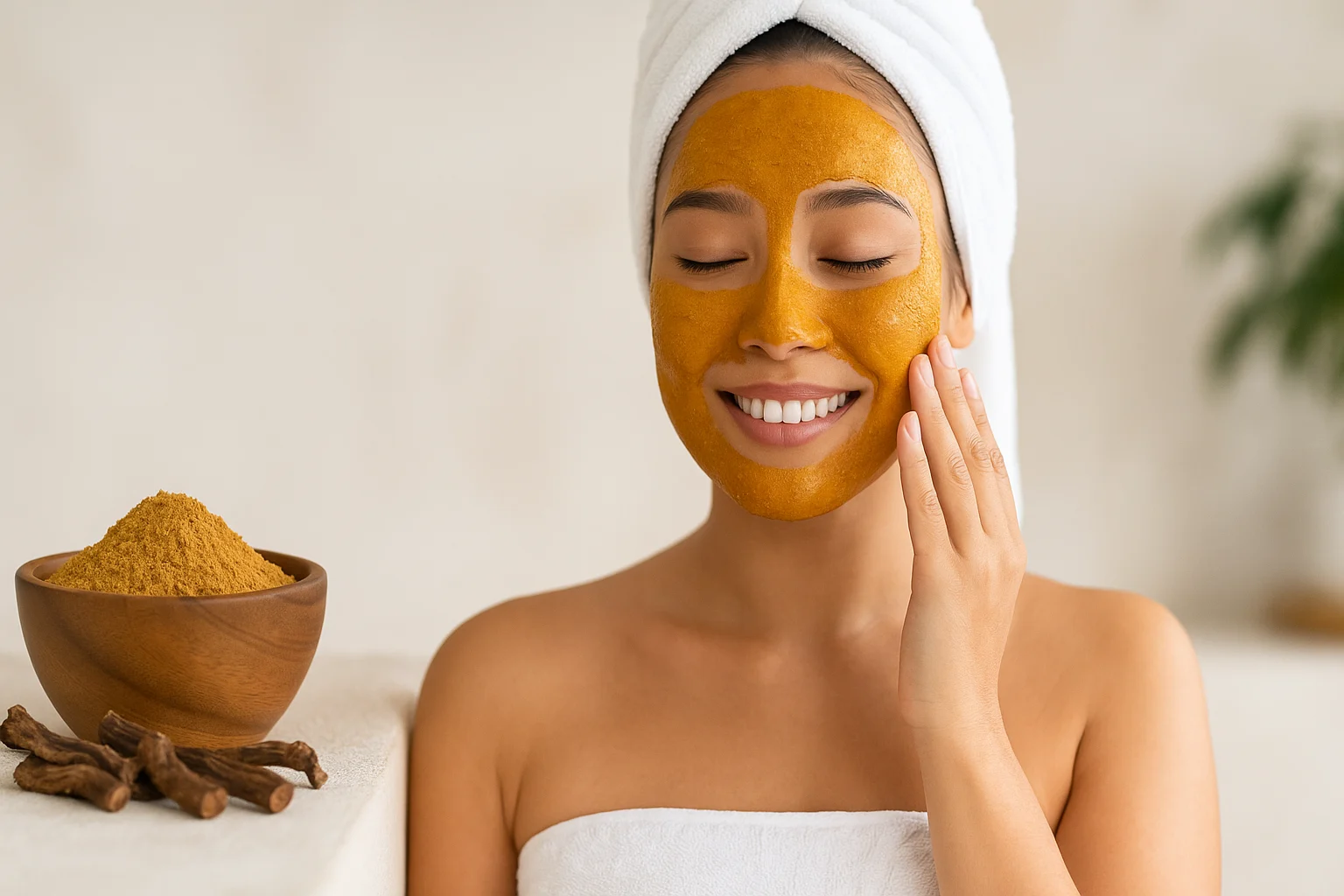
Skin-focused use is one of the most common reasons people encounter manjistha. If you are interested in the ritual rather than a treatment claim, our Ayurvedic face care routine keeps that context separate from medical promises.
Manjistha Forms and Dosing Limits
Manjistha is sold in several forms, but the current evidence does not establish one evidence-based self-care dose or format as best. Product strength and preparation can vary, so the label and individualized clinical advice matter more than a generic teaspoon rule.
Forms of Manjistha
- Powder (Churna): A loose preparation that can be mixed according to the product directions.
- Capsules: A premeasured format; follow the specific product label rather than transferring a powder dose between products.
- Tea/root preparations: Preparation strength can vary. Follow the product directions or qualified guidance rather than assuming a universal amount or steeping method. For a broader beverage comparison, see our Ayurvedic tea guide.
Dose and Product Quality
There is no well-established clinical dose for the wellness uses discussed in this article. Supplements sold online or in stores may also differ from preparations used in research. Follow the product label, and ask a qualified clinician or pharmacist before use if you take medication, are pregnant or breastfeeding, or have a medical condition.
Manjistha Tablets/Capsules vs. Powder
VSQuick comparison: Tablets or capsules are simpler if you want a label-directed serving without measuring. Powder can offer more flexibility when the product is intended for oral use, but it requires measuring and usually has a stronger taste. Neither format is automatically the better choice; suitability matters more than format.
| Format | Tablets / capsules |
Powder |
|---|---|---|
| Best fit |
|
|
| Convenience |
|
|
| Taste |
|
|
| Flexibility |
|
|
| What to check |
|
|
| Main trade-off |
|
|
Whichever format you consider, safety and evidence matter more than convenience.
Safety Precautions for Manjistha Use
Human safety data for Rubia cordifolia are limited, so it is more accurate to focus on uncertainty than to present a precise side-effect or interaction list.
- Pregnancy, breastfeeding, and children: Clinical safety data for manjistha are limited, and many dietary supplements have not been tested in these groups. Discuss herbal supplements with a qualified healthcare professional before use.
- Medications: Herb-drug interaction data for manjistha are limited. If you take prescription or over-the-counter medicines, ask a clinician or pharmacist to review the combination.
- Medical conditions: Dietary supplements can pose additional risks with some health conditions or around surgery. Ask a qualified clinician for individualized advice if you have a significant medical condition or an upcoming procedure.
- Unexpected symptoms: Stop the product and seek appropriate medical advice if you develop a concerning reaction.
For general supplement-safety guidance, see the National Center for Complementary and Integrative Health.
Frequently Asked Questions
Bottom Line: What the Evidence Supports
Manjistha is best understood as a traditional herb with interesting preclinical research—not as a proven treatment for acne, eczema, “detox,” lymph drainage, liver or hormonal problems, or everyday pain. If you choose to use an oral product, follow the label and treat medication use, pregnancy or breastfeeding, and significant medical conditions as reasons to get individualized guidance rather than relying on traditional use alone.
If tablets fit your routine better than measuring loose powder, Banyan Botanicals Manjistha Tablets lists Rubia cordifolia on the label, so the herb species is straightforward to check. That product detail does not establish the detox, blood-cleansing, or lymph claims discussed above.
If your goal is to understand where manjistha fits within Ayurveda rather than to treat a condition, continue with our Ayurvedic wellness guide.