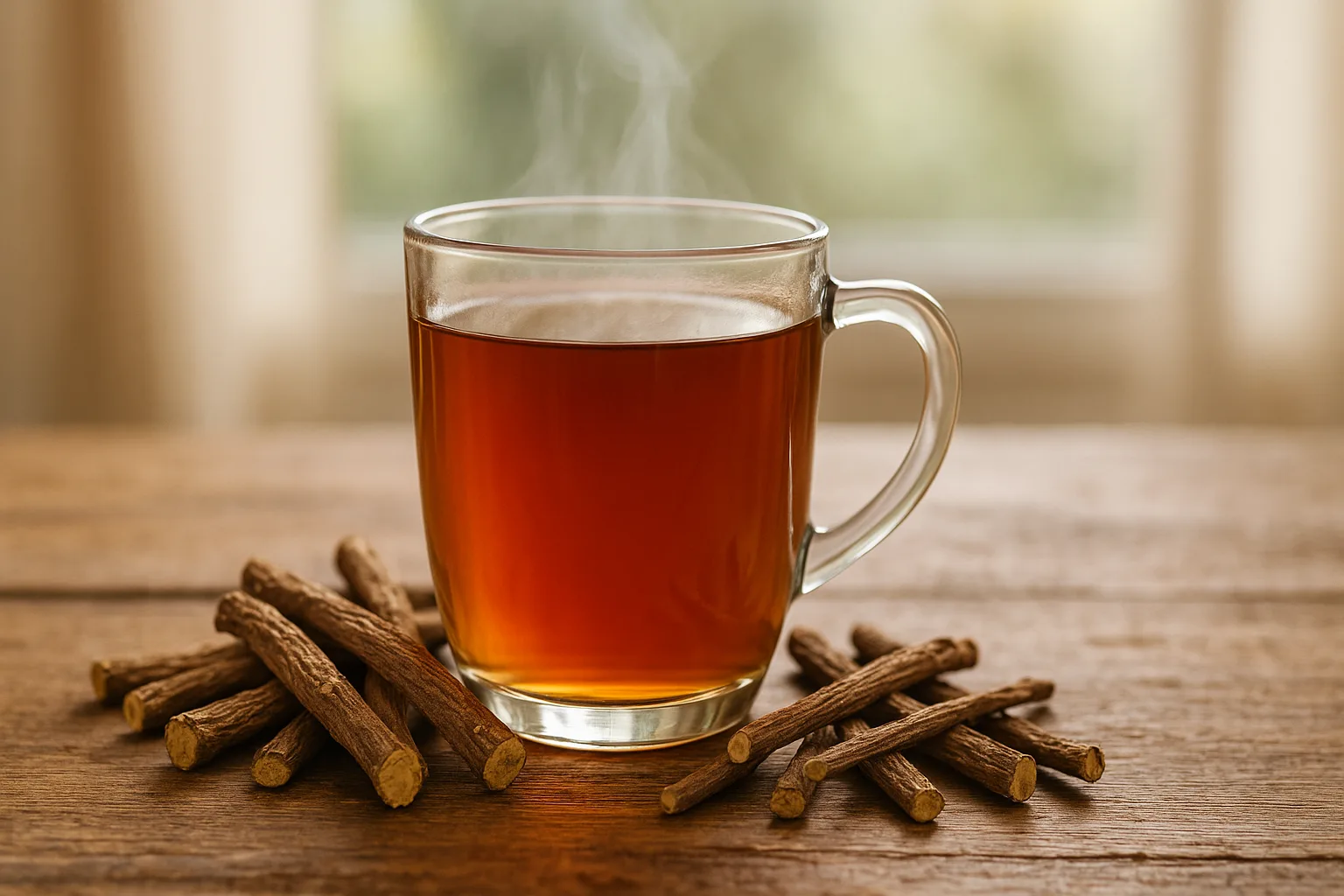
Licorice-root tea is naturally sweet, but its health reputation is stronger than the evidence. Licorice has a long history of traditional use, but a search for licorice benefits tea can surface claims that run ahead of current evidence. The National Center for Complementary and Integrative Health (NCCIH) says there is not enough high-quality evidence to clearly support licorice for any health condition.
The more important question is whether regular licorice is appropriate for you: its glycyrrhizin can cause serious blood-pressure, electrolyte, and heart-rhythm effects in some people. This guide separates traditional use from current evidence, shows a practical brewing approach, and puts the safety check before any routine advice. To explore Ayurveda beyond licorice tea, see the Ayurvedic Wellness Guide.
Try the Safety CheckThis page contains affiliate links. As an Amazon Associate, I earn from qualifying purchases. If you purchase through an Amazon link, I may earn a commission at no extra cost to you. Learn more.
Table of Contents
- Licorice Tea: What Matters Most
- What the Evidence Says
- Brewing Guide
- Quick Safety Check
- Who Needs Extra Caution?
- DGL vs. Regular
- When to Drink Licorice Tea
- If You Decide to Try It
- FAQs
- Bottom Line
Licorice Tea: What Matters Most
- As a drink, licorice root tea is naturally sweet and caffeine-free — a real option for the evening, or when you want something sweet without sugar. That much needs no health claim.
- Licorice has a long traditional-use history, but current evidence does not establish licorice tea as a treatment for sore throats, digestive problems, stress, or other health conditions.
- Regular licorice contains glycyrrhizin, which can cause serious adverse effects, especially with larger or prolonged intake and in people with hypertension or heart or kidney conditions.
- DGL removes glycyrrhizin, but that does not prove a digestive benefit or indefinite safety; NCCIH says oral DGL might be safe for up to four months.
- Preparation depends on the product. The currently verified Traditional Medicinals tea-bag directions use freshly boiled water and a 10–15 minute covered steep.
- If you are pregnant or breastfeeding, take medicine, or have a health condition, get clinician or pharmacist guidance rather than relying on timing or a stronger brew.
Licorice Tea Health Claims: What the Evidence Says
NCCIH says there is not enough high-quality evidence to clearly support licorice for any health condition. When reading wellness claims about licorice tea, it helps to separate traditional use, extract studies, and ordinary tea. This guide keeps the evidence summary brief and leaves the deeper herb review to our licorice root benefits reference.

| Common claim | What the evidence actually supports |
|---|---|
| Sore throat | Limited evidence involves licorice gargles or lozenges used around surgery to reduce sore throat after intubation. That does not establish ordinary licorice tea as a treatment for a cold, cough, infection, or breathing problem. |
| Digestion | NCCIH says it is unclear whether licorice-alone products improve digestive symptoms. A 2011 randomized trial tested a specific licorice extract (GutGard) for functional dyspepsia—not licorice tea and not a general reflux or ulcer treatment. |
| Respiratory or energy support | Licorice is promoted for these uses, but current high-quality evidence does not clearly establish a health benefit from licorice tea. |
That distinction also matters when reading broad herbal tea benefits lists: evidence for one ingredient, extract, or preparation does not automatically apply to licorice-root tea. None of that makes licorice tea pointless — it just moves the honest reason to drink it. The tea tastes distinctly sweet with no sugar added, and it is caffeine-free, so it does something most herbal teas do not: it answers a craving for something sweet late in the day without sugar or caffeine. That is a plain property of the drink, and it is a different thing from using licorice tea as treatment for persistent symptoms.
How to Brew Licorice Tea
Preparation varies by product, so the label is the best starting point. A stronger or longer-steeped cup is not automatically more useful, and brewing choices do not remove glycyrrhizin-related safety concerns.
Tea Bags
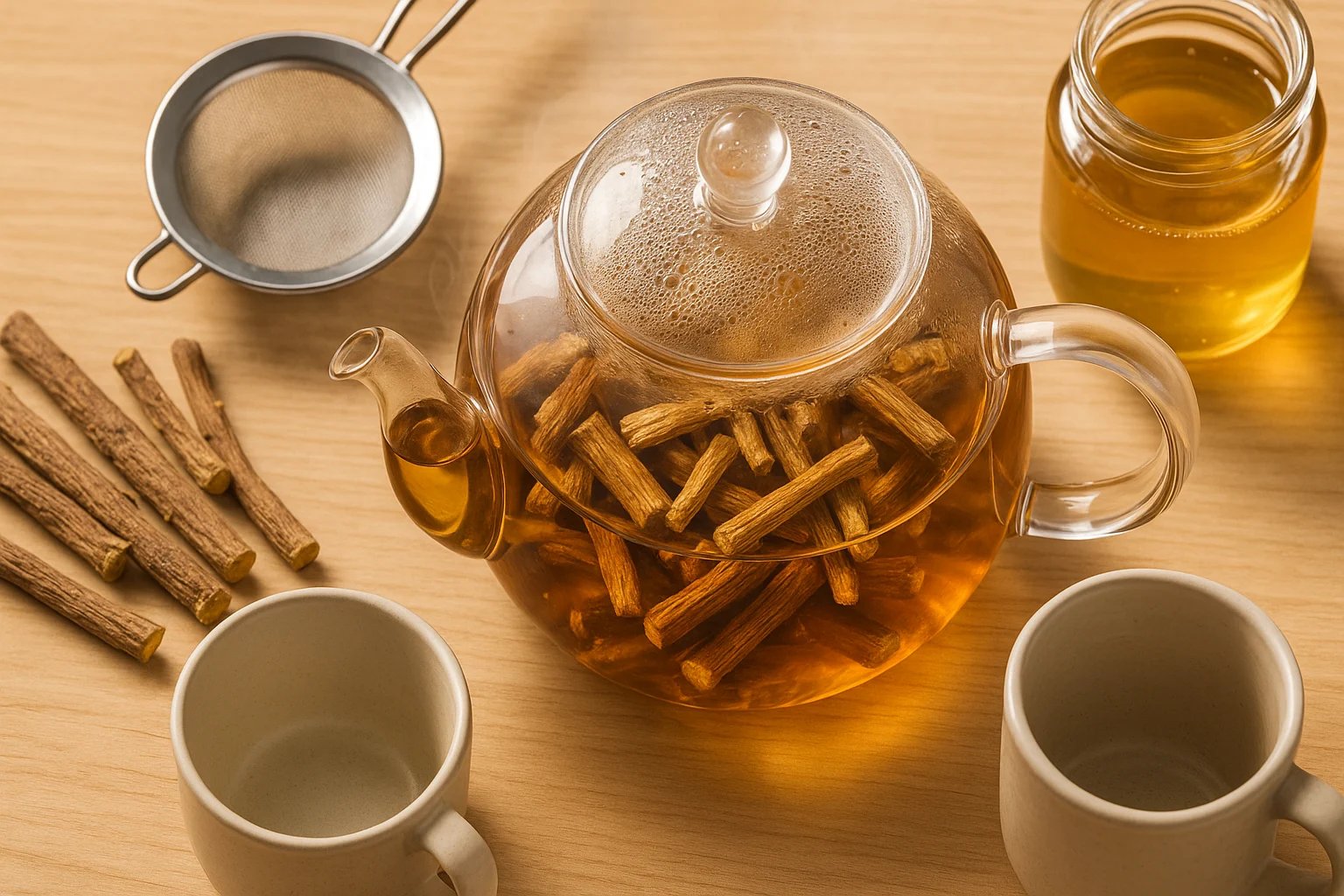
For Traditional Medicinals Organic Licorice Root Tea, the current manufacturer directions say to pour 8 oz of freshly boiled water over one tea bag, cover, and steep for 10–15 minutes. Other brands and blends may use different directions, so check the package you actually have.
Loose or Cut Licorice Root
Loose-root products can vary in cut size and suggested strength. Use a food-grade product from a reputable seller and follow its preparation directions rather than assuming a generic spoon measurement applies to every root product. If you already have loose-cut root, a fine-mesh infuser is a simple way to contain it while steeping; the Reinmoson stainless-steel tea infuser is a reusable option for that job.
Flavor Without Changing the Safety Picture
Licorice root is already sweet and earthy. Lemon, ginger, mint, cinnamon, or a little honey can change the taste, but they do not make regular licorice safer or turn it into a proven treatment.
If flavor variety is the goal, compare Ayurvedic teas by ingredients and taste rather than by benefit claims.
Quick Licorice Tea Safety Check
Before you decide how to use licorice tea, check the risk factors that matter more than timing, flavor, or steep strength. Stronger is not automatically safer, so follow the product label and use the three questions below to find the right caution route.
Answer three quick questions. The result is a caution route—not a diagnosis, dose recommendation, or substitute for a clinician or pharmacist.
Complete all three answers to see your caution route.
This screen intentionally avoids a green “safe” result. Licorice can still carry risks even when none of the listed factors apply.
Safety basis: NCCIH licorice-root guidance. If you take medicine, have a health condition, or are pregnant or breastfeeding, use clinician or pharmacist guidance rather than this screen alone.
Who Should Use Extra Caution With Licorice Tea?
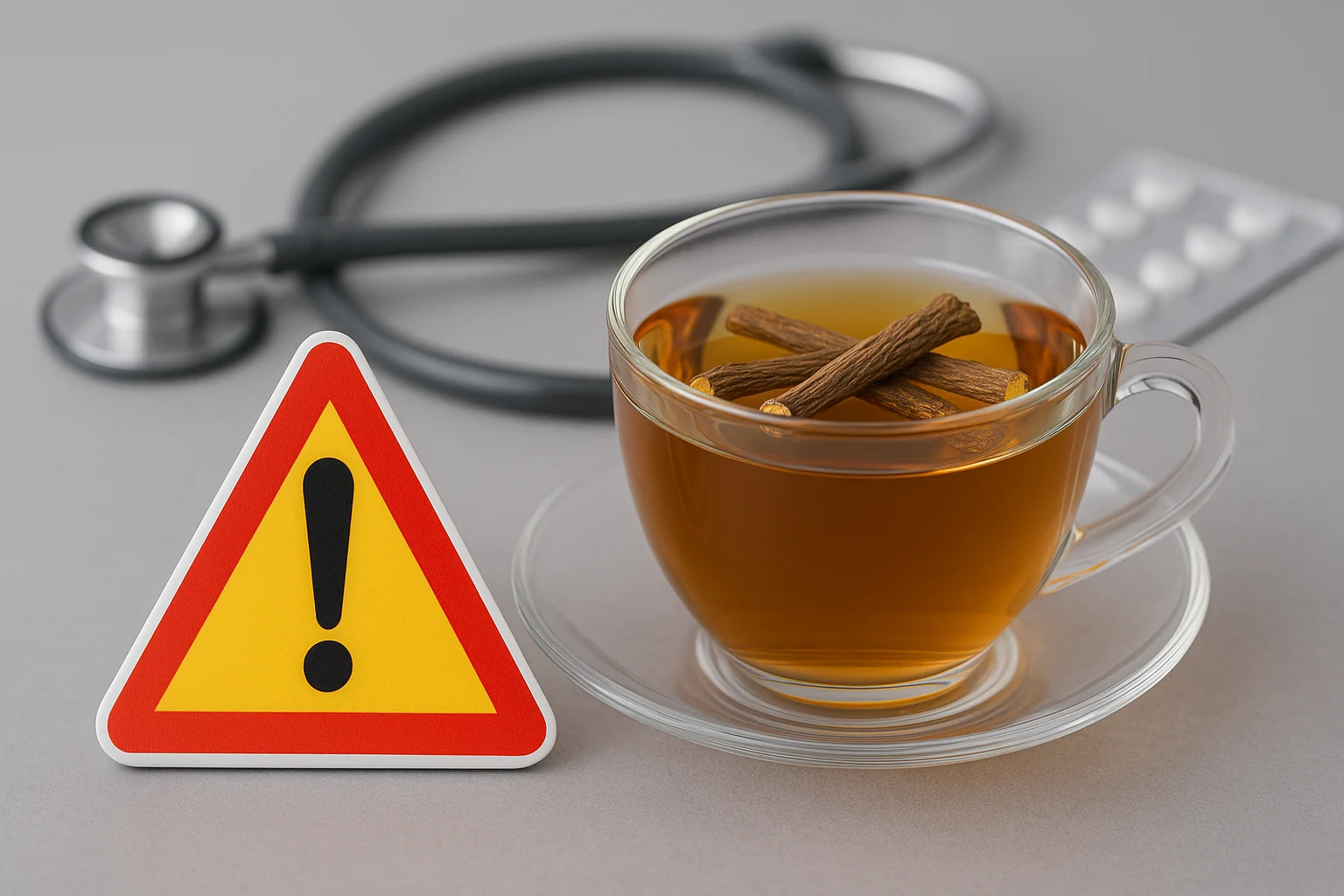
Regular licorice contains glycyrrhizin. NCCIH reports that glycyrrhizin can cause serious adverse effects—including irregular heartbeat and cardiac arrest—especially with large or long-term intake. Severe effects have also been reported with smaller amounts in people with hypertension or heart or kidney conditions.
Blood Pressure, Potassium, and Heart Rhythm
Glycyrrhizin can disturb fluid and electrolyte balance. Warning signs can include swelling, muscle weakness, or a racing or irregular heartbeat. If you have high blood pressure or a heart or kidney condition, do not treat regular licorice tea as a routine wellness drink.
Pregnancy and Breastfeeding
NCCIH says consuming large amounts of oral licorice extract during pregnancy is unsafe and that little is known about safety while breastfeeding. Do not assume that DGL automatically makes a licorice product appropriate during pregnancy or breastfeeding; use clinician guidance.
Medicine and Other Health Conditions
NCCIH reports interactions between licorice and corticosteroids and advises people taking any medicine to talk with a healthcare provider before using licorice or other herbal products. The current Traditional Medicinals licorice-root tea label also advises against use with diuretics, corticosteroids, digoxin/cardiac glycosides, potassium-depleting medicines, high blood pressure, heart disease, or impaired kidney or liver function.
How Long Is “Short Term”?
There is no universal tea duration that makes regular licorice risk-free. The currently verified Traditional Medicinals product says it may be used 1–3 cups per day but should not be drunk daily for more than four weeks. That is a product-specific direction, not a general dose for every licorice tea. NCCIH separately says oral DGL products might be safe for up to four months.
When in doubt—especially with medicine use, pregnancy, or blood-pressure, heart, kidney, or liver concerns—ask a clinician or pharmacist before using licorice regularly.
DGL vs. Regular Licorice
The key difference is glycyrrhizin:
- Regular licorice: contains glycyrrhizin, the compound linked to the major blood-pressure, electrolyte, and heart-rhythm risks.
- DGL (deglycyrrhizinated licorice): has glycyrrhizin removed. That lowers the concern tied specifically to glycyrrhizin, but it does not establish a digestive benefit or indefinite safety.
NCCIH says oral DGL might be safe for up to four months. Check the label for “DGL” or “deglycyrrhizinated licorice” rather than assuming a product is DGL because it is marketed for digestion.
When to Drink Licorice Tea
There is no well-established “best” time of day for licorice tea. If you use regular licorice, whether it is appropriate for you matters more than morning-versus-evening timing, so use the safety check above and follow the product label rather than treating timing as a way to make regular licorice safer.
DGL removes glycyrrhizin, but that does not prove a digestive benefit or indefinite safety. If you choose DGL, follow the product directions and use clinician guidance for ongoing symptoms or regular use.
If You Decide to Try It
Once the safety questions are settled, the reason to drink licorice tea is a straightforward one: it is a caffeine-free tea that tastes sweet without any sugar in it. That makes it useful in the evening, and it is a genuine option when you want something sweet and are not drinking sugar. No health claim required — that is simply what the drink is.
Two teas are worth knowing apart, because they are different products rather than different sizes of one.
The single-herb tea is the one the brewing guide above is written for — plain licorice root, 10–15 minute covered steep, and the label directions this article quotes throughout. The verified listing is a 96-bag six-pack, so it suits someone who already knows they like licorice rather than someone testing it.
Traditional Medicinals Organic Licorice Root Tea
Plain licorice root — the tea the brewing guide above is written for.
If you are trying licorice for the first time, a 16-bag box is the sensible size. Yogi Egyptian Licorice is a spiced blend rather than plain root — licorice with warming spices — and its directions call for a shorter 7-minute steep, so it is the softer introduction of the two.
Yogi Egyptian Licorice — 16 bags
A small box to find out whether you like it, before buying in bulk.
Either way, the precautions above still apply — the choice here is about flavour and quantity, not about which product is safer.
Frequently Asked Questions About Licorice Tea
Bottom Line: Is Licorice Tea Worth Drinking?
If you enjoy its naturally sweet flavor and decide to use it after considering the safety issues, licorice tea is better treated as an herbal beverage—not as a proven treatment. The evidence does not justify choosing it to treat a sore throat, digestive problems, stress, or another health condition.
The practical rule is simple: know whether the product is regular licorice or DGL, follow its label, keep glycyrrhizin-related risks ahead of timing or flavor, and use appropriate medical care for persistent symptoms. Choose licorice tea for the drink—not because a benefit list made it sound like medicine.
Disclaimer: This content is for informational purposes only and does not constitute medical advice. Always consult a qualified healthcare provider before using licorice tea, especially if you are pregnant, nursing, taking medication, or have a medical condition.