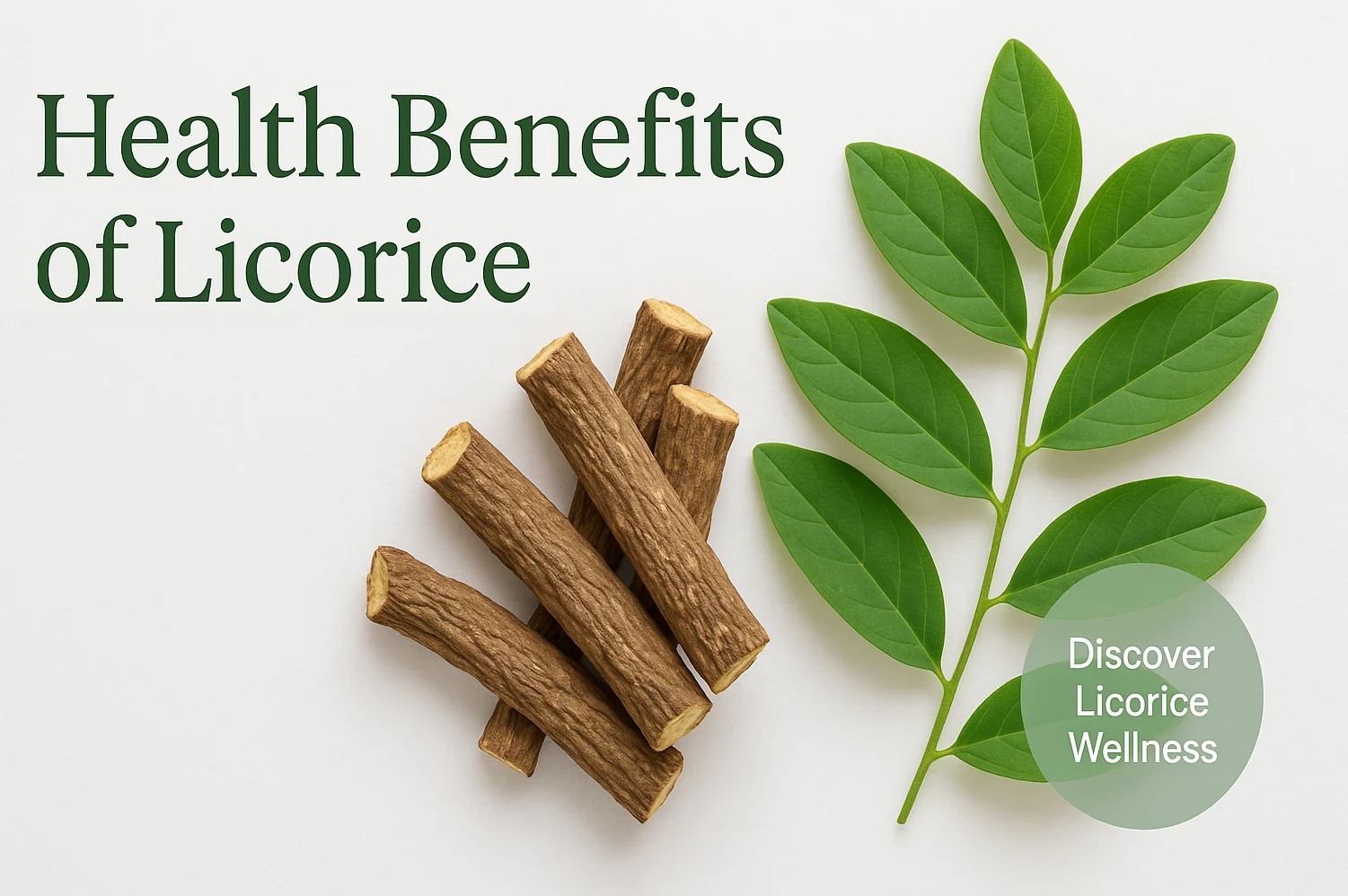
When people ask what benefits licorice may offer, the first useful question is: which form? Whole-root tea, extracts, DGL, topical products, and licorice-flavored candy can differ in both evidence and risk. Glycyrrhizin is the main reason whole-root oral products deserve extra caution: it can affect blood pressure and potassium, while DGL is processed to remove glycyrrhizin without proving the digestive benefits often claimed for it.
This guide answers the question behind most searches for licorice benefits: what does human evidence actually support, which claims are still thin, and what should you check before using a product? For a wider look at Ayurveda beyond licorice, see our Ayurvedic wellness guide.
This page contains paid/affiliate links. As an Amazon Associate we earn from qualifying purchases, and we may earn commissions from other partners—at no extra cost to you. Links marked with ‘#ad’ are affiliate links, meaning we may earn a commission at no extra cost to you. Learn more.
Table of Contents
- Licorice Benefits: The Short Answer
- What Benefits Licorice May Offer — and Where Evidence Is Thin
- Whole Root, DGL, Tea, Candy, and Topical Licorice Are Different
- Licorice Form & Safety Check
- Licorice Safety: Blood Pressure, Potassium, Pregnancy, and Medicines
- How to Evaluate a Licorice Product Before You Use It
- Licorice Benefits — FAQ
- Licorice Benefits: What Matters Most
Licorice Benefits: The Short Answer
If you came looking for licorice benefits, the honest answer is mixed. In its April 2025 review, the National Center for Complementary and Integrative Health (NCCIH) says some human studies exist, but there is not enough high-quality evidence to clearly support licorice for any health condition. Evidence is more specific for a few mouth, throat, and topical uses; evidence for digestive symptoms from products containing licorice alone remains unclear.
| Common claim | What current evidence supports | Practical takeaway |
|---|---|---|
| Digestive support | Unclear for licorice-only products. | Do not treat DGL or whole-root licorice as a proven reflux or ulcer treatment. |
| Mouth and throat comfort | Some evidence exists for specific rinses, gargles, or lozenges in defined settings. | That does not prove that any tea, candy, or supplement will have the same effect. |
| Topical skin use | Preliminary evidence suggests possible benefit for some skin conditions or burn healing. | Topical use has a different risk profile from swallowing licorice, but irritation can occur. |
| Stress, immunity, hormones, or “adrenal” support | No high-quality evidence establishes these broad wellness claims. | Treat mechanisms, laboratory findings, and traditional use as context—not proof of a clinical benefit. |
What Benefits Licorice May Offer — and Where Evidence Is Thin
Some mouth and throat uses have specific human evidence
NCCIH notes that licorice mouth rinses or gargles may reduce pain or ulcer size in recurrent canker sores, and that licorice gargles or lozenges used before surgery may reduce postoperative sore throat after intubation. These are narrow, preparation-specific uses. They are not evidence that ordinary black licorice candy or a generic supplement treats respiratory illness.
Topical evidence is still preliminary
Early human evidence suggests topical licorice preparations may help with some eczema symptoms or burn healing, but more research is needed. NCCIH also notes that short-term topical use may be safe for many people while still causing skin irritation in some.
Digestive claims are much less settled than they sound online
Licorice and DGL are frequently promoted for reflux, indigestion, and ulcers. The current NCCIH review is more cautious: it is unclear whether products containing licorice alone improve digestive symptoms. That matters because “DGL has less glycyrrhizin” is a safety distinction, not proof that DGL works for a digestive condition.
Traditional use and biological mechanisms are not the same as proven benefit
Traditional licorice herbal remedies appear in Ayurveda, Chinese medicine, and other systems, and researchers continue to study compounds such as glycyrrhizin and flavonoids. Those histories and mechanisms help explain why licorice is still studied, but many licorice wellness benefits described online still outrun the clinical evidence—especially broad claims about immunity, inflammation, stress, hormones, or “adrenal support.”
Whole Root, DGL, Tea, Candy, and Topical Licorice Are Different
Many confusing licorice health uses become easier to judge once you separate the form from the marketing. These products are not interchangeable.
| Form | Glycyrrhizin | Why it matters |
|---|---|---|
| Whole-root tea, extract, powder, or supplement | Usually contains glycyrrhizin; the amount can vary by product and preparation. | Blood-pressure, potassium, heart, kidney, pregnancy, and medication cautions matter most here. |
| DGL (deglycyrrhizinated licorice) | Processed to remove glycyrrhizin. | The safety profile is different, but lower glycyrrhizin does not establish effectiveness for reflux, ulcers, or other conditions. What a DGL label looks like. |
| Topical cream or gel | Systemic exposure is not the same as oral use. | Short-term topical use may be tolerated, but irritation is still possible and evidence remains preliminary. |
| “Licorice” candy or flavoring | Check the ingredient list. | NCCIH notes that many U.S. products sold as licorice use anise oil instead of actual licorice root. |
If tea is the form you are specifically considering, use our dedicated licorice tea guide for that narrower format rather than assuming advice for DGL, extracts, and tea is interchangeable.

Licorice Form & Safety Check
Choose the form you are considering and whether any common safety flag applies. This does not diagnose a condition or clear you to use licorice; it shows what deserves attention before you decide.
High blood pressure; heart or kidney disease; low potassium; pregnancy or breastfeeding; or prescription medicines.
Licorice Safety: Blood Pressure, Potassium, Pregnancy, and Medicines
For oral licorice, the safety question can matter more than the benefit claim. Glycyrrhizin can cause serious adverse effects, including abnormal heart rhythms, especially with high or prolonged exposure. NCCIH notes that severe effects have also been reported with smaller amounts in people who have high salt intake, hypertension, or heart or kidney conditions.
A 2024 meta-analysis of eight randomized trials involving 541 participants found that interventions dominated by glycyrrhizic acid increased both systolic and diastolic blood pressure. That does not tell you the risk from every individual product, but it reinforces that the blood-pressure warning is not merely theoretical.
Check before regular oral use: high blood pressure; heart or kidney disease; a history of low potassium; pregnancy or breastfeeding; or prescription medicines. NCCIH specifically reports interactions with corticosteroids and advises people taking medicines to discuss licorice with a health professional.
DGL deserves a separate sentence because it is easy to overread the label. NCCIH says oral products without glycyrrhizin might be safe for up to four months. “Might be safe” is not the same as “works,” and it does not make DGL a universal workaround for pregnancy, medications, or unexplained symptoms.
How to Evaluate a Licorice Product Before You Use It
You do not need a universal internet dose to make a better decision. A safer process is to verify what the product actually is, then decide whether its form and risk profile fit your situation.
- Read the ingredient label first. Look for actual licorice root (Glycyrrhiza) and whether the product states that glycyrrhizin has been removed.
- Match the form to the question. Evidence about a mouth rinse, topical gel, DGL product, or whole-root preparation should not be transferred automatically to another form.
- Screen for the safety flags above. If a condition, pregnancy, low potassium, or medication makes the decision less straightforward, use the exact label when you ask a clinician or pharmacist.
- Use the label or professional guidance instead of a generic dose from a blog. Glycyrrhizin content and preparation can vary, so a one-size-fits-all oral dosing rule would create false precision.
If DGL is the form you are comparing: Natural Factors DGL Licorice 400 mg — 180 chewable tablets is the verified product example used in this guide. It is deglycyrrhizinated, so it avoids the glycyrrhizin exposure discussed above; that does not prove it treats reflux, ulcers, or other digestive symptoms, and it is not a blanket safety clearance. Use the label and the safety checks above to decide whether it is even a product worth comparing for your situation.
Licorice Benefits — FAQ
Licorice Benefits: What Matters Most
The useful way to think about licorice is not “good herb or bad herb.” It is an evidence-and-form decision. A few specific uses have preliminary or limited human support, many broad wellness claims remain unproven, and oral glycyrrhizin can create meaningful safety problems for some people.
If your next question is specifically about tea, continue with our licorice tea guide. If you are considering a supplement or extract, bring the exact product label—especially its glycyrrhizin or DGL information—into the decision rather than relying on a generic benefit list.
Three questions are more useful than a long benefits list: What form is this? What does the evidence actually support for that form? What could make it a poor fit for me?
Disclaimer: This article is for informational purposes only and does not provide medical advice, diagnosis, or treatment. Licorice products vary by formulation. Oral glycyrrhizin can affect blood pressure, potassium, and medication safety; pregnancy, breastfeeding, heart or kidney conditions, high blood pressure, low potassium, or prescription medicines are reasons to get individualized guidance before regular use.