Wondering whether your answers lean more Vata, Pitta, or Kapha? This five-question ayurveda doshas quiz gives you a quick match based on traditional Ayurvedic descriptions of energy, appetite, stress response, temperature preference, and pace. Use it as a reflection, not a diagnosis.
Take the quiz first if that is what you came for. Then use the result sections to see what the label means, where this short quiz is limited, and what you may want to explore next. For a broader look at traditional routines, see our Ayurvedic daily practices guide.
Start the 5-question quizTable of Contents
- Take the Ayurveda Doshas Quiz
- What Vata, Pitta, and Kapha Mean
- What This Dosha Quiz Can—and Can’t—Tell You
- Compare the Three Dosha Patterns
- If Your Result Leaned Vata
- If Your Result Leaned Pitta
- If Your Result Leaned Kapha
- How to Use Your Result
- When Your Result Doesn’t Quite Fit
- Frequently Asked Questions
- Get the 10-Minute Chair Yoga Routine
- What to Do Next
Take the Ayurveda Doshas Quiz
Answer five quick questions about your usual patterns. The result is a simple reflection of traditional Ayurvedic descriptions, not a medical or diagnostic assessment.Choose the closest fit rather than trying to match every word.
Question 1 of 5
Question 2 of 5
Question 3 of 5
Question 4 of 5
Question 5 of 5
Your quiz pattern
A close score only means your answers were split across more than one pattern in this short quiz. Use the sections below for context, and treat ongoing health symptoms as health questions rather than dosha labels.
What Vata, Pitta, and Kapha Mean
Ayurveda is a traditional system from India. Within its framework, the five elements—space, air, fire, water, and earth—are grouped into three doshas. Vata is associated with air and space, Pitta with fire and water, and Kapha with earth and water. These are traditional categories, not biomedical measurements.
Ayurvedic writing also uses the term prakriti for a person’s constitutional pattern, often described through relative dosha tendencies. That idea is the source of the familiar phrase ayurvedic body type, but a five-question web quiz cannot establish a validated constitution. If you want more background before using these ideas in daily life, our Ayurvedic wellness guide gives the broader context.
What This Dosha Quiz Can—and Can’t—Tell You
The quiz is deliberately simple: each answer adds one point to Vata, Pitta, or Kapha. The highest count becomes your closest match; an equal score stays a mixed result. That makes the output easy to understand, but it also means the score is a lightweight reflection—not a measurement of exact dosha proportions.
That limitation matters. A 2025 critical review of Prakriti assessment tools found that none of the reviewed tools fully met the authors’ scale-development and validation criteria, although two showed partial readiness. Read the PubMed record. The U.S. National Center for Complementary and Integrative Health also notes that scientific evidence for Ayurvedic approaches is limited for many health conditions. See the NCCIH overview.
Use this dosha test guide as a simple comparison of traditional descriptions, not as a formal dosha assessment. Do not use the score to explain anxiety, digestive problems, sleep changes, pain, skin changes, weight changes, or other symptoms; those are health questions that deserve appropriate evaluation on their own.
Compare the Three Dosha Patterns
| Dosha | Traditional elements | Answers that add a point | How to read the result |
|---|---|---|---|
| Vata | Air + space | Changeable energy, variable appetite, restless stress response, seeking warmth, quick/adaptable pace | Your answers leaned toward the mobile and changeable qualities Ayurveda associates with Vata. |
| Pitta | Fire + water | Focused energy, strong appetite, intense stress response, preferring cool conditions, decisive pace | Your answers leaned toward the focused and intense qualities Ayurveda associates with Pitta. |
| Kapha | Earth + water | Steady energy, staying full longer, slowing or withdrawing under stress, preferring warm/dry conditions, patient pace | Your answers leaned toward the steady and grounded qualities Ayurveda associates with Kapha. |
If Your Result Leaned Vata
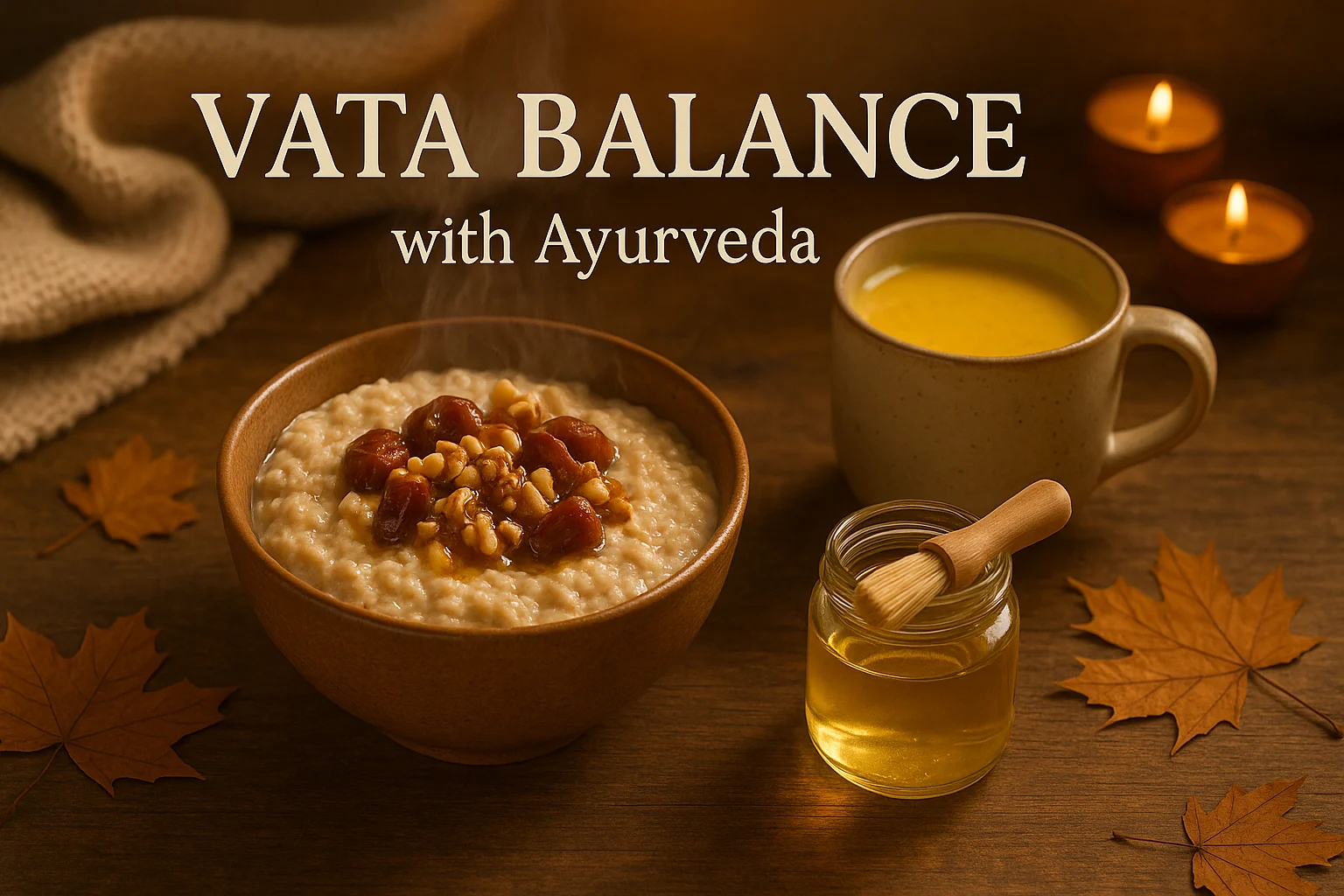
What your Vata result means: more of your answers matched the quiz’s Vata-coded options—changeable energy, a variable appetite, a restless or scattered stress response, seeking warmth, and a quick or adaptable pace. In traditional Ayurveda, Vata is associated with movement, lightness, coolness, and change.
If the description feels useful, treat it as a prompt to notice which kinds of routine help you feel settled. A regular schedule, comfortable warmth, quieter transitions, or gentle movement may be reasonable low-risk experiments when they suit you anyway. If you want a non-dosha movement option, try a gentle yoga sequence.
If Your Result Leaned Pitta
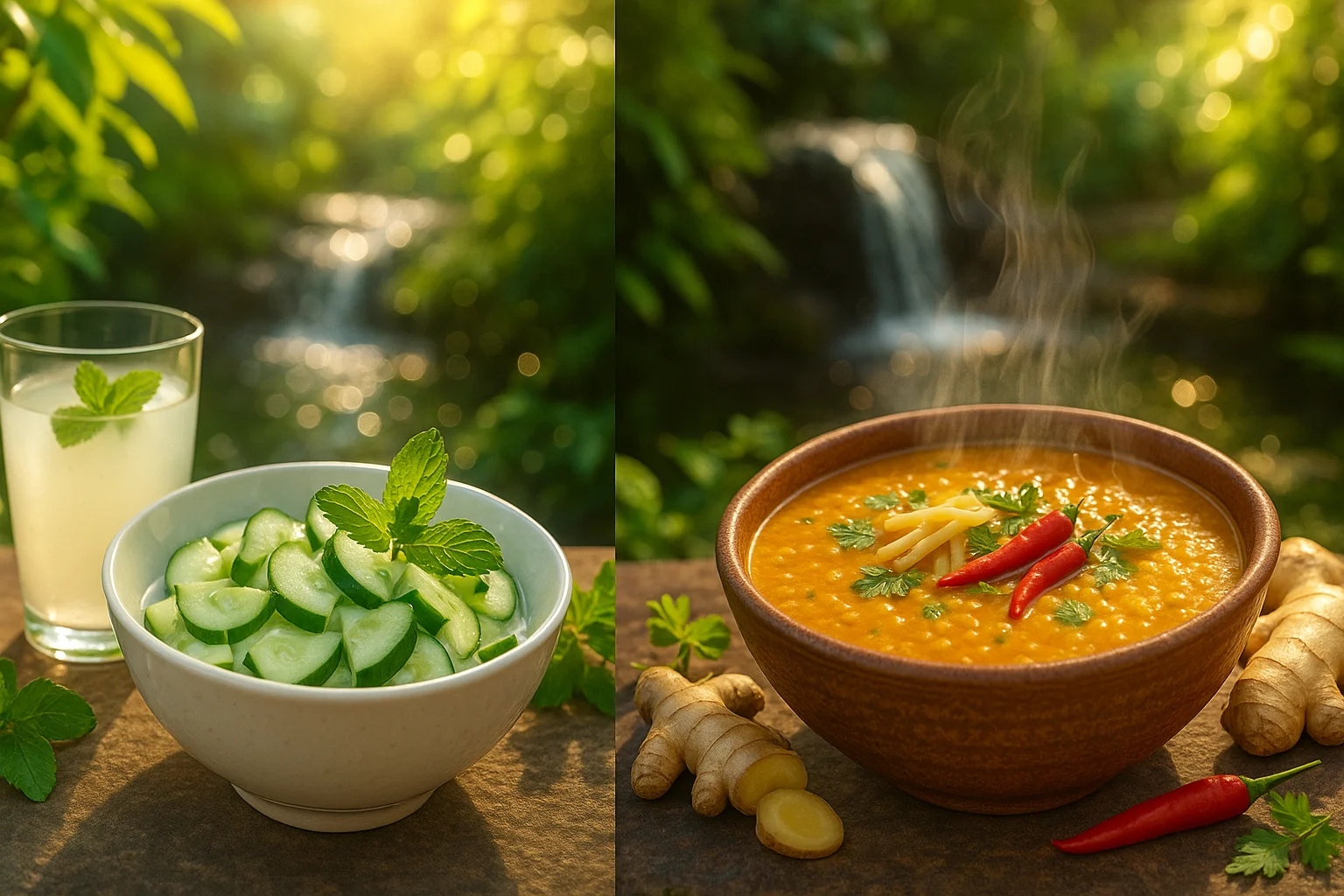
What your Pitta result means: more of your answers matched the quiz’s Pitta-coded options—focused energy, a strong appetite, an intense or irritable stress response, preferring cooler conditions, and a decisive pace. In traditional Ayurveda, Pitta is associated with heat, sharpness, focus, and transformation.
The safest way to use that result is descriptively: notice whether intensity and over-scheduling are familiar patterns, then choose ordinary habits that would help regardless of the label, such as taking breaks or using a calmer practice when you are already keyed up. For a practical non-dosha route, see our yoga for stress relief guide.
If Your Result Leaned Kapha
What your Kapha result means: more of your answers matched the quiz’s Kapha-coded options—steady energy, staying full longer, slowing down or withdrawing under stress, preferring warm and dry conditions, and a calm, consistent pace. In traditional Ayurveda, Kapha is associated with steadiness, heaviness, structure, and stability.
Use the label only if it helps you describe a pattern you already recognize. If variety, movement, or a clearer daily rhythm feels useful, you can experiment gently without treating the dosha as a medical explanation. You do not need to force diet rules, supplements, or intense exercise to “fix” a quiz score.
How to Use Your Result
Start with the specific answers you chose, not the label alone. A mixed result simply means your five answers were split; a one-point lead means the second pattern was close. Neither outcome tells you exact dosha percentages.
Then choose one low-risk next step that would make sense even without Ayurveda. That might be a steadier daily routine, gentler movement, more breathing room in a busy schedule, or simply noticing which conditions help you feel comfortable. If you want to explore traditional routines, keep the same boundary: treat them as tradition rather than as a substitute for medical care.
When Your Result Doesn’t Quite Fit
A result can feel off for ordinary reasons: none of the three choices described you perfectly, your answers depend on context, two patterns scored almost the same, or five questions simply did not capture much nuance. Do not force yourself into a category. Look back at the individual answers that did fit and ignore the parts that did not.
If what brought you here is a symptom or health concern, a stronger dosha label is not the solution. Use the quiz for cultural and self-reflective context, and use appropriate health care for medical questions.
Frequently Asked Questions
If you want one concrete routine to try after the quiz, this free chair-yoga PDF gives you a 10-minute morning practice to follow.
Get the 10-Minute Chair Yoga Routine
Confirm to get the routine and yoga tips. Unsubscribe anytime.
Something went wrong. Please check your email address and try again.
What to Do Next
If one pattern clearly won, read that result section and notice what genuinely resonates. If your score was mixed—or the result simply did not fit—that is useful information too. The point is not to make yourself match a category.
If you are curious about Ayurveda beyond the quiz, the Ayurvedic daily practices guide is the natural next step.
A useful quiz result should make your next step clearer, not make you squeeze yourself into a label.