Triphala is a traditional Ayurvedic formula associated with digestion and elimination. Modern wellness claims extend that list to “detox,” weight, inflammation, immunity, skin, eyes, and more—but human evidence is much narrower, and many popular benefit claims remain unproven.
Traditional use is not the same as proven benefit. This guide looks at the benefits Triphala is claimed to offer, separates traditional uses from what human research actually supports, explains where common claims outpace the evidence, and puts safety before dose or product choice. For the wider Ayurvedic context, see our guide to Ayurvedic daily practices.
If you are already considering taking it, you can jump to the quick safety check before reading about formats.
This page contains paid/affiliate links. As an Amazon Associate we earn from qualifying purchases, and we may earn commissions from other partners—at no extra cost to you. Links marked with ‘#ad’ are affiliate links, meaning we may earn a commission at no extra cost to you. Learn more.
Table of Contents
- What Triphala Is
- What Benefits Have Human Evidence?
- Does Triphala Detox the Body?
- Quick Safety Check
- Capsules vs Powder & Use
- How to Choose Quality
- FAQs
- Bottom Line
What Is Triphala?
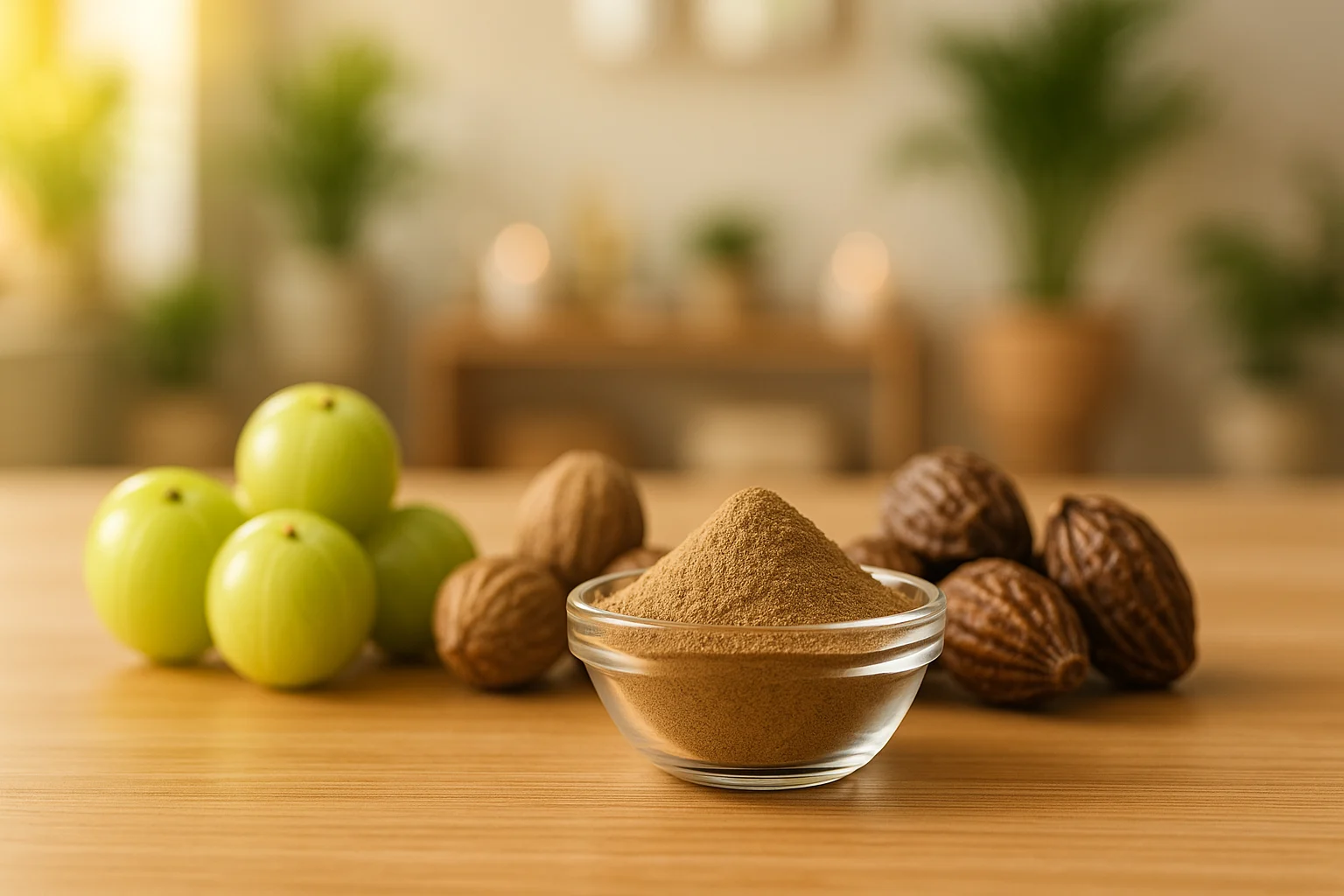
Triphala is an Ayurvedic herbal formula combining three dried fruits: Amalaki (amla), Bibhitaki, and Haritaki. In traditional Ayurveda, the blend is discussed in terms of digestion, elimination, rejuvenation, and balancing the doshas. These Ayurvedic Triphala uses belong to a traditional framework, not biomedical diagnoses.
- Amalaki (amla): one of the three fruits and a source of plant compounds with antioxidant activity.
- Bibhitaki: traditionally associated with cleansing and digestive support.
- Haritaki: traditionally associated with digestion and elimination.
If you want to explore the traditional dosha framework, use our dosha self-reflection quiz as a learning tool rather than a medical assessment.
What Triphala Benefits Have Human Evidence?
Across common Triphala health claims, the evidence is uneven. Memorial Sloan Kettering Cancer Center notes that human studies of Triphala are limited overall: gastrointestinal and inflammation claims rely heavily on preclinical evidence, cholesterol findings are limited and mixed, immune data are limited, and oral-health studies are more direct but still not definitive.
| Claim | What the evidence says | Practical takeaway |
|---|---|---|
| Digestion / regularity | Traditional use is well established, but high-quality human evidence for gastrointestinal benefits remains limited. | Do not treat a traditional digestive use as a proven treatment for constipation or another GI condition. |
| Weight, glucose, cholesterol | Small clinical studies and a systematic review report some favorable metabolic findings, but results vary and the evidence base is limited. | Triphala is not a substitute for evidence-based care for diabetes, high cholesterol, or weight management. |
| Oral health | Several small trials of Triphala mouthwash report reductions in plaque or gingival inflammation. | Mouthwash studies do not show that swallowing Triphala improves oral health or that a homemade rinse matches the studied formulations. |
| Inflammation | Preclinical studies are promising, but human evidence remains insufficient. | Do not use it as a treatment for inflammatory disease or persistent pain. |
| Immune, skin, eye, “anti-aging” | Direct human evidence for these outcomes is weak or insufficient. | These Triphala wellness claims should be treated as unproven rather than expected benefits. |
Digestion and Regularity
Digestive support is probably the claim most closely associated with Triphala in traditional use. That does not make the clinical answer settled. Memorial Sloan Kettering’s Triphala review says animal models suggest gastrointestinal effects but that human studies are lacking. If bowel habits change after taking it, that is an effect to notice—not proof that the supplement is “detoxing” you or correcting an underlying digestive problem.
Weight and Metabolic Markers
A 2021 systematic review found potentially favorable changes in some glucose, lipid, and anthropometric outcomes, while also emphasizing the need for larger, better-designed randomized trials. Other controlled research has found no benefit for measures such as cholesterol, BMI, or waist circumference in a specific Triphala-plus-guggul formulation. The reasonable conclusion is “interesting but unsettled,” not “weight-loss supplement.”
Oral Health Has Some Direct Human Research
Triphala mouthwash is one area where human studies exist. A systematic review of Triphala mouthrinse reported improvements in plaque-related gingival outcomes in the included trials. Those findings are specific to mouthwash preparations and short-term dental outcomes; they do not establish broad systemic benefits from capsules or powder, and they do not show that a homemade rinse is equivalent to the studied formulations.
Inflammation Claims
Laboratory and animal research can help explain why Triphala attracts interest, especially because the formula contains polyphenols and other plant compounds. But antioxidant or anti-inflammatory activity in a lab is not the same thing as a demonstrated clinical benefit. MSK says human studies for inflammation are lacking, so Triphala should not be treated as a proven remedy for inflammatory disease or everyday pain.
Eye, Skin, and Immune Claims
MSK describes immune evidence as limited, and there is not strong human evidence supporting routine Triphala use for clearer skin, better vision, or screen comfort. These are examples of claims that may sound plausible because of antioxidant activity without having convincing clinical proof for the outcome itself.
Does Triphala “Detox” the Body?
Not in the way “detox” is often marketed. Ayurveda uses the concept of ama within its own traditional framework, but that is not the same as a measurable biomedical toxin that Triphala has been shown to remove.
If Triphala changes stool frequency or consistency, that may feel like a cleanse. It still does not demonstrate that the supplement is clearing toxins from the liver, colon, blood, or tissues. The more durable way to read detox claims is: regularity is not proof of detoxification.
That distinction matters because a vague detox promise can make ordinary gastrointestinal effects sound like evidence of a broader health benefit.
Before choosing capsules or powder, check whether any of these three cautions apply to you.
Before You Try Triphala: A Quick Safety Check
Answer three questions that can flag reasons to check with a clinician or pharmacist before using Triphala. This tool cannot confirm that Triphala is safe for you or predict whether it will help.
Triphala Side Effects and Interaction Points to Know
This three-question check is intentionally incomplete. It is a prompt to slow down, not a medical clearance.
- Gastrointestinal effects can happen. MSK lists gastrointestinal side effects as a reported adverse reaction.
- Medication interactions are plausible. Triphala can inhibit CYP3A4 and CYP2D6 in laboratory testing, which may affect drugs metabolized by those enzymes.
- Pregnancy and breastfeeding deserve extra caution. NIH’s Office of Dietary Supplements advises caution with supplements in pregnancy or nursing because many have not been well studied in these groups.
- Stop and get advice if you react badly. New diarrhea, cramping, or another concerning reaction is a reason to pause rather than “push through” in search of a cleanse.
Tell your clinician or pharmacist about supplements you use, especially if you take prescription medicines, are preparing for surgery, are pregnant or breastfeeding, or are using a supplement to address a health condition. The NIH Office of Dietary Supplements gives the same general advice for dietary supplements.
Capsules vs Powder: Which Triphala Format Fits Your Routine?
Once safety is addressed, the choice between capsules and powder is mostly practical. Capsules are easier and avoid the strong taste; powder requires measuring and mixing but gives you more flexibility in how you prepare it. Neither format has been shown to offer greater health benefits simply because of its form.
| Format | Capsules |
Powder |
|---|---|---|
| Convenience | Pre-measured and easier to take away from home. | Needs measuring and mixing before use. |
| Taste | Usually avoids most of the direct taste. | You taste the blend, which some people find quite bitter. |
| Routine | May suit readers who prefer a simple, repeatable format. | May suit readers who prefer a more traditional preparation ritual. |
| Main trade-off | Less flexible to adjust than loose powder. | More preparation and cleanup. |
What About Triphala Dosage and Timing?
There is no single evidence-backed Triphala dosage or “best time” that is appropriate for everyone. Products and preparations differ, and research does not support a universal rule such as “take it at night for cleansing.” Use the product label as product-specific information and ask a clinician or pharmacist when your medicines, health conditions, pregnancy status, or symptoms make the decision less straightforward.
Avoid copying a dose from a testimonial, influencer, or someone else’s routine. If you develop diarrhea, cramping, or another adverse effect, treat that as a reason to stop and reassess rather than evidence that a detox is working.
How to Choose a Quality Triphala Product
Quality labels can help you screen a supplement, but none of them proves that Triphala will be safe or effective for you. The NIH Office of Dietary Supplements notes that supplements are not approved by FDA for safety and effectiveness before marketing in the same way medicines are.
- Check the ingredient list. A Triphala product should clearly identify Amalaki, Bibhitaki, and Haritaki and state the serving information rather than hiding basic composition behind vague marketing.
- Look for independent quality testing when available. ODS notes that seals from organizations such as USP, NSF, or ConsumerLab can indicate checks on manufacturing, label contents, and harmful contaminant levels. Those seals do not guarantee safety or effectiveness.
- Understand what “organic” does and does not mean. USDA Organic verifies production under organic standards. It does not mean “chemical-free,” and approved substances can still be used under those rules.
- Be wary of disease-treatment promises. A supplement marketed as a cure, cleanse, or treatment for a medical condition deserves more skepticism, not less.
If you prefer capsules, or if the safety check above flagged a reason to get individualized advice, skip this product route rather than changing format just to follow an affiliate recommendation.
Triphala FAQs
Bottom Line: Useful Tradition, Limited Human Evidence
Triphala has a long place in Ayurveda, but the modern evidence does not support treating it as an all-purpose detox, weight-loss, anti-inflammatory, eye, skin, or immune remedy. Some areas are worth watching—particularly oral-health research and preliminary metabolic findings—but uncertainty is still part of the decision.
If you choose to explore Triphala, start with the safety questions, use a clearly labeled product, and treat side effects or medication concerns as reasons to get individualized advice. If your interest is the wider Ayurvedic routine rather than this one supplement, continue with Ayurvedic daily practices.
The useful takeaway is not that Triphala “does everything”; it is knowing which claims are traditional, which have human evidence, and where uncertainty should change your decision.