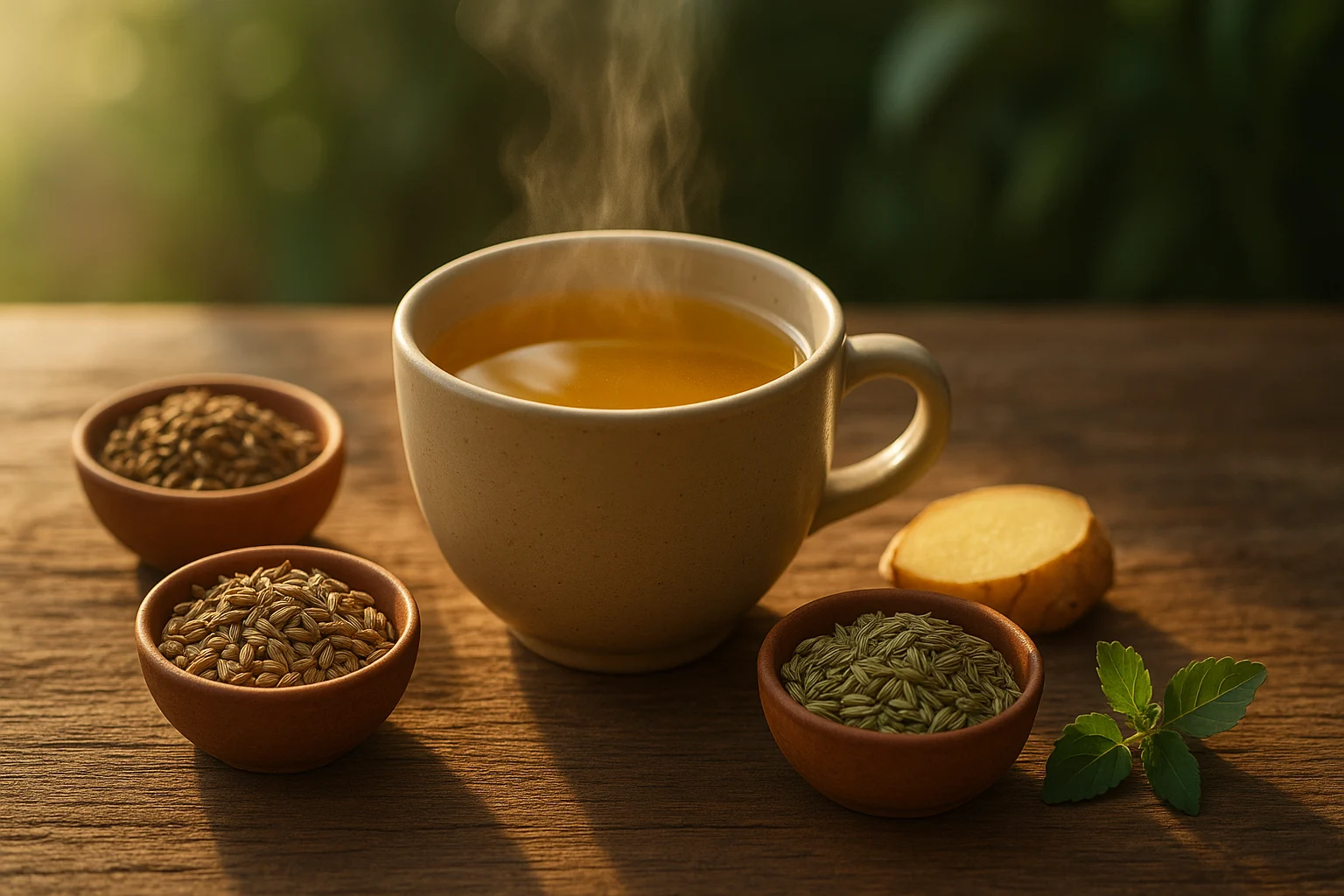
Ayurveda detox tea is a ritual, not a medical detox. The word “detox” is common in wellness language, but a cup of spiced tea has not been shown to remove toxins from the body. A more useful test is ordinary: does the tea taste good, sit comfortably with you, and make a warm ritual you actually enjoy?
If you want one place to start, make CCF tea—cumin, coriander, and fennel. The guide below gives you the base recipe, three dosha-inspired flavor variations, what the spices add, and the safety limits worth knowing.
Jump to the CCF RecipeThis post contains Amazon affiliate links. As an Amazon Associate, I earn from qualifying purchases. Learn more.
Table of Contents
- Realistic Detox Tea Benefits
- What Ayurveda Detox Tea Means
- Start with the CCF Recipe
- Dosha-Inspired Variations
- What the Core Ingredients Add
- Make It a Simple Ritual
- Frequently Asked Questions
- Free Chair Yoga Routine
- Start with One Cup
Detox Tea Benefits: The Realistic Version
If you are searching for detox tea benefits, separate the experience of drinking tea from the bigger claims attached to the word “detox.” A warm, flavorful drink can be pleasant and can fit into your normal hydration routine, but that is different from proving toxin removal, weight loss, clearer skin, or treatment for digestive symptoms.
Individual ingredients have been studied for specific uses, often as standardized supplements or extracts. Those findings do not automatically transfer to a home-brewed blend made with culinary amounts of several spices.
For this guide, the practical benefits are the ones you can judge directly: simple preparation, aroma, flavor, warmth, and whether the ritual feels worth keeping. If an ingredient bothers you—or if you are pregnant, take medicines, or manage a health condition—treat that as a reason to simplify the recipe and get individualized medical advice.
What Is Ayurveda Detox Tea?
Here, ayurvedic cleanse tea means a herbal or spice infusion inspired by Ayurvedic traditions. It is not the same thing as medical detoxification. The NCCIH evidence review on detoxes and cleanses does not support claims that detox diets or cleanses eliminate toxins from the body.
Ayurveda is a traditional Indian medical system that combines diet, lifestyle, movement, and herbal preparations. The NCCIH overview of Ayurvedic medicine notes that scientific evidence is limited for many health claims, so this article treats the tradition as context for flavor and ritual rather than as proof that a particular tea diagnoses, balances, or treats a condition. In other words, the herbal detox tea label describes the style of drink here—not a proven physiological detox.
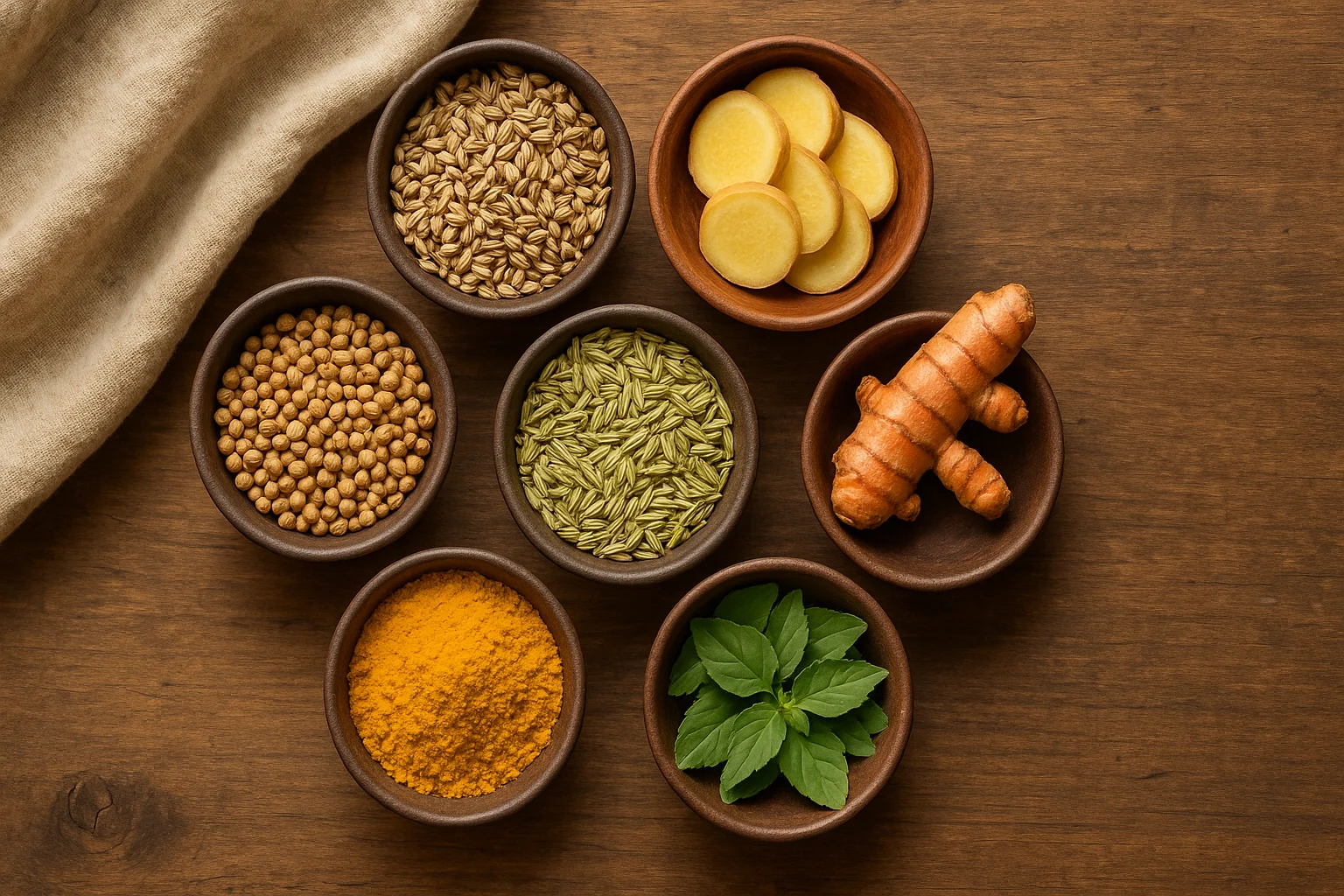
Ayurveda Detox Tea Recipe: Start with CCF
CCF tea is the simplest starting point because the recipe is easy to remember: equal parts cumin, coriander, and fennel. Make this version first before deciding whether you need a more elaborate blend.
CCF Tea Recipe: Simple Three-Spice Brew
Why choose it: It is mild, savory-aromatic, and simple enough to batch without turning the cup into a medical “detox.”
Ingredients:
- 1 tsp whole cumin seeds
- 1 tsp whole coriander seeds
- 1 tsp whole fennel seeds
- 4-5 cups water
- Optional: a thin ginger slice or a small squeeze of lemon or lime
Whole seeds are easiest to strain cleanly here; ground spices tend to leave more sediment in the cup.
Instructions:
- Lightly crush the seeds.
- Bring the water to a boil, then add the seeds.
- Cover and simmer for 10-15 minutes.
- Strain through a fine-mesh tea strainer.
- Drink it warm, or let it cool to a comfortable temperature.
One-mug version: Use ¼ tsp each cumin, coriander, and fennel with about 1¼ cups water, then follow the same simmer-and-strain method.
Pre-mixed option: Banyan Botanicals CCF loose blend combines cumin, coriander, and fennel so you do not have to measure three separate spices; you still brew and strain it like tea.
Dosha-Inspired Tea Variations: Flavor, Not Diagnosis
Ayurveda traditionally describes Vata, Pitta, and Kapha as organizing patterns. If you enjoy that framework, use it as a way to explore flavor—not as a medical diagnosis or a promise that one tea will treat a symptom. You do not need to identify a dosha to use these variations; choose the flavor profile that sounds best to you.
Vata-Style Warming Variation
Flavor: Warm, peppery, and aromatic. Simmer 4 cups of water with a 1-inch slice of ginger, ½ tsp each cumin and fennel, ¼ tsp black peppercorns, and 1-2 tulsi leaves for 10-15 minutes, then strain.
Pitta-Style Mint and Rose Variation
Flavor: Light, fresh, and floral. Simmer 4 cups of water with 1 tsp each coriander and fennel, ½ tsp dried mint, and 2-3 culinary rose petals for 8-10 minutes, then strain.
Kapha-Style Spiced Variation
Flavor: The boldest of the three. Simmer 4 cups of water with a 1-inch slice of ginger, ½ tsp black peppercorns, ¼ tsp each cloves and cinnamon, and 1 tulsi tea bag for about 15 minutes, then strain.
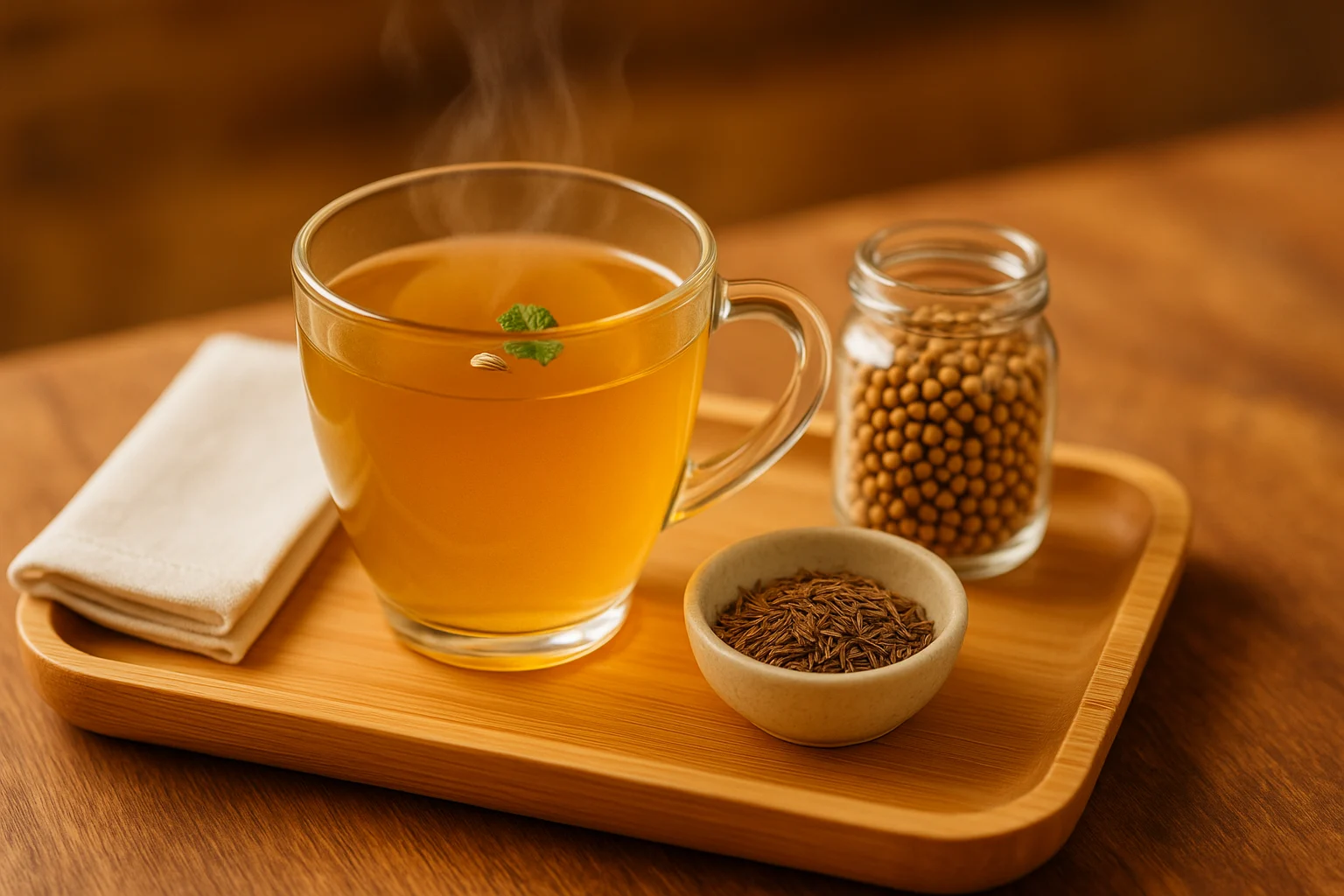
Core Tea Ingredients: What They Add
Traditional use can be useful context, but it is not the same as clinical evidence. In this recipe, the spices first need to earn their place through flavor and practicality.
Ginger: Sharp and warming. Research on ginger covers specific uses and often studies supplements rather than food amounts. A 2019 Phytotherapy Research study examined ginger supplementation and inflammatory/immune gene expression in people with rheumatoid arthritis; it does not show that a slice of ginger tea generally “fights inflammation.” See NCCIH’s ginger fact sheet for an evidence overview.
Fennel: Mildly sweet and anise-like. It softens sharper spices and helps give CCF its distinctive aroma.
Cumin: Earthy and savory. It makes the blend taste more substantial without needing a “cleansing” claim.
Coriander: Lighter and more citrusy than cumin, which keeps the CCF blend from tasting too heavy.
Tulsi: Herbal and slightly peppery, with a long history of traditional use.
Make the Tea a Simple Ritual
If you want the tea to become a habit, keep the routine flexible instead of following a “cleanse” schedule:
- Timing: Drink it when a warm tea fits your day; it does not need to replace coffee, control appetite, or follow a strict before-meals rule.
- Taste: Start with CCF, then add ginger for more spice or mint for a fresher cup.
- Hydration: Let tea be one drink in the day rather than the whole hydration plan.
- Wind-down: If a warm caffeine-free drink feels relaxing in the evening, keep the ingredients simple and comfortable for you.
The tea is optional. Food, hydration, movement, sleep, and appropriate medical care matter more than any cleanse label. If you want to go beyond tea, our Ayurvedic wellness guide walks through low-risk daily practices, food, movement, and routine. Enjoy the cup if you like it, but do not make it carry a job that belongs to the rest of your routine or to healthcare.
Frequently Asked Questions
If you want a simple movement practice alongside the rest of your routine, the free Stiff Mornings PDF gives you a 10-minute chair-yoga routine to try.
Get the 10-Minute Chair Yoga Routine
Confirm to get the routine and yoga tips. Unsubscribe anytime.
Something went wrong. Please check your email address and try again.
Start with One Cup, Not a Cleanse
Make the CCF recipe once and judge it on ordinary things: flavor, comfort, and whether you would genuinely make it again. If the cup tastes too earthy, use a little less cumin next time; if it feels too spicy, leave out the optional ginger. If you simply do not enjoy it, stop there—the tea does not need to become a daily habit.
If CCF simply isn’t your flavor, compare it with other Ayurveda-inspired options in our best Ayurvedic teas guide.