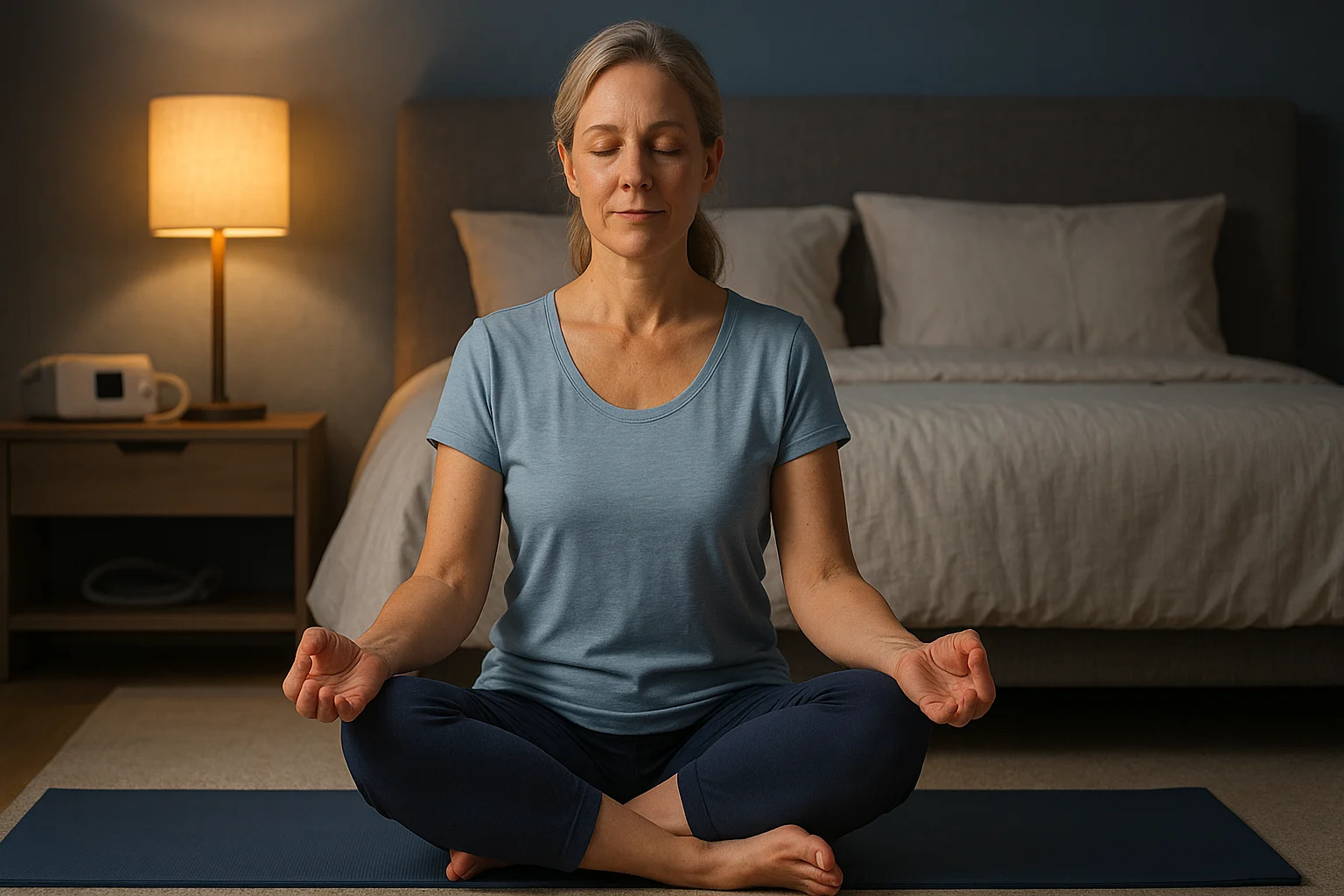
Sleep apnea needs medical treatment. Yoga cannot keep your airway open or replace CPAP/PAP, an oral device, or other prescribed care. What a gentle bedtime practice can do is help with a different problem: settling your body and attention before sleep.
If you’re looking for yoga for sleep apnea, use this page as a short wind-down, not a treatment: two gentle breathing practices, five gentle pose options, and a routine builder so you can choose what feels realistic tonight. I’d keep the goal small: finish a little calmer and more comfortable. If you want broader guidance on adapting yoga around health conditions, see our guide to yoga for specialized health needs.
Build Your Bedtime RoutineTable of Contents
- What Yoga Can—and Can’t—Do for Sleep Apnea
- Safety Tips Before You Start
- 2 Gentle Breathing Practices for Bedtime
- 5 Gentle Bedtime Yoga Poses
- Build Your Gentle Bedtime Routine
- Sleep Habits That Can Support Your Treatment
- Yoga for Apnea: Frequently Asked Questions
- Keep the Goal Small
What Yoga Can—and Can’t—Do for Sleep Apnea
The distinction matters because sleep apnea is a breathing disorder during sleep, not a bedtime-tension problem. The NHLBI overview of sleep apnea explains that obstructive sleep apnea (OSA) happens when the upper airway becomes blocked, while central sleep apnea (CSA) happens when the brain does not send the signals needed to breathe. Snoring or gasping during sleep and excessive daytime sleepiness can be clues, and untreated sleep apnea can lead to serious health problems.
Where yoga may fit
Yoga is not an established treatment for sleep apnea. Research on pranayama is still limited, and the programs studied are much more structured than this five-pose bedtime routine. A 2026 randomized trial of 34 adults with mild-to-moderate obstructive sleep apnea found better sleep quality, daytime sleepiness, fatigue, and several quality-of-life measures after an eight-week pranayama program. But the program involved 45 minutes of practice a day plus regular physiotherapist supervision, people using CPAP or mandibular devices were excluded, and AHI was not remeasured after training. That supports pranayama as a possible adjunct worth further study—not evidence that the short routine below treats apnea or keeps your airway open.
- Creates a repeatable wind-down cue: A short practice can mark the transition from a busy day toward sleep.
- Gives you gentle ways to settle: Slow, unforced breathing and supported poses can help you focus on the breath and ease ordinary end-of-day tension without trying to “fix” apnea.
- Fits beside—not instead of—treatment: Use it as a relaxation habit alongside healthy sleep habits and prescribed care. For broader relaxation practice, see our guide on yoga for stress relief.
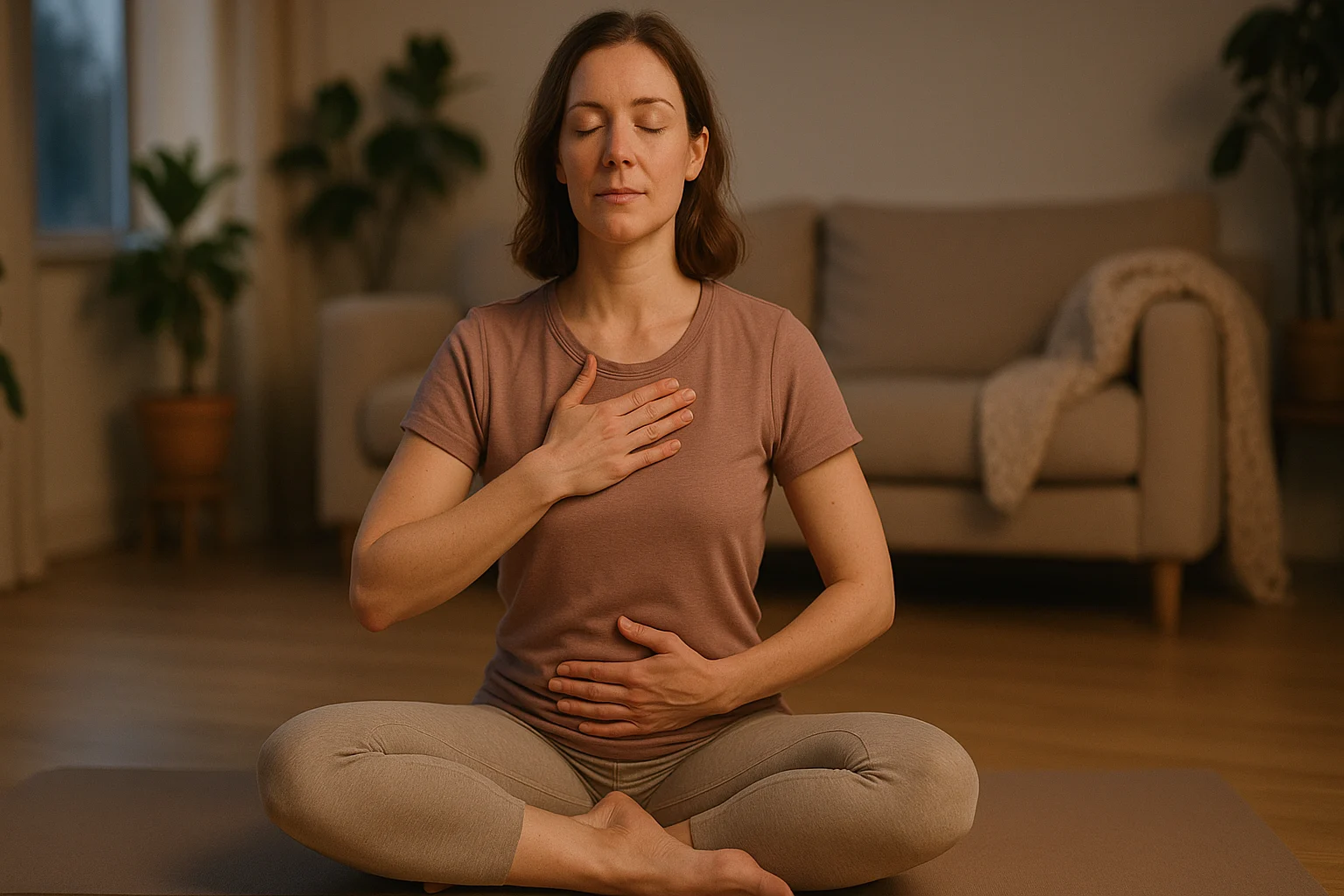
Sleep Apnea Yoga Safety: Before You Start
This bedtime practice is optional support, not sleep-apnea treatment. Keep using PAP/CPAP, oral devices, medicines, or other care exactly as prescribed. Move gently and stop if a position makes breathing feel harder, causes dizziness, or hurts. If your symptoms are new, worsening, or untreated, talk with a healthcare professional or sleep specialist rather than relying on yoga.
2 Gentle Breathing Practices for Bedtime
If you came looking for breathing exercises for sleep apnea, keep the goal narrow: use these practices for relaxation and breath awareness, not as airway treatment. Keep every breath easy and unforced. Start with the two simple techniques below, or explore more in our beginner breathwork guide:
Diaphragmatic breathing (belly breathing)
Use it when: you want the simplest option and can breathe comfortably without effort. The goal is not to take the biggest breath possible; it is to notice the belly and lower ribs moving while the pace stays easy.
How to do it:
- Lie on your back with knees bent, or sit upright. Place one hand on your chest and one on your belly.
- Breathe in through your nose and let the belly rise while the chest stays mostly still.
- Exhale slowly through the nose or mouth and let the belly fall.
- Continue comfortably for up to 5–10 minutes without trying to make each breath deeper.
Make it easier: If the exercise starts to feel effortful, return to your normal breathing and simply notice the belly moving.
Nadi Shodhana (alternate nostril breathing)
Use it when: you want a little more structure and both nostrils feel open enough to practice comfortably. It gives your attention a simple pattern to follow without asking for forceful or extra-deep breathing.
How to do it:
- Sit tall. With the right hand, rest the index and middle fingers between the brows; use the thumb to close the right nostril and the ring finger to close the left.
- Close the right nostril and inhale through the left. Close the left and exhale through the right.
- Inhale through the right, close it, and exhale through the left. That is one round; repeat for 5–10 comfortable rounds.
Make it easier: Keep the breath light and unforced. If one nostril is blocked or the pattern feels uncomfortable, skip it and return to normal breathing.
5 Gentle Bedtime Yoga Poses
These five gentle options give you different ways to settle before bed:
| Pose | Best fit tonight | Duration |
|---|---|---|
| Supine Bound Angle | Supported reclining when lying back feels comfortable | 5–10 min |
| Legs Up the Wall | Low-effort rest with wall or chair support | 5–15 min |
| Child’s Pose | Supported forward rest when kneeling feels comfortable | 3–5 min |
| Easy Pose + Neck & Shoulder Stretches | Seated option when neck and shoulder tension is the main issue | 3–5 min |
| Corpse Pose | Simple full-body resting finish | 5–10 min |
1. Supine Bound Angle Pose (Supta Baddha Konasana)
Use it when: reclining feels comfortable and you want a supported resting shape without turning bedtime into a stretch session.
How to do it:
- Lie on your back. Bring the soles of the feet together and let the knees fall outward.
- Support the knees with pillows. Rest the arms by your sides or place a hand on the belly.
- Stay for 5–10 minutes with natural, unforced breathing.
Make it easier: Add pillows or a bolster under the knees or upper body. If lying flat makes breathing feel harder, choose another resting position that feels easier.
2. Legs Up the Wall Pose (Viparita Karani)
Use it when: you want very little active movement and getting down to the floor and back up again is comfortable for you.
How to do it:
- Sit with one hip at the wall and swing the legs up so your body forms an L shape.
- Use a pillow for comfort if you like, and let the arms rest easily by your sides.
- Stay for 5–15 minutes and let the breath remain natural.
Make it easier: No free wall space—or don’t want to get that close to one? Rest your calves on a chair instead.
3. Child’s Pose (Balasana)
Use it when: kneeling and folding forward feel roomy rather than cramped, and you like a more enclosed resting shape.
How to do it:
- Kneel, bring the big toes together, and widen the knees. Fold the torso forward.
- Rest the forehead on the mat or a pillow; reach the arms forward or tuck them by your sides.
- Stay for 3–5 minutes with natural breathing.
Make it easier: Hug a pillow or bolster under the chest if the hips or back need more support. If folding forward makes breathing feel cramped, skip this pose. For more supported options, see our recovery yoga guide.
4. Easy Pose (Sukhasana) with neck & shoulder stretches
Use it when: neck or shoulder tension is the main thing you want to settle and you would rather stay seated.
How to do it:
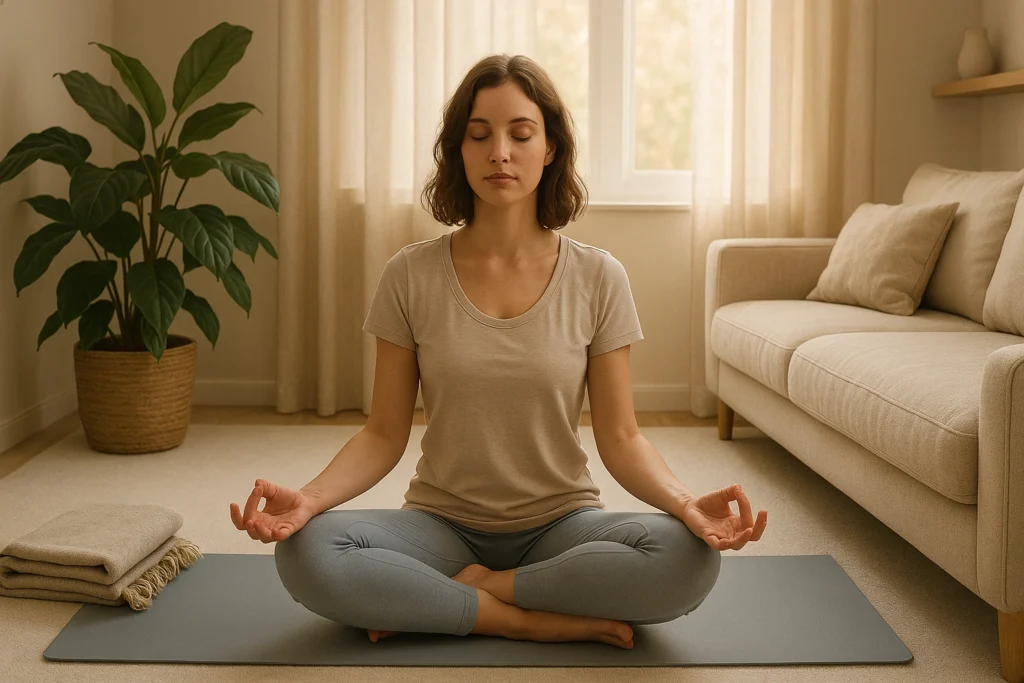
- Sit in Easy Pose on a cushion, or sit upright in a chair if that is more comfortable.
- Roll the shoulders 5–10 times forward, then 5–10 times back.
- Let the right ear move gently toward the right shoulder for 3 easy breaths, then switch sides.
- Look left, then right, and finally lower the chin toward the chest for a few slow repetitions.
Make it easier: Keep every movement small enough that you can breathe normally; there is no need to chase a deeper stretch.
5. Corpse Pose (Savasana)
Use it when: you want the simplest possible finish and lying on your back feels comfortable.
How to do it:
- Lie back with the legs extended and the feet relaxed outward.
- Rest the arms by your sides. Use a pillow under the head or knees if that makes the position easier.
- Stay for 5–10 minutes and let the breath return to its natural rhythm.
Make it easier: If lying flat does not feel good, choose another comfortable resting position. A short body scan can give your attention something quiet to follow without controlling the breath.
You do not need all five poses. If choosing is the hard part, use the routine builder below to turn the options into one short plan for tonight.
Build Your Gentle Bedtime Routine
Answer three quick questions to build a short bedtime wind-down from the practices above. This relaxation tool does not assess or treat sleep apnea.
Question 1 of 3
What would you most like to settle before bed?
How much movement feels comfortable right now?
How much time do you have tonight?
Sleep Habits That Can Support Your Treatment
Pair bedtime yoga with habits that current sleep-apnea guidance actually supports. The NHLBI sleep-apnea treatment guidance recommends healthy sleep habits alongside prescribed care:
- Keep a steady schedule: aim for a consistent sleep and wake time, including weekends.
- Make the room sleep-friendly: keep it quiet, cool, and dark or dim.
- Use the last hour to wind down: reduce bright artificial light and screen exposure when you can.
- Be careful with evening intake: avoid heavy meals and alcohol before bed, and avoid caffeine late enough that it will not interfere with sleep.
- Discuss weight if it is relevant to you: maintaining a healthy weight can be part of sleep-apnea treatment when excess weight contributes to OSA.
- Ask about sleep position: a clinician may recommend side sleeping rather than sleeping on your back; use pillows only for comfort and positioning.
If the physical routine feels easy but your mind still stays busy, our mindfulness stress-relief guide offers non-pose ways to wind down.
Yoga for Apnea: Frequently Asked Questions
Keep the Goal Small
For tonight, choose the shortest routine you are likely to repeat—one comfortable breathing practice, one supported pose, or the 5-minute result from the routine builder. If you finish a little calmer and more comfortable, the routine has done its job. Let your prescribed treatment handle the apnea; yoga does not need to do more than that.
If the seated options on this page felt most realistic, this gives you a chair-based practice for mornings too.
Get the 10-Minute Chair Yoga Routine
Confirm to get the routine and yoga tips. Unsubscribe anytime.
Something went wrong. Please check your email address and try again.