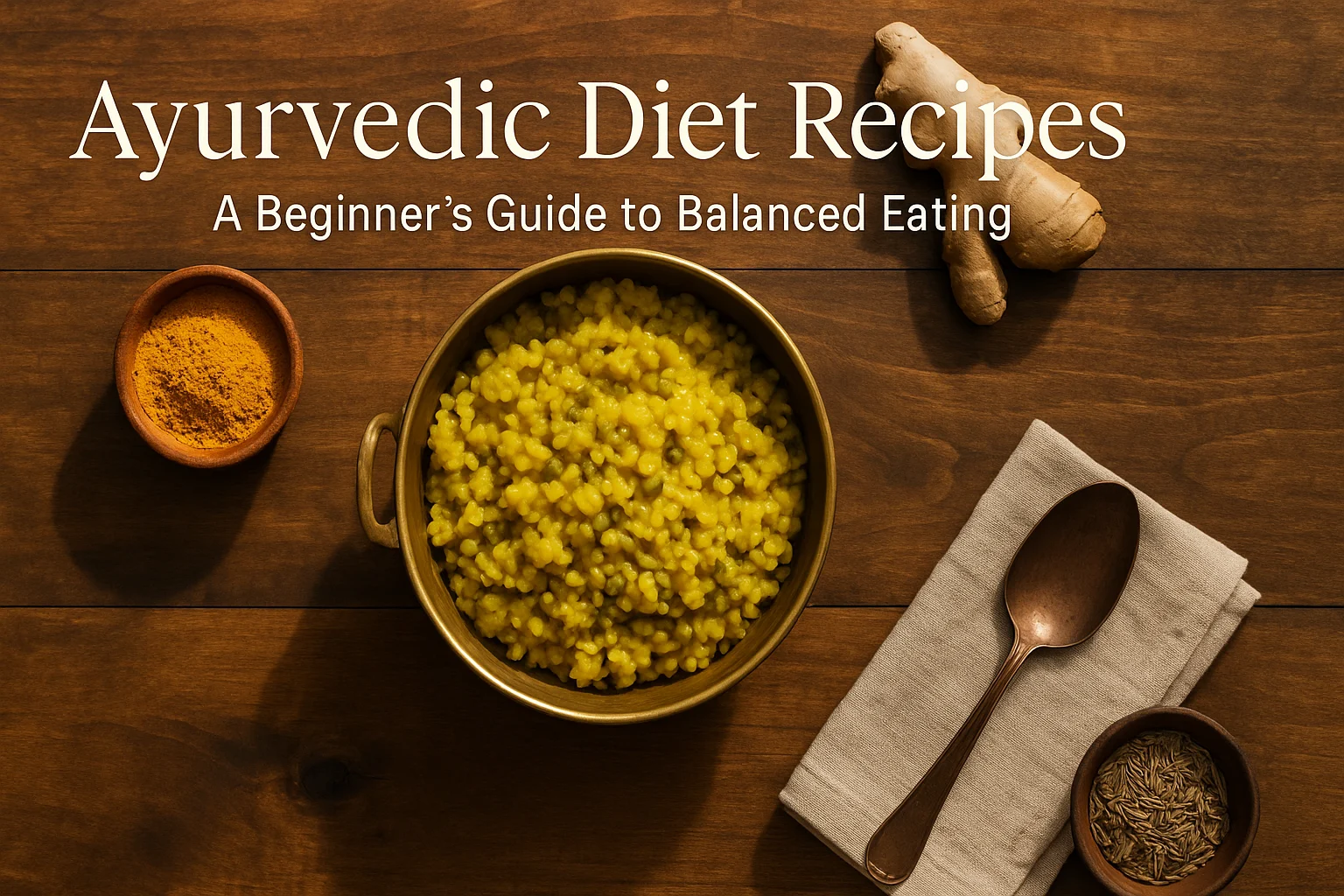
You do not need to know your dosha before you cook. Start with six beginner-friendly Ayurvedic diet recipes—from spiced oatmeal and kitchari to lentil soup and quinoa salad—and use the same pantry for more Ayurvedic meal ideas. If you want help choosing, use the recipe finder by meal type first and add a dosha preference only if it helps.
Ayurveda traditionally uses ideas such as the six tastes, season, dosha, and agni to organize food choices. Here, those ideas are treated as traditional cooking frameworks—not medical diagnoses or proven treatments. For a broader introduction to doshas, daily routines, and seasonal practices, see our Ayurvedic wellness guide.
Use the Recipe FinderThis post contains affiliate links. If you purchase through them, we may earn a commission at no extra cost to you. As an Amazon Associate, I earn from qualifying purchases. Learn more.
Table of Contents
- How to Use These Ayurvedic Recipes
- Choose an Ayurvedic Recipe for Today
- Six Beginner-Friendly Recipes
- Build More Ayurvedic Meals With These Staples
- Traditional Ayurvedic Ideas Behind the Recipes
- FAQs About Ayurvedic Meals
- Start With One Recipe, Then Adjust
How to Use These Ayurvedic Recipes
- Start with the meal you want: Pick breakfast, a warm bowl or soup, or a lighter meal before choosing a dosha preference.
- Treat dosha as optional: Use Vata, Pitta, or Kapha as a traditional cooking preference if it helps; choose “I’m not sure” if it does not.
- Build flavor deliberately: Grains, legumes, vegetables, herbs, and spices do most of the practical work in these recipes.
- Adjust for your own tolerance: Traditional food-pairing ideas can guide experimentation, but they do not need to become rigid rules.
Choose an Ayurvedic Recipe for Today
Pick the kind of meal you want first, then add a traditional dosha preference—or choose “I’m not sure.” This is a recipe filter, not a dosha assessment.
What kind of meal do you want?
Would you like to use a dosha preference?
Choose two options to see a recipe.
Six Beginner-Friendly Ayurvedic Diet Recipes
Warming Spiced Oatmeal (Vata/Kapha Style)
A warm oatmeal with cinnamon, cardamom, and optional ginger for an easy breakfast.
Yield: 1 serving | Prep Time: | Cook Time:
Ingredients
- ½ cup rolled oats
- 1 cup water or unsweetened plant milk
- Pinch of cinnamon
- Pinch of cardamom
- Small piece of fresh ginger, grated (optional, for a spicier version)
- 1 tsp ghee (optional)
- Optional toppings: chopped almonds, chopped dates, or diced cooked apple
Instructions
- Combine oats, water/milk, cinnamon, cardamom, and ginger in a saucepan.
- Bring to a boil, then simmer for 5-7 minutes, stirring occasionally.
- Stir in ghee, if using.
- Top with almonds, dates, or apple. Serve warm.
Cooling Cardamom Rice Pudding (Pitta Style)
A creamy rice pudding with cardamom, plus optional saffron and rosewater.
Yield: 1 serving | Prep Time: | Cook Time:
Ingredients
- ¼ cup basmati rice, rinsed
- 1½ cups water or milk
- 2-3 green cardamom pods or ¼ tsp ground cardamom
- 1 tsp maple syrup or jaggery (optional)
- Pinch of saffron (optional)
- Few drops of rosewater (optional)
Instructions
- Combine rice, water/milk, and cardamom in a saucepan.
- Boil, then simmer for 20-25 minutes, stirring occasionally.
- Remove from heat, add sweetener, saffron, and rosewater.
- Serve warm or slightly cooled.
Classic Kitchari (Tri-Dosha Style)
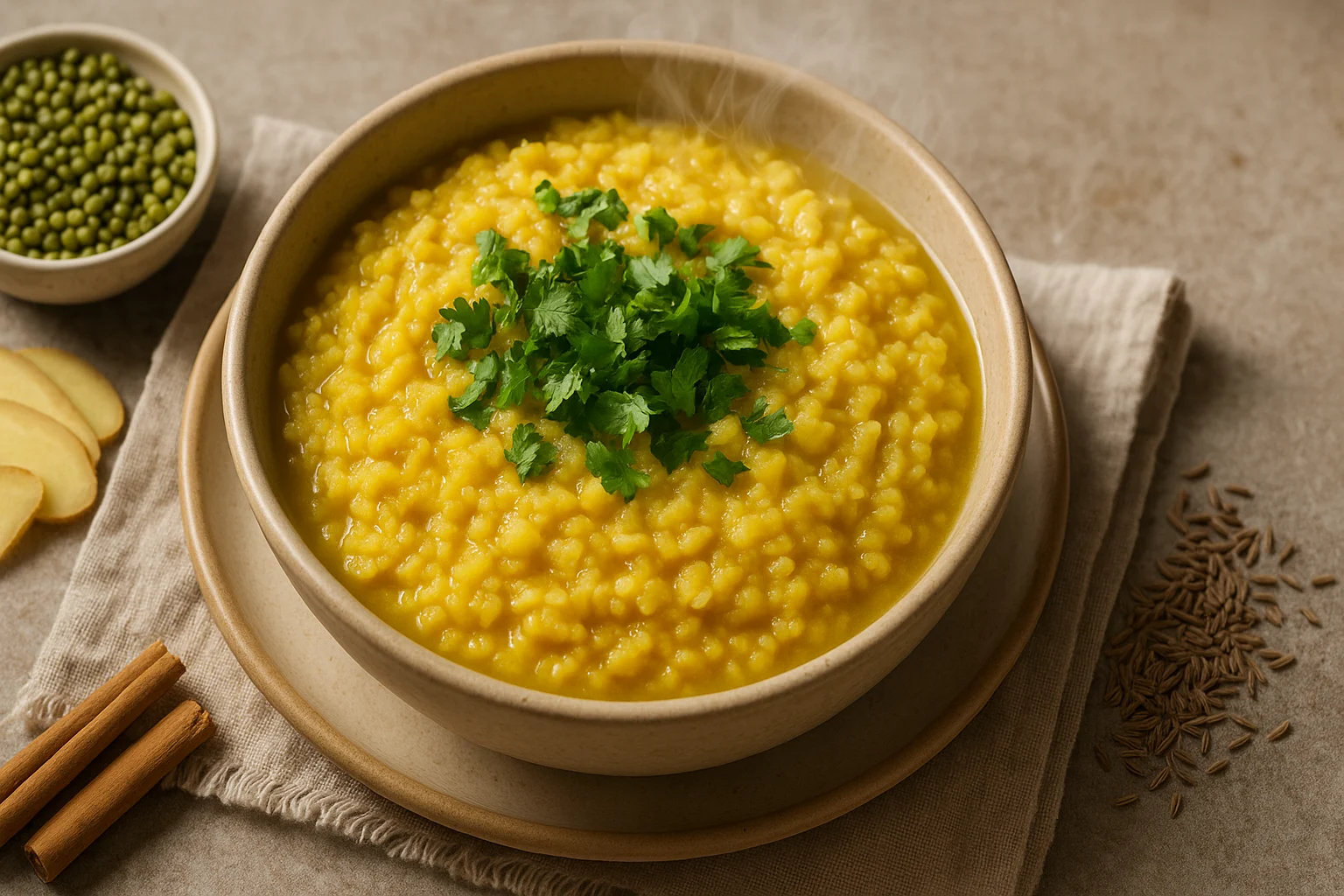
A warm rice-and-mung-dal staple in Ayurvedic cooking.
Yield: 4 servings | Prep Time: | Cook Time:
Ingredients
- 1 cup yellow split mung dal, soaked and rinsed
- ½ cup basmati rice, rinsed
- 6 cups water
- 2 tbsp ghee
- 1 tsp cumin seeds
- ½ tsp black mustard seeds (optional)
- ½ tsp turmeric powder
- 1 tsp grated fresh ginger
- ¼ tsp asafoetida (hing)
- ½ tsp ground coriander
- ½ tsp ground fennel
- 2 cups chopped seasonal vegetables
- Salt to taste
- Fresh cilantro for garnish
Instructions
- Heat ghee in a pot, add cumin and mustard seeds, and sauté until they pop.
- Add ginger, turmeric, hing, coriander, and fennel. Sauté for 30 seconds.
- Add mung dal and rice, stir to coat with spices.
- Add water, boil, then simmer for 15-20 minutes.
- Add vegetables, simmer for 15-20 minutes more, adding water if needed.
- Season with salt, garnish with cilantro, and serve hot.
Spiced Vegetable & Lentil Soup (Vata/Kapha Style)
A warm lentil soup with ginger and cumin for a lighter savory meal.
Yield: 4 servings | Prep Time: | Cook Time:
Ingredients
- 1 tbsp ghee or olive oil
- 1 tsp cumin seeds
- ½ tsp black mustard seeds
- ½ tsp turmeric powder
- ¼ tsp cayenne pepper (optional)
- 1 inch fresh ginger, grated
- 1 cup red lentils, rinsed
- 6 cups vegetable broth or water
- 3 cups chopped mixed vegetables
- Salt and black pepper to taste
- Fresh cilantro for garnish
Instructions
- Heat ghee/oil, add cumin and mustard seeds, and sauté until fragrant.
- Add turmeric, cayenne, and ginger. Sauté for 30 seconds.
- Add lentils, broth, and vegetables. Bring to a boil.
- Simmer for 25-30 minutes until tender.
- Season with salt and pepper, garnish with cilantro, and serve hot.
Mung Bean & Vegetable Stir-Fry (Pitta/Kapha Style)
A lighter savory dinner built around mung beans, vegetables, and spices.
Yield: 2 servings | Prep Time: | Cook Time:
Ingredients
- 1 cup whole green mung beans, soaked overnight
- 1 tbsp coconut oil or ghee
- 1 tsp black mustard seeds
- 1 tsp cumin seeds
- Pinch of asafoetida (hing)
- 1 inch fresh ginger, minced
- 2 cups chopped vegetables (broccoli, bell peppers)
- ½ tsp turmeric powder
- ¼ tsp black pepper
- Salt to taste
- Fresh cilantro for garnish
- Optional: squeeze of lime juice
Instructions
- Cook mung beans in 3 cups water for 15-20 minutes. Drain.
- Heat oil/ghee, add mustard and cumin seeds, and let them pop.
- Add hing and ginger, sauté for 30 seconds.
- Add vegetables, stir-fry for 5-7 minutes.
- Add mung beans, turmeric, pepper, and salt. Toss to heat through.
- Garnish with cilantro and lime juice. Serve warm.
Quinoa Salad with Fresh Herbs (Pitta/Kapha Style)
A lighter room-temperature meal with quinoa, cucumber, herbs, and lemon.
Yield: 2 servings | Prep Time: | Cook Time:
Ingredients
- 1 cup quinoa, rinsed
- 2 cups water
- ½ cucumber, diced
- ½ cup cherry tomatoes, halved
- ¼ cup fresh mint, chopped
- ¼ cup fresh cilantro, chopped
- 2 tbsp roasted pumpkin seeds (optional)
- 1 tbsp olive oil
- Juice of ½ lemon
- Salt and black pepper to taste
Instructions
- Cook quinoa in water for 15 minutes. Fluff and cool slightly.
- Combine quinoa, cucumber, tomatoes, mint, and cilantro in a bowl.
- Whisk oil, lemon juice, salt, and pepper for dressing.
- Toss dressing with quinoa mix. Add seeds if using. Serve at room temperature.
If you want a larger recipe collection after trying these six starters, The Everyday Ayurveda Cookbook — 10th Anniversary Edition is an optional next reference.
Build More Ayurvedic Meals With These Staples
These Ayurvedic meal ideas rely on a small set of familiar staples. If you’re looking for healthy Ayurvedic meals, keep the pattern practical rather than rigid: start with a grain or legume, add vegetables, choose a cooking fat, and season to taste. Once you have tried one recipe, use the same pantry to improvise the next meal.
Kitchen Staples
- Grains: Basmati rice, quinoa, oats, millet, barley.
- Legumes: Mung dal, red lentils, chickpeas.
- Vegetables: Seasonal root vegetables, leafy greens, squash.
- Fruits: Ripe, seasonal fruits.
- Fats: Ghee, olive oil, coconut oil.
- Nuts & Seeds: Almonds, walnuts, pumpkin seeds.
- Dairy: Milk or plain yogurt, if you use dairy.
- Spices: Turmeric, cumin, coriander, ginger, cardamom.
- Sweeteners: Dates, maple syrup, jaggery.
Use the list above as a simple Ayurveda food guide for stocking a flexible pantry, not as a required shopping list. For more batch-prep and beginner cooking guidance, see our Ayurvedic cooking for beginners guide.
Traditional Ayurvedic Ideas Behind the Recipes
Dosha as a Cooking Preference, Not a Diagnosis
Ayurveda is a traditional Indian medical system built around concepts such as the five elements, three doshas, and daily or seasonal routines. The doshas—Vata, Pitta, and Kapha—are traditional categories used to describe patterns and qualities; on this page, they are used only as cooking preferences, not as modern medical diagnoses.
For a traditional overview, see Banyan Botanicals. For an evidence-focused health overview, the National Center for Complementary and Integrative Health notes that scientific evidence for Ayurveda treating most health conditions remains limited.
| Dosha | Traditional qualities | Common culinary emphasis |
|---|---|---|
| Vata | Light, dry, cool, mobile | Warm, soft, moist dishes; sweet, sour, and salty tastes |
| Pitta | Hot, sharp, intense | Milder seasoning and cooling foods; sweet, bitter, and astringent tastes |
| Kapha | Heavy, steady, cool | Lighter, warming dishes; pungent, bitter, and astringent tastes |
If you do not know your dosha—or simply do not want to use that framework—choose “I’m not sure” in the recipe finder and pick by meal type instead.
Agni: A Traditional Digestive Framework
Agni is Ayurveda’s traditional concept of digestive capacity. For cooking, keep the idea practical: notice meal temperature, richness, portion size, and your own comfort. If a food repeatedly does not agree with you, treat that as personal tolerance rather than proof that a dosha is “out of balance.”
The Six Tastes as a Flavor Framework
Ayurveda groups foods into six tastes (Rasa): sweet, sour, salty, pungent, bitter, and astringent. You can use that traditional framework as a practical way to vary flavor and texture without treating every meal as a prescription.
- Sweet (Madhura): Grains, milk, fruits, and root vegetables; traditionally described as grounding and cooling.
- Sour (Amla): Citrus, yogurt, and fermented foods; traditionally described as warming and stimulating.
- Salty (Lavana): Salt and sea vegetables; traditionally described as warming and moistening.
- Pungent (Katu): Chili, ginger, garlic, and mustard; traditionally described as hot and stimulating.
- Bitter (Tikta): Leafy greens and turmeric; traditionally described as cooling and light.
- Astringent (Kashaya): Legumes, pomegranates, and some vegetables; traditionally described as dry and cooling.
A plate with rice, lentils, greens, ginger, lemon, and a little salt can touch several of those taste categories. Think of the six tastes as a flavor checklist, not a requirement that every dish include all six.
Traditional Food-Combining and Mealtime Ideas
Compatibility Rules in Traditional Ayurveda
Ayurvedic food-combining rules come from the tradition itself, not from a universal biomedical digestion test. If you want to experiment with them, treat them as optional cooking habits and pay attention to your own tolerance.
- Fruit is often eaten on its own rather than mixed into a larger meal.
- Milk is traditionally kept separate from sour or salty foods and from meat or fish.
- Very hot and very cold foods are often avoided in the same meal.
- Honey is traditionally added after cooking rather than heated.
- Nightshades may be reduced in some Pitta-style meals if you personally prefer that approach.
- Rice and mung dal are a classic grain-and-legume pairing in kitchari.
Mindful Mealtime Practices
Ayurvedic routines often pair food choices with a calmer, more regular eating rhythm. You do not need to follow every habit at once; choose the ones that make meals easier to prepare and enjoy.
- Give the meal your attention instead of eating through constant distractions.
- Keep meal times reasonably consistent when that fits your schedule.
- Use hunger and comfortable fullness as practical cues rather than forcing a fixed portion rule.
- Chew thoroughly and slow the pace enough to notice texture and taste.
- Sip whatever amount and temperature of water feels comfortable with the meal.
- If a lighter evening meal suits you, soup, kitchari, or a simple grain-and-vegetable plate are easy options.
Ghee and Spices in the Kitchen
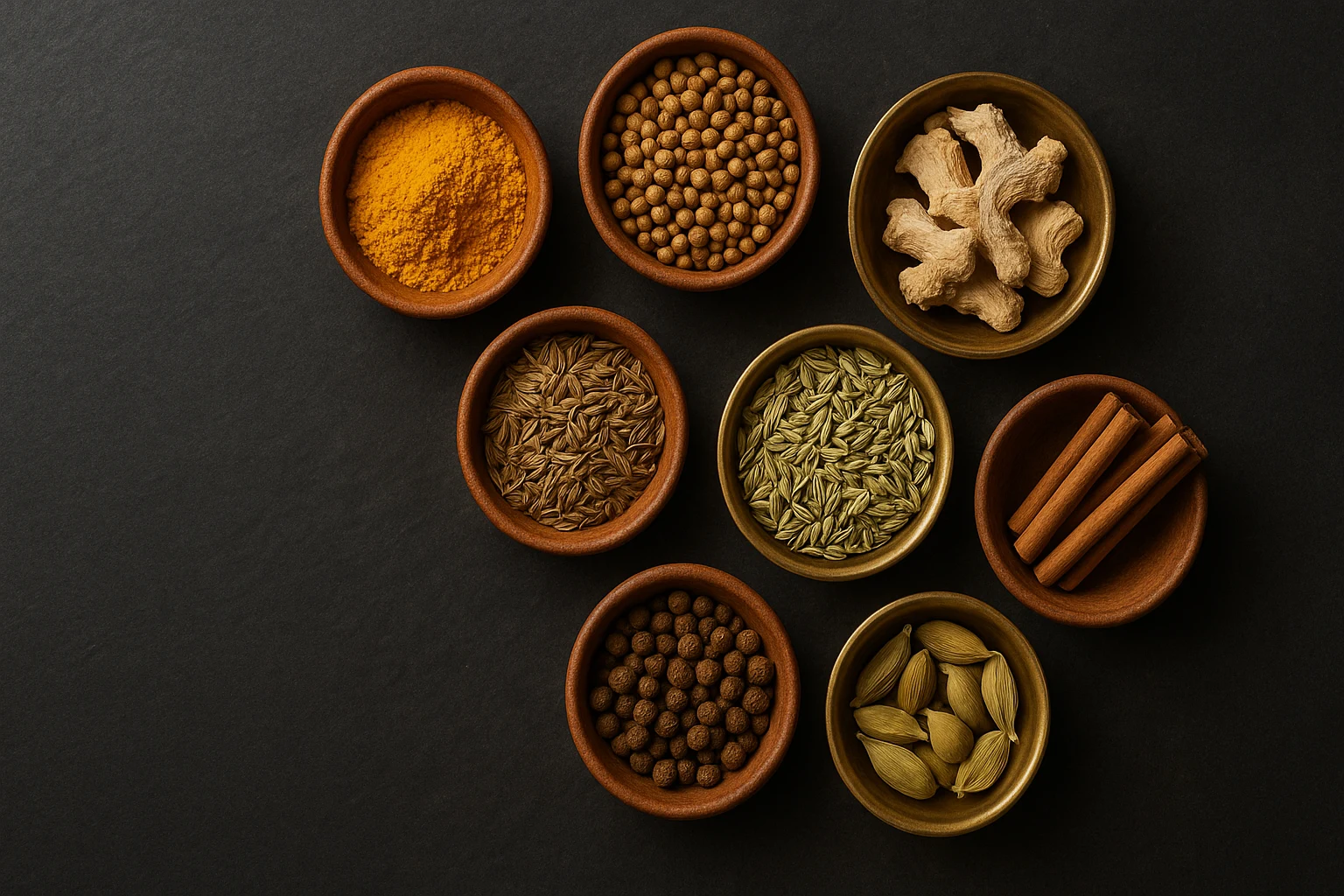
Ghee is clarified butter and a common cooking fat in Ayurvedic recipes. Use it when you enjoy and tolerate it, or use another cooking fat when the recipe allows. Blooming cumin, coriander, fennel, ginger, or cardamom in fat is also a practical way to build aroma and flavor without treating the spices as medicine.
Seasonal Eating in Ayurveda
Traditional Ayurveda changes food emphasis with the season: warmer, heavier dishes are often associated with colder periods, while lighter or cooling foods are more common in hotter weather. Treat that as a flexible cooking lens rather than a fixed calendar rule—your climate, appetite, and available produce matter too. For the broader routine context, see our Ayurvedic daily practices guide.
Frequently Asked Questions About Ayurvedic Meals
Start With One Recipe, Then Adjust
You do not need to settle on a dosha or follow every traditional rule at once. Pick the meal you want, make one of these Ayurvedic diet recipes, and change one thing next time—spice, richness, texture, or portion. Once that feels easy, build the next meal from the same pattern: a grain or legume, vegetables, a cooking fat, and spices you enjoy.