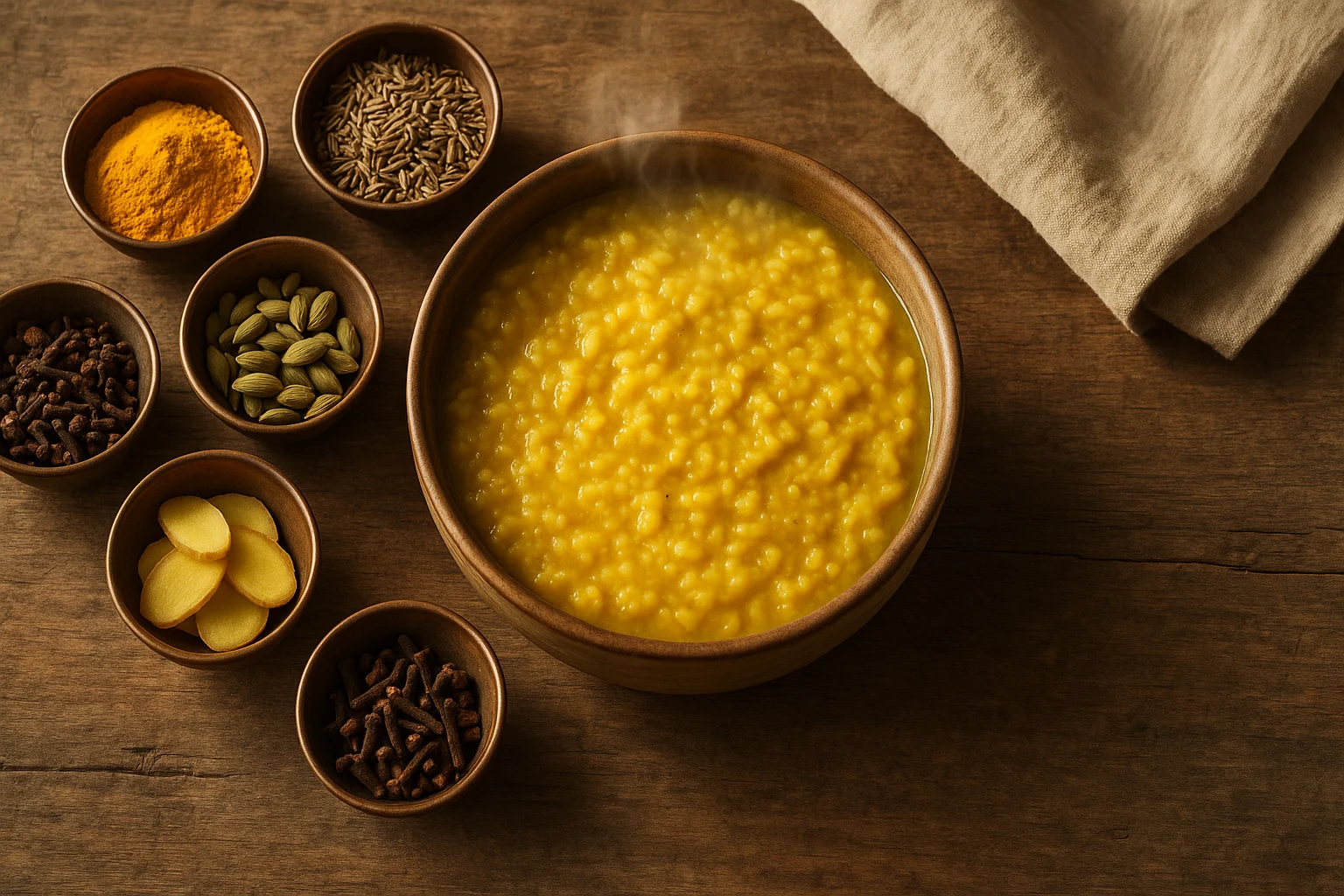
Ayurvedic cooking for beginners can start with one day, not a whole lifestyle. This guide shows how to build a simple breakfast, a main midday meal, and a lighter dinner with familiar grains, legumes, vegetables, and spices.
You do not need to know your dosha or adopt a full Ayurvedic routine to use the recipes here. This guide treats doshas and Agni as traditional cooking frameworks—not medical diagnoses or proven physiology. For the broader lifestyle context, see our Ayurvedic wellness guide.
This post contains affiliate links. If you purchase through them, we may earn a commission at no extra cost to you. As an Amazon Associate, I earn from qualifying purchases. Learn more.
Table of Contents
- Ayurvedic Cooking for Beginners: Doshas, Agni, and Seasons
- Choose Your Ayurvedic Meal Starting Point
- Morning: Start With a Simple Breakfast
- Midday: Make Lunch the Main Cooking Moment
- Evening: Keep Dinner Simple
- Seasonal Adjustments (Ritucharya)
- FAQs: Getting Started With Ayurvedic Cooking
- Start With One Repeatable Day
Ayurvedic Cooking for Beginners: Doshas, Agni, and Seasons
Three traditional ideas show up throughout this guide: doshas, Agni, and Ritucharya (seasonal adjustment). They come from Ayurveda’s long history in India, but they should not be confused with established medical physiology. The NIH’s NCCIH notes that scientific evidence for Ayurveda is limited for most health issues; see its overview of Ayurvedic medicine.
Doshas: Optional Cooking Lenses
In traditional Ayurveda, doshas are categories used to describe patterns of constitution and to organize food and lifestyle guidance:
- Vata (Air & Ether): Traditionally associated with qualities such as lightness, movement, dryness, and variability.
- Pitta (Fire & Water): Traditionally associated with heat, intensity, sharpness, and transformation.
- Kapha (Earth & Water): Traditionally associated with steadiness, heaviness, moisture, and structure.
You do not need to identify a dosha before you start cooking. Begin with the General path or the meal that sounds easiest, then treat dosha-specific ideas as optional traditional variations rather than health prescriptions.
Agni: A Traditional Cooking Framework
Agni, often translated as digestive “fire,” is a central Ayurvedic concept. In this guide, it helps explain the traditional preference for warm, cooked foods and aromatic spices; it is not a measurable medical condition.
Ritucharya: Seasonal Cooking
Ritucharya is Ayurveda’s traditional framework for seasonal adjustment. Here, use it simply as a reminder to let weather and available produce influence the meal—not as a promise of a particular health outcome.
Now that you have the basic terms, use the selector below to choose one meal to start with before you read the full breakfast-to-dinner plan.
Choose Your Ayurvedic Meal Starting Point
Choose the meal you want to plan and a traditional Ayurvedic lens. If you do not know your dosha, choose General. The result gives one practical food starting point from this guide; it is not a medical assessment or personalized nutrition plan.
Choose a meal and an approach to see a simple food starting point.
Start with the meal the selector pointed you to, or read straight through for a simple breakfast-to-dinner cooking day.
Morning: Start With a Simple Breakfast
You do not need a complicated morning ritual to begin Ayurvedic cooking. Pick one warm or gently cooked breakfast that you can repeat, then change only one ingredient at a time as you learn what you enjoy.
A Beginner Breakfast Formula
- Base: oats, barley, or another familiar cooked grain.
- Fruit: cooked apple, pear, berries, or another fruit you already tolerate.
- Spice: start with one or two, such as cinnamon, ginger, or cardamom.
- Optional richness: a small amount of ghee, milk, or a non-dairy alternative if it fits your diet.
Three Easy Starting Breakfasts
- General / Vata-oriented: oatmeal with cooked apple, cinnamon, and optional ghee.
- Pitta-oriented: oatmeal with pear or blueberries and a milder spice profile.
- Kapha-oriented: cooked barley or apple with ginger and cinnamon, keeping added sweetener optional.
If mornings are rushed, measure the grain and spices the night before. The goal is a breakfast you can actually make again—not a perfect Ayurvedic routine.
Midday: Make Lunch the Main Cooking Moment
If Ayurvedic meal prep feels like a lot at first, make lunch the meal where you practice the full method: one grain, one legume or other protein source, vegetables, and a small set of spices. For a deeper food-first guide, see our Ayurvedic diet recipes.
Ayurvedic Meal Prep Without the Overhaul
Traditional Ayurveda often treats midday as the main meal. You can use that as a flexible cooking pattern rather than a rigid clock rule. Prep only what removes friction from the next meal:
- Cook a grain you can reuse once or twice.
- Rinse or portion lentils ahead of time.
- Chop a few vegetables, not the whole week.
- Keep one simple spice combination ready.
Basic Kitchen Staples for Ayurvedic Cooking
No need for anything fancy. A useful beginner pantry can stay small:
- Grains: basmati rice, quinoa, oats, barley.
- Legumes: moong dal and red lentils.
- Fats: ghee, sesame oil, or coconut oil if they fit your diet.
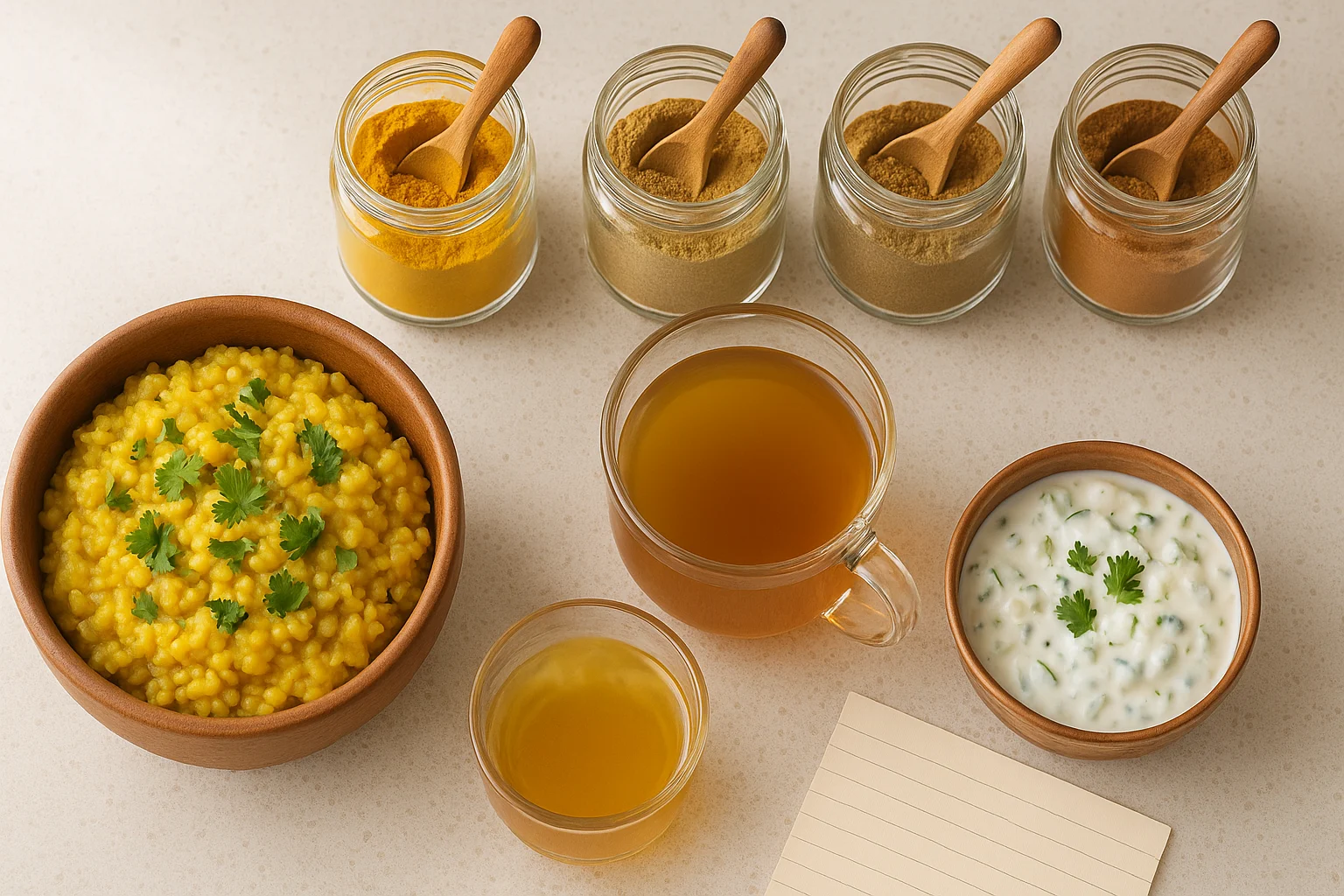
- Spices: cumin, coriander, ginger, turmeric, fennel, cardamom, cinnamon, and black pepper.
- Vegetables: use seasonal options you already know how to cook.
Ayurvedic Recipes for Beginners: Three Main-Meal Ideas
These are traditional dosha-oriented variations, not medical diets. If you are unsure of your dosha, choose the recipe that sounds easiest and most appealing.
Vata-Style Kitchari 🥣
Traditional Vata-oriented cooking emphasizes warm, moist foods. For a simple kitchari:
- Sauté 1 tsp cumin seeds, a pinch of turmeric, and fresh ginger in 1 tbsp ghee or another cooking fat you use.
- Add ½ cup rinsed moong dal and ¼ cup rinsed basmati rice.
- Add 4–5 cups water, bring to a boil, then simmer for about 20–30 minutes.
- Add chopped carrots or zucchini near the end and serve warm.
Pitta-Style Quinoa Veggie Bowl 🥗
Traditional Pitta-oriented cooking leans toward milder flavors. For this bowl:
- Cook quinoa or basmati rice.
- Sauté zucchini, green beans, and greens with coriander and fennel.
- Combine with the grain and finish with cilantro or a small squeeze of lime if you enjoy it.
Kapha-Style Red Lentil Soup 🌶️
Traditional Kapha-oriented cooking emphasizes lighter, warm, gently spiced meals. For this soup:
- Cook ½ cup red lentils in 4 cups water until soft.
- In a small pan, warm ginger with mustard seeds and a small amount of black pepper or another spice level you tolerate.
- Stir the spices into the lentils and serve with a cooked green vegetable.
Sample One-Day Meal Plans for Each Dosha
Use this as a planning template, not a rulebook:
| Dosha | Breakfast | Lunch | Dinner |
|---|---|---|---|
| Vata | Oatmeal with cooked apple | Kitchari with carrots | Vegetable soup with rice |
| Pitta | Oatmeal with pear or berries | Quinoa veggie bowl | Steamed greens with rice |
| Kapha | Spiced cooked apple or barley | Red lentil soup | Ginger barley soup |
If you want a dedicated cookbook to go beyond these starter meals, Ayurvedic Cooking for Self Healing by Usha and Vasant Lad is a traditional Ayurvedic cooking reference. Use it for recipes and food ideas, not as medical guidance.
Evening: Keep Dinner Simple
By dinner, the useful beginner move is repetition—not another complicated ritual. Traditional Ayurvedic guidance often favors a lighter evening meal, but your dinner should still match your hunger, schedule, and nutrition needs.
A Simple Dinner Formula
- Use leftovers intelligently: turn cooked grain or lentils into soup, a bowl, or a simple side.
- Add cooked vegetables: steamed, sautéed, or simmered vegetables keep the meal easy to assemble.
- Keep the spice profile familiar: reuse the same small spice set instead of creating a new recipe every night.
- Adjust the portion: make dinner as light or substantial as your hunger, schedule, and nutritional needs require.
Three Easy Dinner Directions
- Vata-oriented: vegetable soup with rice or a smaller bowl of kitchari.
- Pitta-oriented: steamed greens with rice or another mild cooked vegetable bowl.
- Kapha-oriented: ginger barley soup or a lighter lentil-and-vegetable soup.
Prep One Thing for Tomorrow
Before you finish in the kitchen, do one small task for the next day: rinse lentils, portion oats, chop one vegetable, or refill your spice jar. That is enough to make Ayurvedic meal prep feel like a routine instead of a project.
Seasonal Adjustments (Ritucharya)
Seasonal eating is another traditional Ayurveda lens. For a beginner, the most useful version is simply to let the weather and available produce change the meal—not to follow a detox schedule:
- Spring: Rotate in greens, lentils, and lighter soups as they suit your appetite and local produce.
- Summer: Use seasonal vegetables and fruits, milder spice combinations, and cooking methods that feel comfortable in warmer weather.
- Autumn and winter: Lean on soups, stews, root vegetables, cooked grains, and familiar warming spices.
FAQs: Getting Started With Ayurvedic Cooking
Start With One Repeatable Day
For your first week, pick one breakfast, one main lunch, and one simple dinner from this guide, then repeat them enough to learn the pattern. Keep the ingredients familiar and change only one thing at a time.
Once that feels easy, swap in a new recipe, spice, or seasonal ingredient. Ayurvedic cooking becomes more approachable when the tradition is a lens for the meal—not another set of rules you have to get right.