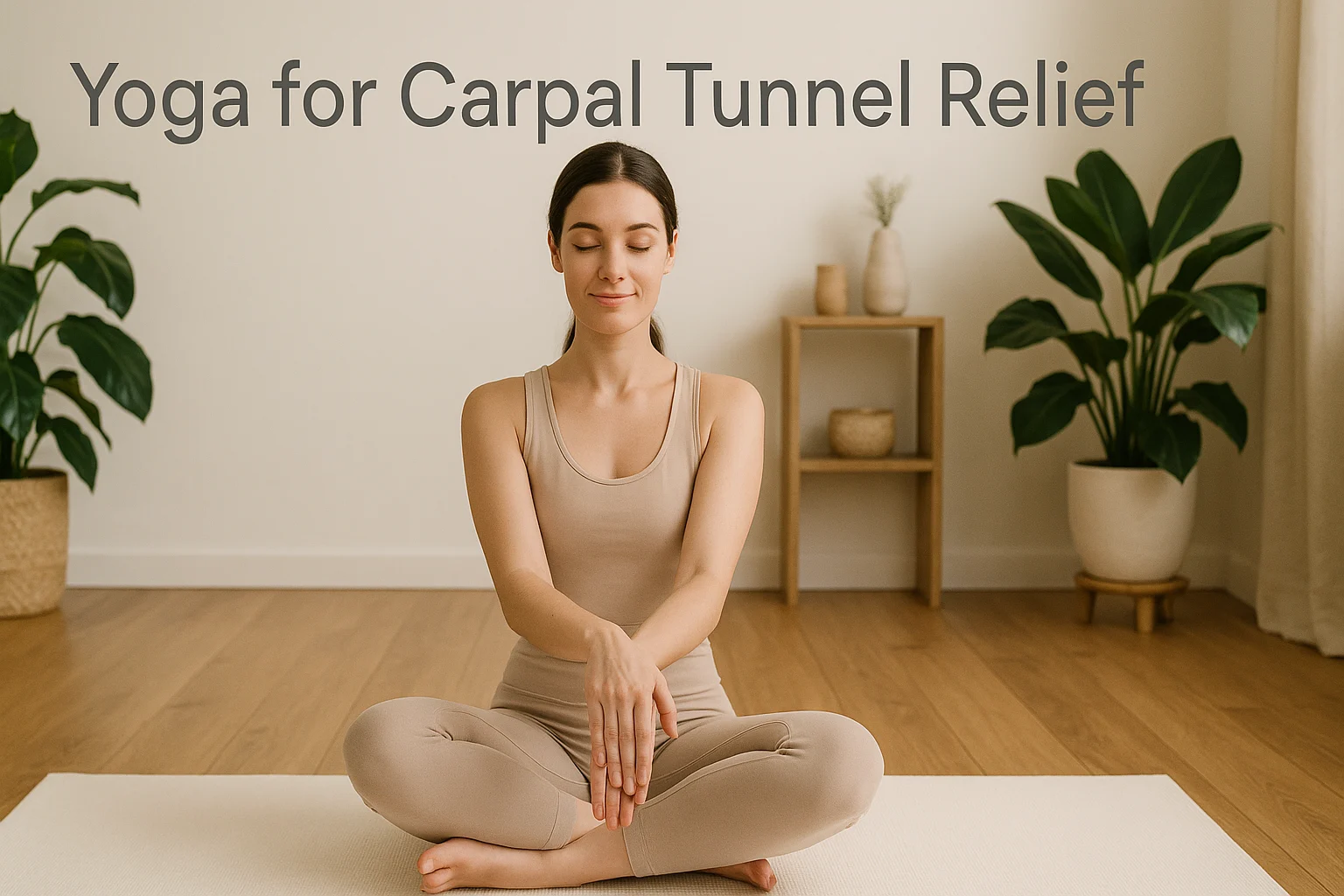
People searching for “yoga carpal tunnel” are usually trying to answer one practical question: can gentle movement be tried without making symptoms worse? Carpal tunnel symptoms deserve a careful starting point. Yoga is not a proven treatment for median-nerve compression, but gentle hand and wrist movement may still be useful for comfort or mobility when it does not aggravate symptoms.
This guide gives you a cautious practice check, six low-load wrist and hand movements, clear stop signals, and guidance on when persistent numbness or weakness needs assessment. If you’re also dealing with pain elsewhere, our yoga for pain relief guide can help you find a gentler starting point for other areas of the body.
Table of Contents
- What Carpal Tunnel Is—and What Symptoms Matter
- What Yoga Can—and Can’t—Do for Carpal Tunnel
- Before You Try Wrist Exercises for Carpal Tunnel
- Carpal Tunnel Practice Check
- Gentle Yoga and Wrist Exercises for Carpal Tunnel
- Tips for Wrist-Friendly Yoga Practice
- Get the 10-Minute Chair Yoga Routine for Stiff Mornings
- Yoga and Carpal Tunnel: Common Questions
- Start Small—and Let Symptoms Set the Limit
What Carpal Tunnel Is—and What Symptoms Matter
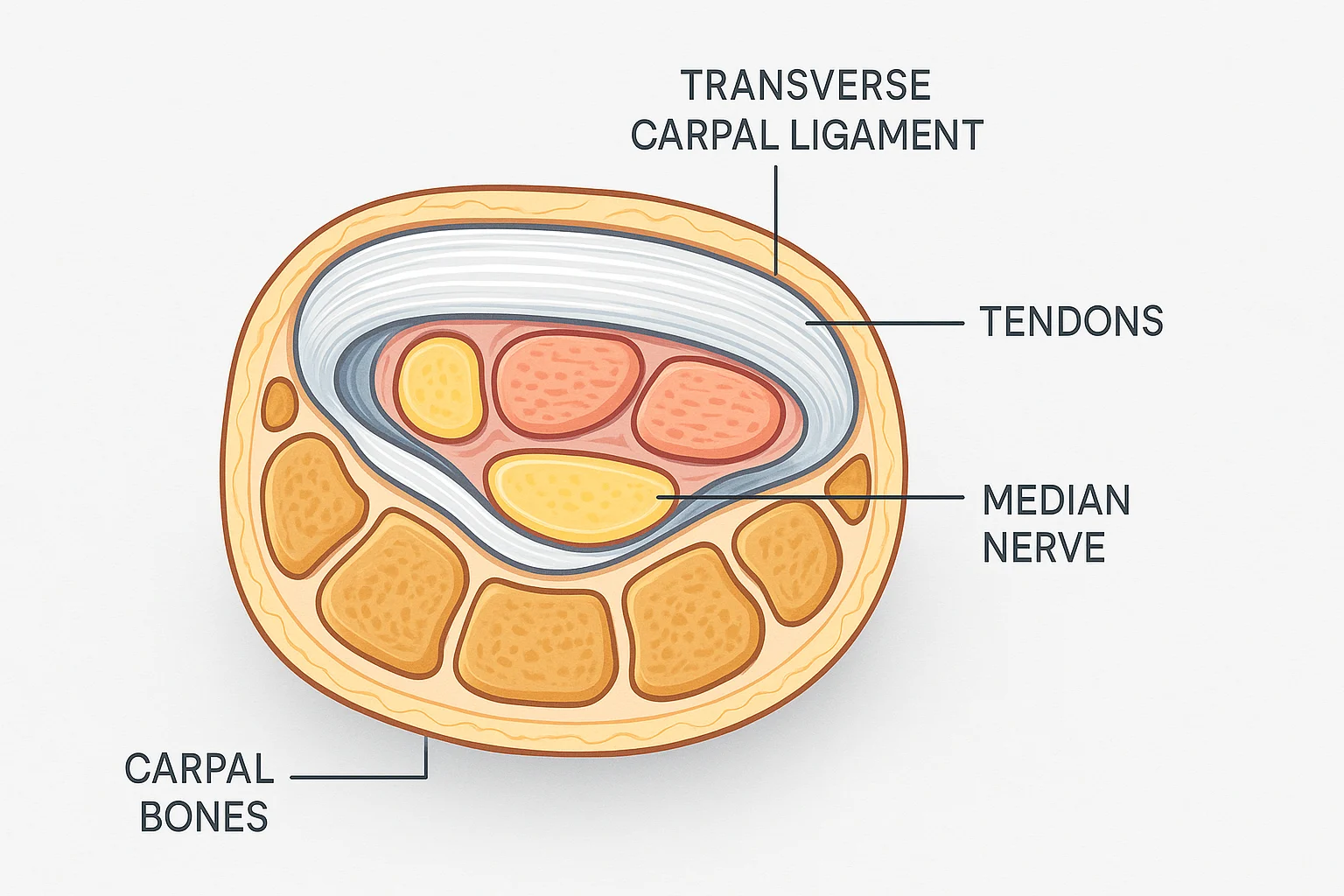
Before exploring wrist-friendly movement, it helps to understand carpal tunnel syndrome (CTS). The carpal tunnel is a narrow passageway at the wrist formed by small wrist bones and the transverse carpal ligament. The median nerve and nine flexor tendons pass through it. The median nerve carries sensation from the thumb, index and middle fingers, and the thumb-side half of the ring finger, and it also controls some muscles at the base of the thumb.
When tissues in this tunnel swell, they can pinch the median nerve—like a crowded subway. This may lead to classic CTS symptoms:
- Numbness or Tingling: Often in the thumb, index, middle, and ring fingers, feeling like “pins and needles,” especially at night.
- Pain: In the wrist, hand, or up the arm toward the shoulder.
- Weakness: Difficulty gripping, dropping objects, or struggling with fine motor tasks like buttoning shirts.
- Burning Sensation: A burning feeling in the hand or fingers.
CTS is caused by pressure on the median nerve, but there is often no single cause. Wrist anatomy, some health conditions, injury, and activities that keep the wrist in extreme positions can all matter. Repetitive hand use may aggravate symptoms or tendons, but high keyboard use by itself is not established as a cause. For current overviews, see the Mayo Clinic CTS guide and AAOS OrthoInfo guidance.
What Yoga Can—and Can’t—Do for Carpal Tunnel
Yoga can give you a low-load way to move the hands and wrists and notice which positions aggravate symptoms, but it does not treat the median-nerve compression itself. The 2024 AAOS clinical guideline reports that exercise has not demonstrated improvement in long-term patient-reported CTS outcomes, although AAOS also notes that some patients may benefit from clinician-recommended nerve-gliding exercises.
Yoga-specific evidence is limited. A preliminary 1998 randomized trial of 42 people found improvements in some symptoms and signs after an eight-week yoga program, but that small older study is not enough to establish yoga as a stand-alone CTS treatment.
Practically, yoga can help you explore comfortable motion and notice which wrist positions aggravate symptoms. Nerve- or tendon-gliding work may also be part of broader care when a clinician recommends it. Breathing can make a gentle practice feel calmer, but it does not decompress the median nerve.
If numbness or tingling is persistent, worsening, or paired with weakness, assessment matters more than adding another stretch.
Before You Try Wrist Exercises for Carpal Tunnel
If you are looking for carpal tunnel exercises that incorporate yoga, use symptoms as a stop signal rather than a challenge to work through. AAOS patient guidance advises that therapeutic CTS exercises be chosen with a doctor or physical therapist, especially when numbness is worsening or exercise increases pain. If you are new to yoga and movement is comfortable, seated yoga stretches can keep the rest of the practice low-load.
- Start below the symptom threshold: Use a small, comfortable range instead of a deep wrist stretch.
- Stop for increased nerve symptoms: Back off if tingling, numbness, burning, or pain increases during or after a movement.
- Keep the wrist neutral when possible: Long periods at the end of wrist flexion or extension can increase pressure on the median nerve.
- Use short trials: A few controlled repetitions make it easier to notice whether a movement is helping, neutral, or aggravating.
- Do not use improvement as proof of diagnosis: Wrist aching or stiffness can have causes other than CTS.
- Get assessed when symptoms persist or progress: Symptoms that disturb sleep or daily activity, constant numbness, weakness, or dropping objects warrant healthcare evaluation.
Carpal Tunnel Practice Check
Answer two quick questions to choose how cautious to be with the wrist sequence below. This check cannot diagnose carpal tunnel syndrome or tell you which treatment you need.
Choose the closest match rather than trying to diagnose the cause.
Think small and comfortable—not a deep stretch or a weight-bearing pose.
Your starting point
Answer both questions to get a cautious next step before trying the sequence.
Gentle Yoga and Wrist Exercises for Carpal Tunnel
If you want a routine you can try immediately, these six low-load options mix general yoga-style mobility with movements that overlap with AAOS therapeutic exercise guidance. You do not need to do all six: start with one or two comfortable movements, and stop if symptoms increase. If you have diagnosed CTS, use the nerve- and tendon-glide sections with clinician guidance rather than treating them as a required progression.
Wrist Circles for a Gentle Warm-Up
This is a general mobility warm-up rather than a CTS-specific treatment. Small circles give you a low-load way to notice how the wrist responds before moving into a longer range.
- Sit comfortably, either in a chair or another supported position.
- Rest the elbows or hold the forearms where your shoulders can stay relaxed.
- Keep the fingers loose and make small, smooth wrist circles.
- Change direction after a few repetitions.
- Stop if tingling, numbness, or pain increases.
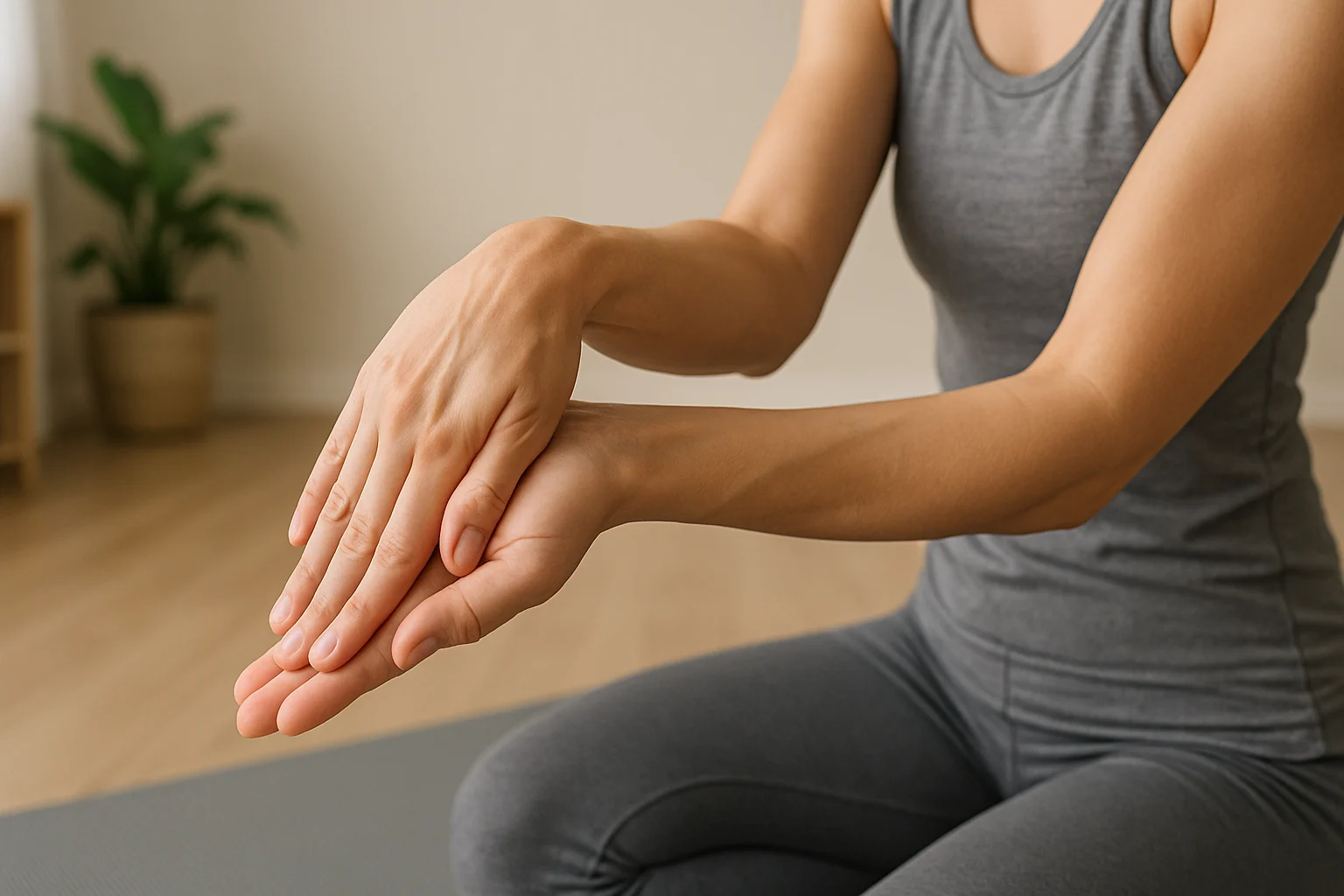
Wrist Flexor Stretch
AAOS includes a wrist-extension stretch in its CTS exercise handout. The aim is a mild stretch along the forearm flexor side, not a strong wrist bend.
- Straighten one arm without locking the elbow.
- Bring the wrist gently back, as if making a soft “stop” gesture.
- Use the other hand lightly across the palm until you feel a mild stretch along the inside of the forearm.
- Hold briefly, then release. Stop sooner if tingling, numbness, or pain increases.
Wrist Extensor Stretch
AAOS also includes a wrist-flexion stretch for the opposite side of the forearm. Keep it gentle and avoid locking the elbow.
- Straighten one arm with the palm facing down.
- Let the wrist bend so the fingers point down, then use the other hand to add only light pressure.
- Stop at a mild stretch along the outer forearm.
- Release if nerve symptoms increase rather than holding through them.
Prayer Hands: Keep the Range Small
Prayer hands can be an optional yoga-style wrist range check, but it is not a CTS-specific treatment. Because it places the wrist in extension, keep the range small and skip it if symptoms increase.
- Bring the palms together lightly at chest height.
- Lower the hands only until you notice a mild stretch.
- Keep the pressure between the palms light rather than forcing them together.
- Come out immediately if tingling, numbness, or pain increases.
Median Nerve Glide
AAOS notes that some patients may benefit from exercises that help the median nerve move within the carpal tunnel. Because technique matters, use this as an overview and follow a clinician’s or the AAOS handout’s instructions if you have diagnosed CTS.
- Start with a relaxed fist and the thumb outside the fingers.
- Open the fingers, then gently extend the wrist.
- Extend the thumb and turn the forearm so the palm faces up.
- If instructed, add only a light thumb stretch with the other hand.
- Move between positions slowly and stop if numbness, tingling, or pain increases.
Tendon Glides for the Fingers
AAOS includes tendon-gliding sequences among its CTS therapeutic exercises. These are controlled finger-position changes rather than deep stretches.
- Begin with the wrist straight and fingers extended.
- Move into a gentle hook shape, then return to straight.
- Try a comfortable fist, then reopen the hand.
- Another option is a tabletop shape followed by bringing the fingertips toward the palm.
- Keep the movement easy; increased pain or nerve symptoms are a reason to stop.
Tips for Wrist-Friendly Yoga Practice
The useful goal is not to stretch harder; it is to notice which positions your hands tolerate and reduce the ones that reliably aggravate symptoms. For broader wrist-loading adaptations, see yoga for wrist pain.
- Take short, frequent breaks: If an activity aggravates symptoms, change position and gently move the hands rather than holding the same wrist angle for long periods.
- Reduce hand loading: Skip or modify poses that put substantial body weight through an extended wrist when that reproduces symptoms.
- Use props as comfort tools, not treatment: A rolled towel or wedge can change wrist angle, but it does not treat median-nerve compression.
- Keep notes on response: What happens during the movement and later that day is more useful than chasing a deeper stretch.

For mornings when general stiffness is the issue—not numbness or tingling—this chair-yoga routine gives you a separate 10-minute practice.
Get the 10-Minute Chair Yoga Routine for Stiff Mornings
Confirm your email to get the routine. Unsubscribe anytime.
Something went wrong. Please check your email address and try again.
Yoga and Carpal Tunnel: Common Questions
Start Small—and Let Symptoms Set the Limit
The practical takeaway is simple: more is not better. Use the practice check, choose one or two low-load movements that stay comfortable, and treat any increase in tingling, numbness, or pain as your stop signal. You do not need to progress through the whole list; persistent nerve symptoms or weakness make assessment a more useful next step than a harder yoga routine.