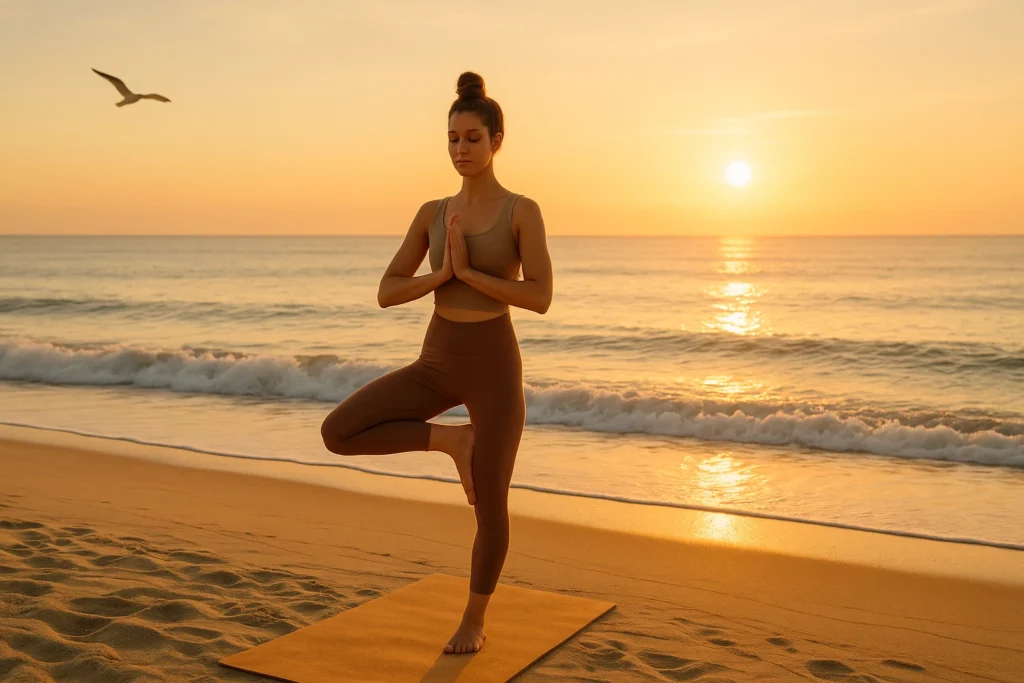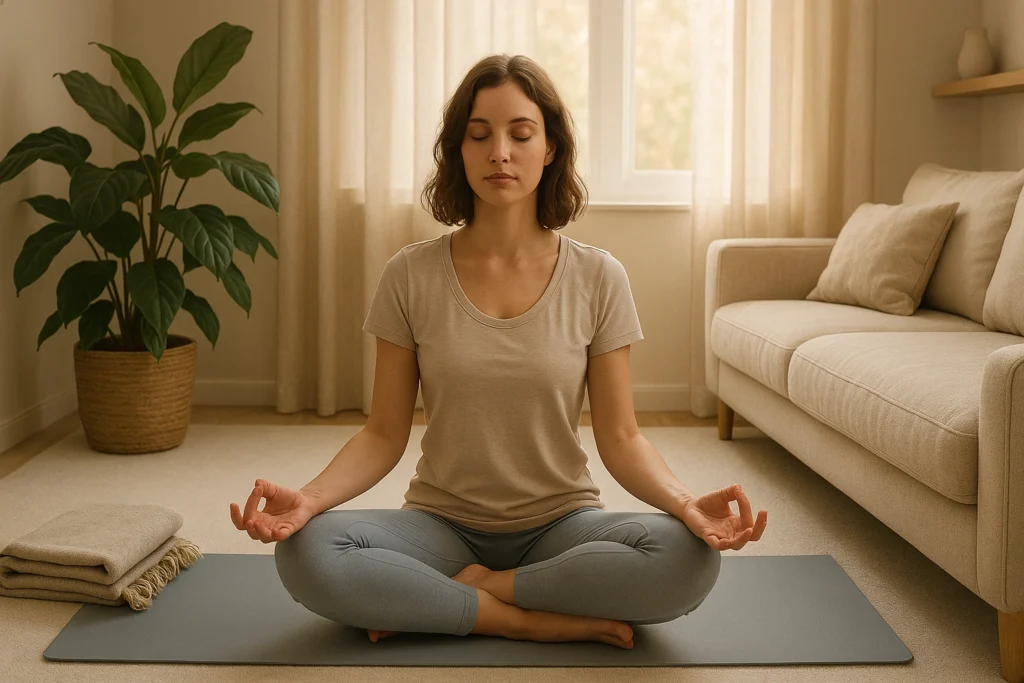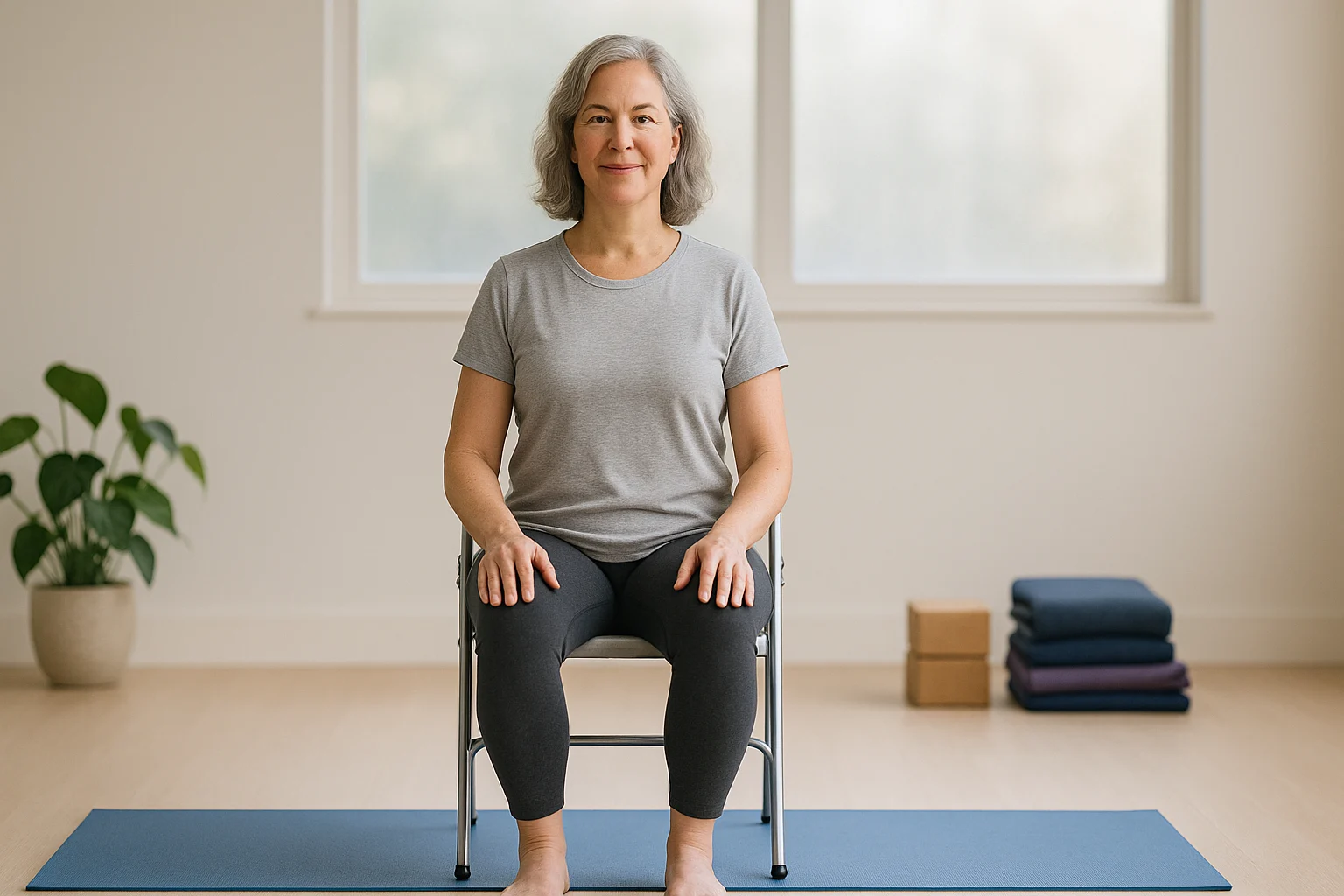
If you live with MS, the same yoga practice may feel workable one day and too demanding the next. The useful question is not “Which pose is best for MS?” but “What version gives me enough support today?”
Yoga for multiple sclerosis is best treated as adaptable physical activity—not as a treatment for MS. Current evidence is mixed and generally low-certainty, so adapt the practice to the day you’re having. A chair, wall, smaller range of motion, cooler room, or shorter session can matter more than the name of the pose. This guide covers the evidence, safety, ways to begin, and gentle options. For adaptations related to other health needs, see our guide to yoga for specialized health needs.
Table of Contents
- What Yoga May Help With—and Its Limits
- Safety Tips for Yoga with MS
- Find an MS-Friendly Yoga Starting Point
- Yoga Styles That Are Easy to Adapt
- Gentle Yoga Poses to Adapt for MS
- How to Adapt Yoga on Different Days
- Build a Routine You Can Recover From
- Get the 10-Minute Chair Yoga Routine
- Common Questions About Yoga and MS
- Start With the Version You Can Recover From
What Yoga May Help With—and Its Limits
Research on yoga for multiple sclerosis is still limited. Current findings are mixed and generally low-certainty. The National Center for Complementary and Integrative Health remains cautious about broad benefits for people with MS. A 2026 overview of reviews found mixed results for fatigue and low-to-very-low certainty for most mind-body movement outcomes; for some outcomes, yoga was analyzed alongside other mind-body therapies rather than in isolation.
That does not make yoga useless. A more accurate expectation is that yoga can be adapted into physical activity or relaxation that fits your current abilities—not that a particular pose has been proven to treat an MS symptom.
| Area | Cautious takeaway |
|---|---|
| Fatigue | Some reviews report fatigue benefit, but a 2026 overview found mixed results; certainty remains limited. |
| Balance and mobility | Supported yoga can provide a controlled way to practice movement and body awareness, but it should not be presented as proven fall prevention or mobility treatment. |
| Stiffness or spasticity | Gentle positioning and supported stretching may feel more manageable, but yoga is not an established treatment for MS spasticity. |
| Pain | MS pain can have different causes. Avoid promising that yoga will relieve it; adapt or stop a movement that increases pain. |
| Stress and relaxation | Breathing and mindfulness may support general stress management without replacing mental-health or medical care. |
Fatigue is especially common: the National MS Society says about 80% of people with MS live with fatigue. If fatigue changes suddenly or becomes much worse, it is worth discussing with your care team rather than assuming yoga, sleep, or willpower is the whole answer.
Use yoga for adaptability, not promises. A practice can be worthwhile even when its job is simply to help you move, breathe, or relax in a way that fits today.
Safety Tips for Yoga with MS
The National MS Society’s symptom overview includes fatigue, balance or walking changes, weakness, altered sensation, vision problems, and cognitive changes; which of these matter most can change from one session to the next. Build the practice around your actual symptoms and temperature tolerance rather than a fixed routine.
Ask for Individual Guidance When You Need It
If you are new to exercise, have frequent falls, significant weakness, pain, or recent symptom changes, ask your neurologist or a physical therapist how to adapt the practice for you.
Stay Cool If Heat Affects You
Heat can temporarily worsen symptoms for many people with MS. If that happens to you, use a cool room, avoid hot yoga, take breaks, and use hydration or other cooling strategies that already work for you.
Use Stable Support Early
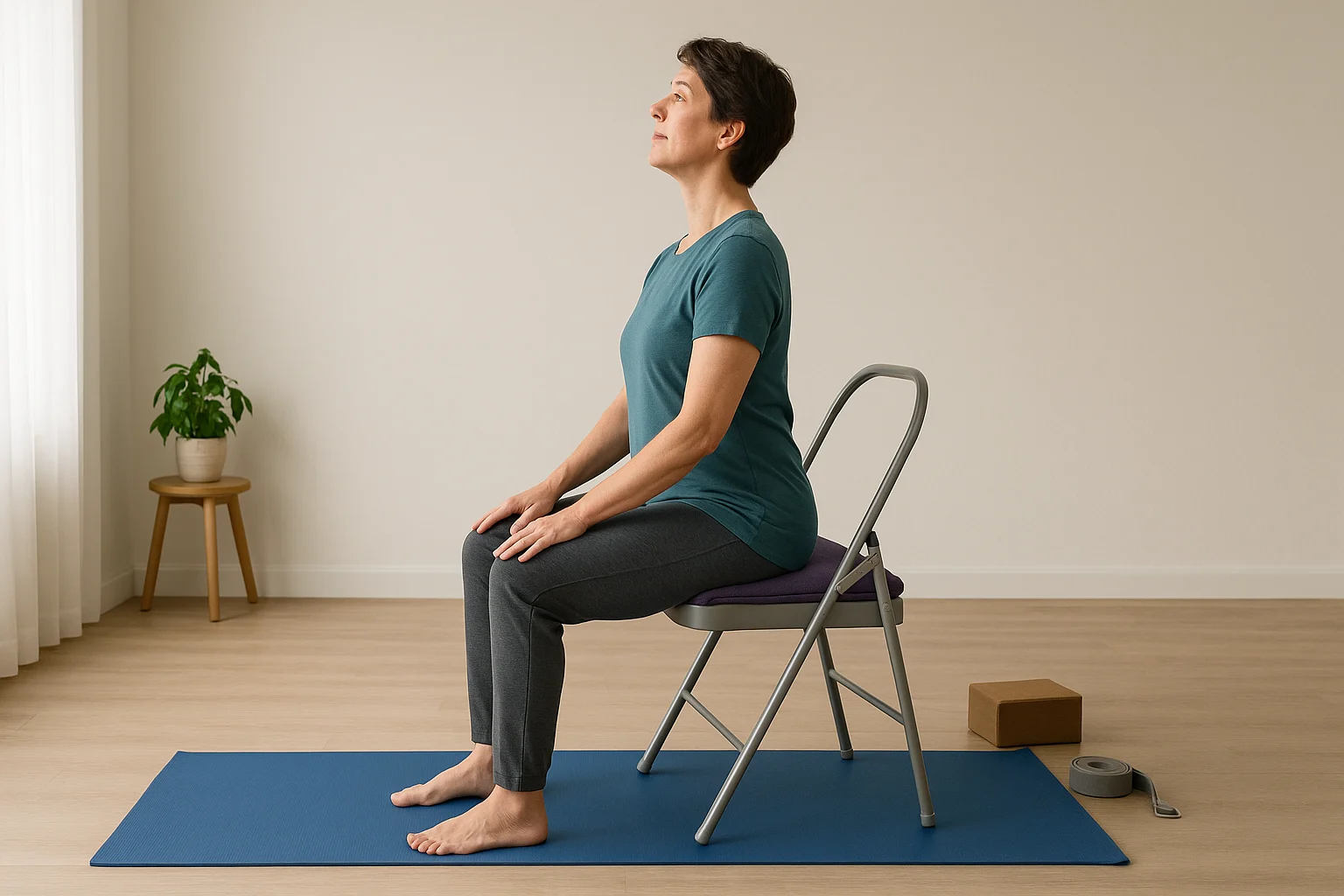
A chair, wall, blocks, blankets, or straps can reduce the amount of balance or range a pose demands. Treat props as part of the practice, not as a fallback. Our guide to essential yoga props explains common options without requiring any specific brand.
Pace by Recovery, Not by the Clock
Start with a short session and stop before fatigue spikes. Add time only when you recover well afterward; a session that leaves you depleted for the rest of the day is useful feedback to scale back.
Stop for Concerning Symptoms
Pause if you develop pain, dizziness, unusual weakness, a meaningful balance change, vision changes, or another symptom that feels new or concerning.
Find an MS-Friendly Yoga Starting Point
Answer three practical questions about support, energy, and experience. The result is a starting format to explore—not a medical recommendation or a test of what your body “should” be able to do.
Question 1 of 3
What setup feels most stable today?
Choose the option that would let you focus on the movement instead of worrying about balance.
How much energy do you want to spend on practice today?
How familiar are you with yoga?
Yoga Styles That Are Easy to Adapt
The labels matter less than whether the teacher and format allow you to change position, support, range, and pace. These four styles are useful starting categories rather than a ranking from “best” to “worst.”
Chair Yoga for MS
Chair yoga keeps some or all of the practice seated and can also use the chair as standing support. It is a practical choice when getting to the floor, standing balance, or transfers are the bigger challenge.
Restorative Yoga
Restorative yoga uses blankets, bolsters, or other support to reduce muscular effort. It may fit lower-energy days, provided the positions are comfortable and easy for you to enter and leave.
Gentle Hatha Yoga
A gentle Hatha class can offer slow transitions and time to adjust alignment. Look for a teacher who welcomes props and alternatives rather than expecting everyone to use the same range or pace.
Adaptive Yoga
Adaptive yoga is built around changing the practice to the person. The National MS Society describes yoga for MS as adaptable, including standing, seated or wheelchair-based, and lying-down options.
Gentle Yoga Poses to Adapt for MS
These MS yoga poses are examples of supported movement, not symptom prescriptions. Use the version that gives you the most control, and skip a floor pose when the transition to or from the floor is the hardest part.
Seated Cat-Cow
Sit with your feet supported. As you inhale, gently lift the chest; as you exhale, let the spine round only as far as feels comfortable. Think of it as a small spinal movement rather than a deep stretch.
Seated or Supported Leg Lifts
From a chair, slowly extend one leg and lower it with control. If you use a reclined version, a strap can reduce how much effort the lift requires. Stop if the movement becomes jerky or hard to control.
Gentle Seated Twists
Sit tall and rotate only through a comfortable range, using the chair for orientation rather than leverage. Keep the movement small if sensation, balance, or dizziness makes twisting uncertain.
Wall Push-Ups
Place your hands on a wall, bend your elbows, and press away at a pace you can control. The wall provides a stable base while you practice upper-body movement without a floor transition.
Supported Forward Rest
From a chair, rest your forearms or upper body on a table, pillows, or another stable support if that position is comfortable. This avoids making floor access a prerequisite for a quieter posture.
Breathing for Pacing and Relaxation
Let the lower ribs and belly expand comfortably as you inhale, then soften on the exhale. If breath practices make you lightheaded, return to normal breathing. The goal here is pacing and relaxation, not treating a neurological symptom.
Choose the setup by the hardest transition. If getting to or from the floor costs more balance or energy than the pose itself, use a chair or wall version instead.
How to Adapt Yoga on Different Days
Adaptation is the main skill—not a sign that you are doing the pose incorrectly. Change one variable at a time: position, support, range, pace, or duration.
When Weakness or Numbness Is More Noticeable
Reduce the range, support the limb, and favor positions where you can clearly control the start and finish of the movement. If sensation is reduced, avoid using pain alone as your guide to how far is enough.
When Spasticity Is the Main Limitation
Use slow transitions and comfortable supported stretching rather than forcing a muscle that is resisting. A physical therapist familiar with MS can help you choose positions and durations when spasticity is a major concern.
When Balance Is Uncertain
Move the practice toward a wall, chair, or seated position before you feel unstable. Support works best when it is already in place rather than something you reach for after losing balance.
When Vision or Focus Changes
Use a familiar space, reduce clutter around the mat or chair, and choose clear verbal or written cues. A slower sequence with fewer position changes may be easier to follow.
Build a Routine You Can Recover From
Consistency only helps when the practice is recoverable. Instead of chasing a fixed schedule, notice which setup, time of day, and session length let you finish with enough energy for the rest of your day.
- Before: Choose a time, room temperature, and setup that usually give you the most control. Keep a chair or wall within easy reach if you may need it.
- During: Start shorter than you think you need, change one variable at a time, and stop while the practice still feels controlled.
- After: Notice how you feel later that day. Repeat what recovers well; if a session repeatedly leaves you unusually depleted, shorten it or reduce the effort next time.
If mornings are one of the times a chair-based practice feels more realistic, the free Stiff Mornings routine gives you a concrete 10-minute sequence to try instead of building a session from scratch.
A Seated Routine for Low-Energy Days
Confirm to get the routine and yoga tips. Unsubscribe anytime.
Something went wrong. Please check your email address and try again.
Common Questions About Yoga and MS
Start With the Version You Can Recover From
For MS, a useful yoga practice is one you can adapt without turning the session into another endurance test. Choose the most stable setup, keep the room comfortable, use a smaller range when needed, and stop while the practice still feels controlled.
If you are unsure where to begin, use the starting-point tool, then try one or two movements from the matching section. The goal is not to prove what you can do today; it is to find a form of movement you can repeat with control and adjust when the day changes.