
There is no universal YTT syllabus. A yoga teacher training curriculum should tell you what the hours actually cover, how much practice teaching is built in, and what the school expects you to be able to do by graduation. A 200-hour program is foundational, a 300-hour program is advanced, and a 500-hour program combines foundational and advanced training—but schools still differ in lineage, emphasis, format, and assessment.
If you’re still deciding whether teacher training is right for you, start with our yoga teacher training guide. If you’re already comparing programs, use the quick table below for the big picture, then jump to the level you care about for the details.
Table of Contents
- How the Curriculum Changes at 200, 300, and 500 Hours
- 200-Hour Yoga Teacher Training Curriculum: The Foundation
- Try a Chair-Based Practice Yourself
- 300-Hour Yoga Teacher Training Curriculum: Advanced Study
- 500-Hour Yoga Teacher Training: Comprehensive Path
- Yoga Teacher Training Curriculum: Common Questions
- Before You Enroll: 6 Curriculum Checks
How the Curriculum Changes at 200, 300, and 500 Hours
The yoga course structure changes by level, but the hour label still does not tell you every module a school will use. Yoga Alliance’s current RYS standards use a four-category common core for RYS 200; RYS 300 and RYS 500 use five categories and allow additional hours to reflect the school’s emphasis. Use the table as a comparison guide, not a universal syllabus.
| Area to Compare | 200-Hour Foundation | 300-Hour Advanced | 500-Hour Comprehensive |
|---|---|---|---|
| Overall structure | Foundational common core with room for lineage and methodology | Builds on 200-hour concepts with advanced study | Meets both foundational and advanced standards in one path |
| Best fit | You need a foundational teacher-training curriculum | You already have a 200-hour foundation and want advanced study | You want one comprehensive path spanning foundational and advanced training |
| Techniques & practice | Foundational practice and understanding of yoga techniques | More advanced, detailed, or subtle study | Broader combined scope; exact emphasis varies by school |
| Anatomy & physiology | Foundational anatomy and physiology connected to yoga | Deeper anatomy and physiology study | Foundational + advanced depth across the full program |
| Philosophy & ethics | Yoga humanities, history, philosophy, ethics | Deeper philosophy, lifestyle, and ethics | Combined study across foundational and advanced levels |
| Teaching & practicum | Professional essentials, methodology, practice teaching, feedback | Advanced methodology and practicum requirements | Teaching and practicum work across the complete program |
| Specialization | School style and lineage shape the foundation | School-chosen emphasis can shape advanced hours | School emphasis may be broader, but separate specialty credentials still need separate verification |
200-Hour Yoga Teacher Training Curriculum: The Foundation
A 200-hour program is the foundational level. In Yoga Alliance’s current RYS 200 framework, the common core is organized into four broad areas while still leaving room for each school’s lineage and methodology. When you compare a 200-hour yoga training syllabus, look for clear learning goals inside each area—not just a list of attractive module names.
Techniques, Training & Practice
This is the practice-facing part of the curriculum. Depending on the school’s tradition, it may include asana, pranayama, meditation, chanting, or other yoga techniques, along with instruction on how those practices are taught. A useful syllabus explains both what you will practice and what you are expected to understand about the practice.
Anatomy & Physiology
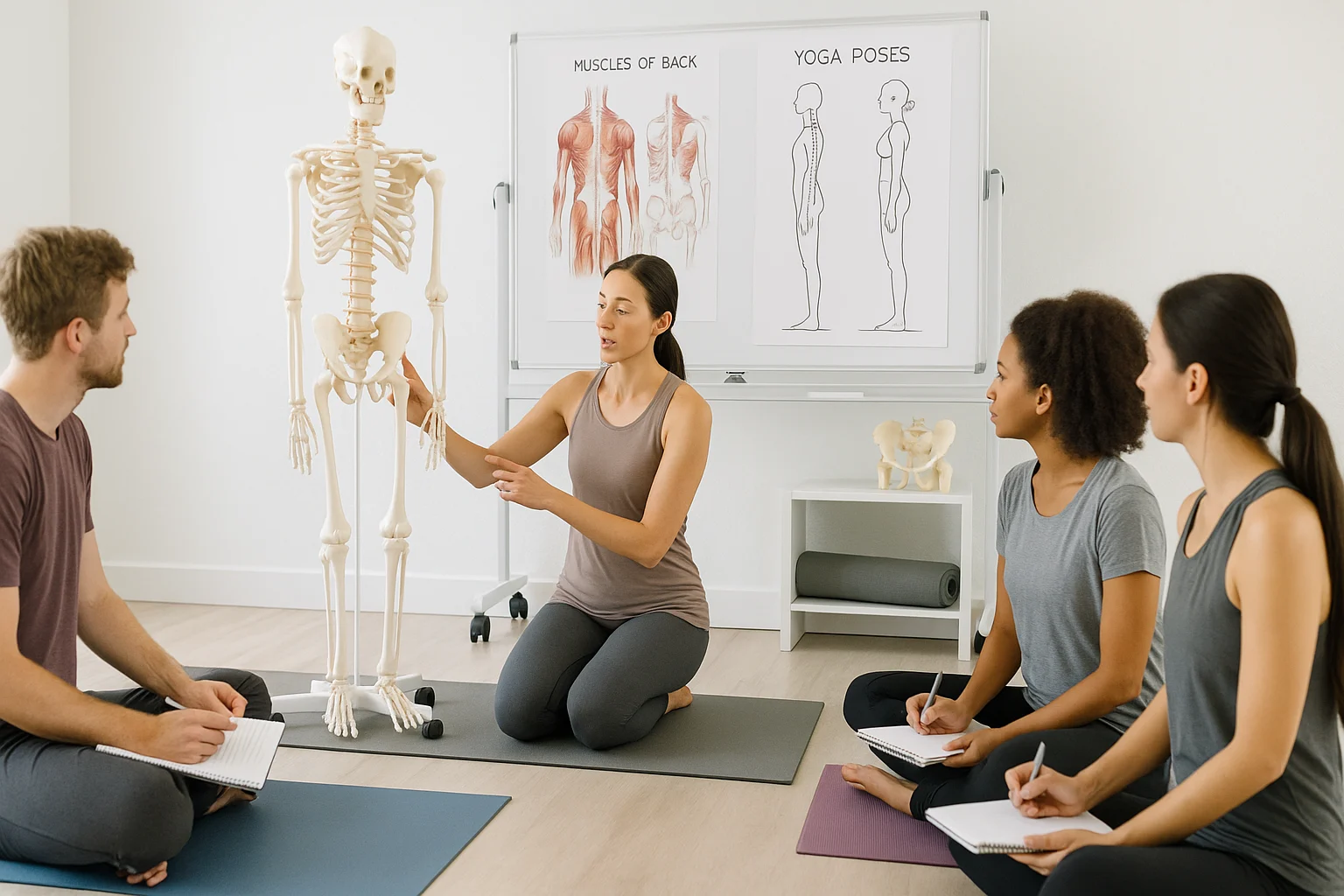
Look for anatomy that is connected to real teaching decisions: how movement and breathing work, how bodies can differ, and how a teacher stays within an appropriate scope of practice. The goal is not to promise injury prevention; it is to give trainees a stronger basis for cueing, observation, adaptation, and referral when something is outside a yoga teacher’s role.
Yoga Humanities
This area covers the history, philosophy, ethics, and broader context of yoga. Programs often draw from texts such as Patanjali’s Yoga Sutras or the Bhagavad Gita, but the exact texts and emphasis vary by school. What matters is whether the syllabus connects those ideas to practice, teaching relationships, and ethical decision-making rather than treating philosophy as a list of terms to memorize.
Professional Essentials
This is where teaching methodology and practicum come together. Compare how the program teaches sequencing, pace, cueing, class management, feedback, practice teaching, professional ethics, scope of practice, and any basic business or professional topics it includes. If hands-on assisting is included, the syllabus should also make the school’s consent and teaching approach clear.
If you’re comparing a registered program, use Yoga Alliance’s current training and credential guidance to confirm what the exact school designation requires.
Curriculum can explain adaptation; your own practice is where you can notice what a different setup actually feels like. This chair-based routine gives you one simple variation to try for yourself.
Get the 10-Minute Chair Yoga Routine
Try the chair-based practice yourself and keep it for stiff mornings when you want a gentler setup.
Confirm to get the routine and yoga tips. Unsubscribe anytime.
Something went wrong. Please check your email address and try again.
300-Hour Yoga Teacher Training Curriculum: Advanced Study
A 300-hour training is designed to build on the concepts generally taught at the 200-hour level. Current RYS 300 standards use five educational categories, but schools can distribute additional hours according to their chosen emphasis. That is why two legitimate 300-hour programs can look very different. Compare the school’s actual schedule, learning outcomes, and assessment plan rather than relying on the 300-hour label alone.
Techniques, Training & Practice
Expect more advanced, detailed, or subtle study of yoga techniques than at the foundational level. The exact practices depend on the school, so do not assume that “advanced” automatically means difficult poses; it can also mean greater depth in breathwork, meditation, teaching application, or the school’s particular methodology.
Teaching Methodology
Look for a clearer treatment of how to teach, not just what to teach. That can include communication, group dynamics, boundaries, observation, assisting, class design, and working with different student needs. The strongest syllabus makes the school’s teaching method explicit instead of relying on vague promises about becoming “more advanced.”
Anatomy & Physiology
Advanced anatomy should deepen what the program expects you to understand about movement, physiology, and teaching decisions. Some schools also include subtle-body frameworks as part of their lineage, but those topics are not a universal substitute for anatomy and physiology.

Yoga Philosophy, Ethics & Lifestyle
This is where programs can go deeper into philosophy, traditional texts, ethics, teacher-student relationships, and how a school’s values show up in teaching. Compare the actual reading, reflection, and discussion requirements rather than assuming every 300-hour syllabus studies the same texts.
Practicum
An advanced practicum should give you meaningful opportunities to teach, receive feedback, observe, and demonstrate what you have learned. If a program advertises mentorship or a specialization, check where that work appears in the schedule and how it is assessed.
500-Hour Yoga Teacher Training: Comprehensive Path
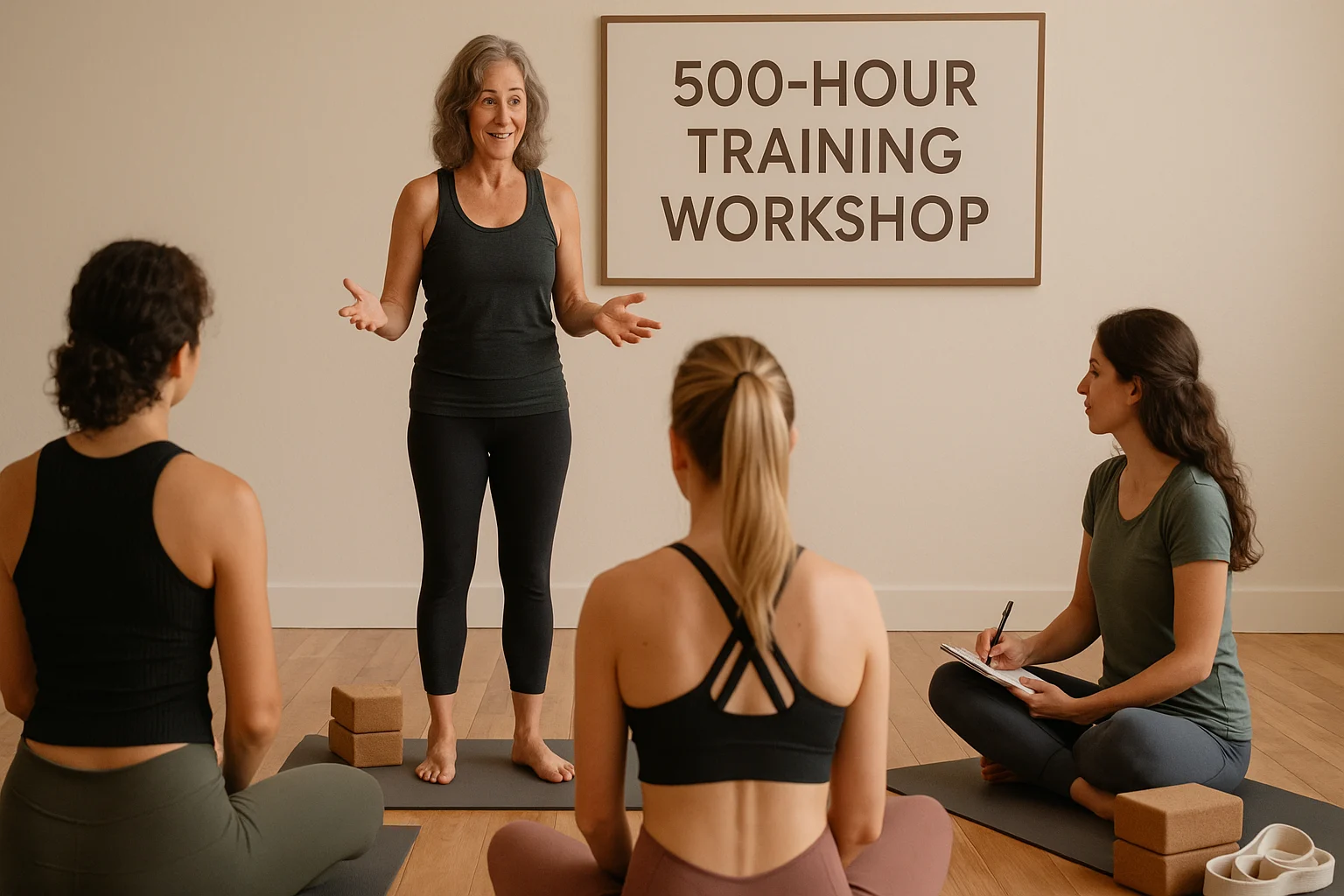
An RYS 500 program meets both the foundational 200-hour and advanced 300-hour standards within one comprehensive training path. The label tells you the scope of the training, not that every graduate has “mastered” yoga or earned a particular specialty. The useful comparison is how the school connects its foundational and advanced work.
Foundational + Advanced Scope
A 500-hour curriculum should cover the full arc from foundational techniques and professional essentials into more advanced study. Ask whether the program is designed as one integrated sequence or as clearly separated foundational and advanced phases, and how the prerequisites work.
Where Programs Differ
Once the required categories are covered, schools can emphasize different methods, traditions, research interests, or teaching populations. Compare the actual hours, faculty, assignments, and assessment methods behind a specialty claim rather than treating the 500-hour designation itself as proof of expertise in that specialty.
Scope of Practice Still Matters
A longer training does not automatically expand a teacher into clinical work. Yoga Alliance’s yoga-therapy policy states that RYS and RYT designations alone do not qualify someone to diagnose or treat physical or mental health conditions. Separate credentials and competence matter when a program makes therapeutic or specialty claims.
Yoga Teacher Training Curriculum: Common Questions
Before You Enroll: 6 Curriculum Checks
Hour count is only the starting point. Before enrolling, check whether the school makes these six things clear:
- Curriculum: what topics, modules, and learning goals are actually taught.
- Practice teaching: where you lead, observe, receive feedback, and demonstrate teaching skills.
- Faculty: who teaches each area and what experience or credentials support that role.
- Format and prerequisites: how the schedule works, what must be completed first, and which sessions are live or in person.
- Assessment: what assignments, attendance, practice teaching, or other requirements determine successful completion.
- Claims and credentials: what supports any specialty, therapy, or advanced-certification claim. If Yoga Alliance registration matters to you, verify the school’s current designation in the Yoga Alliance school directory.
A useful teacher training outline should leave you able to answer three questions: What will I study? How will I practice teaching it? What will I be expected to demonstrate before I graduate? If those answers are hard to find, keep comparing.
This guide explains yoga teacher-training curricula and credentials; it does not qualify anyone to diagnose or treat health conditions. For individual health concerns, use appropriately qualified medical care and stay within the scope of your training.