
If you are comparing yoga teacher insurance, the hard part is not finding a policy—it is knowing whether two policies are actually covering the same work. A studio teacher, private instructor, online teacher, and retreat leader can face different requirements, exclusions, and gaps even when the sales pages use similar labels.
This guide gives you a practical way to compare them: first identify how and where you teach, then check the coverage terms, limits, exclusions, policy form, and current price on equivalent terms. The checklist below turns that into a short set of questions you can take to each provider.
Table of Contents
- What Yoga Teacher Insurance Usually Covers
- Do You Need Yoga Teacher Insurance?
- How to Compare Yoga Insurance Policies
- Build Your Yoga Teacher Insurance Checklist
- Providers and Programs to Compare
- How Much Does Yoga Instructor Insurance Cost?
- Example Scenarios: Where Coverage Questions Come Up
- Frequently Asked Questions
- Compare the Policy, Not Just the Price
What Yoga Teacher Insurance Usually Covers
Yoga liability insurance policies often combine several protections, but the exact wording is provider-specific. Current programs differ on limits, policy form, covered modalities, add-ons, and pricing. Use the categories below as comparison questions rather than assumptions about every policy, then see the current provider examples for concrete differences.
General Liability: Bodily Injury and Property Damage
General liability commonly addresses third-party bodily injury and property-damage claims connected with business operations. A student slipping over a prop or accidental damage to a client’s property are the kinds of events to ask about. Check the policy definition, exclusions, and limits rather than assuming every accident is covered.
Professional Liability: Claims Tied to Your Teaching
Professional liability, often called Errors & Omissions coverage, addresses claims arising from professional services. For a yoga teacher, that can include allegations that instruction, an adjustment, or other covered professional service caused harm. Confirm that the specific styles and services you offer are inside the policy’s definition of professional services.
Products and Completed Operations
If you sell props or other physical products, ask how product-related claims are handled. Some current yoga-professional policies include products-completed-operations protection, but the limit and scope are policy-specific. If you recommend equipment without selling it, that is a different exposure from operating a product business.
Personal and Advertising Injury
Some policies include protection for specified non-physical claims such as libel, slander, wrongful entry, or privacy-related offenses. The wording can be narrower than the label suggests, so compare the listed offenses rather than assuming broad “privacy protection.”
Damage to Premises You Rent
Do not assume rental-property damage is always a completely separate policy. Current programs may include a specific “damage to premises rented to you” limit within their liability package, with limits and covered causes that differ by insurer. If you regularly rent studios or event spaces, ask exactly what property and time periods are covered.
Cyber Liability for Online Business Activity
Online instruction can still fall under general or professional liability when a policy says it does, but cyber coverage is a separate question. Insurance Canopy currently lists cyber liability as an optional add-on, while Alliant offers separate cyber-liability coverage for network-security, privacy, and breach-related risks. If you collect client data, take payments, or manage bookings online, ask whether cyber protection is included, optional, or separate.
Limits, Deductibles, and Policy Form
Headline limits are only one comparison point. For example, Alliant YogaPro currently publishes options including $1 million per claim / $2 million aggregate and $2 million per claim / $4 million aggregate, while Insurance Canopy publishes different occurrence and annual limits. Deductibles can also differ by coverage. Compare quotes using the same limits, add-ons, and policy form so the prices mean the same thing.
Do You Need Yoga Teacher Insurance?
There is no useful one-size-fits-all answer. Your decision depends on how you work, what a studio or venue requires, what coverage may already extend to you, and whether your own activities fall outside that protection. If a legal or contractual requirement is unclear, confirm it with the relevant venue, insurer, or qualified professional rather than relying on a general web article.
Freelance and Independent Teachers
If you run your own classes, work with private clients, or contract across several venues, an individual policy is worth evaluating because you may not have one employer’s policy to rely on. Ask whether the policy follows you across the locations and services you actually use.
Studio Employees and Contractors
Do not assume either that the studio covers everything or that you automatically need duplicate coverage. Ask the studio what its policy covers for employees or contractors, whether it extends to work away from the studio, and whether you need to provide your own certificate of insurance.
Online Yoga Instructors
Some current yoga-professional liability programs cover live or prerecorded online instruction, but cyber risks such as data breaches may be handled separately. If you teach online, verify both the instruction coverage and any data/payment exposure instead of treating “online” as one insurance category.
Retreat Leaders
If you are planning a yoga retreat, verify geographic territory, temporary event locations, additional-insured requests, and any exclusions that could apply outside your normal teaching setting. International coverage can come with conditions, so confirm the actual destination and policy terms.
Part-Time or New Teachers
Part-time work does not automatically mean the same rate or coverage everywhere. Some current programs publish separate part-time pricing while others use a single base rate. Compare the definition of “part-time,” the limits included, and any membership requirement before deciding.
If you are still working out training and credentials before you start teaching, the yoga teacher training guide covers that part of the process.
How to Compare Yoga Insurance Policies
The best policy is the one whose covered services, limits, exclusions, and requirements fit the way you actually teach. Start with your work, then compare quotes on equivalent terms.
Assess Your Teaching Needs
Write down the parts of your teaching setup that an insurer needs to understand:
- Where you teach: studios, homes, outdoors, online, events, or retreats.
- Which yoga styles and related services you provide.
- Whether you use hands-on assists, sell products, rent space, or manage client data and payments.
- Whether you work independently, as an employee, as a contractor, or in more than one role.
Compare Key Policy Factors
- Covered professional services: Make sure the actual modalities and teaching formats you use are included.
- Limits and deductibles: Compare quotes at equivalent limits and note any coverage-specific deductibles.
- Policy form and territory: Check claims-made versus occurrence wording, geographic limits, and what happens after the policy ends.
- Exclusions and add-ons: Look for restrictions on specialty formats, products, cyber risks, rented premises, and other activities you selected in the checklist.
- Certificates and additional insureds: Confirm the process and cost if a studio, landlord, or event organizer requires them.
Request Comparable Quotes
Get more than one quote when practical, but keep the comparison consistent. A lower price with lower limits or missing add-ons is not the same product as a higher quote with broader coverage.
Read the Policy, Not Just the Sales Page
Provider pages are useful for screening options, but the policy controls the actual terms. Review covered services, exclusions, territory, limits, deductibles, and any claims-made or occurrence provisions before you rely on the coverage.
Know When an Instructor Policy May Not Be Enough
If you own a studio, school, or other teaching business, ask whether an individual instructor policy also covers the business itself. Current programs can separate teacher coverage from studio or business coverage, so do not assume a personal teaching policy automatically protects the premises or the wider business operation.
Build Your Yoga Teacher Insurance Checklist
Choose where you teach and how independently you work. Add any optional activities, and the tool builds a quote-comparison checklist—not a policy recommendation.
Build your checklist
Choose at least one teaching setting and answer the independent-teaching question to see your checklist.
Providers and Programs to Compare
These are current examples, not a ranking. They are useful because they show how differently yoga-professional policies can be structured. Verify the current quote and policy documents before purchasing.
Yoga Alliance Member Program: Alliant YogaPro
Yoga Alliance currently lists Alliant YogaPro as a member insurance benefit with special rates for professional and general liability coverage. Alliant describes its YogaPro policy as claims-made and publishes multiple limit tiers, plus options or benefits for activities that can differ from other programs. Membership eligibility matters, so compare the insurance cost together with any membership requirement.
Insurance Canopy
Insurance Canopy currently advertises yoga-teacher coverage starting at $159 per year or $15 per month. Its public page says the base price is the same across locations and yoga styles, while optional coverages such as cyber liability can add cost. Its published limits and occurrence-form details differ from Alliant’s program.
NACAMS
NACAMS currently advertises a $179 one-year professional policy with occurrence-form coverage, online-class coverage, and published general/professional liability limits. As with any provider, confirm that your modalities, state, locations, and other activities fit the current policy rather than relying on the summary alone.
Other insurers may also be appropriate. Compare policies on equivalent limits and terms, then choose based on the work you actually do rather than a generic “best provider” label.
How Much Does Yoga Instructor Insurance Cost?
Current public prices vary by provider, limit, membership requirement, payment plan, and optional coverage. The examples below were checked on August 10, 2026 and are snapshots—not guaranteed future prices.
Current Published Examples
| Provider or program | Published price example | What to verify |
|---|---|---|
| Yoga Alliance / Alliant YogaPro | Public pages currently differ: Yoga Alliance says rates start at $110/year part-time and $125/year full-time, while Alliant’s comparison table lists $115/$125 for the $1M/$2M part-time/full-time tier | Current rate and part-time definition, membership eligibility, selected limit, and the quote you are actually offered |
| Insurance Canopy | $159/year or $15/month starting price | Optional add-ons, payment plan, exclusions, and current state availability |
| NACAMS | $179/year for the advertised one-year professional policy | Covered modalities, limits, territory, and current eligibility |
Why Your Quote May Differ
Providers do not all price yoga insurance the same way. One program may distinguish part-time from full-time work, another may use one base rate across locations and yoga styles, and optional coverage can change the total. Compare the actual quote together with the limits, deductible, policy form, covered services, and add-ons instead of using a generic “basic versus comprehensive” price band.
Example Scenarios: Where Coverage Questions Come Up
These are hypothetical examples to show which policy terms you would want to check. They are not reports of actual claims, and coverage would depend on the policy terms and circumstances.
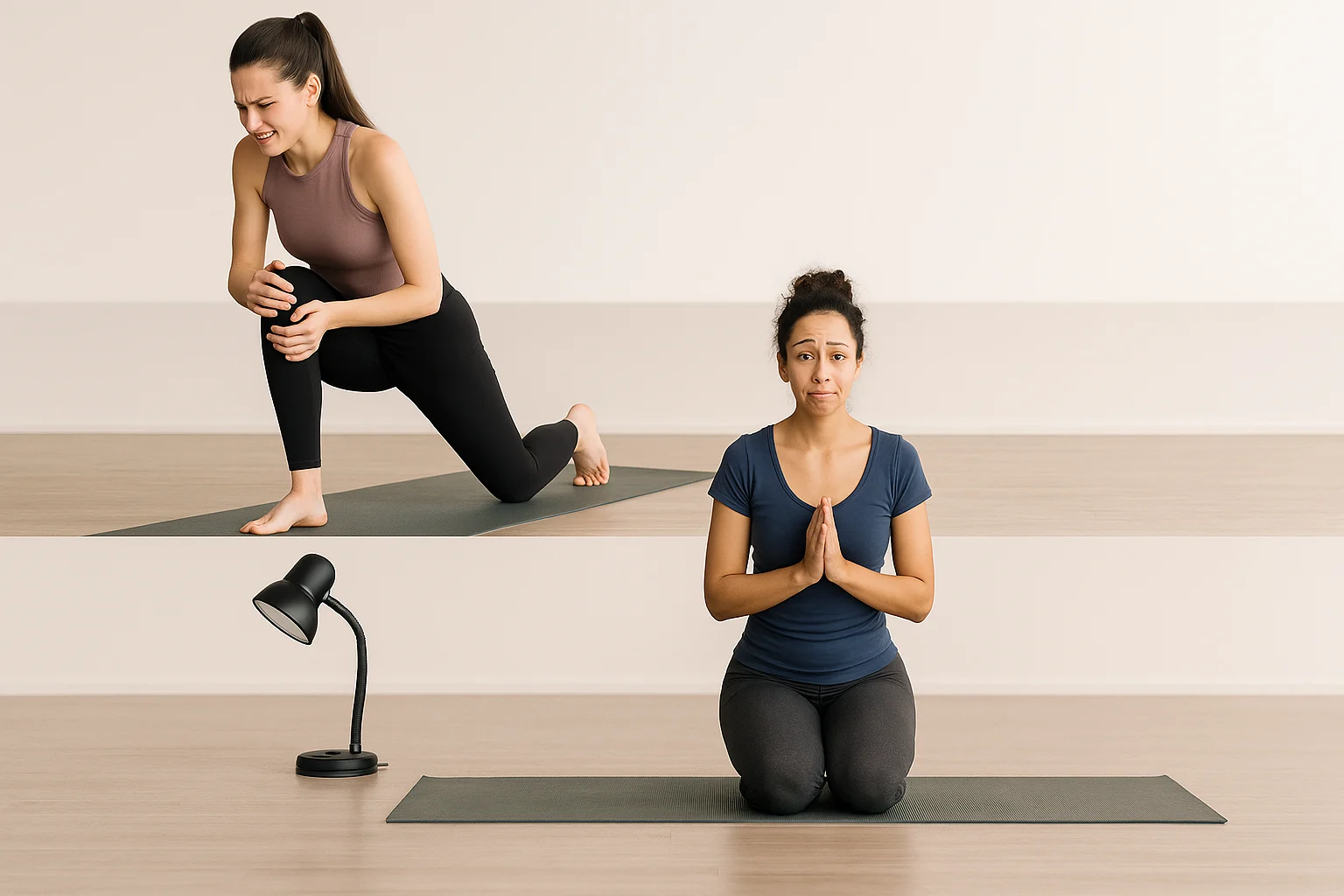
Scenario 1: A Student Slips Before Class
A student trips over a prop while entering your teaching area and is injured. The question to ask is whether the event falls within the policy’s general-liability bodily-injury coverage, what limits apply, and whether the location is covered.
Scenario 2: You Damage a Rented Space
You accidentally damage flooring or another part of a studio you rented for a workshop. Check the policy’s property-damage wording and any specific “damage to premises rented to you” limit rather than assuming all rented-property damage is treated the same way.
Scenario 3: A Student Alleges Your Instruction Caused Harm
A student alleges that an adjustment or instruction caused an injury. That is the kind of professional-services allegation that makes the professional-liability wording, covered modalities, exclusions, and claims process important.
Frequently Asked Questions
Compare the Policy, Not Just the Price
A useful insurance decision starts with the way you actually teach. List your settings and services, clarify what a studio or employer already covers, then compare policies on equivalent limits, exclusions, territory, additional-insured rules, and policy form.
If you are about to request quotes, run the insurance checklist once more and use the same questions for every provider. That makes the differences easier to see—and gives you a short list of terms to get confirmed before you rely on the policy.
Disclaimer: This article is for informational purposes only and does not constitute legal or financial advice. Coverage, eligibility, pricing, and legal or contractual requirements can change. Confirm current policy terms with the insurer or a licensed insurance professional, and confirm legal requirements with the appropriate authority for your location.